Why is forming gas considered an essential consumable in the crystallization process of niobium dioxide thin films? Precise Reduction
Updated 3 months ago
Forming gas is the primary chemical agent used to drive the precise reduction of niobium pentoxide ($Nb_2O_5$) into the desired semiconducting phase of niobium dioxide ($NbO_2$). By introducing a controlled concentration of hydrogen, the process effectively "strips" oxygen atoms from the precursor's crystal lattice. This transition is essential because it converts a wide-bandgap insulator into a functional semiconductor capable of exhibiting the insulator-to-metal transition (IMT) required for advanced electronics.
Forming gas acts as a precision "reduction regulator," using a dilute hydrogen mixture to transform insulating niobium oxides into semiconducting thin films while preventing the material from degrading into metallic sub-oxides.
The Chemical Mechanics of Niobium Reduction
Transforming the Lattice Structure
The crystallization process typically begins with niobium pentoxide ($Nb_2O_5$), which is chemically stable but electrically insulating. The hydrogen within the forming gas reacts with the oxygen in the $Nb_2O_5$ lattice, removing it to create $NbO_2$.
This reduction must be meticulously controlled to ensure the resulting thin film achieves the correct stoichiometry. Even slight deviations in oxygen removal can prevent the film from exhibiting the specific electronic properties required for its intended application.
The Role of Hydrogen as a Reducing Agent
Hydrogen is the active component that facilitates the chemical change by acting as a powerful reducing agent. At elevated temperatures within the furnace, hydrogen atoms interact with the surface of the film to break niobium-oxygen bonds.
Because pure hydrogen is highly volatile and reactive, it is used in a diluted form. This dilution allows for a slower, more predictable reaction rate, known as reduction kinetics.
The Structural Stability Provided by Nitrogen
Maintaining Pressure and Thermal Equilibrium
Nitrogen serves as the carrier gas, comprising roughly 95% of the forming gas mixture. Its primary role is to maintain a stable pressure environment within the crystallization furnace.
This stability is critical for ensuring that the thin film crystallizes uniformly across its entire surface. Without a consistent carrier gas, fluctuations in pressure could lead to physical defects or uneven electrical properties in the film.
Safety and Process Dilution
Beyond its physical properties, nitrogen is essential for industrial safety. It dilutes the hydrogen to a concentration (typically 5%) that is below the spontaneous combustion threshold in air.
This dilution also acts as a "chemical brake." By lowering the concentration of the reactant, the nitrogen prevents the hydrogen from reacting too aggressively with the niobium oxide.
Understanding the Trade-offs and Pitfalls
The Risk of Over-Reduction
The most significant challenge in using forming gas is avoiding over-reduction. If the film is exposed to too much hydrogen or for too long, it can be reduced beyond $NbO_2$ into $NbO$ or metallic niobium.
These metallic phases lack the semiconductor properties of $NbO_2$. Once a film has been over-reduced, it generally cannot be "re-oxidized" back to the precise $NbO_2$ state without compromising the crystal quality.
Environmental Sensitivity
The effectiveness of forming gas is highly dependent on the precision of the furnace seal and the purity of the gas supply. Even trace amounts of moisture or oxygen leaks can counteract the reduction process.
Inconsistent gas flow rates can also lead to "patchy" crystallization. This results in a thin film that exhibits different electrical resistances across different areas of the same wafer.
How to Apply This to Your Project
Optimizing the Crystallization Workflow
Successfully utilizing forming gas requires balancing the temperature, duration, and gas flow rates to reach the "sweet spot" of $NbO_2$ formation.
- If your primary focus is electrical precision: Closely monitor the hydrogen-to-nitrogen ratio to ensure a slow, uniform reduction that stops exactly at the $NbO_2$ phase.
- If your primary focus is industrial safety: Ensure the hydrogen concentration remains at or below 5% to maintain a non-flammable environment within the facility.
- If your primary focus is film uniformity: Prioritize the use of high-purity nitrogen as the carrier gas to prevent accidental re-oxidation during the cooling phase.
By mastering the reduction kinetics provided by forming gas, you can reliably produce niobium dioxide thin films with the precise stoichiometry required for high-performance semiconductor devices.
Summary Table:
| Component | Role in Process | Key Benefit for NbO2 Films |
|---|---|---|
| Hydrogen (H2) | Active Reducing Agent | Strips oxygen from Nb2O5 lattice to create semiconducting NbO2. |
| Nitrogen (N2) | Carrier & Dilution Gas | Ensures thermal equilibrium, pressure stability, and industrial safety. |
| Gas Mixture | Reduction Kinetics Control | Prevents over-reduction into metallic phases like NbO or pure Nb. |
| Atmosphere | Protective Environment | Shields the crystallization process from moisture and trace oxygen leaks. |
Elevate Your Material Research with THERMUNITS
Precise stoichiometry in niobium dioxide thin films demands absolute control over your thermal environment. As a leading manufacturer of high-temperature laboratory equipment, THERMUNITS provides the advanced technology required for sophisticated material science and industrial R&D.
Our comprehensive range of thermal solutions—including Atmosphere Furnaces, Tube Furnaces, CVD/PECVD systems, and Vacuum Induction Melting (VIM) furnaces—is engineered to handle forming gas processes with unmatched precision and safety. Whether you are developing next-generation semiconductors or performing complex heat treatments, our equipment ensures the uniform heating and atmospheric stability your project needs.
Ready to optimize your crystallization workflow? Contact our technical experts today to find the perfect furnace solution for your lab!
References
- Zachary R. Robinson, Marc Currie. Measurement of the crystallization and phase transition of niobium dioxide thin-films using a tube furnace optical transmission system. DOI: 10.1063/5.0228400
Mentioned Products
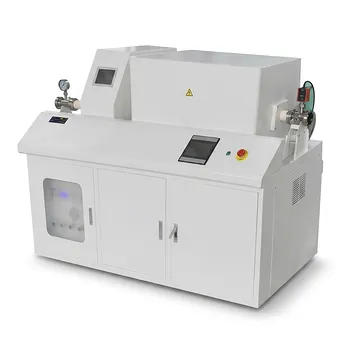
- Inclined Rotary Plasma Enhanced Chemical Vapor Deposition PECVD System for Thin Film Deposition and Nanomaterial Synthesis
- Radio Frequency Plasma Enhanced Chemical Vapor Deposition RF PECVD System for Laboratory and Industrial Thin Film Growth
- High Temperature 800C Rapid Thermal Processing Furnace with Rotating Sample Holder for Close Spaced Sublimation and Thin Film Solar Cell Research
- Two Zones CSS Furnace for Rapid Thermal Processing Thin Film Coating 3 Inch Diameter 650C
- 1200C Sliding Internal Crucible Tube Furnace for Controlled Atmosphere Thin Film Deposition and Material Sublimation Research
People Also Ask
- What types of materials can be deposited using PECVD systems? Explore Versatile Thin-Film Coating Solutions
- How does the non-equilibrium nature of plasma facilitate low-temperature deposition in PECVD systems? Pro Tips for R&D
- How is Plasma-Enhanced Chemical Vapor Deposition (PECVD) utilized in the production of photovoltaic solar cells? Study
- How do RF frequency and power settings influence the characteristics of a PECVD process? Master Quality & Efficiency
- What are the advantages of PECVD systems for nano flame retardant films? Protect Heat-Sensitive Polymers with Precision

Tech Team · ThermUnits
Last updated on Jun 03, 2026
Related Products
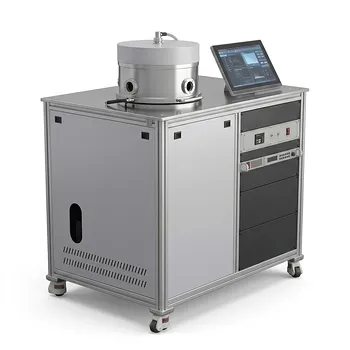
Inclined Rotary Plasma Enhanced Chemical Vapor Deposition PECVD System for Thin Film Deposition and Nanomaterial Synthesis
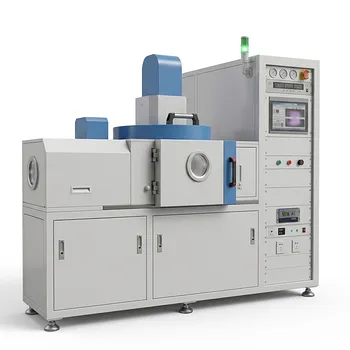
Radio Frequency Plasma Enhanced Chemical Vapor Deposition RF PECVD System for Laboratory and Industrial Thin Film Growth
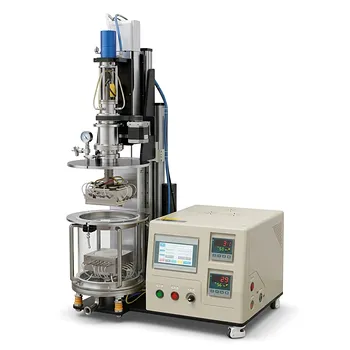
High Temperature 800C Rapid Thermal Processing Furnace with Rotating Sample Holder for Close Spaced Sublimation and Thin Film Solar Cell Research
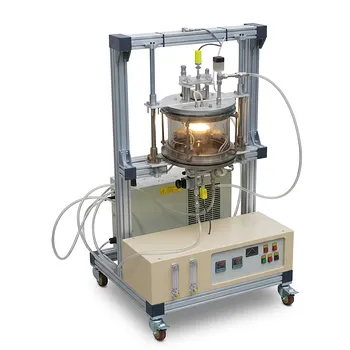
Two Zones CSS Furnace for Rapid Thermal Processing Thin Film Coating 3 Inch Diameter 650C
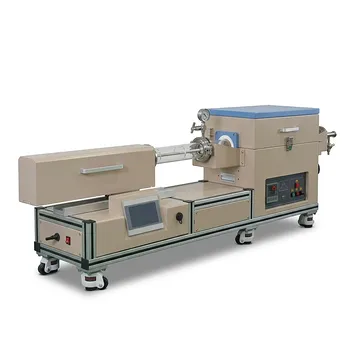
1200C Sliding Internal Crucible Tube Furnace for Controlled Atmosphere Thin Film Deposition and Material Sublimation Research
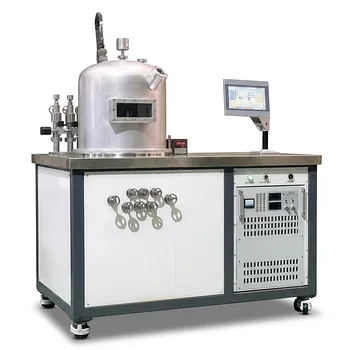
HFCVD Machine System for Nano Diamond Coating on Drawing Dies and Industrial Tools