Why is high-purity argon essential for chromium diffusion? Achieve Oxidation-Free, High-Performance Coatings
Updated 3 months ago
High-purity argon (Ar) is the primary safeguard against oxidation and chemical contamination during chromium diffusion. By continuously flushing the furnace chamber, it eliminates residual oxygen and non-protective gases that would otherwise react with the stainless steel substrate and active metal powders. This inert atmosphere ensures the final chromized layer achieves a metallic texture, maintains structural continuity, and remains free from performance-degrading oxide inclusions.
Core Takeaway: High-purity argon acts as both a chemical shield and a process stabilizer, preventing the oxidation of reactive components while ensuring the chemical reactions necessary for chromium diffusion can proceed without interference.
Preventing Oxidation and Surface Defects
Protection of the Substrate and Metal Powders
At the extreme temperatures required for chromium diffusion, stainless steel and active metal powders become highly reactive. High-purity argon isolates these materials from atmospheric oxygen, preventing the formation of oxide films that would block the diffusion process. Without this protection, the substrate would suffer from surface scaling, and the metal powders would lose their effectiveness.
Ensuring Layer Integrity and Texture
The presence of even trace amounts of oxygen can lead to oxide inclusion defects within the diffused layer. By maintaining a 99.999% pure argon environment, the process ensures the chromium layer is uniform and metallic. This continuity is vital for the material’s eventual corrosion resistance and mechanical durability.
Managing Diffusion Kinetics and Chemical Stability
Facilitating Active Halide Reactions
In many diffusion processes, high-purity argon acts as a carrier or shielding medium for active halide gases. These gases must undergo displacement and diffusion reactions with the substrate to deposit chromium. An inert environment ensures these reactive gases are not "poisoned" by air, allowing the chemical exchange to occur efficiently and repeatably.
Inhibiting Element Evaporation
Under high-temperature vacuum or low-pressure conditions, certain alloy elements or solder components can evaporate rapidly. Introducing argon at controlled pressures provides a stable physical environment that inhibits this evaporation. This preserves the precise chemical composition of the alloy and provides the necessary pressure for liquid metal phases to spread evenly across the surface.
Thermal Control and the Cooling Phase
"Freezing" the High-Temperature State
The cooling stage is as critical as the heating stage for maintaining material properties. Rapidly purging the furnace with argon after the heat cycle "freezes" the structural state achieved at peak temperature. This prevents high-temperature minerals or phases from undergoing secondary, undesirable chemical reactions as the temperature drops.
Preventing Embrittlement and Secondary Reactions
During cooling, materials like Inconel or zirconium-based alloys remain susceptible to surface oxidation and decarburization. Argon provides a protective thermal medium that carries heat away while maintaining chemical neutrality. This prevents the surface embrittlement that often occurs when hot metal is exposed to residual oxygen or nitrogen during the descent to room temperature.
Understanding the Trade-offs
Purity vs. Process Cost
While lower grades of argon are less expensive, they often contain moisture or oxygen levels that can compromise high-performance alloys. Using sub-standard gas risks the formation of thin oxide layers that are difficult to detect but lead to premature coating failure. For critical applications, the higher cost of 99.999% purity argon is a necessary insurance policy for part longevity.
Flow Rate and Pressure Sensitivity
Maintaining a stable flow rate (such as 0.5 NLPM) is essential for process repeatability. If the flow rate is too low, stagnant pockets of residual gas may cause localized oxidation; if it is too high, it may cause uneven cooling or disturb the distribution of active powders. Achieving the correct balance is vital for ensuring the morphology and distribution of precipitated phases meet technical specifications.
How to Optimize Argon Usage for Your Project
Recommendations for Implementation
- If your primary focus is Maximum Corrosion Resistance: Use the highest purity argon available (99.999%) to ensure the chromium layer is completely free of oxide inclusions that act as initiation points for pitting.
- If your primary focus is Structural Phase Accuracy: Prioritize a rapid argon purge during the cooling phase to "lock in" the desired microstructural evolution and prevent secondary reactions.
- If your primary focus is Process Repeatability: Implement automated mass flow controllers to maintain a consistent internal furnace pressure, ensuring that the diffusion kinetics remain identical across every batch.
High-purity argon is the invisible foundation of the chromium diffusion process, ensuring that the final material transitions from the furnace with its chemical integrity and mechanical properties fully intact.
Summary Table:
| Function | Key Benefit | Critical Stage |
|---|---|---|
| Oxidation Prevention | Protects substrate and powders from scaling and inclusions | Heating & Soaking |
| Kinetic Stability | Facilitates active halide reactions and inhibits element evaporation | Heating |
| Thermal Control | "Freezes" high-temp microstructure and prevents embrittlement | Cooling |
| Quality Insurance | 99.999% purity ensures metallic texture and layer continuity | Entire Process |
Optimize Your Thermal Processing with THERMUNITS
High-purity environments are critical for precision chromium diffusion and advanced material science. At THERMUNITS, we provide industry-leading high-temperature laboratory equipment designed to meet the rigorous demands of industrial R&D.
Our comprehensive range of thermal solutions includes:
- Muffle, Vacuum, Atmosphere, Tube, and Rotary Furnaces
- CVD/PECVD Systems and Hot Press Furnaces
- Vacuum Induction Melting (VIM) and Dental Furnaces
- Electric Rotary Kilns and Specialized Thermal Elements
Ensure your heat treatment processes achieve maximum repeatability and material integrity.
Contact THERMUNITS today to find the perfect furnace for your application!
References
- Sarra DJEMMAH, H. Bouchafaa. Investigation of microstructural and electrochemical behavior of chromized-doped layers with variant magnesium concentrations. DOI: 10.1007/s12046-024-02573-1
Mentioned Products
- High Temperature Induction Melting System with Integrated Ultra High Purity Glove Box for Metallic Alloy Processing
- High Temperature Vertical Atmosphere Controlled Furnace with Automatic Bottom Loading and 1700°C Capacity for Advanced Material Research
- High Temperature Cold Wall High Vacuum Chamber Furnace 1400C for Advanced Material Processing
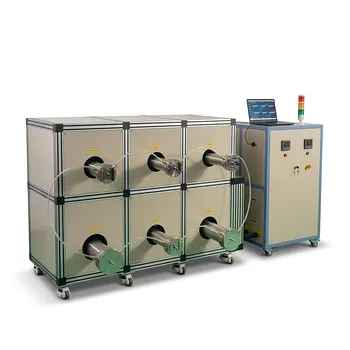
- 1200C Max 6 Channel High Cleanliness Hydrogen Furnace for High Throughput Annealing
People Also Ask
- What are the key structural components that make up a Vacuum Induction Melting (VIM) furnace system? Full Guide
- How does the skin effect influence VIM frequency selection? Optimize Heat Penetration & Stirring Efficiency
- What technical advantages does Vacuum Induction Melting offer regarding alloy homogeneity and purity? Enhance Performance
- Why is a VIM furnace utilized for high-performance metals? Achieve Superior Material Purity and Integrity
- Explain the physical principle behind heat generation in a Vacuum Induction Melting (VIM) furnace: A Technical Guide

Tech Team · ThermUnits
Last updated on Jun 02, 2026
Related Products
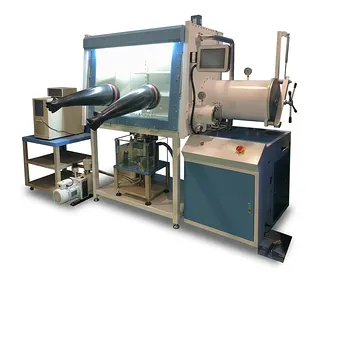
High Temperature Induction Melting System with Integrated Ultra High Purity Glove Box for Metallic Alloy Processing
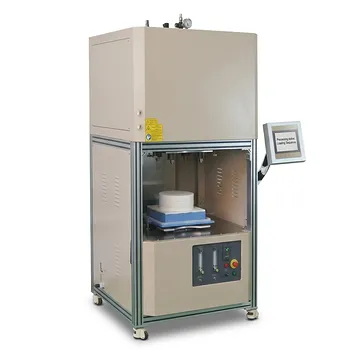
High Temperature Vertical Atmosphere Controlled Furnace with Automatic Bottom Loading and 1700°C Capacity for Advanced Material Research
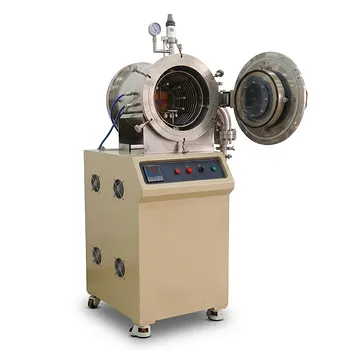
High Temperature Cold Wall High Vacuum Chamber Furnace 1400C for Advanced Material Processing