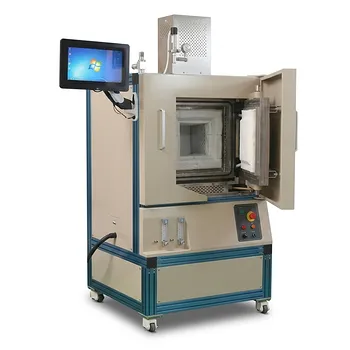
Why is High-Purity Argon Gas Necessary for Rare Earth Hexaborides? Ensure Material Purity and Prevent Oxidation
Updated 3 months ago
High-purity argon gas is the essential safeguard against oxidation. During the high-temperature synthesis of Rare Earth Hexaborides, these materials become extremely reactive. Argon provides an inert environment that excludes oxygen and moisture, preventing the formation of undesirable oxide impurities and ensuring the final product achieves its intended phase purity and crystal structure.
Core Takeaway: High-purity argon serves as a chemical shield that preserves the stoichiometry and structural integrity of Rare Earth Hexaborides by maintaining an oxygen-free environment. Without this protective atmosphere, the material would undergo oxidative degradation, resulting in poor electronic properties and compromised densification.
The Critical Role of Oxygen Exclusion
Rare Earth Hexaborides ($REB_6$) are prized for their low work functions and high thermal stability, but these properties are easily compromised by atmospheric exposure during heating.
Preventing Oxide Impurity Formation
At the high temperatures required for synthesis (often exceeding 1350 °C), rare earth elements and boron exhibit a high affinity for oxygen. High-purity argon effectively displaces residual oxygen from the furnace chamber, preventing the formation of rare earth oxides which act as impurities.
Maintaining Phase Purity and Entropy
For modern applications involving medium-to-high entropy hexaborides, maintaining a specific chemical stoichiometry is vital. Argon ensures a stable environment that allows the crystal structure to form according to the intended design, preserving the configurational entropy that gives these materials their unique characteristics.
Protecting the Boron Substructure
The boron framework within hexaborides is particularly sensitive to chemical interference during the sintering and reduction phases.
Avoiding the $B_2O_3$ Glass Phase
If oxygen is present, boron can react to form boron trioxide ($B_2O_3$), which often exists as a glass phase at high temperatures. This glass phase is detrimental because it can coat particles and inhibit the densification process, leading to porous, brittle, or structurally unsound materials.
Preserving Thermodynamic Pathways
Thermal processing relies on specific thermodynamic pathways to reach the desired final state. An argon atmosphere ensures that the reduction reactions follow the preset chemical equilibrium, allowing for an accurate assessment of how processing time and temperature impact the final material recovery.
Process Stability and Repeatability
Beyond chemical protection, the physical presence of a consistent gas flow contributes to the overall success of the thermal treatment.
Consistent Internal Pressure
A continuous flow of argon (such as 0.5 NLPM) helps maintain a stable internal furnace pressure. This stability is critical for process repeatability, ensuring that every batch of material produced under the same settings yields identical results.
Protection Against Moisture and Contaminants
High-purity argon is not only oxygen-free but also moisture-free. This is critical because moisture can lead to hydration reactions or the introduction of hydrogen, both of which can alter the electrochemical activity and surface chemistry of the hexaboride powders.
Understanding the Trade-offs
While high-purity argon is necessary, it introduces specific operational challenges that must be managed to ensure material quality.
- Purity Requirements: Using "standard" argon rather than "high-purity" (typically 99.999% or higher) can be a fatal mistake. Even trace amounts of oxygen can cause surface oxidation, which may not be visible to the naked eye but will significantly degrade the electronic emission properties of the hexaboride.
- Cost vs. Protection: Continuous flow systems consume large volumes of gas, increasing production costs. However, attempting to "dead-end" the gas (filling and sealing) is risky, as leaks or outgassing from furnace insulation can slowly reintroduce oxygen over long heating cycles.
- Gas Flow Cooling: High flow rates can cause thermal gradients within the furnace. If the argon flow is too high or not pre-heated, it may lead to non-uniform sintering, resulting in a product with inconsistent density.
How to Apply This to Your Project
To achieve the highest quality Rare Earth Hexaborides, your atmospheric control strategy should be tailored to your specific hardware and purity goals.
- If your primary focus is maximum phase purity: Utilize a "purge and vacuum" cycle at the start of the process to ensure all air is removed before the final high-purity argon flow begins.
- If your primary focus is material densification: Monitor the argon flow rate strictly to prevent the formation of boron-oxide glass phases that could halt the shrinking and bonding of particles.
- If your primary focus is process repeatability: Install high-precision mass flow controllers to ensure the furnace pressure remains constant across different production runs.
The use of high-purity argon is not merely a preference but a fundamental requirement for the successful synthesis of Rare Earth Hexaborides.
Summary Table:
| Feature | Impact on Rare Earth Hexaborides | Benefit of High-Purity Argon |
|---|---|---|
| Oxidation Control | Prevents formation of rare earth oxides | Preserves intended chemical phase purity |
| Substructure Integrity | Avoids $B_2O_3$ glass phase formation | Ensures proper densification and structural strength |
| Stoichiometry | Maintains specific chemical ratios | Preserves electronic emission and thermal properties |
| Atmosphere Stability | Eliminates moisture and contaminants | Prevents hydration reactions and inconsistent density |
| Process Repeatability | Stable internal furnace pressure | Ensures identical results across production batches |
Elevate Your Material Synthesis with THERMUNITS
Precise atmospheric control is the difference between a successful synthesis and a failed batch. THERMUNITS is a leading manufacturer of high-temperature laboratory equipment, providing the advanced thermal solutions necessary for Rare Earth Hexaboride research and industrial R&D.
Whether you require Atmosphere Furnaces, Vacuum Furnaces, Tube Furnaces, or CVD/PECVD systems, our equipment is designed to maintain the rigorous high-purity environments your materials demand. We also offer Muffle, Rotary, and Hot Press furnaces, as well as vacuum induction melting (VIM) systems tailored to your specific heat treatment needs.
Ready to optimize your high-temperature processes? Contact our expert team today to find the perfect furnace solution!
References
- Hongye Wang, Heng Chen. Medium- and High-Entropy Rare Earth Hexaborides with Enhanced Solar Energy Absorption and Infrared Emissivity. DOI: 10.3390/ma17081789
Mentioned Products
- Rapid Thermal Processing RTP Atmosphere Controlled Bottom Loading Furnace 1100C High Throughput 50C per Second Heating Rate
- Rapid Thermal Processing Furnace 1100C Atmosphere Controlled Bottom Loading RTP System for Wafer Annealing and Catalysis Research
- Rapid Thermal Processing Atmosphere Controlled Bottom Loading Furnace 1100C with 50C Per Second Heating Rate for Wafer Annealing
- Compact Atmosphere Controlled Rapid Thermal Processing RTP Furnace with 4 Inch ID Quartz Tube 1100C
- 1500°C Atmosphere Controlled Rapid Heating Furnace for Material Science and Battery Powder Sintering
People Also Ask
- What role does a SiC-coated graphite susceptor play in H2Se selenization? Boost RTP Thermal Uniformity & Film Purity.
- What are the functional advantages of an RTP system for surface deposition? Enhance Heterojunction Interface Integrity
- What are the advantages of using a Bottom-Loading High-Temperature Furnace in Barium Titanate Fast Firing? Superior Microstructure
- Why is a tube furnace required for FGM-PhG structural color ceramics? Key to Carbon Preservation & Vibrant Color
- In what ways does an atmosphere control system affect nanoporous gold structure? Control Oxygen for Precision Design.

Tech Team · ThermUnits
Last updated on Jun 02, 2026
Related Products
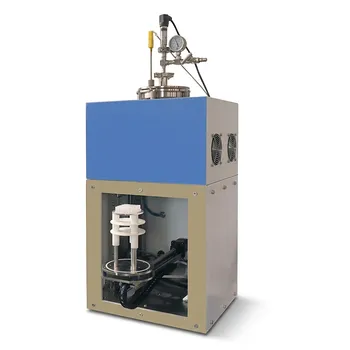
Rapid Thermal Processing RTP Atmosphere Controlled Bottom Loading Furnace 1100C High Throughput 50C per Second Heating Rate
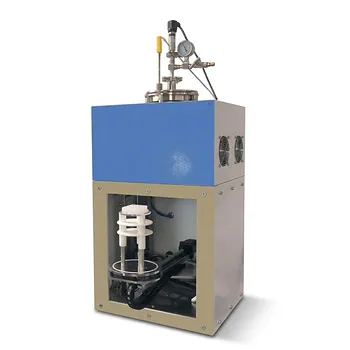
Rapid Thermal Processing Furnace 1100C Atmosphere Controlled Bottom Loading RTP System for Wafer Annealing and Catalysis Research
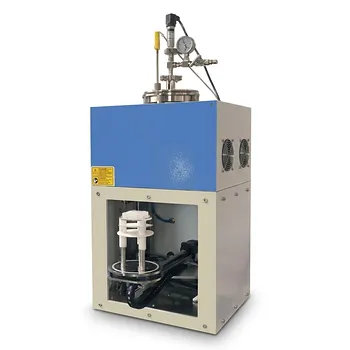
Rapid Thermal Processing Atmosphere Controlled Bottom Loading Furnace 1100C with 50C Per Second Heating Rate for Wafer Annealing
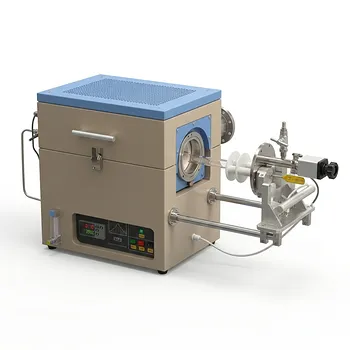
Compact Atmosphere Controlled Rapid Thermal Processing RTP Furnace with 4 Inch ID Quartz Tube 1100C
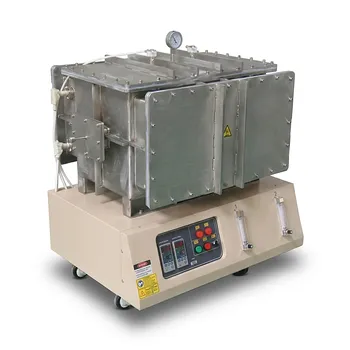
1500°C Atmosphere Controlled Rapid Heating Furnace for Material Science and Battery Powder Sintering
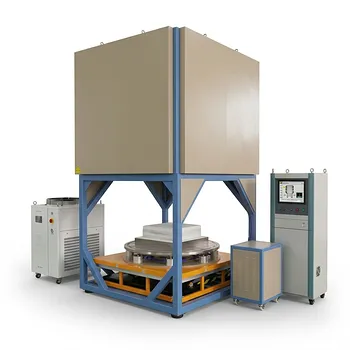
Bottom Loaded Inert Gas Atmosphere Box Furnace 1700C 1300C 216L Large Capacity Industrial Thermal Processing System
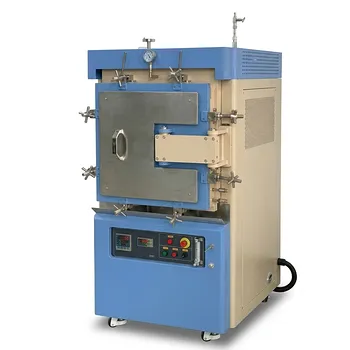
High Temperature Economic Hydrogen Gas Box Furnace 1600C Atmosphere Controlled Thermal Processing System 65L Capacity