In what ways does an atmosphere control system affect nanoporous gold structure? Control Oxygen for Precision Design.
Updated 3 months ago
Atmosphere control systems dictate the structural scale of nanoporous gold by regulating oxygen partial pressure ($P_{O_2}$), which directly influences chemical oxidation and nucleation kinetics. By selecting specific environments—such as forming gas, nitrogen, vacuum, or air—engineers can precisely trigger or suppress the oxidation of secondary elements like germanium. This chemical shift alters the density of nucleation sites and the degree of undercooling, ultimately determining whether the resulting gold ligaments and pores are fine or coarse.
Core Takeaway: The atmosphere acts as a chemical lever; higher oxygen levels promote germanium oxidation, which increases heterogeneous nucleation sites and reduces undercooling, leading to a significantly coarser nanoporous gold structure.
The Role of Oxygen Partial Pressure ($P_{O_2}$)
Controlling the Chemical Environment
The atmosphere control system manages the concentration of oxygen within the furnace chamber using gases like forming gas (FG), high-purity nitrogen, vacuum, or ambient air. Each of these environments provides a distinct $P_{O_2}$ level that dictates the chemical reactivity of the alloy components during thermal processing.
The Oxidation of Germanium
In environments with higher $P_{O_2}$, such as air, the system promotes the oxidation of germanium (Ge) into germanium dioxide ($GeO_2$). This transition is the fundamental mechanism that drives subsequent structural changes in the gold matrix.
Impact on Nucleation and Solidification
Altering Liquid Phase Composition
As germanium oxidizes into $GeO_2$, the chemical composition of the remaining liquid phase is fundamentally altered. This shift in the melt chemistry changes the thermodynamic landscape during the solidification process of the nanoporous structure.
Increasing Heterogeneous Nucleation Sites
The formation of $GeO_2$ particles provides a high density of heterogeneous nucleation sites. These sites act as "seeds" for the solid phase, significantly increasing the frequency of crystal formation throughout the material.
The Relationship with Undercooling
An increase in nucleation sites leads to a measurable decrease in undercooling. Because the system requires less energy to initiate solidification, the growth dynamics shift, favoring the development of larger structural features rather than a dense network of fine ligaments.
Structural Evolution and Morphological Outcomes
Scaling of Ligaments and Pores
The final morphology of the nanoporous gold is a direct reflection of these nucleation kinetics. Lower undercooling and high nucleation densities result in larger ligament and pore sizes.
Tuning the Nanostructure
By precisely adjusting the atmosphere, researchers can tune the scale of the gold "skeleton." This allows for the creation of materials tailored for specific applications, ranging from high-surface-area catalysts to mechanically robust structural components.
Understanding the Trade-offs
Precision vs. Structural Coarseness
While high oxygen environments allow for the creation of larger, more open structures, they also introduce chemical impurities in the form of oxides ($GeO_2$). These oxides may need to be removed in post-processing if high-purity gold is required for the application.
Equipment Complexity and Cost
Maintaining a high-vacuum or specialized forming gas environment requires advanced monitoring equipment and airtight furnace seals. While these systems prevent oxidation and preserve finer ligament scales, they increase the operational complexity compared to simple air-processed thermal treatments.
How to Apply This to Your Project
When designing a thermal process for nanoporous gold, your choice of atmosphere should align with your specific structural requirements.
- If your primary focus is maximizing ligament and pore size: Utilize an air-based atmosphere to promote maximum germanium oxidation and reduce undercooling.
- If your primary focus is maintaining an ultra-fine, high-surface-area structure: Process the material in a vacuum or forming gas environment to minimize oxygen partial pressure and suppress nucleation sites.
- If your primary focus is purity and conductivity: Use reducing atmospheres like forming gas to prevent the formation of resistive oxide layers within the gold matrix.
The ability to control the atmosphere transforms a standard thermal treatment into a precision engineering tool for tailoring the nanoscale architecture of gold.
Summary Table:
| Atmosphere Type | Oxygen Level ($P_{O_2}$) | Chemical Mechanism | Morphological Outcome |
|---|---|---|---|
| Ambient Air | High | Promotes $GeO_2$ oxidation | Coarse ligaments and larger pores |
| Nitrogen/Inert | Moderate to Low | Reduced oxidation sites | Intermediate structural scale |
| Vacuum / Forming Gas | Very Low | Suppresses $GeO_2$ formation | Ultra-fine, high-surface-area structure |
| Reducing Gas | Minimal | Prevents resistive oxide layers | High purity and electrical conductivity |
Elevate Your Material Research with Precision Thermal Control
Achieving the perfect nanostructure requires absolute control over your furnace environment. THERMUNITS is a leading manufacturer of high-temperature laboratory equipment, providing the specialized tools needed for advanced material science and industrial R&D.
Our comprehensive range of thermal processing solutions includes:
- Atmosphere & Vacuum Furnaces for precise $P_{O_2}$ regulation.
- CVD/PECVD Systems and Tube Furnaces for controlled vapor deposition.
- Muffle, Rotary, and Hot Press Furnaces for diverse heat treatment needs.
- Advanced Vacuum Induction Melting (VIM) and Dental Furnaces.
Whether you are tuning nanoporous gold ligaments or developing next-generation catalysts, our equipment ensures the repeatability and accuracy your research demands. Contact our technical experts today to find the ideal furnace solution for your laboratory.
References
- Lotan Portal, Boaz Pokroy. Morphology Control of Nanoporous Gold Through Selective Dissolution of Au–Ge Eutectic Microstructures. DOI: 10.1002/adem.202401564
Mentioned Products
- 1650C High Temperature Atmosphere Controlled Box Furnace with 65L Chamber for Advanced Material Sintering and Industrial Heat Treatment
- 1200C Atmosphere Controlled Automatic Bottom Loading Furnace with 6 Inch Quartz Tube Dual Zone System
- 1200°C Atmosphere Controlled Automatic Bottom Loading Furnace with 6 Inch Quartz Tube
- High Temperature Vertical Atmosphere Controlled Furnace 1700C Automatic Bottom Loading 13 Liter Vacuum Thermal System
- High Temperature Oxygen and Inert Atmosphere Controlled Furnace 8 Liter 1700C Sintering System for Advanced Materials RD
People Also Ask
- What role does atmosphere control play in technical ceramics and glass? Master Material Purity and Precision
- What role does a high-temperature atmosphere furnace play in the direct electrochemical reduction of CO2? - Key Insights
- What is the role of a high-temperature box furnace in the solid-state synthesis of Europium-doped M3MgSi2O8 phosphors?
- What is the role of a high-temperature box furnace in Na3MnZr(PO4)3 synthesis? Engineering High-Performance NASICON.
- What physical conditions does a high-temperature atmosphere furnace provide for MXene exfoliation? Process Guide

Tech Team · ThermUnits
Last updated on Jun 03, 2026
Related Products
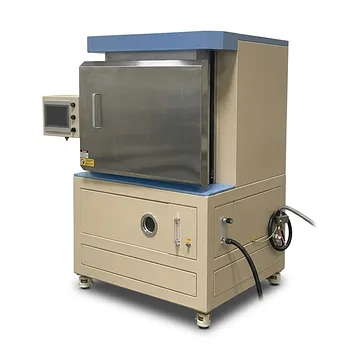
1650C High Temperature Atmosphere Controlled Box Furnace with 65L Chamber for Advanced Material Sintering and Industrial Heat Treatment
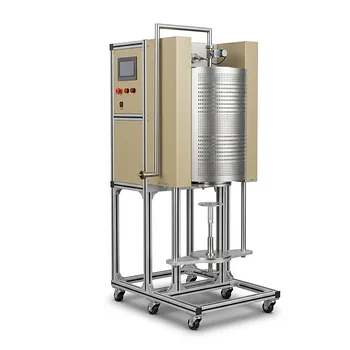
1200C Atmosphere Controlled Automatic Bottom Loading Furnace with 6 Inch Quartz Tube Dual Zone System
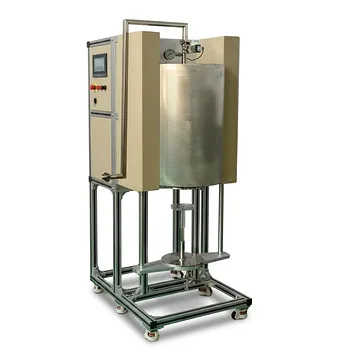
1200°C Atmosphere Controlled Automatic Bottom Loading Furnace with 6 Inch Quartz Tube
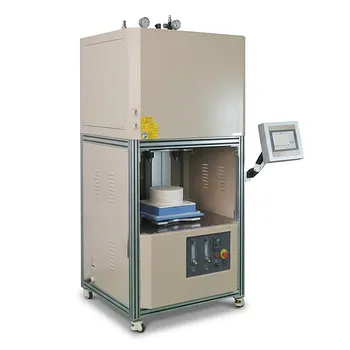
High Temperature Vertical Atmosphere Controlled Furnace 1700C Automatic Bottom Loading 13 Liter Vacuum Thermal System
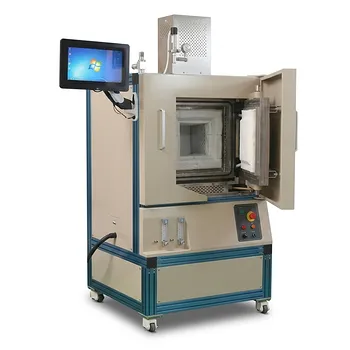
High Temperature Oxygen and Inert Atmosphere Controlled Furnace 8 Liter 1700C Sintering System for Advanced Materials RD
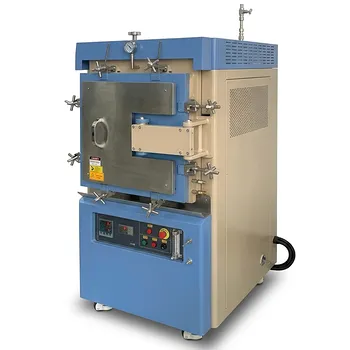
Atmosphere Controlled Muffle Furnace 1700C Maximum Temperature 80L High Capacity Vacuum Inert Gas Box Furnace
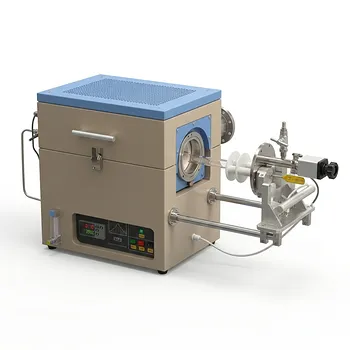
Compact Atmosphere Controlled Rapid Thermal Processing RTP Furnace with 4 Inch ID Quartz Tube 1100C
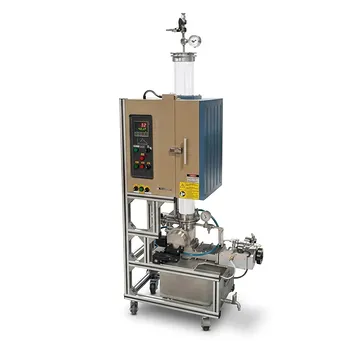
1200C High Temperature Atmosphere Controlled Vertical Quenching Tube Furnace with 4 Inch Quartz Tube
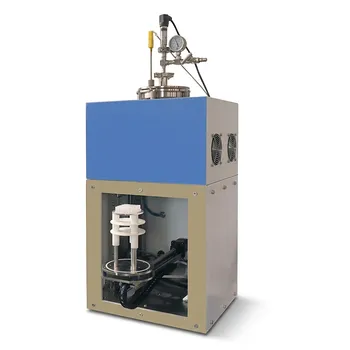
Rapid Thermal Processing RTP Atmosphere Controlled Bottom Loading Furnace 1100C High Throughput 50C per Second Heating Rate
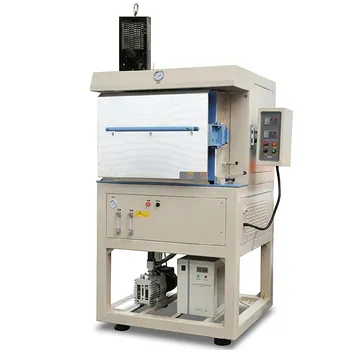
1200C Hydrogen Atmosphere Box Furnace with 5 Heated Sides and 64L Chamber
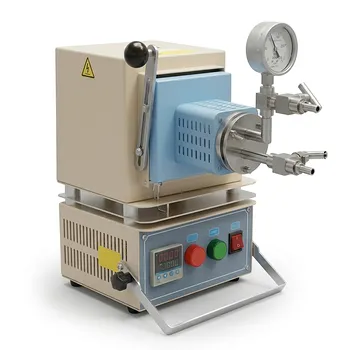
Compact Hybrid Muffle and Tube Furnace for 1000C Controlled Atmosphere Laboratory Material Sintering
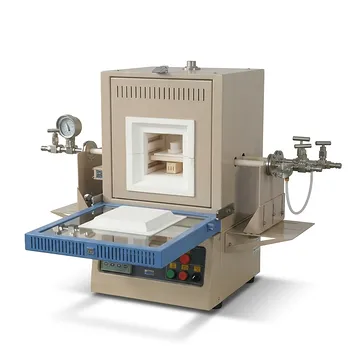
1700C Compact Hybrid Furnace with Dual Layer Box Sintering and Controlled Atmosphere Alumina Tubes

Compact Vertical Split Quartz Tube Furnace with Stainless Steel Vacuum Flanges for Rapid Thermal Quenching and Controlled Atmosphere Material Processing
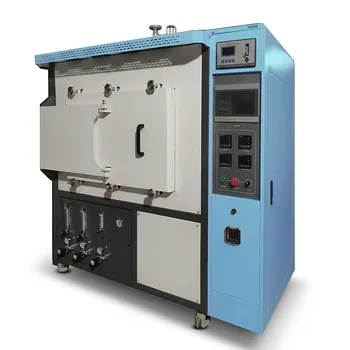
Roller Table Atmosphere Furnace 1500C High Temperature Battery Material Sintering System 112L Capacity
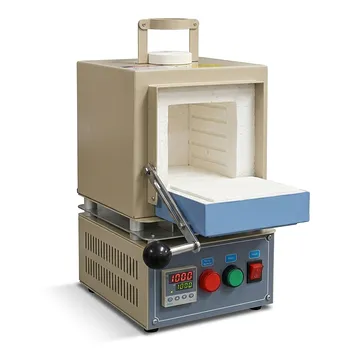
Compact 1000C Muffle Furnace with Programmable Controller and 2 Inch Top Port for Vacuum and Atmosphere Material Research
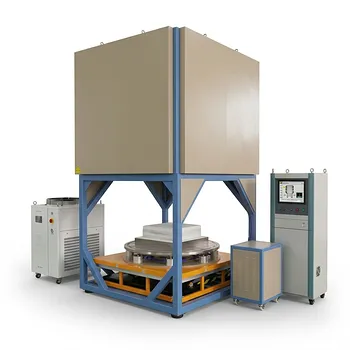
Bottom Loaded Inert Gas Atmosphere Box Furnace 1700C 1300C 216L Large Capacity Industrial Thermal Processing System
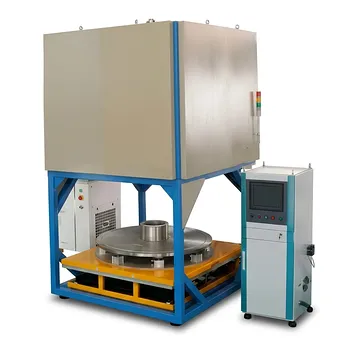
1400C Bottom Loaded Inert Gas Atmosphere Box Furnace with 125L Capacity and Precision Hydraulic Lift
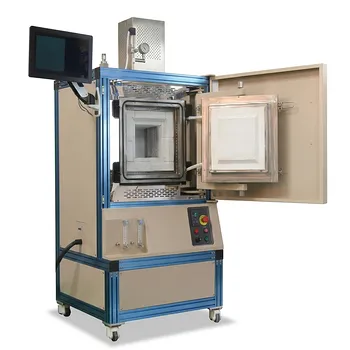
High Temperature Hydrogen Atmosphere Box Furnace 1650C Max Reducing Environment Material Synthesis System 8x8x8 Chamber
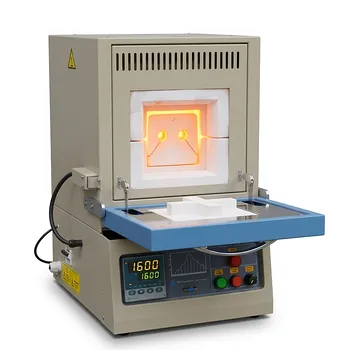
High Temperature Compact Muffle Furnace 1700 C with 30 Segment Programmable Controller and 1.7L Cubic Chamber