Why monitor the 'shroud' in high-volatility material synthesis? Ensure Thermal Accuracy & Minimize Material Loss
Updated 3 months ago
Monitoring the "shroud" or "smoke" phenomenon is critical because this layer of volatilized material directly interferes with infrared thermal imaging and serves as a vital indicator of material loss. In high-volatility synthesis, failing to account for this layer leads to inaccurate temperature data and compromised material integrity.
Core Takeaway: The shroud created by intense volatilization acts as both a barrier to accurate thermal measurement and a visual record of reaction kinetics; monitoring it is essential to calibrate sensors and optimize parameters to minimize material waste.
The Challenge of Accurate Thermal Monitoring
Interference with Infrared Readings
High-temperature synthesis often relies on infrared thermal imaging to monitor sample stability. However, the smoke layer alters the local emissivity of the environment, causing the camera to report temperatures that do not reflect the actual state of the material.
Signal Scattering and Absorption
The physical particles within the shroud can scatter or absorb radiation before it reaches the sensor. This interference creates "noise" in the data, making it difficult to maintain the precise thermal control required for sensitive materials like Uranium Nitride (UN).
Correcting for Optical Distortions
By actively monitoring the density and behavior of the shroud, researchers can develop correction factors for their thermal models. This ensures that the temperature readings used to drive the synthesis process are grounded in reality rather than distorted by the volatilization cloud.
Deciphering Volatilization Kinetics
Analyzing Shroud Morphology
The shape and size of the shroud are not random; they are determined by the interaction between the vapor pressure and the surrounding melting environment. Observing these physical dimensions helps researchers map the rate at which the material is escaping the sample.
Temperature-Dependent Behavior
As temperatures approach the melting point, the shroud typically becomes more intense. Tracking these changes allows scientists to identify the critical volatilization threshold, the exact point where material loss begins to accelerate unsustainably.
Optimizing Synthesis Parameters
Understanding the kinetics revealed by the shroud allows for the fine-tuning of atmospheric pressure and heating rates. This optimization is the primary defense against significant material loss during the production of expensive or hazardous high-volatility compounds.
Understanding the Trade-offs
The Risk of Excessive Mass Loss
Aggressively heating a sample to reach a desired phase can lead to a "runaway" shroud effect. While the reaction might happen faster, the total yield of the final product may be significantly reduced due to the material escaping into the vapor phase.
Measurement Complexity vs. Speed
Accounting for the shroud adds a layer of complexity to the experimental setup. Researchers must balance the need for high-fidelity data with the practical constraints of rapid synthesis, often requiring more sophisticated diagnostic tools to "see through" the smoke.
How to Apply This to Your Project
Recommendations for Material Synthesis
- If your primary focus is Measurement Accuracy: Use the shroud’s density profile to recalibrate your infrared sensors and account for emissivity shifts in real-time.
- If your primary focus is Material Retention: Monitor the size of the smoke layer to identify the lowest possible temperature that still allows for successful synthesis without excessive volatilized waste.
- If your primary focus is Process Optimization: Correlate shroud behavior with different atmospheric pressures to find the ideal environment that suppresses vapor formation.
By mastering the observation of the volatilization shroud, you transform a measurement obstacle into a powerful diagnostic tool for high-precision material engineering.
Summary Table:
| Monitoring Aspect | Impact on Synthesis | Optimization Strategy |
|---|---|---|
| Thermal Imaging | Smoke causes emissivity shifts and signal noise | Real-time sensor recalibration and correction factors |
| Reaction Kinetics | Shroud morphology indicates material escape rate | Map vapor pressure to identify critical thresholds |
| Material Yield | Excessive volatilization leads to high mass loss | Adjust atmospheric pressure and heating rates |
| Process Stability | Signal scattering obscures sample state | Use sophisticated diagnostics to see through smoke |
Achieve Precision in High-Volatility Material R&D
When synthesizing sensitive materials like Uranium Nitride, precise thermal control is the difference between a successful yield and significant material loss. THERMUNITS is a leading manufacturer of high-performance laboratory equipment specifically engineered for material science and industrial R&D.
Our comprehensive range of thermal solutions—including Vacuum and Atmosphere Furnaces, CVD/PECVD systems, and Vacuum Induction Melting (VIM) furnaces—is designed to provide the stable, controlled environments necessary to manage volatilization phenomena effectively.
Partner with THERMUNITS to enhance your lab’s efficiency and data fidelity.
Contact our expert team today to discuss your project requirements!
References
- Jordan Stone, Elizabeth S. Sooby. High-temperature thermal imaging to inform the arc-melt synthesis of nuclear materials. DOI: 10.3389/fnuen.2023.1322209
Mentioned Products
- Inclined Rotary Plasma Enhanced Chemical Vapor Deposition PECVD System for Thin Film Deposition and Nanomaterial Synthesis
- Multi Heating Zones CVD Tube Furnace System for Precision Chemical Vapor Deposition and Advanced Material Synthesis
- Chemical Vapor Deposition CVD System Slide PECVD Tube Furnace with Liquid Gasifier PECVD Machine
- Cylindrical Resonator MPCVD Machine System for Microwave Plasma Chemical Vapor Deposition and Lab Diamond Growth
- Versatile Chemical Vapor Deposition Tube Furnace System for Advanced Material Research and Industrial Coating Processes
People Also Ask
- What types of materials can be deposited using PECVD systems? Explore Versatile Thin-Film Coating Solutions
- How does the non-equilibrium nature of plasma facilitate low-temperature deposition in PECVD systems? Pro Tips for R&D
- How is Plasma-Enhanced Chemical Vapor Deposition (PECVD) utilized in the production of photovoltaic solar cells? Study
- How do RF frequency and power settings influence the characteristics of a PECVD process? Master Quality & Efficiency
- What are the advantages of PECVD systems for nano flame retardant films? Protect Heat-Sensitive Polymers with Precision

Tech Team · ThermUnits
Last updated on Jun 03, 2026
Related Products
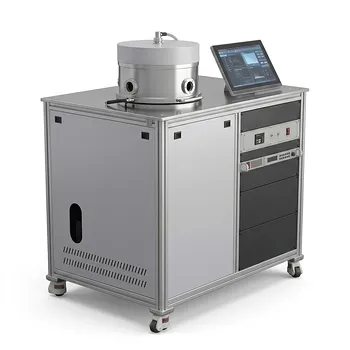
Inclined Rotary Plasma Enhanced Chemical Vapor Deposition PECVD System for Thin Film Deposition and Nanomaterial Synthesis
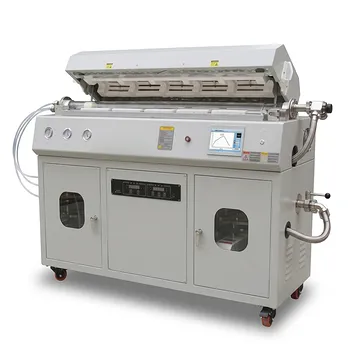
Multi Heating Zones CVD Tube Furnace System for Precision Chemical Vapor Deposition and Advanced Material Synthesis
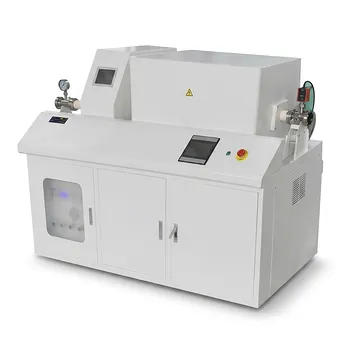
Chemical Vapor Deposition CVD System Slide PECVD Tube Furnace with Liquid Gasifier PECVD Machine
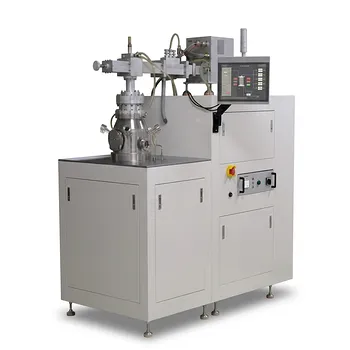
Cylindrical Resonator MPCVD Machine System for Microwave Plasma Chemical Vapor Deposition and Lab Diamond Growth