Why is a stable N2 atmosphere necessary for Co–Ni–N–C catalyst pyrolysis? Essential for Structure & Activity
Updated 3 months ago
The stability of a nitrogen (N2) atmosphere is the fundamental safeguard for the chemical and structural integrity of Co–Ni–N–C catalysts. During high-temperature pyrolysis, this inert environment prevents the destructive oxidation of metallic active sites, facilitates the removal of volatile inhibitors like zinc, and ensures the formation of the critical microporous carbon framework necessary for high catalytic activity.
Core Takeaway: Nitrogen acts as both a chemical shield and a transport medium. It prevents the combustion of the carbon matrix while enabling the precise evaporation and removal of pore-forming agents, ultimately preserving the atomic-level dispersion of cobalt and nickel.
Preventing the Oxidative Destruction of Active Sites
Protection of Metallic Nanoparticles
High-purity nitrogen excludes oxygen from the reaction chamber, which is vital because cobalt and nickel are highly susceptible to oxidation at elevated temperatures. Without this inert barrier, these metals would form inactive oxides rather than the desired metallic or nitrogen-coordinated sites.
Preservation of the Carbon Framework
Pyrolysis is a process of thermal decomposition in an oxygen-deficient environment. If oxygen were present, the carbon precursors would undergo combustion, turning the potential catalyst into ash and destroying the conductive scaffold required for electron transfer.
Maintenance of Surface Functional Groups
The nitrogen atmosphere protects surface functional groups and persistent free radicals from premature oxidation. This preservation ensures the material retains the chemical potential necessary for its intended catalytic applications.
Managing Volatile Products and Chemical Equilibrium
Removal of Evaporated Zinc Vapors
In many Co–Ni–N–C synthesis protocols, zinc is used as a sacrificial template to create porosity. The continuous flow of nitrogen acts as a carrier gas, effectively sweeping evaporated zinc vapors out of the furnace to prevent them from re-depositing or interfering with the metal-nitrogen coordination.
Efficient Transport of Pyrolysis By-products
As precursors like melamine decompose, they release volatile gases that can hinder the reaction if allowed to accumulate. A stable nitrogen flow maintains chemical equilibrium by rapidly transporting these vapors into the exhaust system, ensuring a clean transformation.
Promotion of Nitrogen Doping
The inert flow facilitates the efficient incorporation of nitrogen atoms into the emerging carbon framework. By managing the concentration of nitrogen-rich decomposition products, the atmosphere helps create the specific N-C bonds that anchor metal atoms in place.
Engineering the Microporous Architecture
Formation of High-Surface-Area Structures
The controlled removal of volatiles under an N2 flow is essential for developing a rich microporous structure. This porosity is critical because it increases the number of accessible active sites, directly enhancing the catalyst's overall performance.
Atomic-Level Metal Dispersion
A stable nitrogen environment prevents the agglomeration of metal atoms into large, inactive clusters. By protecting the nitrogen-doped carbon coordination sites, the atmosphere ensures that cobalt and nickel remain dispersed at the atomic level, maximizing atom efficiency.
Facilitating Graphitic Shell Growth
In specific conditions, the nitrogen atmosphere helps balance the redeposition of carbon-containing gases onto metal surfaces. This process catalyzes the formation of protective graphitic carbon shells around metal nanoparticles, improving the catalyst's durability in harsh environments.
Understanding the Trade-offs and Risks
The Risk of Insufficient Flow Rates
If the nitrogen flow is too low, volatile by-products and oxygen traces may not be effectively purged. This can lead to "poisoning" of the catalyst surface or localized oxidation, resulting in a significant loss of catalytic surface area.
The Problem of Nitrogen Purity
Using low-purity nitrogen introduces trace oxygen and moisture into the system at high temperatures. Even minute amounts of oxygen can trigger the "gasification" of the carbon support, leading to a collapsed pore structure and reduced electrical conductivity.
Impact of Over-pressurization
While a stable flow is necessary, excessive pressure or flow rates can lead to the over-cooling of the precursor or the premature removal of essential intermediate species. This can result in incomplete carbonization or poor nitrogen-doping efficiency.
How to Optimize Your Pyrolysis Environment
Making the Right Choice for Your Goal
- If your primary focus is maximizing surface area: Ensure a high-purity N2 flow with precise flow rate control to facilitate the complete removal of sacrificial templates like zinc.
- If your primary focus is atomic metal dispersion: Maintain a strictly oxygen-free environment from the start of the heating cycle to prevent metal atom clustering or oxidation.
- If your primary focus is structural durability: Optimize the nitrogen pressure to promote the formation of graphitic carbon shells around the metallic active sites.
A stable nitrogen atmosphere is not merely a background condition; it is a critical "reagent" that dictates the final atomic configuration and catalytic power of the Co–Ni–N–C material.
Summary Table:
| Role of N2 Atmosphere | Primary Benefit | Impact on Catalyst |
|---|---|---|
| Oxidation Prevention | Protects Co/Ni active sites and carbon frame | Maintains electrical conductivity and catalytic activity |
| Volatile Transport | Sweeps out evaporated Zn and by-product gases | Enables high-surface-area microporous architecture |
| Structural Engineering | Promotes N-doping and atomic dispersion | Prevents metal clustering and maximizes atom efficiency |
| Chemical Equilibrium | Manages decomposition product concentration | Facilitates formation of protective graphitic shells |
Optimize Your Catalyst Synthesis with THERMUNITS
Precise atmospheric control is the difference between a high-performance catalyst and failed synthesis. THERMUNITS is a leading manufacturer of high-temperature laboratory equipment specifically designed for material science and industrial R&D.
Our advanced Atmosphere Furnaces, Tube Furnaces, and CVD systems provide the stable, high-purity nitrogen environments required to prevent oxidation and ensure the atomic-level dispersion of your Co–Ni–N–C catalysts. From dental and muffle furnaces to vacuum induction melting (VIM) and rotary kilns, we offer comprehensive thermal processing solutions tailored to your research goals.
Ready to achieve superior heat treatment results?
Contact our technical experts today to find the perfect furnace for your laboratory.
References
- Jianping Chen, Wei‐Ning Wang. Highly efficient CO<sub>2</sub> electrochemical reduction on dual metal (Co–Ni)–nitrogen sites. DOI: 10.1039/d3ta05654f
Mentioned Products
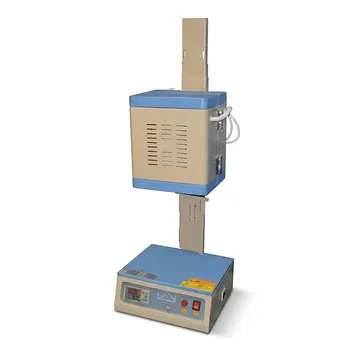
- Gas Pre-Heating Tube Furnace for High Temperature Pyrolysis Reactors and Material Science Research
- 1500C Three Zone Vertical Pyrolysis Furnace for Nanoparticle Synthesis and Advanced Oxide Coating
- 1200C Max Dual Sliding Tube Furnace with 50 mm Tube Flanges for CVD
- 5 Inch Two Zone Rotary Tube Furnace 1100C for Powder CVD and Material Synthesis
- 1200C Sliding Tube Furnace for Rapid Thermal Processing and CVD Graphene Growth with 100mm OD Capacity
People Also Ask
- What is the function of a preheated high-temperature tube furnace in the rapid pyrolysis synthesis of carbon nitride films?
- What is the role of a high-temperature tube furnace in coal powder pyrolysis benchmarking? Achieve Precise Baselines.
- Why is high-precision temperature control essential in a pyrolysis furnace? Master Pd NPs/NO-C Catalyst Synthesis
- How does a high-temperature tube furnace facilitate the pyrolysis of PR-ZS hybrid aerogels into carbon aerogels?
- How is a laboratory tube heating furnace applied during the evaluation of denitration catalysts? Essential Guide

Tech Team · ThermUnits
Last updated on Jun 02, 2026
Related Products
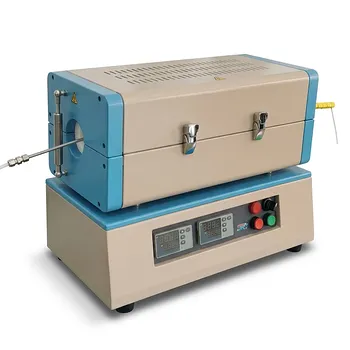
Gas Pre-Heating Tube Furnace for High Temperature Pyrolysis Reactors and Material Science Research
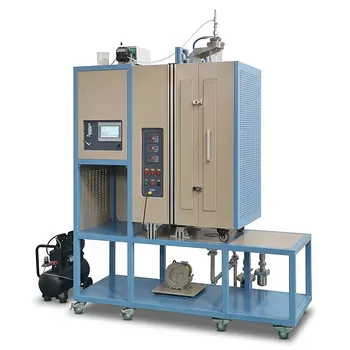
1500C Three Zone Vertical Pyrolysis Furnace for Nanoparticle Synthesis and Advanced Oxide Coating
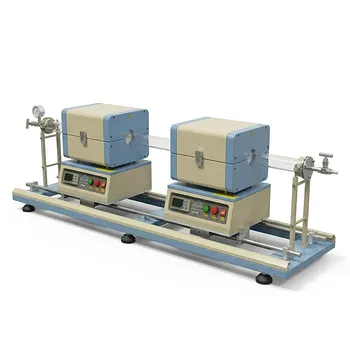
1200C Max Dual Sliding Tube Furnace with 50 mm Tube Flanges for CVD
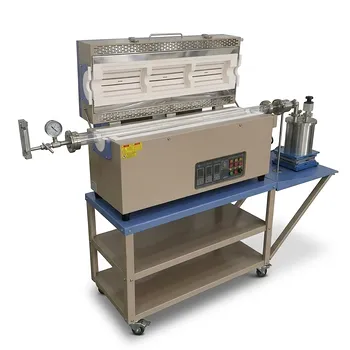
5 Inch Two Zone Rotary Tube Furnace 1100C for Powder CVD and Material Synthesis
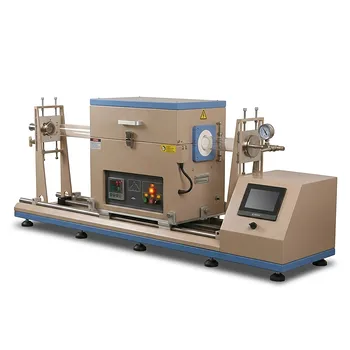
1200C Sliding Tube Furnace for Rapid Thermal Processing and CVD Graphene Growth with 100mm OD Capacity
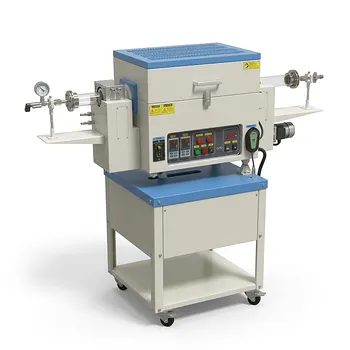
4 Inch Two Zone Rotary CVD Tube Furnace for High Temperature Battery Material Synthesis and Advanced Material Calcination

High Temperature 1700C Vertical Tube Furnace for Powder Spherification and Material Sintering
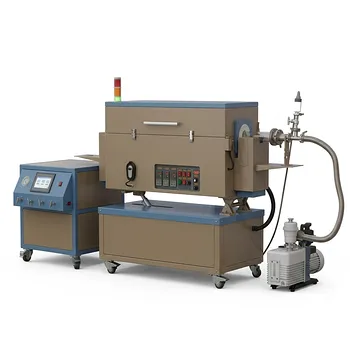
5 Inch Three Zone Rotary Tube Furnace with Integrated Gas Delivery System and 1200C Capability for Advanced Material CVD Processing

Compact High Temperature 1600C Tube Furnace with 50mm Alumina Tube and Vacuum Flanges for Material Sintering
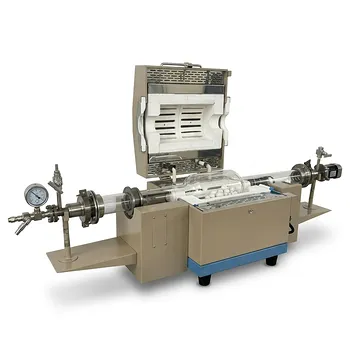
High Temperature Rotary Tube Furnace with Integrated Ball Milling and Gas Flow Function for Powder Nitriding
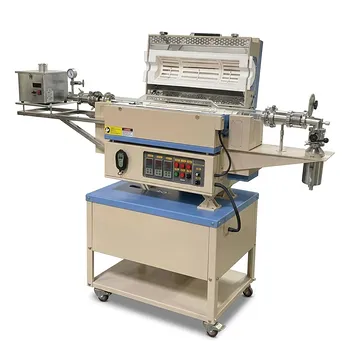
5 Inch Rotary Tube Furnace with Automatic Feeding and Receiving System 1200C Three Zone CVD Powder Processing
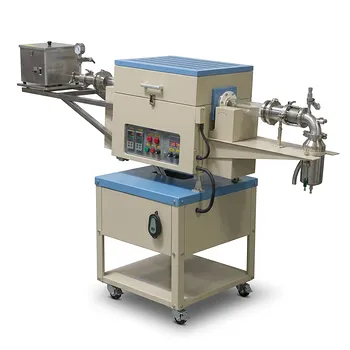
Two Zone Rotary CVD Furnace with Automatic Feeding and Receiving System for Powder Processing
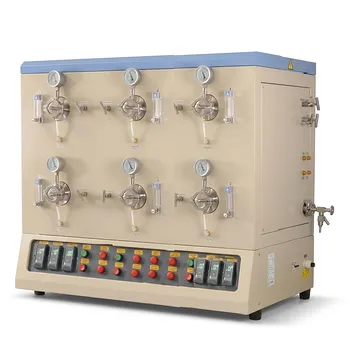
1200C High Throughput Multi Channel Tube Furnace with 50mm Quartz Tubes for Annealing and Material Phase Diagram Research
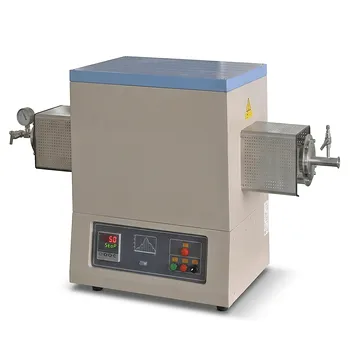
High Temperature 1700C Tube Furnace with 4 Inch OD Alumina Tube and Vacuum Sealing Flanges

Vertical 1700C Vacuum and Atmosphere Tube Furnace with 80mm Alumina Tube
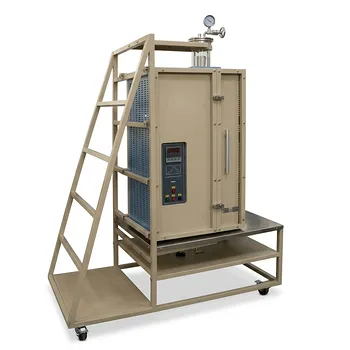
Split Vertical Tube Furnace with 1200C Quartz Tube and Stainless Steel Vacuum Flanges for Rapid Thermal Processing

1800C High Temperature Compact Vacuum Tube Furnace with 60mm OD Alumina Tube and Kanthal MoSi2 Heating Elements

High Temperature 1700C Benchtop Tube Furnace with 5 Inch Heating Zone High Purity Alumina Tube and Vacuum Sealing Flanges

1100C Tube Furnace with Vacuum Flange and Programmable Temperature Controller for Material Science and Industrial Heat Treatment