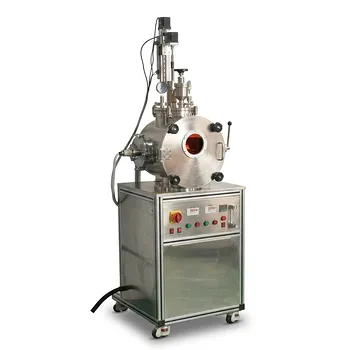
Why must Ti-Al-Si-V alloy fabrication use Argon gas? Ensure Purity and Prevent Oxidation in High-Performance Alloys
Updated 3 months ago
The use of Argon gas is a non-negotiable requirement for the fabrication of Ti-Al-Si-V alloys. Argon serves as a chemically inert shield that prevents the high-temperature melt pool from reacting with oxygen and nitrogen in the air. Without this protective atmosphere, the titanium and aluminum components would oxidize instantly, leading to brittle structures and failed mechanical properties.
Argon gas acts as both a protective barrier and a pressure stabilizer, ensuring the chemical purity of the alloy. By eliminating reactive gases and controlling the environment, it preserves the precise elemental ratios and structural integrity required for high-performance applications.
Preventing Atmospheric Contamination
Titanium’s High Chemical Reactivity
Titanium is extremely reactive with oxygen and nitrogen, especially when it reaches the high temperatures required for melting. If exposed to air, it forms interstitial impurities that significantly harden the metal but make it dangerously brittle.
Shielding the Melt Pool
During laser processing, the Argon gas creates a localized, inert environment around the molten metal. This "shield" prevents the formation of oxides and nitrides, ensuring the alloy retains its intended ductility and strength.
Ensuring Material Purity
Maintaining a pure Argon environment is the only way to guarantee that the final Ti-Al-Si-V alloy meets strict chemical specifications. Even trace amounts of atmospheric contamination can lead to microscopic defects that cause catastrophic part failure under stress.
Maintaining Precise Alloy Composition
Inhibiting Elemental Volatilization
High-energy fabrication processes can cause certain elements to vaporize or "boil off" before they can solidify. A pressurized Argon atmosphere (typically around 0.5 atm) helps suppress this volatilization, keeping the elemental ratios of Silicon and Vanadium stable.
The Importance of High-Purity Gas
Standard industrial Argon is often insufficient for these sensitive alloys; experts typically utilize high-purity Argon (99.9995%). This level of purity ensures that the gas itself does not introduce moisture or other contaminants into the fabrication chamber.
Vacuum Integration
The process usually begins by vacuuming the chamber to remove all residual air before backfilling with Argon. This two-step process ensures that the protective atmosphere is not diluted by trapped pockets of oxygen or nitrogen.
Understanding the Trade-offs and Pitfalls
Operational Complexity and Cost
Implementing a high-purity Argon environment significantly increases the cost of fabrication. It requires specialized airtight chambers, high-vacuum pumps, and a continuous supply of expensive, high-grade gas.
The Risk of Turbulent Flow
Simply filling a chamber is rarely enough; the flow of the gas must be carefully managed. If the Argon flow is too turbulent, it can actually pull in trace contaminants or destabilize the melt pool, leading to surface irregularities.
Monitoring Requirements
Relying on Argon requires constant monitoring of oxygen sensors within the chamber. If a seal fails and oxygen levels rise even slightly, the entire batch of Ti-Al-Si-V alloy may need to be scrapped due to internal oxidation.
Best Practices for Atmospheric Control
How to Apply This to Your Project
- If your primary focus is structural integrity: Ensure a deep vacuum cycle is performed before Argon injection to eliminate all trace nitrogen.
- If your primary focus is compositional precision: Maintain a consistent positive pressure of Argon throughout the cooling phase to prevent elemental loss.
- If your primary focus is minimizing defects: Use a laminar flow gas delivery system to provide a steady, non-disruptive shield over the melt pool.
By strictly controlling the processing atmosphere with Argon gas, you transform a highly reactive chemical process into a controlled manufacturing science that yields superior material performance.
Summary Table:
| Role of Argon | Benefit for Ti-Al-Si-V Alloy | Essential Requirement |
|---|---|---|
| Atmospheric Shield | Prevents oxidation and nitrification | Prevents structural brittleness |
| Pressure Stabilizer | Inhibits elemental volatilization (Si/V) | Maintains precise chemical ratios |
| Inert Environment | Eliminates reactive contaminants | Use of high-purity (99.9995%) gas |
| Vacuum Integration | Removes residual oxygen/nitrogen | Deep vacuum cycle before backfill |
Achieve Superior Alloy Integrity with THERMUNITS
Fabricating sensitive materials like Ti-Al-Si-V demands absolute atmospheric control and precision. THERMUNITS is a leading manufacturer of high-temperature laboratory equipment specifically designed for material science and industrial R&D.
We provide the advanced thermal solutions necessary to prevent contamination and ensure structural perfection, including:
- Vacuum & Atmosphere Furnaces
- CVD/PECVD Systems for advanced coating
- Vacuum Induction Melting (VIM) Furnaces
- Muffle, Tube, and Rotary Furnaces
Don't let oxidation compromise your research. Enhance your lab's capabilities with equipment engineered for high-purity environments. Contact our technical experts today to discuss your project requirements!
References
- Sadiq Abiola Raji, Monnamme Tlotleng. Assessing the nanomechanical, wear and thermal stability of Ti-Al-Si-V alloys produced via laser engineered net shaping (LENS) in-situ alloying. DOI: 10.1051/matecconf/202440603001
Mentioned Products
- High Temperature Muffle Furnace with Alloy Chamber for Debinding and Sintering Applications
- High Temperature Induction Melting System with Integrated Ultra High Purity Glove Box for Metallic Alloy Processing
- 1100C High Temperature Vacuum Crucible Furnace with Quartz Chamber for Thermal Processing and Sintering
- Vertical Vacuum Furnace 1100C High Temperature 8 Inch Quartz Chamber Water Cold Flange System
- High Temperature Cold Wall High Vacuum Chamber Furnace 1400C for Advanced Material Processing
People Also Ask
- What role does a high-temperature muffle furnace play in evaluating the mineral composition of rock samples? LOI & XRF Guide
- What role does a high-temperature muffle furnace play in the synthesis of Melem precursors? Precision Polymerization.
- What is the purpose of using muffle or tube furnaces in glass synthesis? Achieve Precise Melt-Quenching & Homogeneity
- Why is annealing in a high-temperature muffle furnace necessary for SiO2/Si substrate pretreatment before monolayer WS2 synthesis?
- What is the role of a high-temperature muffle furnace in the synthesis of graphitic carbon nitride (g-C3N4)? - Guide

Tech Team · ThermUnits
Last updated on Jun 02, 2026
Related Products
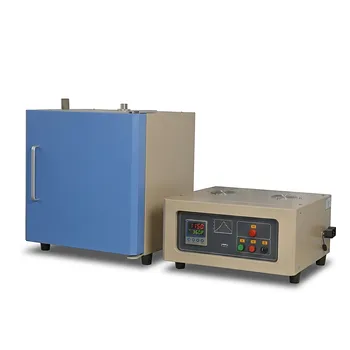
High Temperature Muffle Furnace with Alloy Chamber for Debinding and Sintering Applications
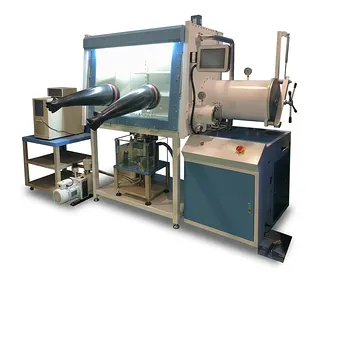
High Temperature Induction Melting System with Integrated Ultra High Purity Glove Box for Metallic Alloy Processing
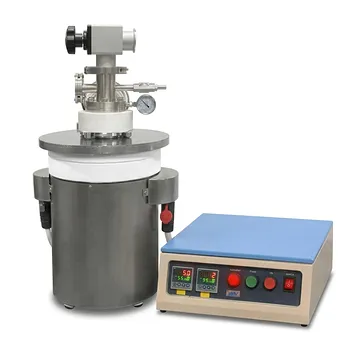
1100C High Temperature Vacuum Crucible Furnace with Quartz Chamber for Thermal Processing and Sintering
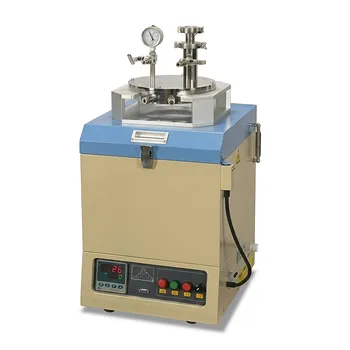
Vertical Vacuum Furnace 1100C High Temperature 8 Inch Quartz Chamber Water Cold Flange System
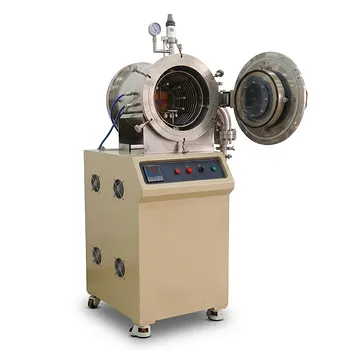
High Temperature Cold Wall High Vacuum Chamber Furnace 1400C for Advanced Material Processing
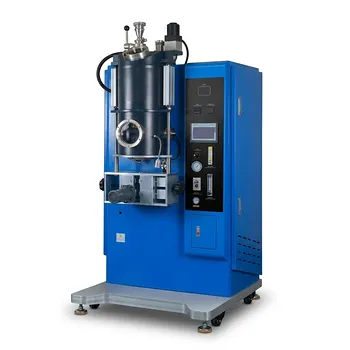
Atmosphere Controlled Continuous Casting Furnace with Secondary Charge Function for Induction Melting and Metal Alloy Wire Production