The Architecture of Ash: Engineering the Transition from Biomass to Carbon
Aug 16, 2026
The Paradox of Transformation
In nature, heat is usually a precursor to destruction. When biomass meets fire, the result is chaos—a rapid oxidation that leaves behind little more than mineral ash and CO2.
But in material science, we seek the "Engineer’s Paradox." We want the heat, but we refuse the fire.
To transform organic fibers into high-performance carbon skeletons, we must subject them to temperatures exceeding 800°C while simultaneously denying them the very oxygen that makes heat dangerous. This is the art of anaerobic pyrolysis, and it requires a system of absolute control.
The Atmosphere as a Shield
Oxygen is the enemy of carbonization. In an open environment, biomass is fuel. In a high-temperature tube furnace, it is a precursor.
The introduction of industrial-grade high-purity argon serves a singular, psychological purpose for the material: it creates a "safe zone."
- Oxygen Exclusion: Argon displaces reactive gases, preventing the oxidative combustion that would otherwise turn the sample into smoke.
- Yield Preservation: By maintaining an inert environment, the furnace ensures that the mass of the biomass is converted into fixed, stable carbon rather than being lost to the atmosphere.
- Doping Potential: Within this vacuum of reactivity, researchers can introduce specific "impurities"—boron or nitrogen—to create electrocatalytic active sites that would be impossible to maintain in a standard environment.
Kinetic Discipline: The Power of Programmed Heat
Carbonization is not a single event; it is a series of chemical negotiations. If you heat a material too quickly, the internal pressure of escaping gases will shatter the very microstructures you are trying to build.
Atul Gawande often speaks of the "checklist" as a tool for managing complexity. In thermal processing, that checklist is the Heating Curve.
- Dehydration Phase: The gentle removal of moisture to prevent structural cracking.
- Degassing Phase: The volatile components begin their exit, leaving behind a network of micropores.
- Structural Reorganization: At 800°C+, the carbon atoms stop wandering and begin to align into high-strength skeletons or conductive membranes.
Precision is the difference between a heap of useless charcoal and a high-conductivity supercapacitor anode.
The Geometry of the Tube
Why is the tube furnace the instrument of choice for this particular alchemy? It is a matter of fluid dynamics and thermal consistency.
The tube design allows for a constant, laminar flow of argon. As the biomass decomposes, it releases "trash"—volatile impurities that, if left to linger, would contaminate the surface of the carbon. The continuous flow of gas acts like a conveyor belt, carrying these impurities away and ensuring the elemental purity of the final product.
Engineering Trade-offs
In the spirit of Morgan Housel’s "No Free Lunch" philosophy, every technical choice in carbonization involves a trade-off.
| Factor | The Choice | The Consequence |
|---|---|---|
| Heating Rate | Fast (30 K/min) | High throughput, but risks collapsing the pore structure. |
| Heating Rate | Slow (5 K/min) | Superior pore integrity and surface area, but higher energy cost. |
| Gas Choice | Nitrogen | Affordable, but potentially reactive with certain precursors. |
| Gas Choice | Argon | Truly inert and reliable, but carries a higher operational price. |
| Final Temp | >1000°C | Maximum conductivity and graphitization; high wear on heating elements. |
Designing for Your Specific Outcome
The goal dictates the system. If your objective is high porosity for filtration, your priority is the ramp rate. If your goal is electrical conductivity for energy storage, your priority is the soak temperature.
Success in material R&D is not about having the hottest furnace; it is about having the most predictable one. It is about the "engineer’s romance"—the ability to repeat a process 1,000 times and get the exact same molecular architecture every single time.
Precision Thermal Solutions by THERMUNITS
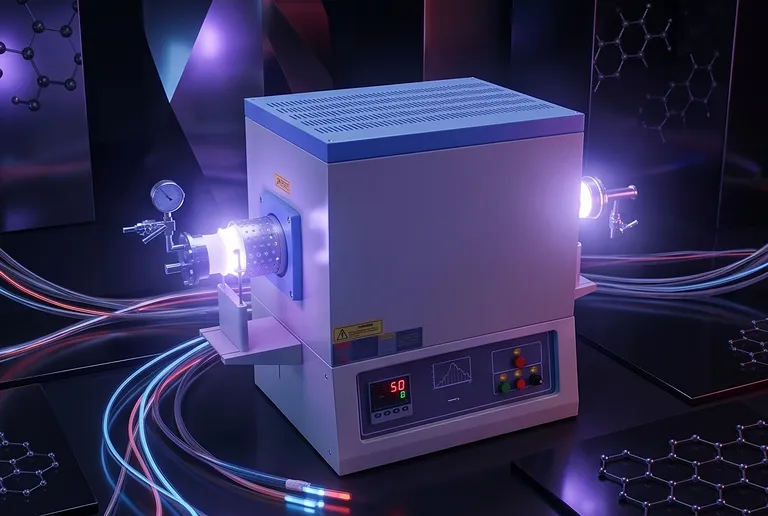
At THERMUNITS, we understand that a furnace is more than a heating element; it is a reactor where the future of material science is forged. We provide the high-temperature infrastructure required for the most demanding industrial R&D.
Our portfolio spans the entire spectrum of thermal processing:
- Tube & Atmosphere Furnaces for precise gas-controlled carbonization.
- Vacuum & Muffle Furnaces for diverse heat treatment needs.
- Advanced CVD/PECVD Systems for thin-film and nanomaterial synthesis.
- Rotary & Hot Press Furnaces for specialized material densification.
Whether you are scaling biomass-to-carbon production or exploring the frontiers of electrocatalysis, our systems provide the stability and control your research demands.
Quick Links
Suggested Products
Gas Pre-Heating Tube Furnace for High Temperature Pyrolysis Reactors and Material Science Research 1500C Three Zone Vertical Pyrolysis Furnace for Nanoparticle Synthesis and Advanced Oxide Coating High Temperature Tube Furnace 1500C with Sliding Flanges and 50mm OD for Rapid Thermal Processing Fast Heating and Cooling High Temperature 1700C Vertical Tube Furnace for Powder Spherification and Material Sintering Compact High Temperature 1600C Tube Furnace with 50mm Alumina Tube and Vacuum Flanges for Material Sintering
ThermUnits
Last updated on Apr 14, 2026
Related Products
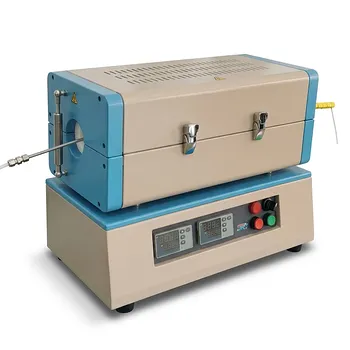
Gas Pre-Heating Tube Furnace for High Temperature Pyrolysis Reactors and Material Science Research
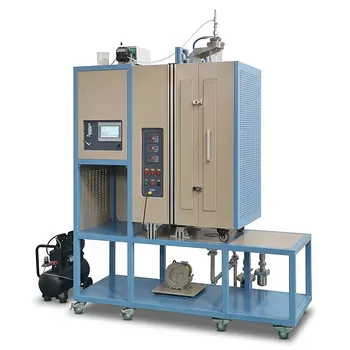
1500C Three Zone Vertical Pyrolysis Furnace for Nanoparticle Synthesis and Advanced Oxide Coating
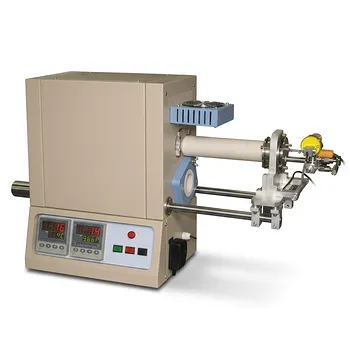
High Temperature Tube Furnace 1500C with Sliding Flanges and 50mm OD for Rapid Thermal Processing Fast Heating and Cooling

High Temperature 1700C Vertical Tube Furnace for Powder Spherification and Material Sintering

Compact High Temperature 1600C Tube Furnace with 50mm Alumina Tube and Vacuum Flanges for Material Sintering

High Temperature 1700C Tube Furnace with High Vacuum Turbomolecular Pump System and Multi Channel Mass Flow Controller Gas Mixer
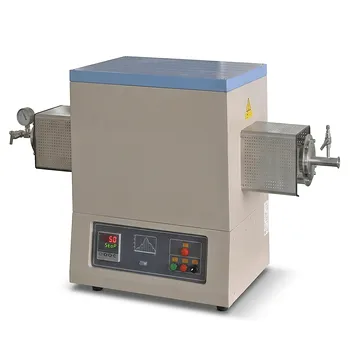
High Temperature 1700C Tube Furnace with 4 Inch OD Alumina Tube and Vacuum Sealing Flanges

High Temperature 1700C Benchtop Tube Furnace with 5 Inch Heating Zone High Purity Alumina Tube and Vacuum Sealing Flanges
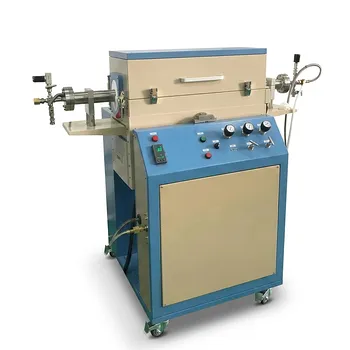
High Temperature Rocking Tube Furnace 1700°C Alumina Processing Tube with Precision Oscillation for Material Synthesis

1800C High Temperature Compact Vacuum Tube Furnace with 60mm OD Alumina Tube and Kanthal MoSi2 Heating Elements
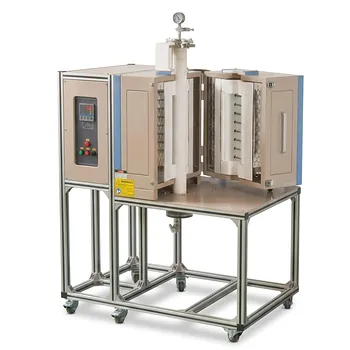
High Temperature 1700C Vertical Split Tube Furnace for Material Quenching and Single Crystal Growth

1750°C High Temperature Benchtop Vacuum Atmosphere Tube Furnace with Kanthal Super 1800 Heating Elements and 60mm Alumina Processing Tube
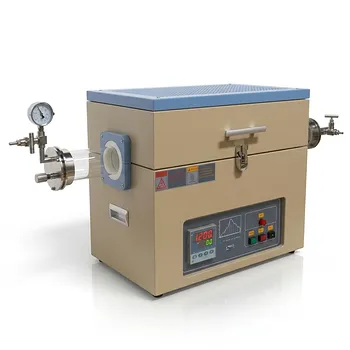
High Temperature 1200C Split Tube Furnace with Optional Quartz Tube Sizes and Vacuum Sealing Flanges for Material Science Research
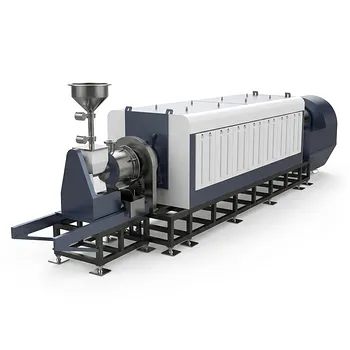
Electric Rotary Kiln Small Rotary Furnace Biomass Pyrolysis Plant

High Temperature Automated 5 Inch Tube Furnace for Autonomous Material Research and Advanced Laboratory R&D
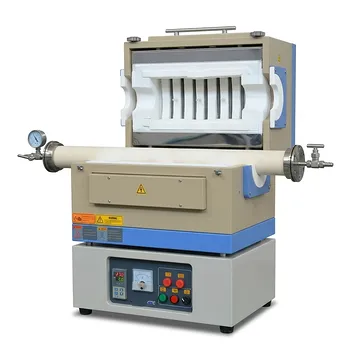
High Temperature 1600C Split Tube Furnace Vacuum Flanges Valves Optional 60mm 80mm Alumina Tube
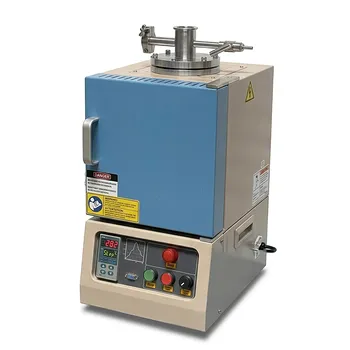
High Temperature Hybrid Muffle and Tube Furnace with Vacuum Capability and PID Control
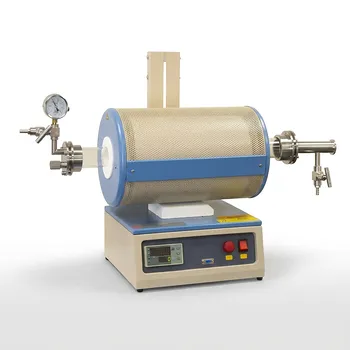
1100C Tube Furnace with Vacuum Flange and Programmable Temperature Controller for Material Science and Industrial Heat Treatment
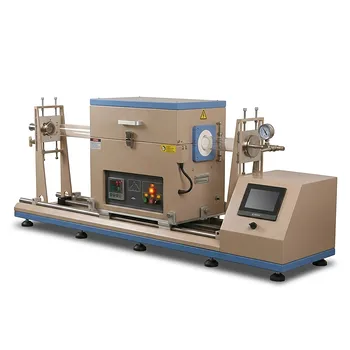
1200C Sliding Tube Furnace for Rapid Thermal Processing and CVD Graphene Growth with 100mm OD Capacity