The Architecture of Order: Thermal Refinement in the Age of Solid-State Physics
Jul 07, 2026
The Invisible Synthesis
In the world of advanced materials, the first act—chemical synthesis—is often the loudest but least complete. When $NaSbS_2$ (sodium antimony sulfide) emerges from its initial reaction, it is frequently a "ghost" of its potential self. It is amorphous, metastable, and crowded with residual organic solvents that act as structural noise.
The real work begins in the quiet.
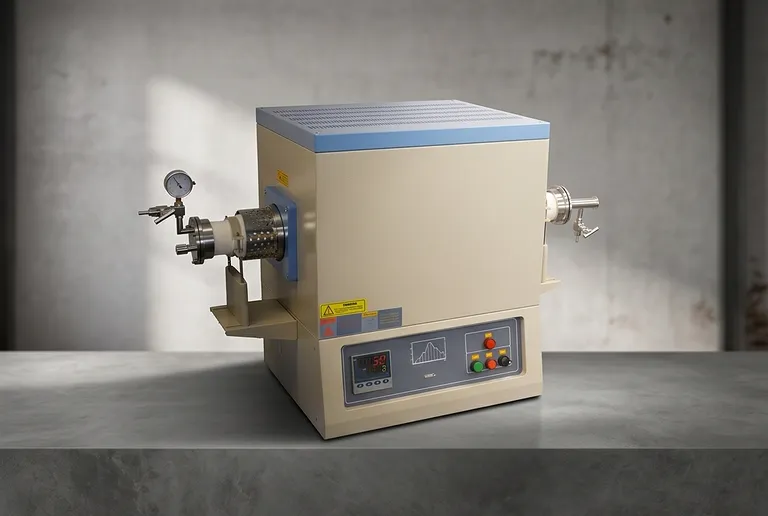
The horizontal tube furnace is not merely a heater; it is a structural refinery. It provides the controlled, linear environment necessary to guide chaotic atoms into the rigorous geometry of a monoclinic or cubic lattice. Without this post-heat treatment, the material remains a scientific curiosity rather than a functional component.
The Kinetic Barrier and the Search for Stability
Overcoming Atomic Inertia
Amorphous materials are trapped in a state of high energy. They want to reach stability, but they lack the "activation energy" to move. The tube furnace provides this energy in a highly calibrated stream.
By maintaining a precise thermal profile—often centered around 300 °C—the furnace allows atoms to vibrate, rotate, and eventually settle into their most stable lattice positions. This is the transition from chaos to crystallinity.
The Psychology of Phase Control
In materials science, the "phase" is the personality of the substance. For $NaSbS_2$, achieving the monoclinic or cubic phase is the difference between an insulator and a high-performance semiconductor.
Researchers use the horizontal tube furnace to map the "Phase Transition Kinetics." By adjusting ramp rates, they observe exactly when a material decides to transform. It is a slow-motion study of structural evolution.
Engineering the Atmosphere: A Shield Against Decay
The War on Oxygen
Sulfides like $NaSbS_2$ are chemically fragile. At high temperatures, oxygen and moisture are not just impurities; they are predators. A single leak can turn a high-purity batch into a degraded oxide.
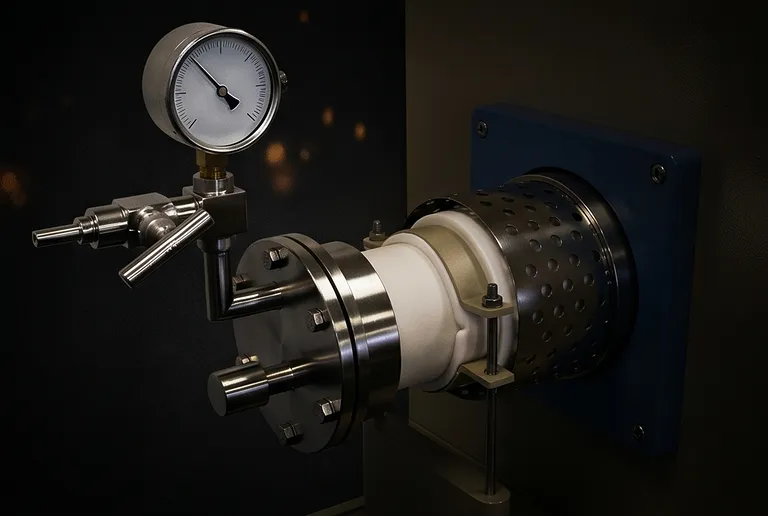
The horizontal design is chosen for its "seal-ability." Equipped with vacuum-tight flanges, it allows for a continuous, laminar flow of high-purity argon. This creates a sanctuary—an anaerobic environment where the material can refine without the risk of oxidation.
The Problem of Volatility
Heating a material also risks losing it. Stoichiometric ratios are delicate. If a furnace has "hot spots" or uneven thermal fields, volatile elements may sublime, escaping the sample and leaving behind a chemically skewed product.
Consistency in the thermal field ensures that what you put into the crucible is what you take out, minus the impurities.
The Hidden Costs of Thermal Gradients
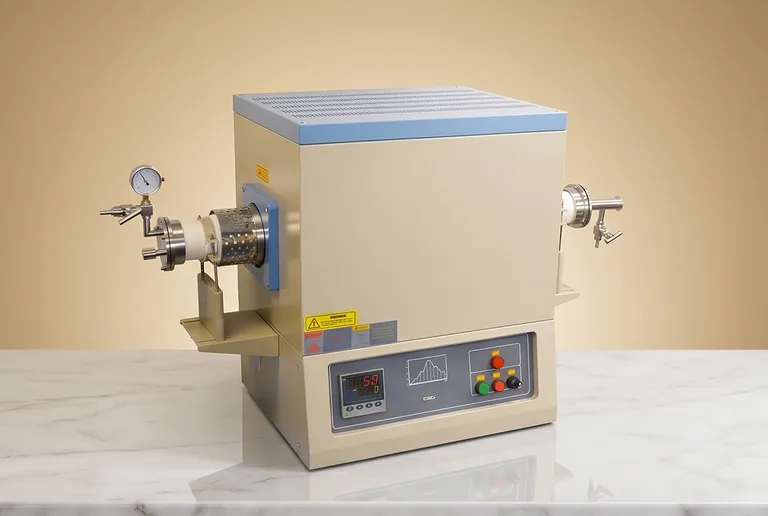
Systemic excellence requires acknowledging systemic flaws. No furnace is perfectly uniform.
- Zone Variance: The center of the tube is the "sweet spot." Moving toward the ends introduces thermal gradients that can lead to uneven crystallization.
- Gas-Induced Cooling: The very gas used to protect the material can inadvertently cool the surface, creating a temperature differential between the core and the exterior of the sample.
- Material Compatibility: At high heat, the tube itself (Quartz or Alumina) becomes a participant in the chemistry. Choosing the wrong tube material can lead to "wall reactions" that contaminate the research.
Strategic Decision-Making in the Lab
How you use the furnace depends entirely on your terminal goal. There is no "one size fits all" profile.
| Objective | Critical Variable | Strategy |
|---|---|---|
| Phase Purity | Dwell Time | Slow ramps and long holds at 300 °C to ensure lattice completion. |
| Solvent Removal | Gas Flow Rate | High initial flow of Argon to sweep away volatilized organic residues. |
| Ionic Conductivity | Temperature Precision | Exacting control to reach high-conductivity rhombohedral phases. |
| Mechanical Stability | Cooling Rate | Linear cooling to eliminate internal processing stresses. |
Precision as a Service
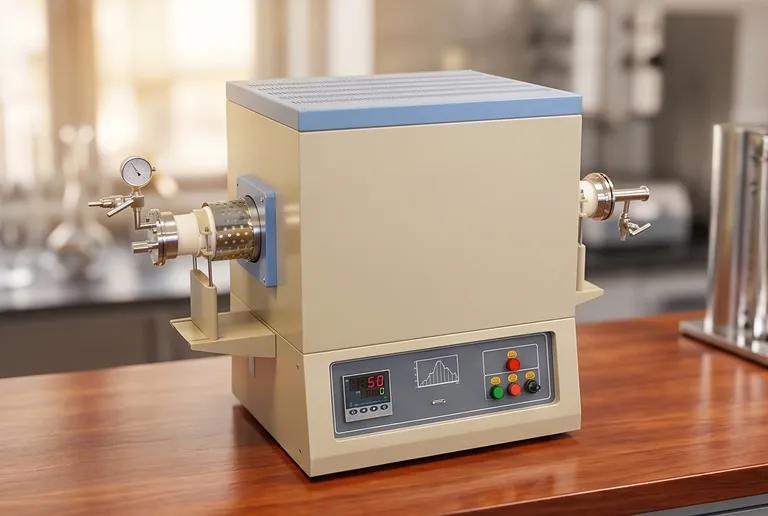
At THERMUNITS, we understand that in the lab, "close enough" is the enemy of discovery. Our horizontal tube furnaces are engineered to solve the systemic challenges of material refinement—providing the thermal stability, atmospheric integrity, and vacuum performance required for the next generation of solid-state electrolytes and semiconductors.
Whether you are refining $NaSbS_2$, experimenting with CVD/PECVD systems, or pushing the limits of Vacuum Induction Melting (VIM), our equipment serves as the bridge between a raw precursor and a perfected material.
Quick Links
Suggested Products
1200°C 10-Zone Split Tube Furnace with Horizontal and Vertical Mounting for Multi-Zone Thermal Gradients and Large Diameter Material Processing Multi Position Tube Furnace 1100C for Laboratory Material Research and Advanced Industrial Thermal Processing Ten Zone Multi Orientation Laboratory Tube Furnace for 1200C High Temperature Gradient Thermal Processing Vertical 1700C Vacuum and Atmosphere Tube Furnace with 80mm Alumina Tube Split Vertical Tube Furnace with 1200C Quartz Tube and Stainless Steel Vacuum Flanges for Rapid Thermal Processing
ThermUnits
Last updated on Apr 14, 2026
Related Products
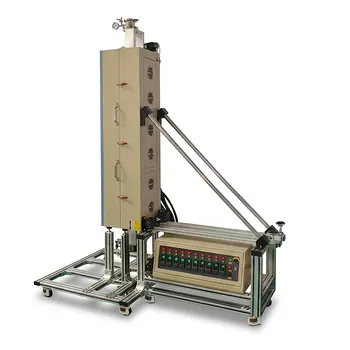
1200°C 10-Zone Split Tube Furnace with Horizontal and Vertical Mounting for Multi-Zone Thermal Gradients and Large Diameter Material Processing
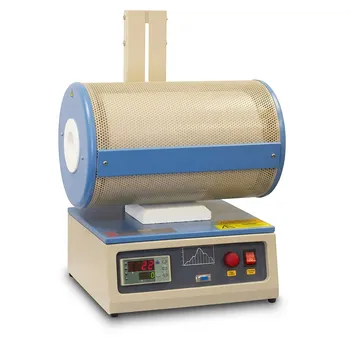
Multi Position Tube Furnace 1100C for Laboratory Material Research and Advanced Industrial Thermal Processing
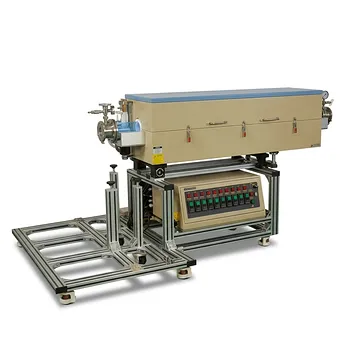
Ten Zone Multi Orientation Laboratory Tube Furnace for 1200C High Temperature Gradient Thermal Processing

Vertical 1700C Vacuum and Atmosphere Tube Furnace with 80mm Alumina Tube
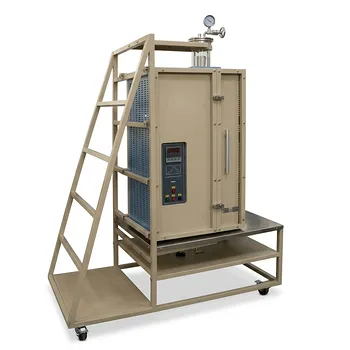
Split Vertical Tube Furnace with 1200C Quartz Tube and Stainless Steel Vacuum Flanges for Rapid Thermal Processing
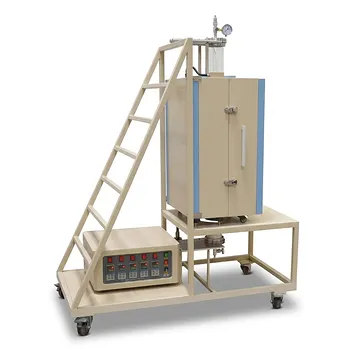
Five Zone Split Vertical Tube Furnace 1200C Max with 4 Inch Quartz Tube and Stainless Steel Vacuum Flanges

1200°C 5 Inch Vertical Quartz Tube Furnace with Stainless Steel Vacuum Flanges
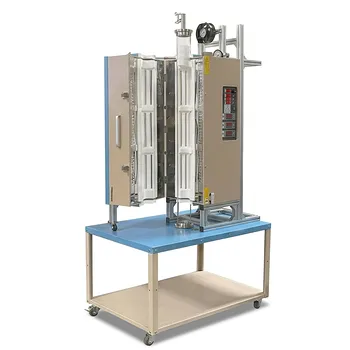
1200C Three Zone Split Vertical Tube Furnace 4 Inch Quartz Tube Stainless Steel Vacuum Flanges

High Temperature 1700C Vertical Tube Furnace for Powder Spherification and Material Sintering
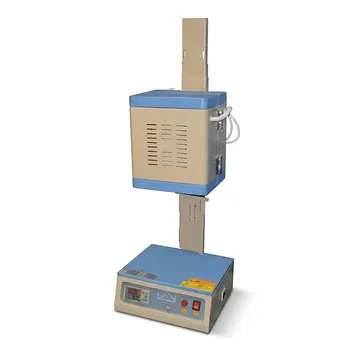
High Temperature Vertical Split Tube Furnace with PID Temperature Controller for 1 and 2 Inch Processing Tubes
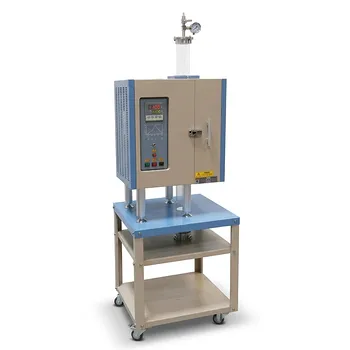
1100°C Split Vertical Tube Furnace with 80mm Quartz Tube and Stainless Steel Vacuum Flanges

Compact Vertical Split Quartz Tube Furnace with Stainless Steel Vacuum Flanges for Rapid Thermal Quenching and Controlled Atmosphere Material Processing

High Temperature 1700C Six Zone Split Tube Furnace with Alumina Tube and Water Cooled Flanges
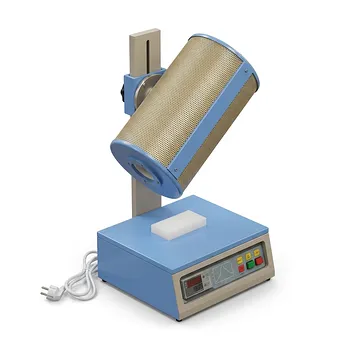
1100°C Vertical Laboratory Furnace for DIY Tubular Reactors with PID Temperature Controller
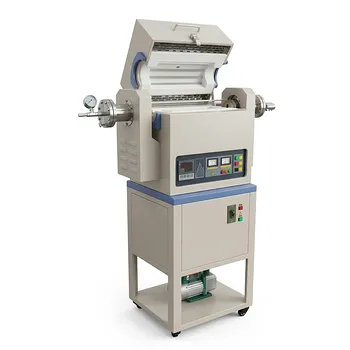
High Temperature Rotary Tilt Tubular Furnaces for Advanced Powder Sintering and Material Processing

High Temperature 1700C Benchtop Tube Furnace with 5 Inch Heating Zone High Purity Alumina Tube and Vacuum Sealing Flanges
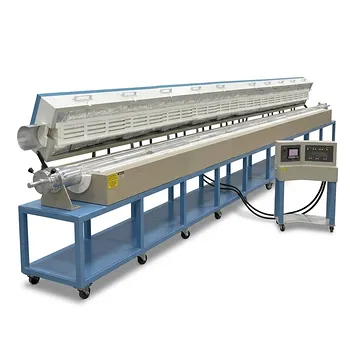
12 Zone Ultra Long Split Tube Furnace with 20 Foot Quartz Tube and 1100C Max Temperature
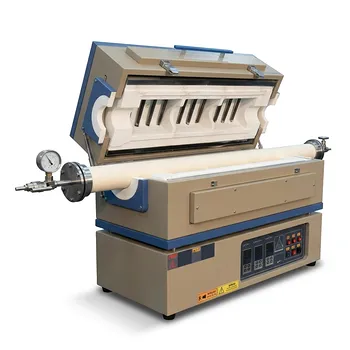
1600C Three Zone Split Tube Furnace with Alumina Tube and Vacuum Flange
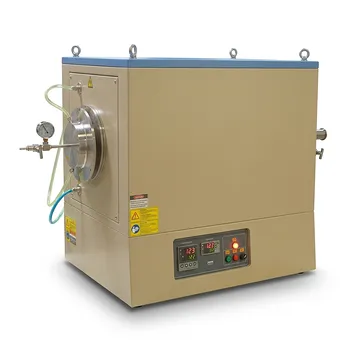
1100°C Large Diameter Quartz Tube Furnace with 24 Inch Heating Zone and Water Cooled Flanges