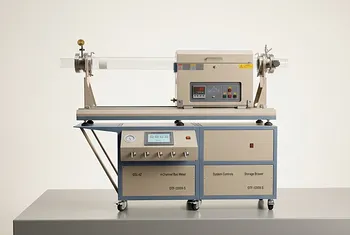
The Chemistry of Silence: Why Atmosphere Control Dictates the Fate of CNT Composites
Jun 18, 2026
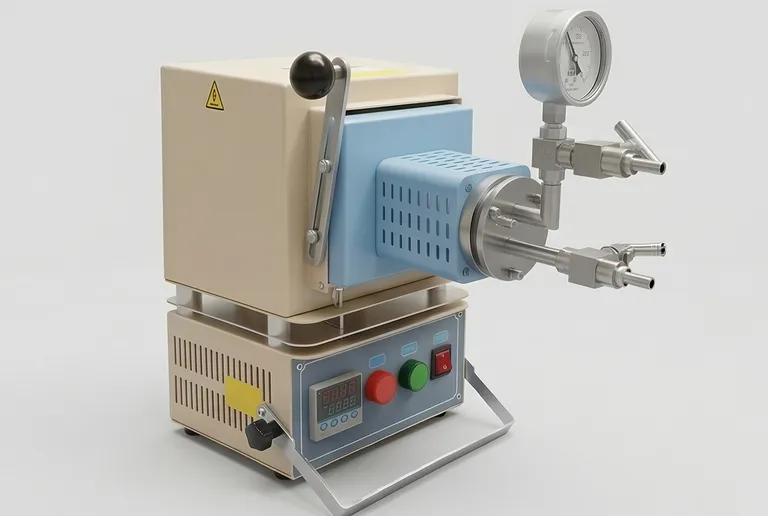
The Invisible Frontier
In material science, the difference between a breakthrough and a failure often comes down to what you cannot see.
At 800°C, the internal world of a furnace is violent. Without intervention, oxygen turns sophisticated organic frameworks into little more than expensive ash. This is the central challenge in the carbonization of DPC/CNTs (Diamond-like Polymer Carbon/Carbon Nanotubes).
To create a functional composite, we are not just heating a material; we are managing a delicate chemical transition that requires absolute silence from the surrounding environment.
The Oxidation Paradox
Heat is a catalyst for creation, but in the presence of oxygen, it becomes an agent of destruction.
When organic precursors reach the carbonization threshold, their affinity for oxygen spikes. If the atmosphere is not strictly controlled, the structure undergoes "intense oxidation."
- The Loss of Architecture: The porous network, designed for conductivity or filtration, collapses as carbon atoms bond with oxygen and escape as gas.
- Metallic Degradation: The metal-organic components within the DPC are stripped of their properties, turning into oxides rather than the active catalysts needed for structural integrity.
By purging the system with high-purity Nitrogen ($N_2$) or Argon, we create a shield. We allow the material to decompose into porous carbon while keeping its skeleton intact.
The Alchemy of Cobalt
The most "romantic" part of this engineering process is the in-situ growth of carbon nanotubes. It is a form of molecular gardening.
Within the composite, cobalt ions sit waiting. For these ions to become "seeds" for CNT growth, they must be reduced into active metal nanoparticles. This reduction is impossible in an oxygenated environment.
- Reduction: The anaerobic environment allows cobalt to shed its oxygen bonds.
- Nucleation: These pure metal nanoparticles become the foundation.
- Growth: Carbon chains reorganize around these seeds, weaving the multi-walled or single-walled structures that give the material its strength.
Engineering the Trade-offs
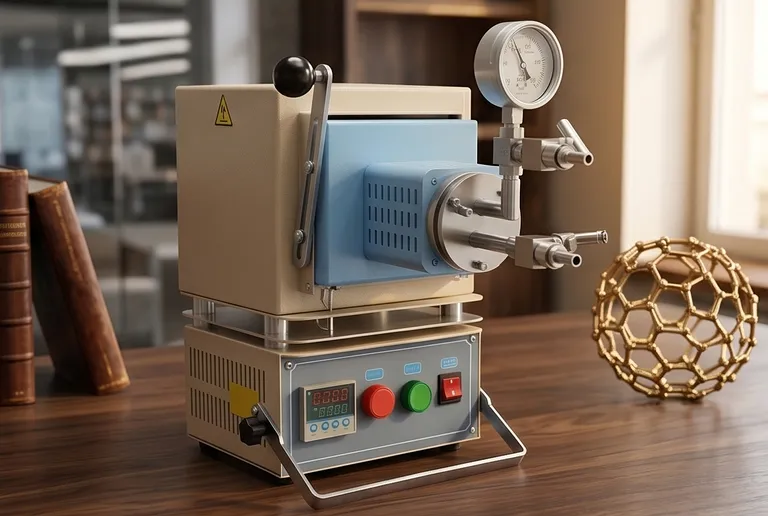
Every decision in the lab carries a psychological and financial weight. As Morgan Housel might observe, we often trade one risk for another. In the tube furnace, these trade-offs are physical.
| Variable | The Trade-off | The Risk |
|---|---|---|
| Gas Purity | Argon vs. Nitrogen | Higher cost vs. potential nitriding reactions. |
| Flow Rate | High vs. Low | Thermal gradients vs. secondary carbon deposition. |
| Cooling Phase | Rapid vs. Controlled | Time efficiency vs. surface oxidation during exit. |
A flow rate that is too high might seem "safer," but it introduces thermal gradients. It creates a temperature "noise" that leads to inconsistent CNT distribution. Precision is the balance between enough flow to remove pyrolysis byproducts and enough stillness to maintain thermal uniformity.
The Architecture of Certainty
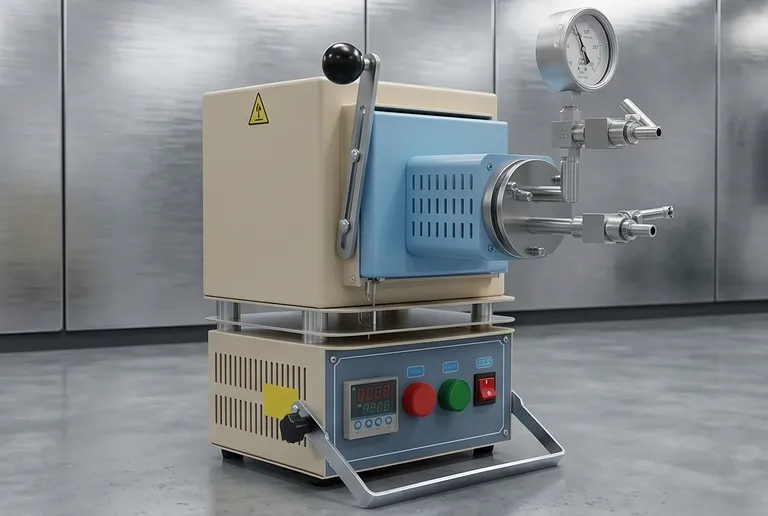
Achieving the perfect DPC/CNTs composite is not a matter of luck; it is a matter of system design.
At THERMUNITS, we build the systems that provide this silence. Whether you are prioritizing CNT density or maximizing surface porosity, the furnace must be an extension of the researcher’s intent.
Our range of Atmosphere and Vacuum Tube Furnaces are engineered to handle the complexities of DPC carbonization, ensuring that your high-temperature R&D results in functional carbon structures rather than oxidative loss.
From CVD/PECVD systems to Vacuum Induction Melting, we provide the thermal processing solutions required for the next generation of material science.
Quick Links
Suggested Products
1200C Dual Temperature Zone Slidable Tube Furnace for 2D Material Growth and TCVD Synthesis High Temperature 1200C Automatic Sliding Dual Zone Tube Furnace for 2D Transition Metal Dichalcogenides Growth and Material Sublimation Research Dual Tube 100mm 80mm CVD Sliding Furnace with 4 Channel Gas Mixing and Vacuum System High Temperature Automated 5 Inch Tube Furnace for Autonomous Material Research and Advanced Laboratory R&D Double Temperature Zone Double Cover Tube Furnace for High Temperature CVD and Vacuum Annealing
ThermUnits
Last updated on Apr 14, 2026
Related Products
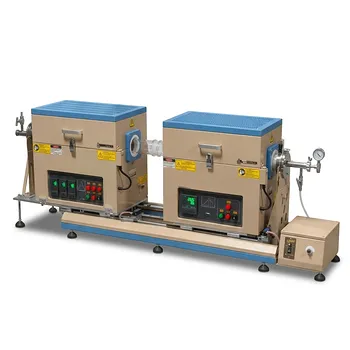
1200C Dual Temperature Zone Slidable Tube Furnace for 2D Material Growth and TCVD Synthesis
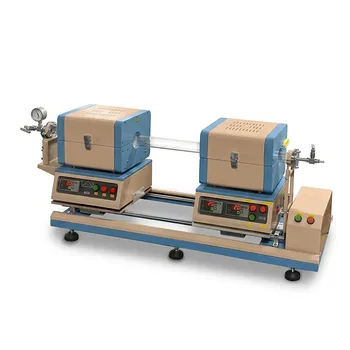
High Temperature 1200C Automatic Sliding Dual Zone Tube Furnace for 2D Transition Metal Dichalcogenides Growth and Material Sublimation Research
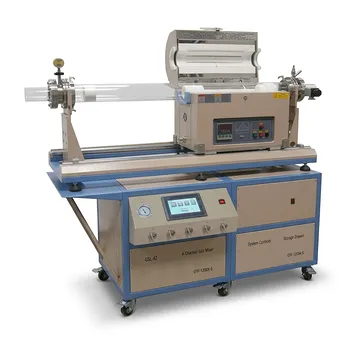
Dual Tube 100mm 80mm CVD Sliding Furnace with 4 Channel Gas Mixing and Vacuum System

High Temperature Automated 5 Inch Tube Furnace for Autonomous Material Research and Advanced Laboratory R&D
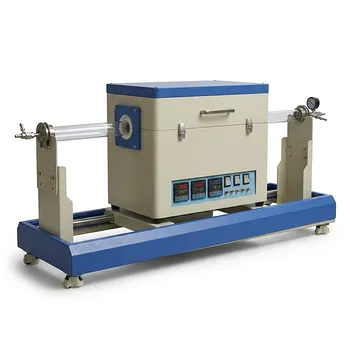
Double Temperature Zone Double Cover Tube Furnace for High Temperature CVD and Vacuum Annealing
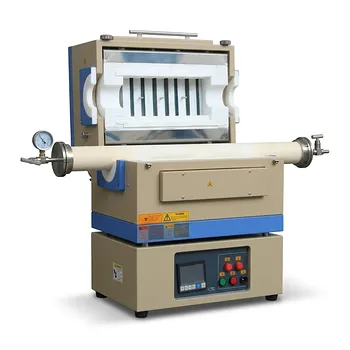
1500C Eight Zone Split Tube Furnace for Thermal Gradient Processing and Advanced Material Research

High Temperature 1700C Vertical Tube Furnace for Powder Spherification and Material Sintering
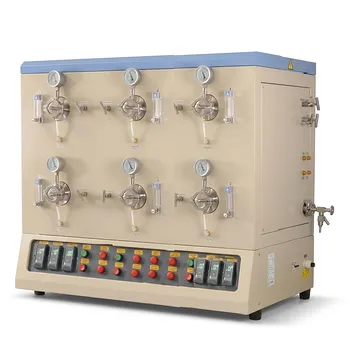
1200C High Throughput Multi Channel Tube Furnace with 50mm Quartz Tubes for Annealing and Material Phase Diagram Research
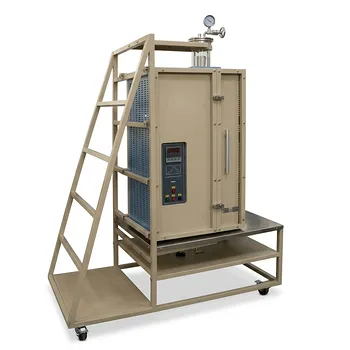
Split Vertical Tube Furnace with 1200C Quartz Tube and Stainless Steel Vacuum Flanges for Rapid Thermal Processing
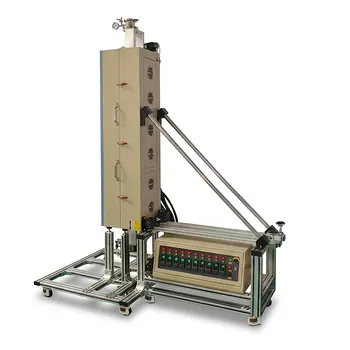
1200°C 10-Zone Split Tube Furnace with Horizontal and Vertical Mounting for Multi-Zone Thermal Gradients and Large Diameter Material Processing
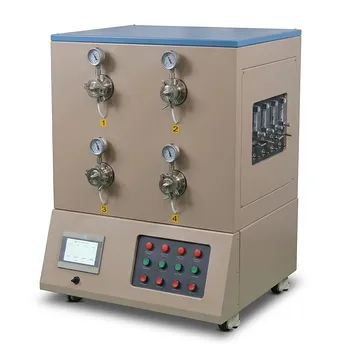
High Throughput 1200C Four Channel Tube Furnace with 3 Inch Quartz Tubes for Multi Zone Annealing and Material Research
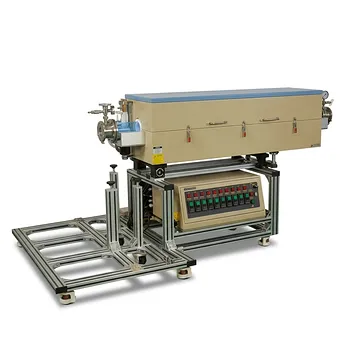
Ten Zone Multi Orientation Laboratory Tube Furnace for 1200C High Temperature Gradient Thermal Processing

1100C Tube Furnace with Vacuum Flange and Programmable Temperature Controller for Material Science and Industrial Heat Treatment

High Temperature Tube Furnace 1500C with Sliding Flanges and 50mm OD for Rapid Thermal Processing Fast Heating and Cooling
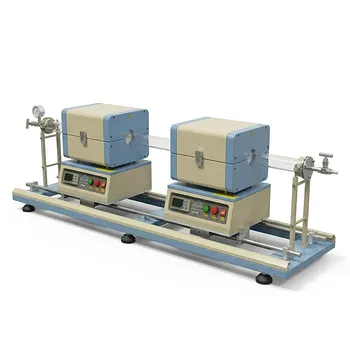
1200C Max Dual Sliding Tube Furnace with 50 mm Tube Flanges for CVD
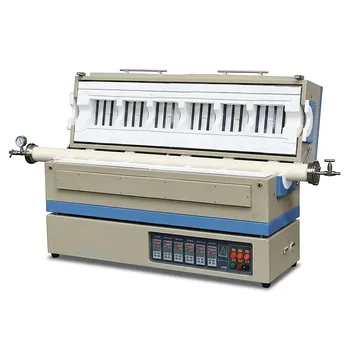
Six Zone Split Tube Furnace with Alumina Tube and Vacuum Flanges for 1500C High Temperature Thermal Processing and CVD
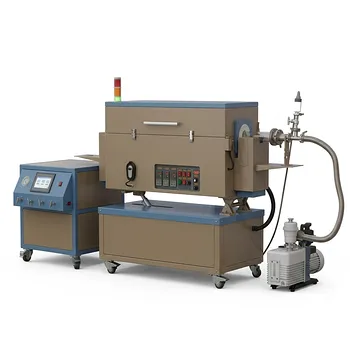
5 Inch Three Zone Rotary Tube Furnace with Integrated Gas Delivery System and 1200C Capability for Advanced Material CVD Processing
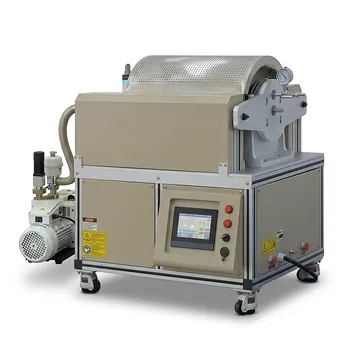
Automated 1200 C Tube Furnace for AI Material Research with 6 Inch OD and Sliding Flange
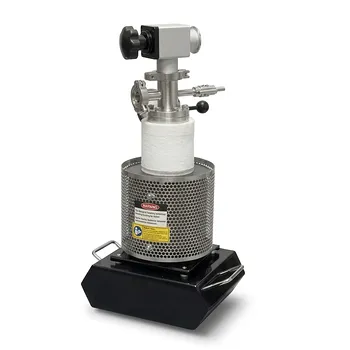
High Temperature 1100C Compact Top Loading Vertical Vacuum Tube Furnace for High Vacuum Noble Metal Melting and Material Research