The Chemistry of Silence: Ensuring Integrity in High-Entropy Carbide Oxidation
May 23, 2026
The Invisible Variable
In material science, silence is a virtue.
When testing Ti-Zr-Ta(Hf) high-entropy carbides at 1350 °C, the environment is violent. Atoms are migrating, oxide scales are thickening, and mass is shifting. In this chaos, the researcher seeks one thing: the truth of the material’s intrinsic behavior.
The greatest threat to this truth isn't the temperature—it is the container. A reaction between the sample and the crucible is an "artifact," a systematic lie that corrupts the data.
High-purity alumina (Al2O3) serves as the "silent witness." It provides a chemically neutral stage, ensuring that every milligram of mass gain recorded is the result of the carbide's oxidation, not a hidden chemical marriage with the crucible.
The Thermodynamic Neutrality of 99.9% Alumina
At extreme temperatures, thermodynamics dictates that everything wants to react. Refractory carbides are particularly aggressive.
Preventing the Chemical Marriage
Standard labware often contains silica or binders. At 1350 °C, these impurities become mobile. They can migrate into the Ti-Zr-Ta(Hf) powder, forming complex silicides or intermetallic compounds.
High-purity alumina stays aloof. Its exceptional chemical inertness means:
- Zero Contamination: No foreign elements leach into the high-entropy system.
- Phase Purity: The XRD (X-ray Diffraction) peaks you see belong to your sample, not a crucible-sample hybrid.
- Easy Harvesting: Because the oxide scale does not bond to the alumina wall, spalled particles can be collected quantitatively.
The Purity of the Mass Signal
In isothermal oxidation, the "mass signal" is the heartbeat of the experiment. If the crucible loses mass through evaporation or gains it through gas absorption, the parabolic rate constant ($k_p$)—the holy grail of oxidation kinetics—is rendered useless.
Alumina exhibits negligible mass fluctuations. When the balance moves, you know it is the carbide breathing in oxygen.
The Engineering Trade-off: Fragility vs. Fidelity
Precision has a price. Understanding the limitations of high-purity alumina is as important as understanding its benefits.
| Feature | Technical Reality | Research Impact |
|---|---|---|
| 99.9% Purity | Absence of glassy phase binders. | Prevents sample-container sticking. |
| Thermal Stability | Maintains geometry at 1350 °C. | Ensures consistent gas flow dynamics. |
| Thermal Shock Sensitivity | Low tolerance for rapid $ΔT$. | Requires controlled ramp rates to avoid cracking. |
| Mechanical Strength | Resists deformation under load. | Guarantees repeatability in long-term runs. |
High-purity alumina is brittle. It demands respect in the form of slow heating and cooling rates. To an engineer, this isn't a flaw; it's a characteristic of a material that refuses to change its internal structure.
Systemic Precision: The THERMUNITS Perspective
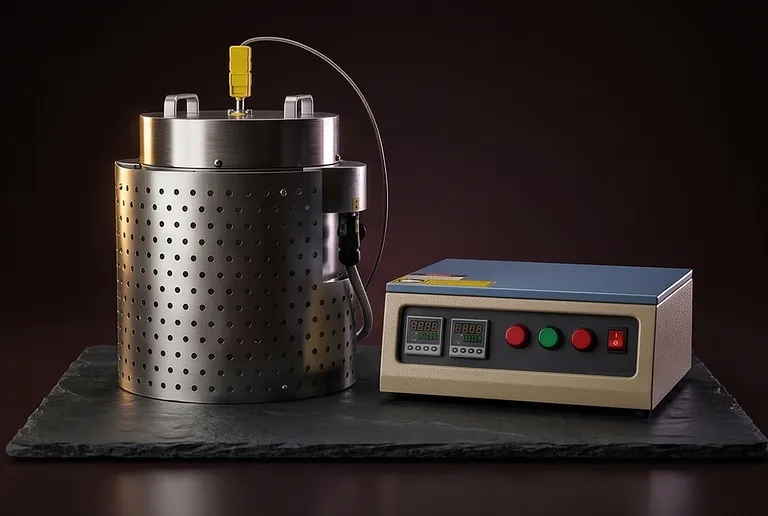
A high-purity crucible is only as effective as the furnace it sits within. To characterize advanced refractory materials like Ti-Zr-Ta(Hf), the entire thermal system must work in harmony.
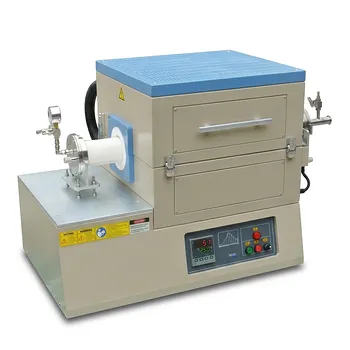
At THERMUNITS, we design the environments where these "silent" reactions take place. Whether you are using our Muffle Furnaces for basic oxidation or our Atmosphere and Vacuum Tube Furnaces for controlled gas kinetics, we understand that the goal is the isolation of variables.
Our equipment provides the thermal stability and atmospheric control required to complement high-purity labware, ensuring that your R&D data remains untainted by the machinery of its creation.
Characterizing the next generation of materials requires an uncompromising approach to experimental purity.
Quick Links
Suggested Products
High Temperature 1700C Benchtop Tube Furnace with 5 Inch Heating Zone High Purity Alumina Tube and Vacuum Sealing Flanges 600°C Vertical Crucible Furnace with SS316 Alloy Reactor and 6 Port Vacuum Flange 1100C High Temperature Vacuum Crucible Furnace with Quartz Chamber for Thermal Processing and Sintering High Temperature Vertical Crucible Furnace with 22L Heating Chamber and 1200C Maximum Temperature Vertical Crucible Furnace 1000C High Temperature Laboratory Equipment 4.7 Inch Diameter Chamber SS316 Anti Corrosive EnclosureFurther Reading
The Architecture of Absence: Why Atmosphere Control Defines the Fate of Mesoporous Carbon The Geometry of Heat: Engineering Magnetic Biochar Through Controlled Pyrolysis The Architecture of Molecular Order: Precision Boundaries in ZIF-67 Synthesis The Architecture of Isolation: Why Atmosphere Defines Material Destiny The Invisible Architect: Precision Thermal Oxidation in NiO@Ni Synthesis
ThermUnits
Last updated on Apr 14, 2026
Related Products

High Temperature 1700C Benchtop Tube Furnace with 5 Inch Heating Zone High Purity Alumina Tube and Vacuum Sealing Flanges
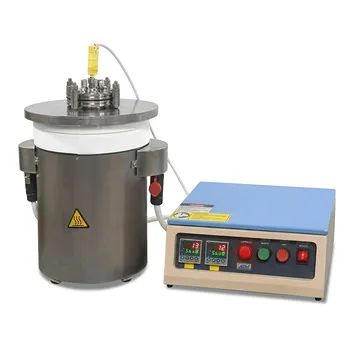
600°C Vertical Crucible Furnace with SS316 Alloy Reactor and 6 Port Vacuum Flange
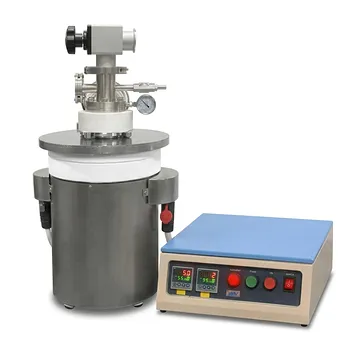
1100C High Temperature Vacuum Crucible Furnace with Quartz Chamber for Thermal Processing and Sintering
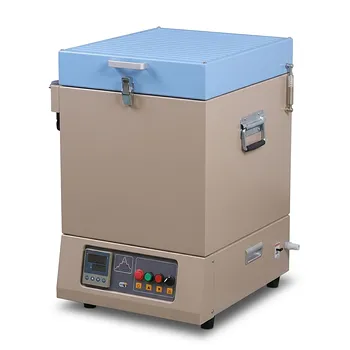
High Temperature Vertical Crucible Furnace with 22L Heating Chamber and 1200C Maximum Temperature
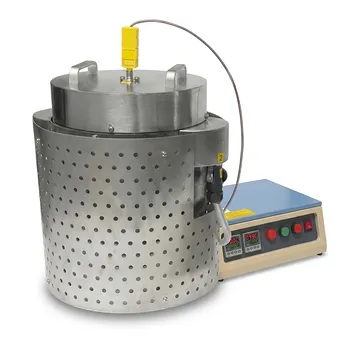
Vertical Crucible Furnace 1000C High Temperature Laboratory Equipment 4.7 Inch Diameter Chamber SS316 Anti Corrosive Enclosure
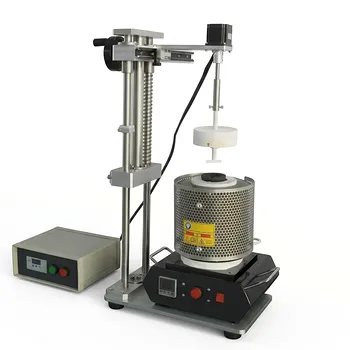
1100C Crucible Melting Furnace with Stirring Function for Glovebox and Air Sensitive Alloy Research
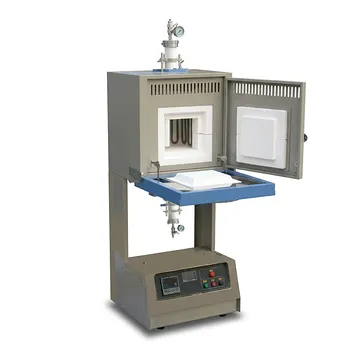
Vertical Hybrid High Temperature Furnace 1500C Alumina Tube SOFC Fuel Cell Testing Laboratory Heat Treatment Research Equipment
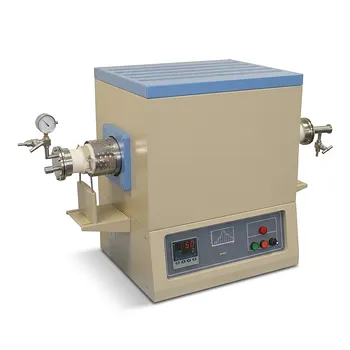
1700C High Temperature Alumina Tube Furnace with 18 Inch Heated Zone and Vacuum Sealing Flanges
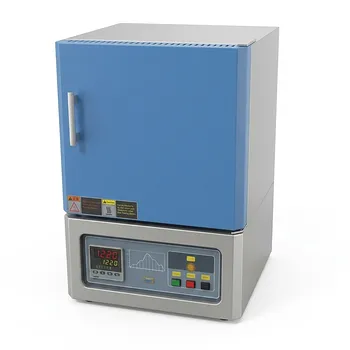
High Temperature Benchtop Muffle Furnace 1700C 10L Chamber Alumina Fiber Insulation MoSi2 Heating Elements
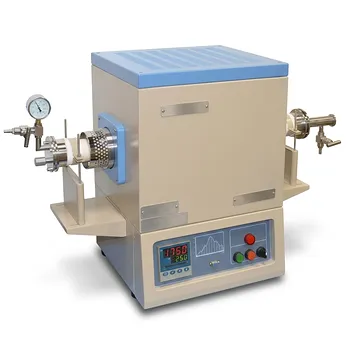
High Temperature Compact Vacuum Tube Furnace 1750C Max 60mm OD Alumina Tube
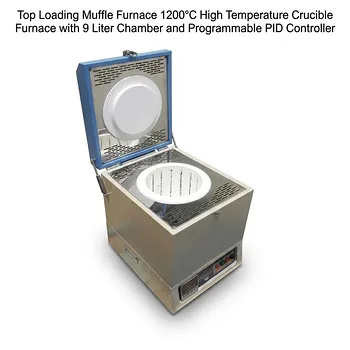
Top Loading Muffle Furnace 1200°C High Temperature Crucible Furnace with 9 Liter Chamber and Programmable PID Controller
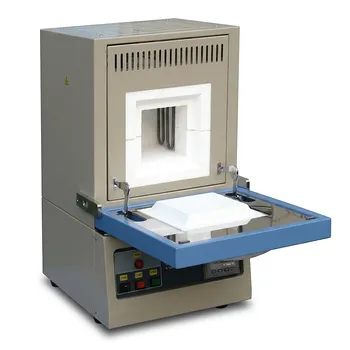
High Temperature 1800C Compact Muffle Furnace with Kanthal Super 1900 Heating Elements and 1.7L Alumina Chamber

Compact High Temperature 1600C Tube Furnace with 50mm Alumina Tube and Vacuum Flanges for Material Sintering

1800C High Temperature Compact Vacuum Tube Furnace with 60mm OD Alumina Tube and Kanthal MoSi2 Heating Elements
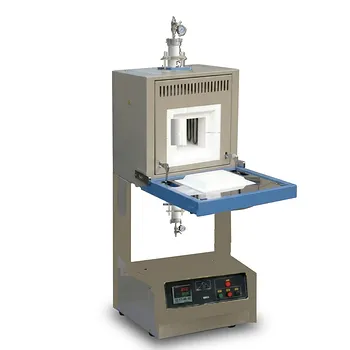
High Temperature Vertical Hybrid Furnace with Alumina Tube and SiC Heating for SOFC Coin Cell Testing and Atmosphere Processing

1750°C High Temperature Benchtop Vacuum Atmosphere Tube Furnace with Kanthal Super 1800 Heating Elements and 60mm Alumina Processing Tube
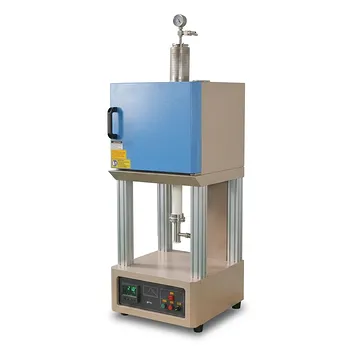
Hybrid High Temperature Tube and Box Furnace 1700C with 2 Inch Alumina Tube for Material Research
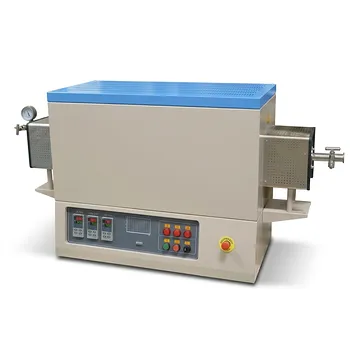
Three Zone Alumina Tube Furnace with Vacuum Flanges High Temperature 1700C Thermal Gradient CVD System
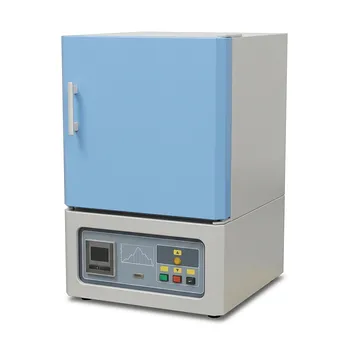
1800C Bench Top Muffle Furnace with Kanthal Super 1900 Heating Elements and 3.6L Alumina Fiber Chamber