The Architecture of Silence: Why Substrate Pre-Annealing is the Foundation of Superconductivity
Jul 19, 2026
The Illusion of a Smooth Surface
In the world of material science, we often mistake "flat" for "perfect."
When a substrate like Strontium Titanate (SrTiO3) or Lanthanum Aluminate (LaAlO3) arrives in the lab, it looks like a mirror. It has been sliced by diamond saws and polished to a high sheen. To the naked eye, it is a finished product.
To the atoms of a YBCO (Yttrium Barium Copper Oxide) superconducting film, however, that surface is a battlefield. It is littered with micro-scratches, residual mechanical stresses, and crystalline chaos.
Without a thermal "reset," trying to grow a high-performance film on this surface is like trying to build a skyscraper on a site filled with rubble.
Thermal Healing: Reaching Thermodynamic Peace
Pre-annealing is not merely a cleaning step; it is a structural transformation. By heating the substrate to between 900°C and 1000°C, we provide the atoms with something they lack at room temperature: the agency to move.
The Mechanics of the Reset
- Energy Injection: Thermal energy allows surface atoms to overcome local energy barriers.
- Surface Diffusion: Atoms migrate across the surface, seeking their most stable, lowest-energy positions.
- Healing: Mechanical scars from the polishing process are "filled in" or smoothed out as the crystal lattice seeks equilibrium.
This process is what engineers call "surface reconstruction." It is the transition from a state of mechanical trauma to a state of thermodynamic peace.
The Geometry of Order: Step-and-Terrace Structures
The ultimate goal of pre-annealing is to create a "step-and-terrace" morphology. This is where the engineering of the invisible becomes beautiful.
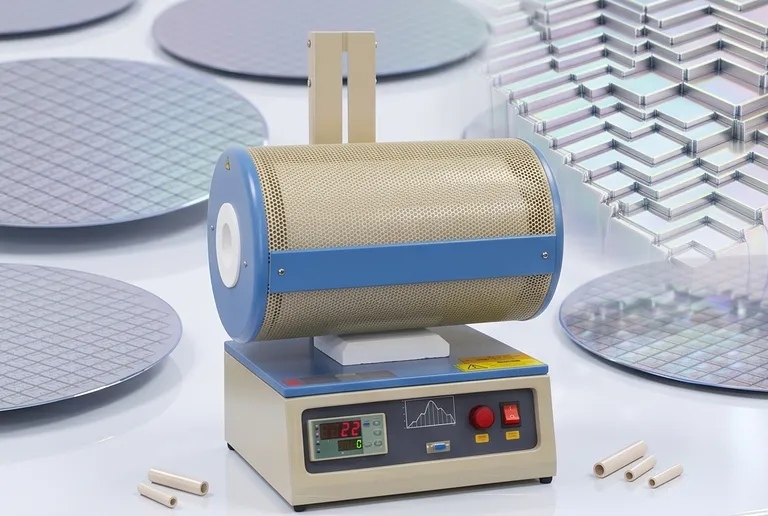
Instead of a random, rugged landscape, the furnace treatment organizes the surface into atomically flat terraces separated by steps that are exactly one unit cell high.
| Feature | Condition | Impact on YBCO Film |
|---|---|---|
| Surface Morphology | Random/Scratched | "Island" growth, high defect density |
| Annealed Morphology | Step-and-Terrace | Layer-by-layer epitaxial growth |
| Nucleation Sites | Unordered | Uniform, high-energy ledge nucleation |
| Lattice Alignment | Misaligned | Perfect crystalline orientation |
These terraces act as a structural map. When YBCO atoms land on an annealed substrate, they don't settle randomly. They gravitate toward the "steps," bonding in a predictable, repetitive pattern. This ensures the film remains a single, continuous crystal—a prerequisite for high critical current density (Jc).
Why the Atmosphere is Non-Negotiable
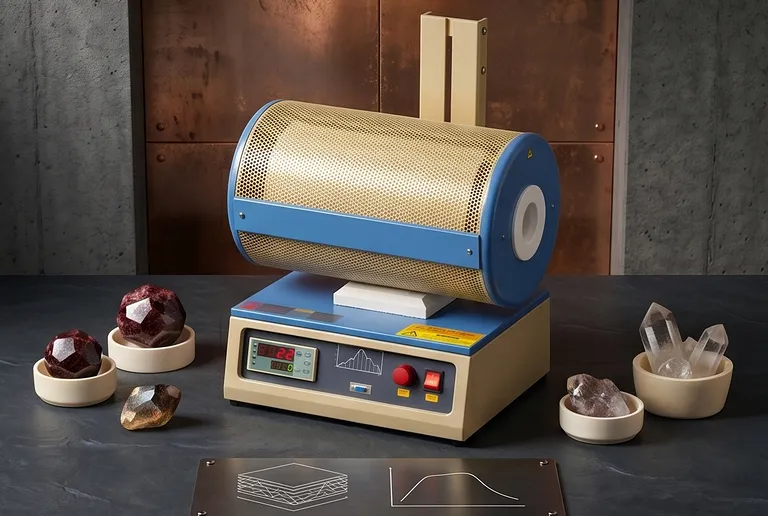
A furnace is more than a heater; it is a pressurized environment. For substrates like LaAlO3 or SrTiO3, the chemical composition—the stoichiometry—is as important as the shape.
At 1000°C, oxygen atoms within the substrate can become mobile. If the annealing happens in a vacuum or an inert gas, the substrate might lose oxygen, creating vacancies that ruin its electrical properties and its compatibility with the YBCO film.
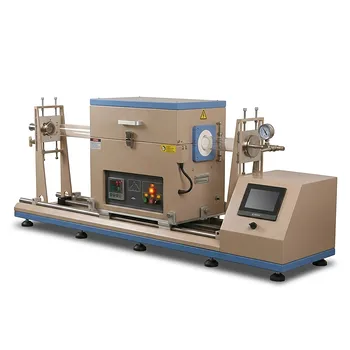
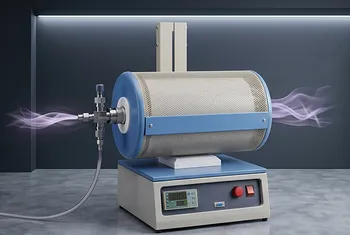
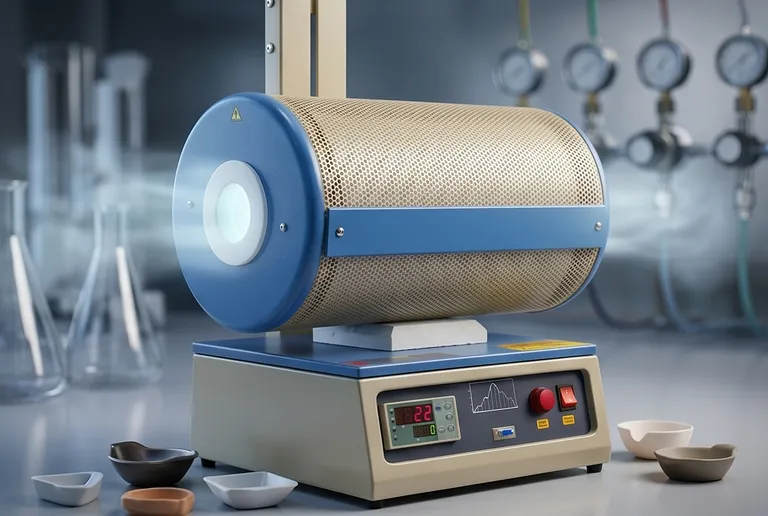
Using a Tube Furnace with flowing oxygen ensures that the substrate stays chemically whole while it becomes structurally perfect. It is a delicate balance of heat and chemistry.
The Cost of Complexity
In research, as in finance, there are no "free" gains. Pre-annealing adds hours to the fabrication cycle. It introduces the risk of contamination if the furnace tube isn't pristine.
However, the psychology of high-end R&D suggests that skipping the foundation rarely pays off in the results.
- High-Performance Focus: If your goal is maximum superconductivity, pre-annealing is mandatory.
- Iterative Testing: If you are merely testing bulk properties, you might skip it, but you accept a lower "yield" of quality.
Precision Tools for Atomic Architecture
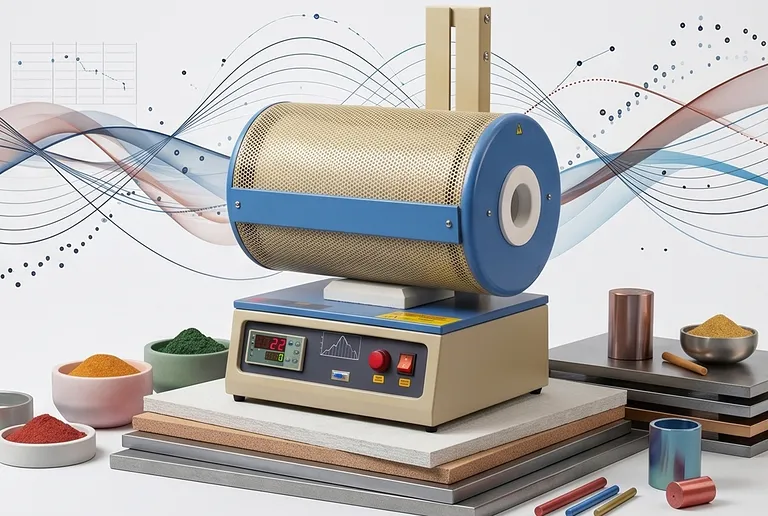
Achieving these precise "step-and-terrace" structures requires equipment that can maintain absolute thermal stability and atmosphere purity. At THERMUNITS, we design our high-temperature laboratory equipment to handle the rigorous demands of material science.
Our range of Tube Furnaces and Atmosphere Furnaces provides the controlled environment—up to 1000°C and beyond—required for substrate reconstruction. Whether you are working on YBCO deposition or advanced CVD/PECVD processes, THERMUNITS delivers the thermal precision that turns raw materials into scientific breakthroughs.
From Muffle and Vacuum furnaces to specialized Hot Press and Rotary systems, we provide the tools that bridge the gap between chaos and order.
To learn more about optimizing your thermal processing workflow, Contact Our Experts.
Quick Links
Suggested Products
Vertical 1700C Vacuum and Atmosphere Tube Furnace with 80mm Alumina Tube Compact High Temperature 1600C Tube Furnace with 50mm Alumina Tube and Vacuum Flanges for Material Sintering 900°C Max Rotary Tube Furnace with 8 Inch 310S Alloy Tube and Optional Multi Zone Heating for Industrial Material Calcination Split Vertical Tube Furnace with 1200C Quartz Tube and Stainless Steel Vacuum Flanges for Rapid Thermal Processing High Temperature 1700C Tube Furnace with High Vacuum Turbomolecular Pump System and Multi Channel Mass Flow Controller Gas MixerFurther Reading
The Silent Guardian of Kinetics: The Engineering Logic Behind Stable Molten Salt Environments The Architecture of Isolation: Why Atmosphere Defines Material Destiny The Invisible Architect: Precision Thermal Oxidation in NiO@Ni Synthesis The Architecture of Thrifty Precision: Why Tube Furnaces Define the R&D Continuity The Architect of Atoms: Why Precision is the Only Currency in TMD Synthesis
ThermUnits
Last updated on Apr 14, 2026
Related Products

Vertical 1700C Vacuum and Atmosphere Tube Furnace with 80mm Alumina Tube

Compact High Temperature 1600C Tube Furnace with 50mm Alumina Tube and Vacuum Flanges for Material Sintering
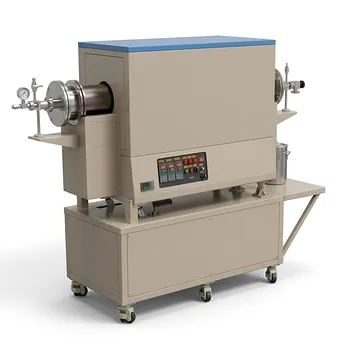
900°C Max Rotary Tube Furnace with 8 Inch 310S Alloy Tube and Optional Multi Zone Heating for Industrial Material Calcination
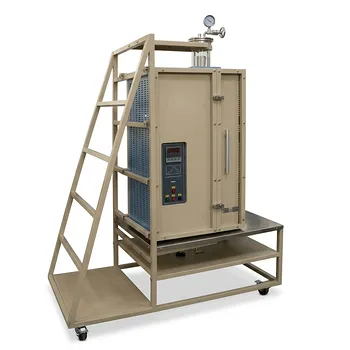
Split Vertical Tube Furnace with 1200C Quartz Tube and Stainless Steel Vacuum Flanges for Rapid Thermal Processing

High Temperature 1700C Tube Furnace with High Vacuum Turbomolecular Pump System and Multi Channel Mass Flow Controller Gas Mixer
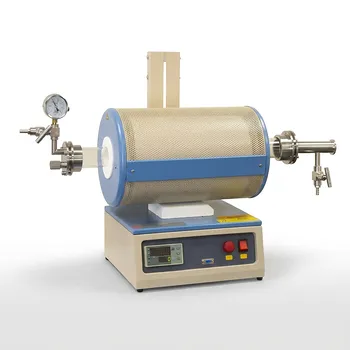
1100C Tube Furnace with Vacuum Flange and Programmable Temperature Controller for Material Science and Industrial Heat Treatment
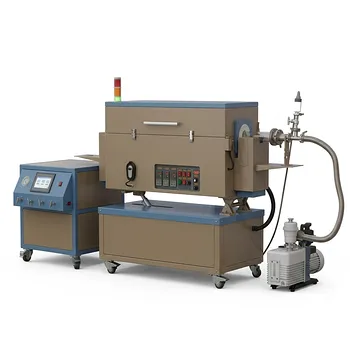
5 Inch Three Zone Rotary Tube Furnace with Integrated Gas Delivery System and 1200C Capability for Advanced Material CVD Processing
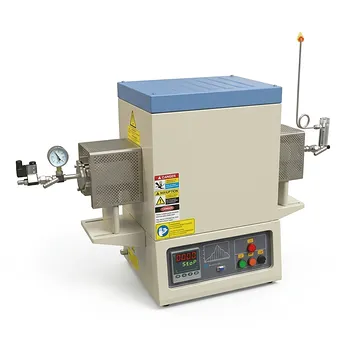
1700C Hydrogen Gas Tube Furnace with 60mm Alumina Process Tube and Integrated Hydrogen Safety Detector
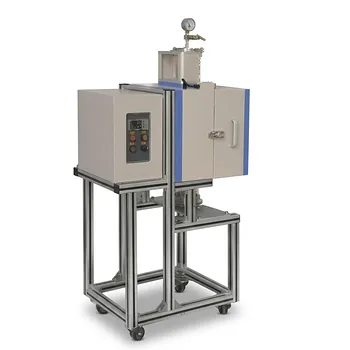
1200°C 5 Inch Vertical Quartz Tube Furnace with Stainless Steel Vacuum Flanges

High Temperature 1700C Six Zone Split Tube Furnace with Alumina Tube and Water Cooled Flanges

Compact Vertical Split Quartz Tube Furnace with Stainless Steel Vacuum Flanges for Rapid Thermal Quenching and Controlled Atmosphere Material Processing

High Temperature 1700C Benchtop Tube Furnace with 5 Inch Heating Zone High Purity Alumina Tube and Vacuum Sealing Flanges
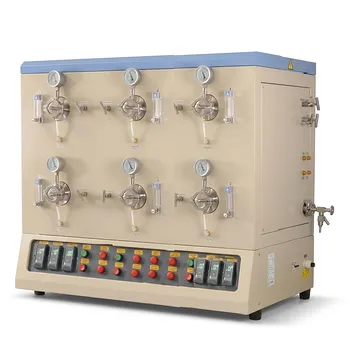
1200C High Throughput Multi Channel Tube Furnace with 50mm Quartz Tubes for Annealing and Material Phase Diagram Research
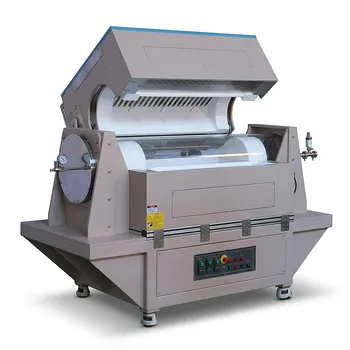
Three Zone Tube Furnace with 11 Inch or 15 Inch Quartz Tube and Hinged Flanges for Vacuum Atmosphere Heat Treatment

1800C High Temperature Compact Vacuum Tube Furnace with 60mm OD Alumina Tube and Kanthal MoSi2 Heating Elements

High Temperature 1700C Vertical Tube Furnace for Powder Spherification and Material Sintering
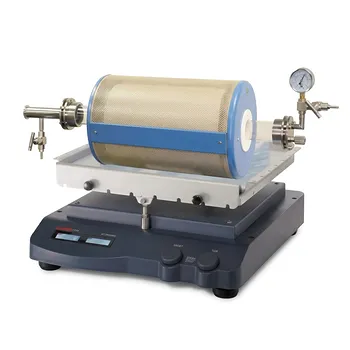
High Temperature Rocking Tube Furnace with Quartz Tube and Vacuum Flange for Materials Synthesis

High Temperature Automated 5 Inch Tube Furnace for Autonomous Material Research and Advanced Laboratory R&D
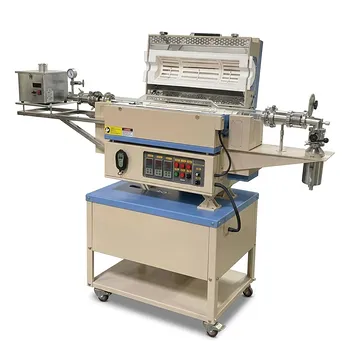
5 Inch Rotary Tube Furnace with Automatic Feeding and Receiving System 1200C Three Zone CVD Powder Processing