The Architecture of the Interface: Why 200°C Defines the Memristor
May 27, 2026
The Subtlety of Systemic Precision
In the world of neuromorphic computing, the memristor is the fundamental unit of mimicry—a device that remembers its past to shape its future. But the performance of a memristor, specifically the Ag/TiOx/SnOx/SnSe2 stack, is not built on brute force.
It is built on the quiet, controlled environment of a tube furnace.
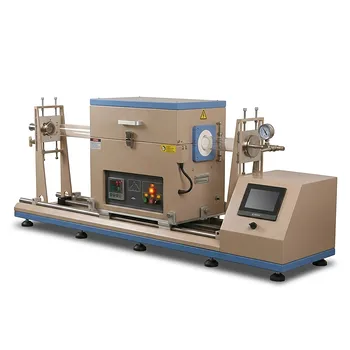
To the uninitiated, a furnace is a heater. To the material scientist, it is an engine for "mild thermal oxidation." In this process, the tube furnace does not just apply heat; it orchestrates a delicate chemical transformation that determines whether a device will function as a synaptic surrogate or fail as a noisy resistor.
The 200°C Threshold: A Study in Mildness
Traditional industrial oxidation often demands temperatures exceeding 600°C. However, in the fabrication of SnSe2-based memristors, 200°C is the "Goldilocks" zone.
- Lattice Preservation: High heat shatters the delicate 2D crystal structure of SnSe2.
- Controlled Kinetic Energy: At 200°C, the thermal energy is sufficient to drive oxidation but insufficient to trigger chaotic diffusion.
- The Transformation: This specific temperature allows for the simultaneous conversion of metallic Titanium (Ti) into TiOx and the surface of SnSe2 into a native SnOx layer.
This "mildness" is a deliberate engineering choice. It ensures that the transition from metal to oxide happens at a pace that allows atoms to find their lowest energy states, creating the atomically smooth interfaces required for stable resistive switching.
The Dual-Layer Alchemy
The tube furnace serves as the stage for a dual-conversion mechanism. It handles two distinct materials with a single thermal profile, ensuring structural harmony across the entire stack.
1. The Native SnOx Layer
The furnace transforms the top layers of the 2D SnSe2 crystal. Because this oxide is "grown" rather than deposited, it maintains an intrinsic bond with the underlying material, reducing the likelihood of interfacial defects.
2. The TiOx Functional Layer
Simultaneously, the deposited metallic titanium is oxidized into TiOx. Together with the SnOx, this forms a bilayer switching medium. This bilayer is the heart of the memristor, where oxygen vacancy migration occurs.
The Risks of the Invisible
Engineering is as much about avoiding failure as it is about achieving success. In a tube furnace, the margins for error are thin, and the risks are often invisible until the final device is tested.
- The Over-Oxidation Trap: Time is the enemy of precision. If the dwell time at 200°C is too long, the SnOx layer grows too thick. A thick oxide layer acts as an insulator rather than a switching medium, requiring "forming voltages" so high they can physically rupture the device.
- Thermal Expansion Logic: Heating Ag, Ti, and SnSe2 creates mechanical tension. Each material expands at a different rate. If the cooling curve of the furnace is not strictly linear, the resulting stress can cause delamination—the invisible peeling of layers that ruins batch yield.
- Atmospheric Purity: Any trace of moisture or nitrogen within the sealed tube introduces "traps" or defects. These impurities act as unpredictable shortcuts for electrons, leading to the erratic switching behavior that plagues low-quality memristors.
Technical Parameters for Memristor Fabrication
To achieve high-performance results, the process parameters must be tuned to the specific research goal:
| Parameter | Role in Fabrication | Critical Benefit |
|---|---|---|
| Temperature (200°C) | Mild Thermal Oxidation | Preserves 2D SnSe2 lattice integrity |
| Oxygen Concentration | High-Purity Atmosphere | Ensures uniform and complete oxide growth |
| Ramp Rate | Controlled Heating/Cooling | Prevents mechanical stress and delamination |
| Atmospheric Seal | Environmental Isolation | Minimizes defect density and electron "traps" |
The Tool as the Foundation
A memristor is only as reliable as the environment in which it was born. In the pursuit of neuromorphic excellence, the tube furnace provides the atmospheric integrity and thermal stability that standard laboratory ovens cannot replicate.
At THERMUNITS, we design thermal systems that understand these nuances. Our high-precision Tube Furnaces, CVD systems, and Atmosphere Furnaces are engineered to maintain the 200°C equilibrium with uncompromising accuracy. By providing a stable, high-purity oxygen environment and programmable cooling cycles, we empower researchers to master the "mild" transformations essential for the next generation of material science.
Whether you are scaling R&D for 2D materials or optimizing the switching stability of a new oxide bilayer, the right thermal solution is the difference between a failed experiment and a breakthrough.
Quick Links
Suggested Products
Vertical 1700C Vacuum and Atmosphere Tube Furnace with 80mm Alumina Tube Compact High Temperature 1600C Tube Furnace with 50mm Alumina Tube and Vacuum Flanges for Material Sintering 900°C Max Rotary Tube Furnace with 8 Inch 310S Alloy Tube and Optional Multi Zone Heating for Industrial Material Calcination Split Vertical Tube Furnace with 1200C Quartz Tube and Stainless Steel Vacuum Flanges for Rapid Thermal Processing High Temperature 1700C Tube Furnace with High Vacuum Turbomolecular Pump System and Multi Channel Mass Flow Controller Gas MixerFurther Reading
The Silent Guardian of Kinetics: The Engineering Logic Behind Stable Molten Salt Environments The Architecture of Isolation: Why Atmosphere Defines Material Destiny The Invisible Architect: Precision Thermal Oxidation in NiO@Ni Synthesis The Architecture of Thrifty Precision: Why Tube Furnaces Define the R&D Continuity The Architect of Atoms: Why Precision is the Only Currency in TMD Synthesis
ThermUnits
Last updated on Apr 14, 2026
Related Products

Vertical 1700C Vacuum and Atmosphere Tube Furnace with 80mm Alumina Tube

Compact High Temperature 1600C Tube Furnace with 50mm Alumina Tube and Vacuum Flanges for Material Sintering
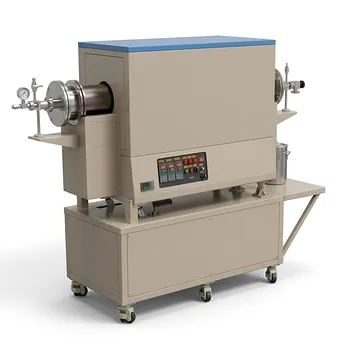
900°C Max Rotary Tube Furnace with 8 Inch 310S Alloy Tube and Optional Multi Zone Heating for Industrial Material Calcination
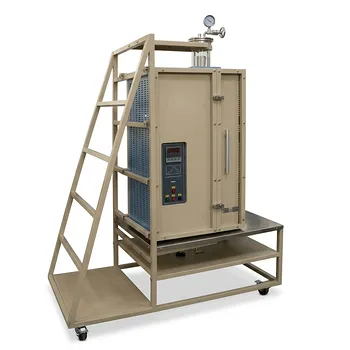
Split Vertical Tube Furnace with 1200C Quartz Tube and Stainless Steel Vacuum Flanges for Rapid Thermal Processing

High Temperature 1700C Tube Furnace with High Vacuum Turbomolecular Pump System and Multi Channel Mass Flow Controller Gas Mixer
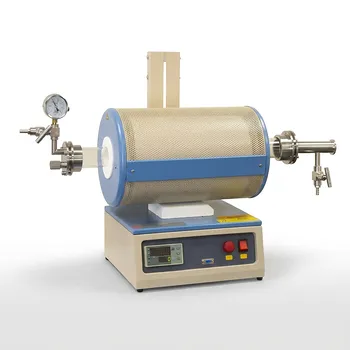
1100C Tube Furnace with Vacuum Flange and Programmable Temperature Controller for Material Science and Industrial Heat Treatment
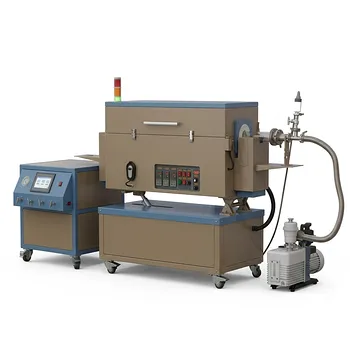
5 Inch Three Zone Rotary Tube Furnace with Integrated Gas Delivery System and 1200C Capability for Advanced Material CVD Processing

1200°C 5 Inch Vertical Quartz Tube Furnace with Stainless Steel Vacuum Flanges
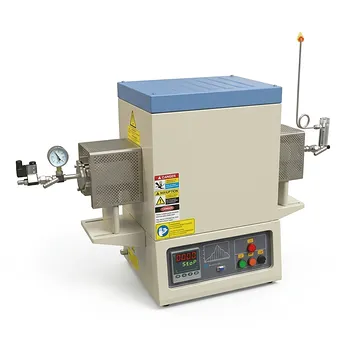
1700C Hydrogen Gas Tube Furnace with 60mm Alumina Process Tube and Integrated Hydrogen Safety Detector
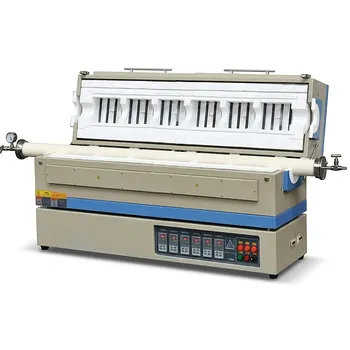
High Temperature 1700C Six Zone Split Tube Furnace with Alumina Tube and Water Cooled Flanges
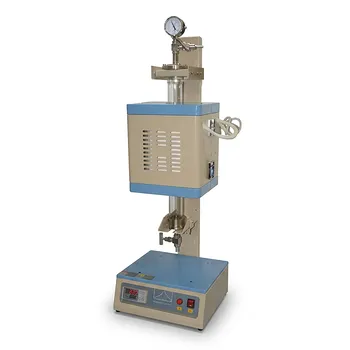
Compact Vertical Split Quartz Tube Furnace with Stainless Steel Vacuum Flanges for Rapid Thermal Quenching and Controlled Atmosphere Material Processing
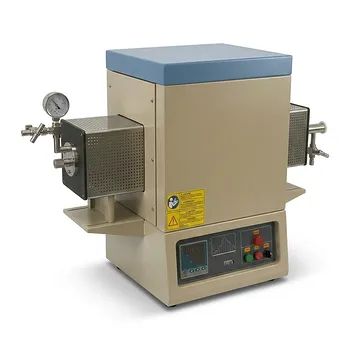
High Temperature 1700C Benchtop Tube Furnace with 5 Inch Heating Zone High Purity Alumina Tube and Vacuum Sealing Flanges
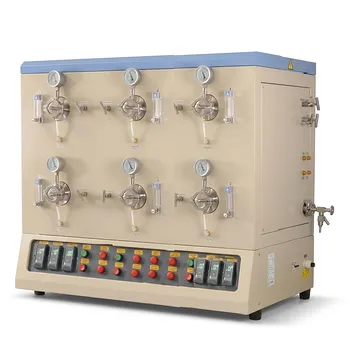
1200C High Throughput Multi Channel Tube Furnace with 50mm Quartz Tubes for Annealing and Material Phase Diagram Research

1800C High Temperature Compact Vacuum Tube Furnace with 60mm OD Alumina Tube and Kanthal MoSi2 Heating Elements
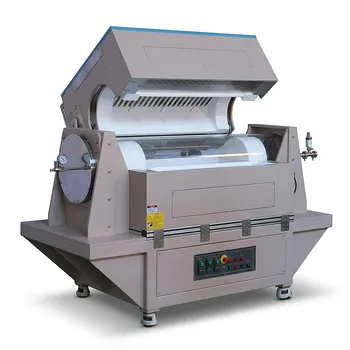
Three Zone Tube Furnace with 11 Inch or 15 Inch Quartz Tube and Hinged Flanges for Vacuum Atmosphere Heat Treatment

High Temperature 1700C Vertical Tube Furnace for Powder Spherification and Material Sintering
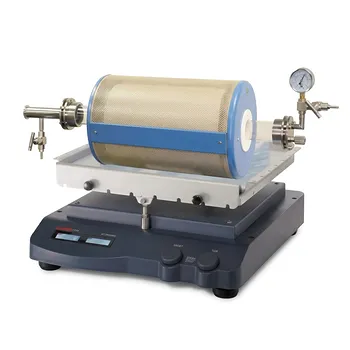
High Temperature Rocking Tube Furnace with Quartz Tube and Vacuum Flange for Materials Synthesis

High Temperature Automated 5 Inch Tube Furnace for Autonomous Material Research and Advanced Laboratory R&D
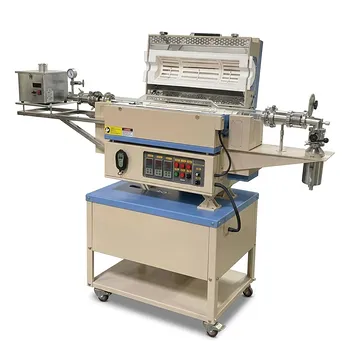
5 Inch Rotary Tube Furnace with Automatic Feeding and Receiving System 1200C Three Zone CVD Powder Processing