The Invisible Architect: Precision Thermal Oxidation in NiO@Ni Synthesis
Jul 01, 2026
The Precision of Transformation
In material science, we often talk about "building" structures. But in the world of NiO@Ni foam synthesis, we aren't building so much as we are evolving.
The process of growing nickel oxide (NiO) nano-arrays directly from a nickel foam substrate is a delicate dance of chemistry and physics. It is an in-situ transformation—a process where the surface of the metal consumes the surrounding air to reinvent itself.
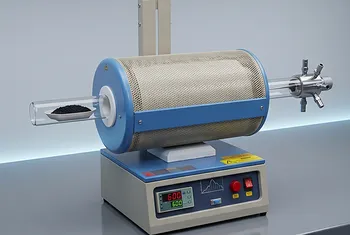
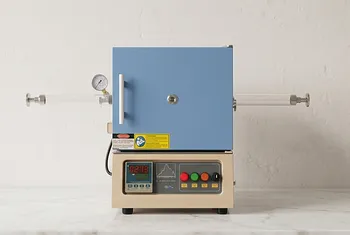
At the heart of this evolution sits the Tube Furnace. It is not merely a heater; it is the invisible architect that dictates whether a material becomes a high-performance electrode or a brittle piece of scrap.
The Strategy of In-Situ Growth
Most industrial processes rely on "glue"—chemical binders that hold active materials onto a substrate. These binders are the hidden tax on performance. They increase internal resistance and consume valuable space.
The tube furnace allows us to bypass this tax through in-situ thermal oxidation.
By providing a controlled atmosphere, the furnace triggers the nickel surface to react with oxygen directly. The resulting NiO grows out of the parent metal, creating a "binder-free" heterostructure. The bond is atomic, not mechanical.
The Margin of Error: 600°C
In the synthesis of NiO@Ni, 600°C is more than a number; it is a psychological and technical threshold.
If you heat the foam too quickly, the thermal stress causes the newly formed oxide layer to delaminate. If you heat it too slowly, the nano-arrays fail to reach the density required for high-energy applications.
The tube furnace manages this through Ramp Rate Management:
- The Standard: A disciplined climb of 5°C per minute.
- The Result: A uniform thermal field that prevents localized defects.
- The Goal: Maximizing crystallinity to ensure efficient electron transport.
The Paradox of Conductivity
Success in material research is often about managing trade-offs. In this process, we face a fundamental paradox: Oxygen is the source of the material’s function, but also the enemy of its structure.
| Optimization Goal | The Strategy | The Risk |
|---|---|---|
| High Conductivity | Shortened oxidation time / Lower Peak Temp | Lower surface area for reactions |
| Max Surface Area | Prolonged dwell at 600°C | Risk of complete oxidation (loss of core) |
| Mechanical Integrity | Precise ramp rate (5°C/min) | Slow throughput in R&D |
A tube furnace provides the precision to "stop the clock" exactly when the oxide layer is thick enough to perform, but before the metallic core—the current collector—is consumed.
Engineering the Thermal Field
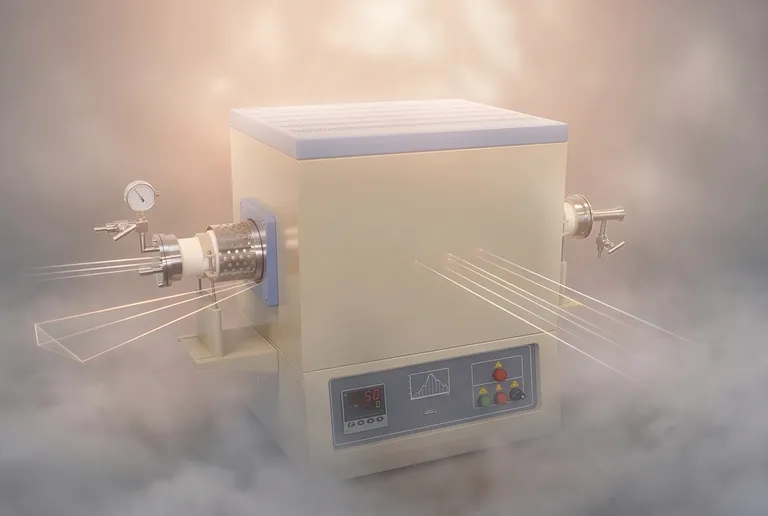
Small deviations in a furnace’s internal temperature can lead to "hot spots." In a 3D architecture like nickel foam, a hot spot means uneven loading. Some areas will be over-oxidized (insulating), while others remain under-developed.
This is why the uniformity of the tube furnace is critical. It creates a closed system where the air atmosphere and the thermal energy reach a state of equilibrium, ensuring that every pore in the 3D foam undergoes the same transformation.
Systemic Reliability with THERMUNITS
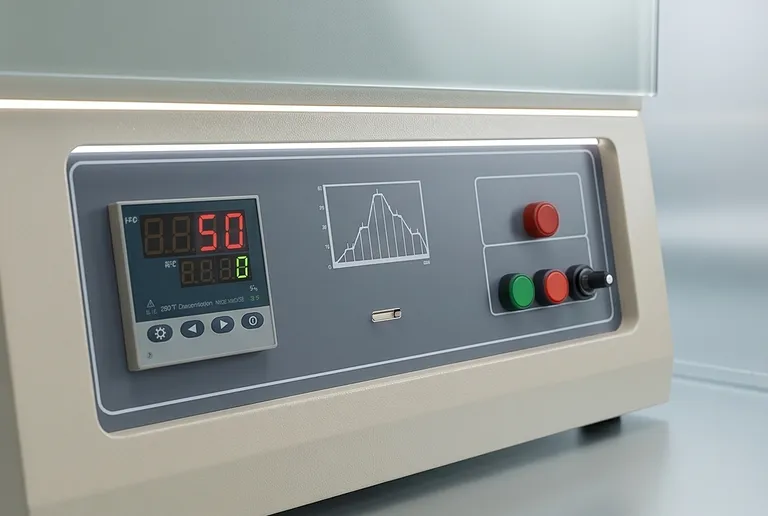
At THERMUNITS, we understand that in-situ synthesis is a game of margins. Our high-precision laboratory equipment is designed to remove the variables that compromise your research.
Whether you are scaling up via Electric Rotary Kilns or perfecting thin-film growth through CVD/PECVD systems, our furnaces deliver the stability required for world-class R&D. We provide the tools; you provide the discovery.
To explore our full range of Tube, Vacuum, and Atmosphere furnace solutions tailored for advanced material science, Contact Our Experts
Quick Links
Suggested Products
High Temperature Tube Furnace 1500C with Sliding Flanges and 50mm OD for Rapid Thermal Processing Fast Heating and Cooling Vertical 1700C Vacuum and Atmosphere Tube Furnace with 80mm Alumina Tube 1100C Tube Furnace with Vacuum Flange and Programmable Temperature Controller for Material Science and Industrial Heat Treatment Compact High Temperature 1600C Tube Furnace with 50mm Alumina Tube and Vacuum Flanges for Material Sintering 900°C Max Rotary Tube Furnace with 8 Inch 310S Alloy Tube and Optional Multi Zone Heating for Industrial Material CalcinationFurther Reading
The Architecture of Absence: Why Atmosphere Control Defines the Fate of Mesoporous Carbon The Geometry of Heat: Engineering Magnetic Biochar Through Controlled Pyrolysis The Architecture of Isolation: Why Atmosphere Defines Material Destiny The Geometry of Heat: Forging the Structural DNA of Dicalcium Ferrite The Architecture of Heat: Why Verticality Defines Modern Metallurgical Simulation
ThermUnits
Last updated on Apr 14, 2026
Related Products
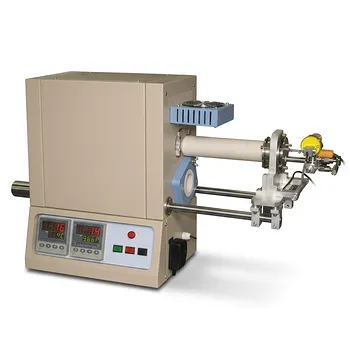
High Temperature Tube Furnace 1500C with Sliding Flanges and 50mm OD for Rapid Thermal Processing Fast Heating and Cooling

Vertical 1700C Vacuum and Atmosphere Tube Furnace with 80mm Alumina Tube
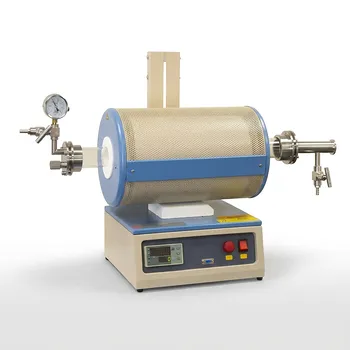
1100C Tube Furnace with Vacuum Flange and Programmable Temperature Controller for Material Science and Industrial Heat Treatment

Compact High Temperature 1600C Tube Furnace with 50mm Alumina Tube and Vacuum Flanges for Material Sintering
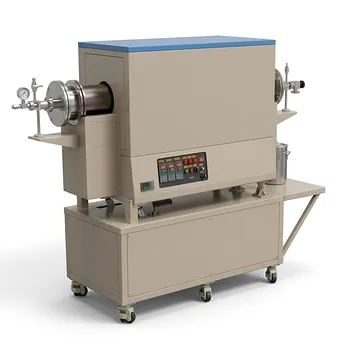
900°C Max Rotary Tube Furnace with 8 Inch 310S Alloy Tube and Optional Multi Zone Heating for Industrial Material Calcination
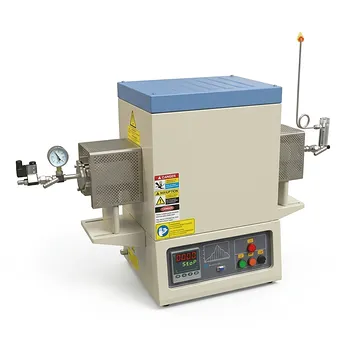
1700C Hydrogen Gas Tube Furnace with 60mm Alumina Process Tube and Integrated Hydrogen Safety Detector

High Temperature 1700C Tube Furnace with High Vacuum Turbomolecular Pump System and Multi Channel Mass Flow Controller Gas Mixer
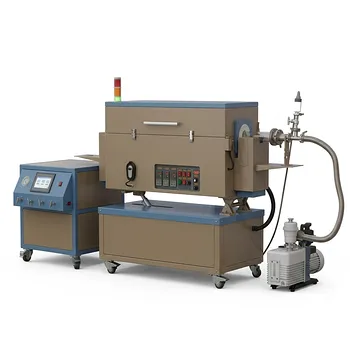
5 Inch Three Zone Rotary Tube Furnace with Integrated Gas Delivery System and 1200C Capability for Advanced Material CVD Processing
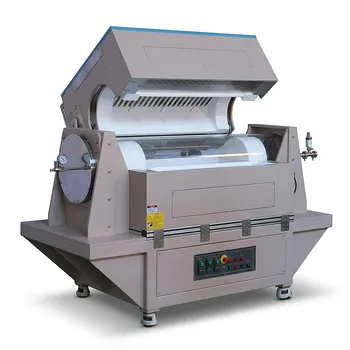
Three Zone Tube Furnace with 11 Inch or 15 Inch Quartz Tube and Hinged Flanges for Vacuum Atmosphere Heat Treatment
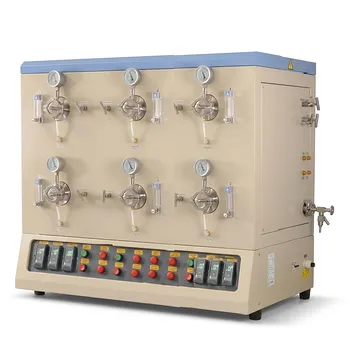
1200C High Throughput Multi Channel Tube Furnace with 50mm Quartz Tubes for Annealing and Material Phase Diagram Research
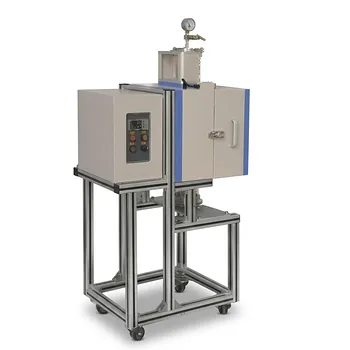
1200°C 5 Inch Vertical Quartz Tube Furnace with Stainless Steel Vacuum Flanges
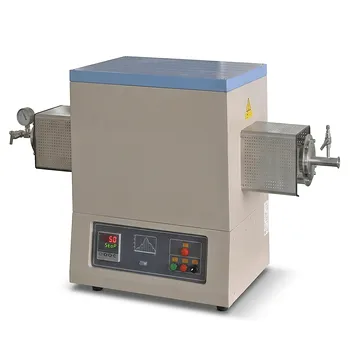
High Temperature 1700C Tube Furnace with 4 Inch OD Alumina Tube and Vacuum Sealing Flanges

High Temperature 1700C Benchtop Tube Furnace with 5 Inch Heating Zone High Purity Alumina Tube and Vacuum Sealing Flanges
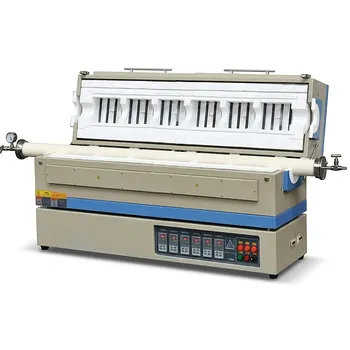
High Temperature 1700C Six Zone Split Tube Furnace with Alumina Tube and Water Cooled Flanges
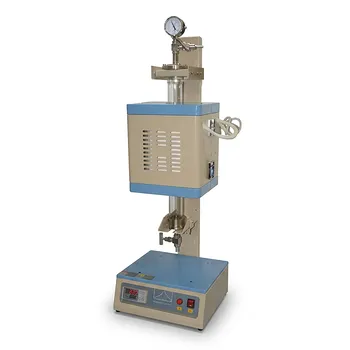
Compact Vertical Split Quartz Tube Furnace with Stainless Steel Vacuum Flanges for Rapid Thermal Quenching and Controlled Atmosphere Material Processing

1800C High Temperature Compact Vacuum Tube Furnace with 60mm OD Alumina Tube and Kanthal MoSi2 Heating Elements
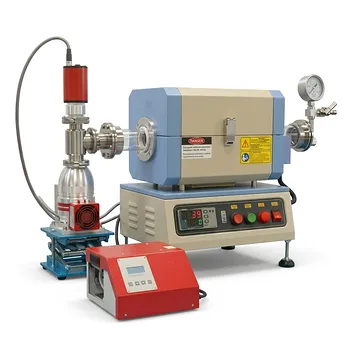
High Vacuum Compact Tube Furnace 1200C with Integrated Turbo Pump System and 8 Inch Heating Zone
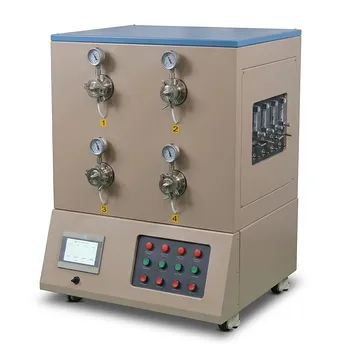
High Throughput 1200C Four Channel Tube Furnace with 3 Inch Quartz Tubes for Multi Zone Annealing and Material Research
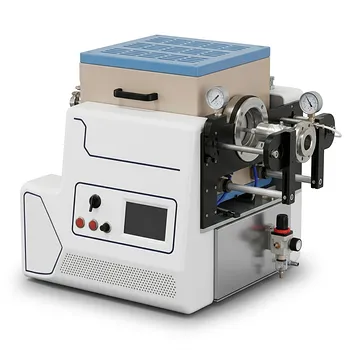
High Temperature Automated 5 Inch Tube Furnace for Autonomous Material Research and Advanced Laboratory R&D