The Architecture of Thrifty Precision: Why Tube Furnaces Define the R&D Continuity
Jun 23, 2026
The Psychology of Thermal Waste
In most industrial processes, we suffer from the "heavy lifting" bias. We assume that to achieve high temperatures, we must heat massive structures. We spend energy warming up the bricks, the steel shell, and the air around the sample before we ever touch the material itself.
In thermodynamics, as in finance, waste is rarely the result of a single catastrophe; it is the accumulation of small, structural inefficiencies.
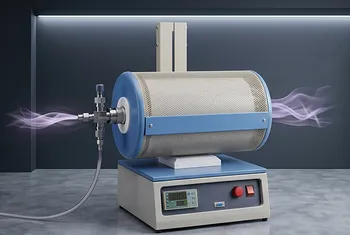
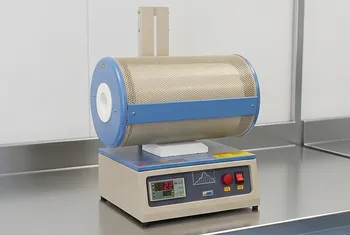
The tube furnace represents a departure from this bias. It is a system designed to ignore the "box" and focus entirely on the "pathway." By isolating the process environment within a slender work tube, it achieves a level of thermal discipline that larger, batch-style furnaces struggle to match.
The Physics of Less: Low-Mass Insulation
The first principle of efficiency is reducing thermal inertia. Traditional furnaces are often "thermally heavy"—they store massive amounts of heat in their linings. When the cycle ends, that energy is simply bled off into the room.
Modern tube furnaces utilize low-mass ceramic fiber insulation. The engineering logic is simple:
- Low Conductivity: Heat stays localized to the heating elements.
- Minimal Storage: The furnace body doesn't act as a heat sink.
- Rapid Response: Less mass means faster ramp rates and shorter cooling cycles.
This isn't just about saving electricity; it’s about control. A system that doesn't hold onto heat is a system that obeys the controller’s commands instantly.
Modularity as a Scaling Strategy
The "Valley of Death" in material science is the gap between a microgram sample in a lab and a kilogram batch in a pilot plant. Most equipment forces you to switch platforms entirely when you scale up.
The tube furnace avoids this through modular geometry. The heating mantle remains the constant, while the "workhorse"—the process tube—is interchangeable.
| Feature | The Scalability Advantage |
|---|---|
| Interchangeable Tubes | Swap quartz for alumina or metal depending on chemistry. |
| Varying Diameters | Move from 25mm to 100mm+ within the same thermal architecture. |
| Zonal Expansion | Add heating zones to maintain uniformity over longer lengths. |
This modularity allows an engineer to refine a process on a small scale and then, with minimal capital reinvestment, expand the throughput by simply upgrading the tube and sealing hardware.
The Environment of Isolation
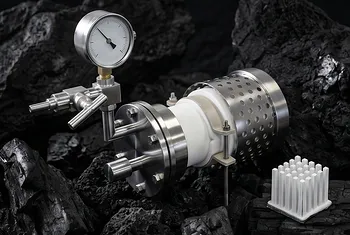
In high-purity R&D, the atmosphere is as much a reagent as the chemicals themselves. Tube furnaces provide a gas-tight environment that serves two purposes:
- Purity: Total isolation from ambient oxygen and contaminants.
- Retention: By eliminating air convection between the heater and the ambient room, energy is trapped where it is needed most.
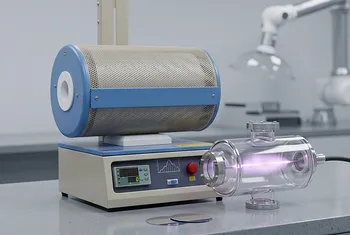
Whether it is a CVD process for graphene or the reduction of specialized alloys, the ability to control the "micro-climate" inside the tube ensures that results are repeatable across different batches and different scales.
Navigating the Volumetric Constraint
Every engineering solution has a boundary. For the tube furnace, that boundary is the cylinder.
While incredibly efficient for powders, wires, and small components, it is less suited for bulky, irregular parts. Scaling throughput in a tube furnace often means moving long-ways (increasing length) rather than out-ways (increasing width).
To manage this, multi-zone heating becomes essential. By controlling the ends of the tube independently from the center, we can eliminate the "cold-end effect," ensuring that a three-meter tube behaves like a three-meter isothermal zone.
Choosing Your Path: R&D to Production
The transition from a benchtop experiment to an industrial pilot requires a thermal strategy that prioritizes flexibility.
- For Prototyping: Split-tube designs allow for rapid cooling and manual intervention.
- For High Purity: Vacuum-sealed systems with automated gas manifolds ensure consistency.
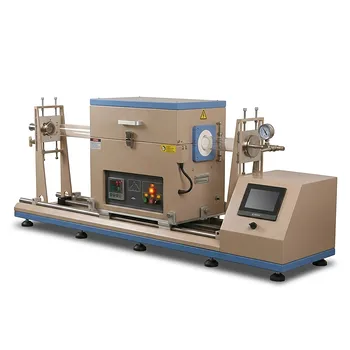
- For Continuous Flow: Rotary tube furnaces bridge the gap into bulk material processing.
At THERMUNITS, we engineer this continuity. Our range—from Muffle and Vacuum systems to advanced CVD/PECVD and Rotary Kilns—is built on the principle that precision should never be sacrificed for scale. We provide the tools that allow material scientists to move from a spark of an idea to a pilot production line without losing the thermal integrity that made the discovery possible.
To explore how the right thermal architecture can optimize your research and production workflow, Contact Our Experts
Quick Links
Suggested Products
Vertical 1700C Vacuum and Atmosphere Tube Furnace with 80mm Alumina Tube Compact High Temperature 1600C Tube Furnace with 50mm Alumina Tube and Vacuum Flanges for Material Sintering 900°C Max Rotary Tube Furnace with 8 Inch 310S Alloy Tube and Optional Multi Zone Heating for Industrial Material Calcination Split Vertical Tube Furnace with 1200C Quartz Tube and Stainless Steel Vacuum Flanges for Rapid Thermal Processing High Temperature 1700C Tube Furnace with High Vacuum Turbomolecular Pump System and Multi Channel Mass Flow Controller Gas MixerFurther Reading
The Silent Guardian of Kinetics: The Engineering Logic Behind Stable Molten Salt Environments The Architecture of Isolation: Why Atmosphere Defines Material Destiny The Invisible Architect: Precision Thermal Oxidation in NiO@Ni Synthesis The Architect of Atoms: Why Precision is the Only Currency in TMD Synthesis The Architecture of Stability: Why Precision Aging is the Soul of Gas Sensor Reliability
ThermUnits
Last updated on Apr 14, 2026
Related Products

Vertical 1700C Vacuum and Atmosphere Tube Furnace with 80mm Alumina Tube

Compact High Temperature 1600C Tube Furnace with 50mm Alumina Tube and Vacuum Flanges for Material Sintering
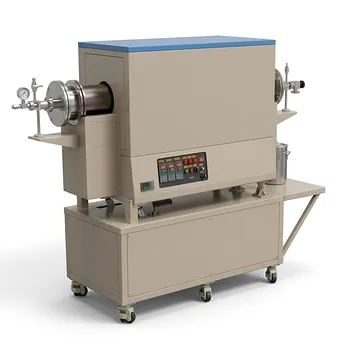
900°C Max Rotary Tube Furnace with 8 Inch 310S Alloy Tube and Optional Multi Zone Heating for Industrial Material Calcination
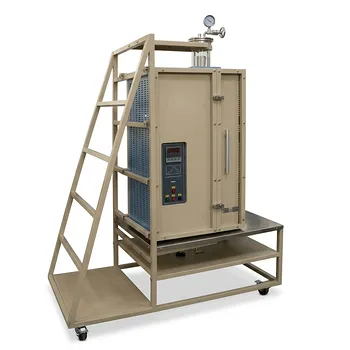
Split Vertical Tube Furnace with 1200C Quartz Tube and Stainless Steel Vacuum Flanges for Rapid Thermal Processing

High Temperature 1700C Tube Furnace with High Vacuum Turbomolecular Pump System and Multi Channel Mass Flow Controller Gas Mixer
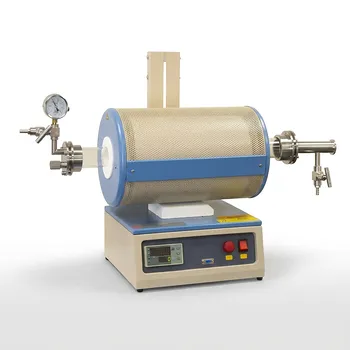
1100C Tube Furnace with Vacuum Flange and Programmable Temperature Controller for Material Science and Industrial Heat Treatment
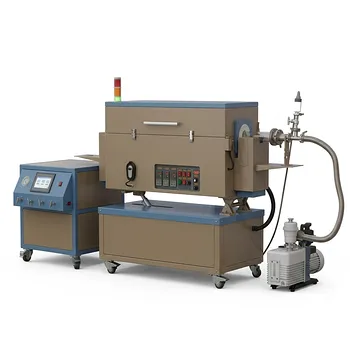
5 Inch Three Zone Rotary Tube Furnace with Integrated Gas Delivery System and 1200C Capability for Advanced Material CVD Processing
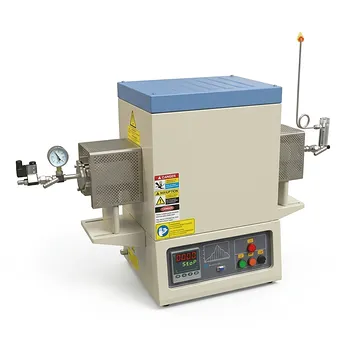
1700C Hydrogen Gas Tube Furnace with 60mm Alumina Process Tube and Integrated Hydrogen Safety Detector

1200°C 5 Inch Vertical Quartz Tube Furnace with Stainless Steel Vacuum Flanges
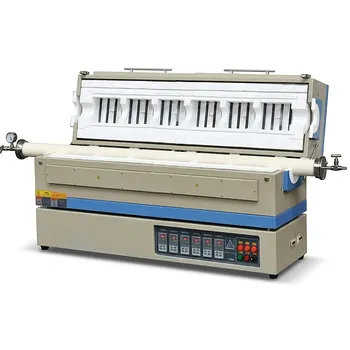
High Temperature 1700C Six Zone Split Tube Furnace with Alumina Tube and Water Cooled Flanges
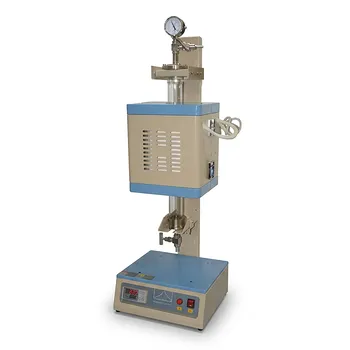
Compact Vertical Split Quartz Tube Furnace with Stainless Steel Vacuum Flanges for Rapid Thermal Quenching and Controlled Atmosphere Material Processing
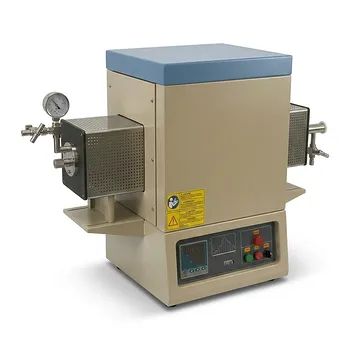
High Temperature 1700C Benchtop Tube Furnace with 5 Inch Heating Zone High Purity Alumina Tube and Vacuum Sealing Flanges
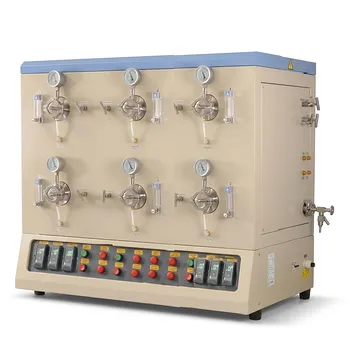
1200C High Throughput Multi Channel Tube Furnace with 50mm Quartz Tubes for Annealing and Material Phase Diagram Research
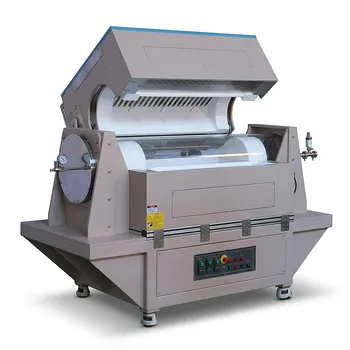
Three Zone Tube Furnace with 11 Inch or 15 Inch Quartz Tube and Hinged Flanges for Vacuum Atmosphere Heat Treatment

1800C High Temperature Compact Vacuum Tube Furnace with 60mm OD Alumina Tube and Kanthal MoSi2 Heating Elements

High Temperature 1700C Vertical Tube Furnace for Powder Spherification and Material Sintering
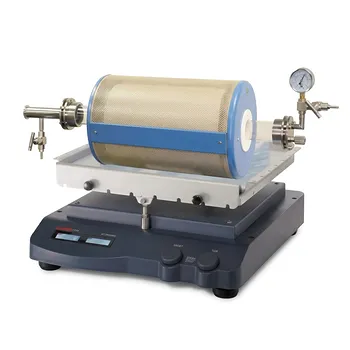
High Temperature Rocking Tube Furnace with Quartz Tube and Vacuum Flange for Materials Synthesis

High Temperature Automated 5 Inch Tube Furnace for Autonomous Material Research and Advanced Laboratory R&D
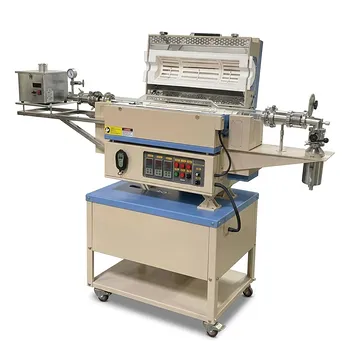
5 Inch Rotary Tube Furnace with Automatic Feeding and Receiving System 1200C Three Zone CVD Powder Processing