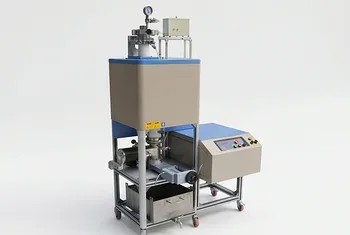
The Architecture of Isolation: Why Atmosphere Defines Material Destiny
Jul 23, 2026
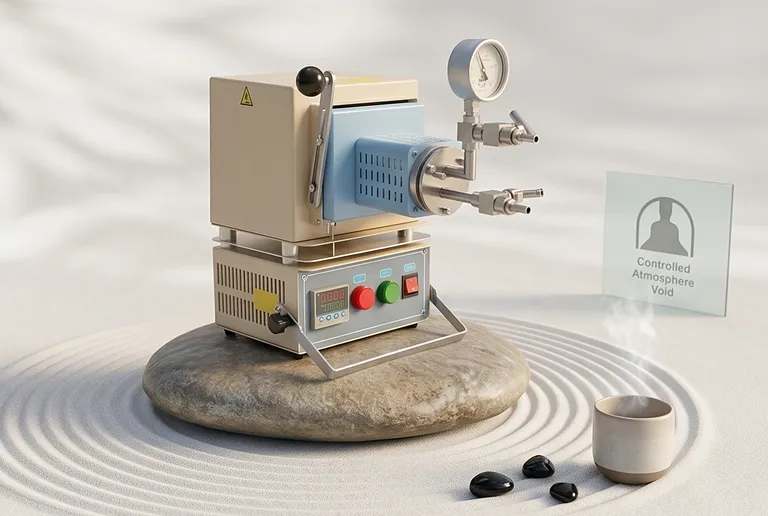
The Illusion of Pure Heat
In material science, we often talk about temperature as the primary variable. We chase the Celsius, believing that energy alone dictates transformation.
But heat is never an isolated event. It is a catalyst for conversation between a material and its surroundings. Without a controlled atmosphere, a furnace is not a laboratory; it is an open invitation for chaos.
The true challenge of high-temperature R&D isn't just getting hot—it's the engineering of isolation.
The Mechanics of a Controlled Void
To control an atmosphere is to manage a boundary. In a tube furnace, this boundary is maintained through a synchronized system of hardware and fluid dynamics.
- Mass Flow Controllers (MFCs): These are the pulse of the system. They don't just "let gas in"; they regulate the chemical concentration with digital precision, ensuring that the environment remains constant even as thermal expansion changes the internal volume.
- Gas-Tight End Seals: These are the unsung heroes. As the furnace reaches 1600°C, the tube expands. If the seals aren't engineered to accommodate this movement while remaining hermetic, the "controlled" atmosphere is lost to the room.
- Active Evacuation: Before the heat begins, the "old" world must be removed. Vacuum pumping sets pull the air out, creating a clean slate for whatever gas—or lack thereof—comes next.
The Four Environments of Transformation
Choosing an atmosphere is a psychological decision about what you want your material to become.
| Atmosphere Type | The "Why" | Common Applications |
|---|---|---|
| Inert (Ar, N2) | Prevention of reaction. A protective blanket. | Biomass pyrolysis, synthesis of air-sensitive crystals. |
| Reducing (H2 Mix) | Aggressive oxygen removal. Forcing a change. | Metal oxide reduction, semiconductor doping. |
| Oxidizing (Air, O2) | Controlled combustion or bonding with oxygen. | Ceramic firing, binder burnout. |
| Vacuum | Eliminating the gas phase entirely. | Carbonization, preventing volatile interference. |
The Engineering of Failure
Systemic failures in thermal processing rarely happen because the heater broke. They happen at the margins.
The Porosity Trap
At extreme temperatures, materials we think of as "solid" (like certain alumina tubes) can become slightly porous. Trace oxygen can migrate through the tube wall, sabotaging a high-purity inert run.
The Thermal Expansion Paradox
If the cooling of the end seals isn't managed, the gaskets degrade. A microscopic leak at 1200°C doesn't just let air in; it introduces a gradient that can cause internal cracks in your sample.
The Safety Stake
Reducing atmospheres involving Hydrogen require more than just a gas tank. They require a safety system—flash-back arrestors and burn-off pilots. In high-stakes R&D, safety is not a feature; it is a prerequisite for precision.
Strategic Selection: Matching Goal to Environment
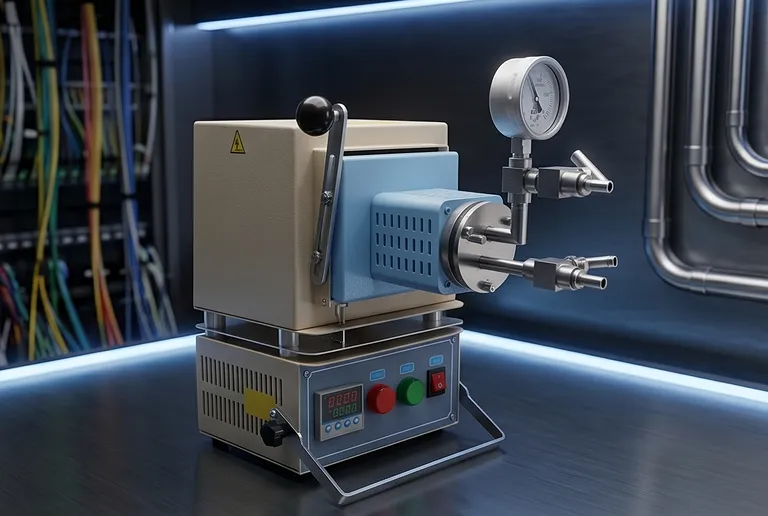
To achieve a specific outcome, the atmosphere must be matched to the material's chemical sensitivity:
- For Absolute Protection: Utilize high-purity Argon paired with liquid-cooled end seals.
- For Volatile Extraction: Use Nitrogen with a high-frequency flow rate to carry away off-gasses before they can re-deposit.
- For Phase Control: Implement Vacuum conditions to lower boiling points and ensure clean structural carbonization.
The THERMUNITS Standard

At THERMUNITS, we understand that the furnace is a vessel for your intellectual property. Our systems—from Rotary Kilns to Vacuum Induction Melting (VIM) furnaces—are designed with the understanding that isolation is just as important as insulation.
Whether you are working in CVD/PECVD or advanced material R&D, our equipment provides the gas-tight integrity and mass flow precision required to turn a hypothesis into a breakthrough.
Quick Links
Suggested Products
High Temperature Tube Furnace 1500C with Sliding Flanges and 50mm OD for Rapid Thermal Processing Fast Heating and Cooling Vertical 1700C Vacuum and Atmosphere Tube Furnace with 80mm Alumina Tube 1100C Tube Furnace with Vacuum Flange and Programmable Temperature Controller for Material Science and Industrial Heat Treatment Compact High Temperature 1600C Tube Furnace with 50mm Alumina Tube and Vacuum Flanges for Material Sintering 900°C Max Rotary Tube Furnace with 8 Inch 310S Alloy Tube and Optional Multi Zone Heating for Industrial Material CalcinationFurther Reading
The Architecture of Absence: Why Atmosphere Control Defines the Fate of Mesoporous Carbon The Geometry of Heat: Engineering Magnetic Biochar Through Controlled Pyrolysis The Invisible Architect: Precision Thermal Oxidation in NiO@Ni Synthesis The Geometry of Heat: Forging the Structural DNA of Dicalcium Ferrite The Architecture of Heat: Why Verticality Defines Modern Metallurgical Simulation
ThermUnits
Last updated on Apr 14, 2026
Related Products

High Temperature Tube Furnace 1500C with Sliding Flanges and 50mm OD for Rapid Thermal Processing Fast Heating and Cooling

Vertical 1700C Vacuum and Atmosphere Tube Furnace with 80mm Alumina Tube

1100C Tube Furnace with Vacuum Flange and Programmable Temperature Controller for Material Science and Industrial Heat Treatment

Compact High Temperature 1600C Tube Furnace with 50mm Alumina Tube and Vacuum Flanges for Material Sintering
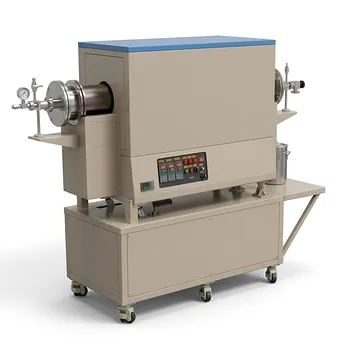
900°C Max Rotary Tube Furnace with 8 Inch 310S Alloy Tube and Optional Multi Zone Heating for Industrial Material Calcination

1700C Hydrogen Gas Tube Furnace with 60mm Alumina Process Tube and Integrated Hydrogen Safety Detector

High Temperature 1700C Tube Furnace with High Vacuum Turbomolecular Pump System and Multi Channel Mass Flow Controller Gas Mixer
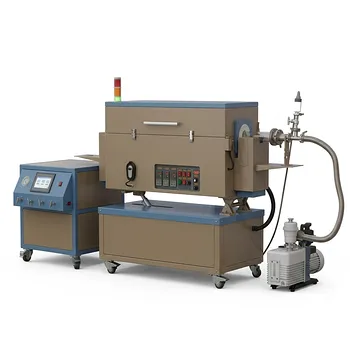
5 Inch Three Zone Rotary Tube Furnace with Integrated Gas Delivery System and 1200C Capability for Advanced Material CVD Processing

1200C High Throughput Multi Channel Tube Furnace with 50mm Quartz Tubes for Annealing and Material Phase Diagram Research

Three Zone Tube Furnace with 11 Inch or 15 Inch Quartz Tube and Hinged Flanges for Vacuum Atmosphere Heat Treatment

1200°C 5 Inch Vertical Quartz Tube Furnace with Stainless Steel Vacuum Flanges

1800C High Temperature Compact Vacuum Tube Furnace with 60mm OD Alumina Tube and Kanthal MoSi2 Heating Elements

High Temperature 1700C Benchtop Tube Furnace with 5 Inch Heating Zone High Purity Alumina Tube and Vacuum Sealing Flanges

High Temperature 1700C Six Zone Split Tube Furnace with Alumina Tube and Water Cooled Flanges
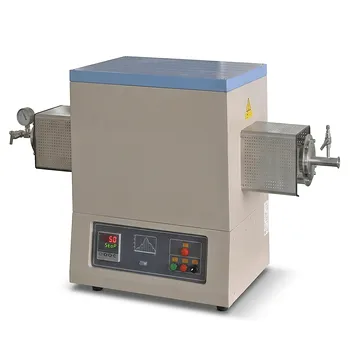
High Temperature 1700C Tube Furnace with 4 Inch OD Alumina Tube and Vacuum Sealing Flanges

Compact Vertical Split Quartz Tube Furnace with Stainless Steel Vacuum Flanges for Rapid Thermal Quenching and Controlled Atmosphere Material Processing
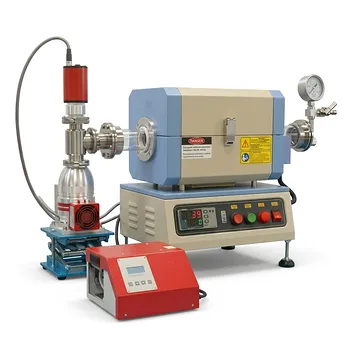
High Vacuum Compact Tube Furnace 1200C with Integrated Turbo Pump System and 8 Inch Heating Zone
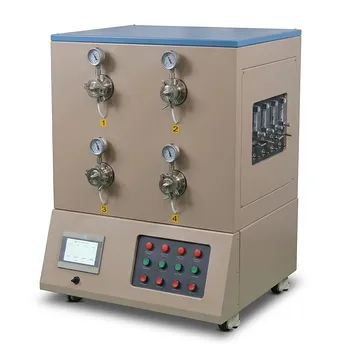
High Throughput 1200C Four Channel Tube Furnace with 3 Inch Quartz Tubes for Multi Zone Annealing and Material Research

High Temperature Automated 5 Inch Tube Furnace for Autonomous Material Research and Advanced Laboratory R&D