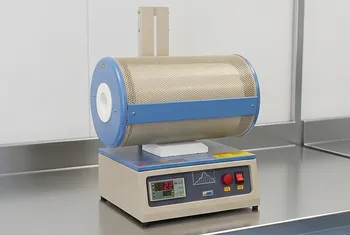
The Architecture of Absence: The Invisible Logic of Nitrogen Purging
Jun 26, 2026
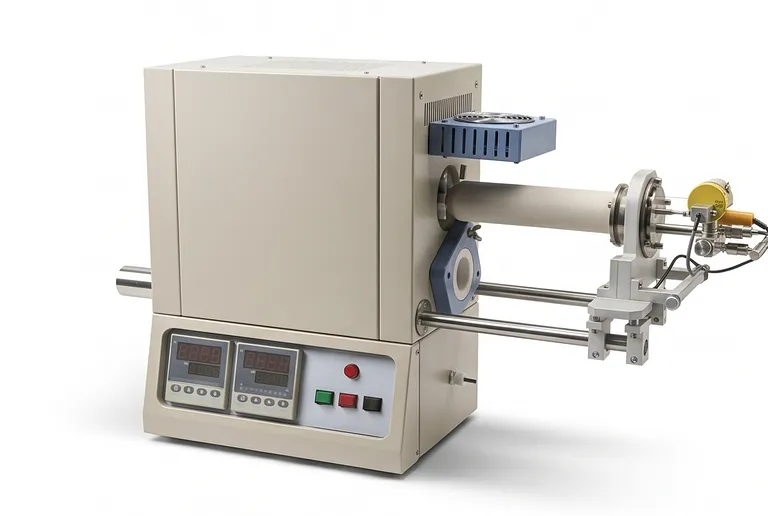
In material science, what we remove is often more important than what we add.
Imagine a researcher spending weeks synthesizing a complex lignin-based precursor. They place it inside a tube furnace, set the temperature to 800°C, and wait. If the atmosphere isn't managed with surgical precision, that weeks-long effort doesn't become high-performance biochar; it simply becomes ash.
The difference between a breakthrough and a bucket of grey dust is the invisible architecture of nitrogen purging.
The Strategic Displacement of Chaos
At its core, conventional pyrolysis (CP) is an exercise in restraint. We want the heat to break chemical bonds, but we do not want oxygen to facilitate combustion.
Nitrogen purging serves as the fundamental mechanism for ensuring anaerobic thermochemical cracking. By flooding the furnace chamber, nitrogen displaces oxygen, effectively "turning off" the possibility of fire.
- Preventing Oxidative Combustion: Without nitrogen, high heat causes the organic feedstock to ignite.
- Enabling Pure Cracking: In an inert environment, materials break down solely through heat-driven decomposition, allowing for the precise study of carbon frameworks.
Mass Transport: The Carrier’s Burden
A furnace is not a static box; it is a dynamic chemical reactor. As the temperature rises, the feedstock begins to "bleed" volatile organic compounds (VOCs) and tars.
If these volatiles linger, they settle back onto the sample, causing secondary reactions that "choke" the development of the material’s pore structure. Nitrogen acts as the furnace’s respiratory system.
- Continuous Extraction: The gas flow carries away byproducts, maintaining a clean gradient.
- Pore Development: This is critical for activated carbon production, where the "clean development" of internal surface area determines the final value of the product.
The Fragility of Surface Morphology
There is a certain "engineer’s romance" in the delicate preservation of a microstructure. Trace amounts of oxygen—even at the parts-per-million level—can cause what researchers call "oxidative ablation."
This is the microscopic erosion of the material’s surface. For sensitive materials like lignin fibers or graphene precursors, this erosion destroys the functional groups that give the material its purpose. Nitrogen is the shield that keeps these structures intact.
The Psychology of the Flow Rate
In engineering, more is not always better. The management of nitrogen flow requires a balance between chemical purity and thermal stability.
| Parameter | The Risk of Low Flow | The Risk of High Flow |
|---|---|---|
| Purge Quality | Residual oxygen causes surface damage. | High purity is maintained. |
| Volatile Removal | VOCs accumulate and re-deposit on samples. | Volatiles are removed effectively. |
| Thermal Stability | Consistent temperature profile. | Cold gas creates thermal gradients. |
| Physical Integrity | Samples remain undisturbed. | Fine powders may be blown out of the boat. |
Engineering the Ideal Environment
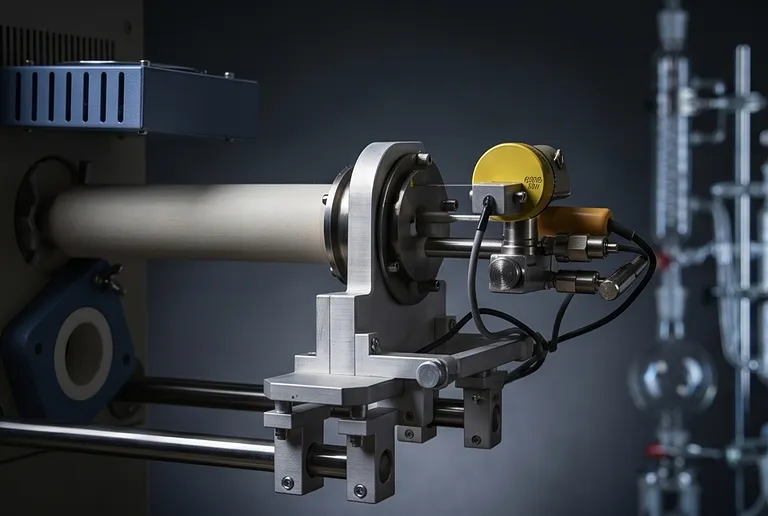
The success of a pyrolysis experiment depends on the hardware’s ability to maintain a hermetic seal and a controlled flow.
At THERMUNITS, we design our high-temperature laboratory equipment—from Vacuum and Atmosphere Tube Furnaces to CVD systems—to provide researchers with absolute control over these invisible variables. Whether you are producing graphene or analyzing biochar yields, the equipment must ensure that the "absence of oxygen" is a constant, not a variable.
Our range of thermal processing solutions, including Rotary Kilns, Hot Press Furnaces, and Vacuum Induction Melting (VIM) units, are built for the rigors of R&D where precision is the only currency that matters.
Master your thermal environment and ensure the integrity of your research—Contact Our Experts.
Quick Links
Suggested Products
Vertical 1700C Vacuum and Atmosphere Tube Furnace with 80mm Alumina Tube Compact High Temperature 1600C Tube Furnace with 50mm Alumina Tube and Vacuum Flanges for Material Sintering 900°C Max Rotary Tube Furnace with 8 Inch 310S Alloy Tube and Optional Multi Zone Heating for Industrial Material Calcination Split Vertical Tube Furnace with 1200C Quartz Tube and Stainless Steel Vacuum Flanges for Rapid Thermal Processing High Temperature 1700C Tube Furnace with High Vacuum Turbomolecular Pump System and Multi Channel Mass Flow Controller Gas MixerFurther Reading
The Silent Guardian of Kinetics: The Engineering Logic Behind Stable Molten Salt Environments The Architecture of Isolation: Why Atmosphere Defines Material Destiny The Invisible Architect: Precision Thermal Oxidation in NiO@Ni Synthesis The Architecture of Thrifty Precision: Why Tube Furnaces Define the R&D Continuity The Architect of Atoms: Why Precision is the Only Currency in TMD Synthesis
ThermUnits
Last updated on Apr 14, 2026
Related Products

Vertical 1700C Vacuum and Atmosphere Tube Furnace with 80mm Alumina Tube

Compact High Temperature 1600C Tube Furnace with 50mm Alumina Tube and Vacuum Flanges for Material Sintering
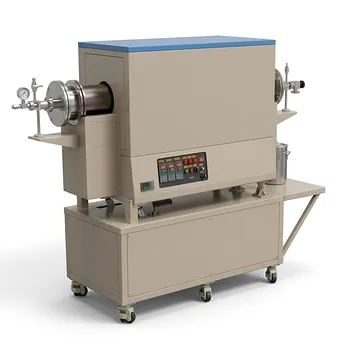
900°C Max Rotary Tube Furnace with 8 Inch 310S Alloy Tube and Optional Multi Zone Heating for Industrial Material Calcination
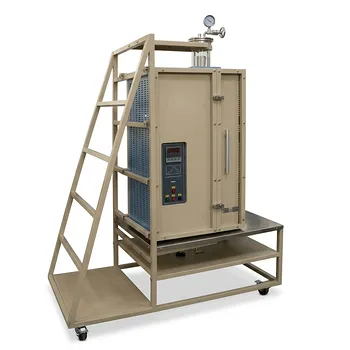
Split Vertical Tube Furnace with 1200C Quartz Tube and Stainless Steel Vacuum Flanges for Rapid Thermal Processing

High Temperature 1700C Tube Furnace with High Vacuum Turbomolecular Pump System and Multi Channel Mass Flow Controller Gas Mixer

1100C Tube Furnace with Vacuum Flange and Programmable Temperature Controller for Material Science and Industrial Heat Treatment
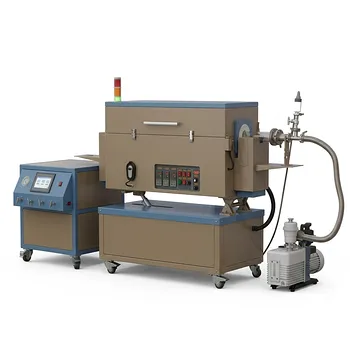
5 Inch Three Zone Rotary Tube Furnace with Integrated Gas Delivery System and 1200C Capability for Advanced Material CVD Processing

1700C Hydrogen Gas Tube Furnace with 60mm Alumina Process Tube and Integrated Hydrogen Safety Detector

1200°C 5 Inch Vertical Quartz Tube Furnace with Stainless Steel Vacuum Flanges

High Temperature 1700C Six Zone Split Tube Furnace with Alumina Tube and Water Cooled Flanges

Compact Vertical Split Quartz Tube Furnace with Stainless Steel Vacuum Flanges for Rapid Thermal Quenching and Controlled Atmosphere Material Processing

High Temperature 1700C Benchtop Tube Furnace with 5 Inch Heating Zone High Purity Alumina Tube and Vacuum Sealing Flanges

1200C High Throughput Multi Channel Tube Furnace with 50mm Quartz Tubes for Annealing and Material Phase Diagram Research

1800C High Temperature Compact Vacuum Tube Furnace with 60mm OD Alumina Tube and Kanthal MoSi2 Heating Elements

Three Zone Tube Furnace with 11 Inch or 15 Inch Quartz Tube and Hinged Flanges for Vacuum Atmosphere Heat Treatment

High Temperature 1700C Vertical Tube Furnace for Powder Spherification and Material Sintering
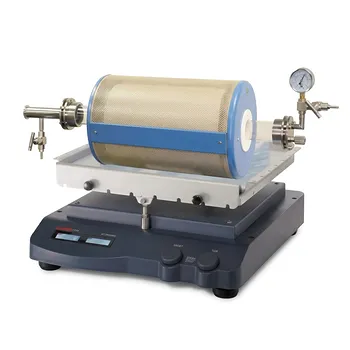
High Temperature Rocking Tube Furnace with Quartz Tube and Vacuum Flange for Materials Synthesis

High Temperature Automated 5 Inch Tube Furnace for Autonomous Material Research and Advanced Laboratory R&D
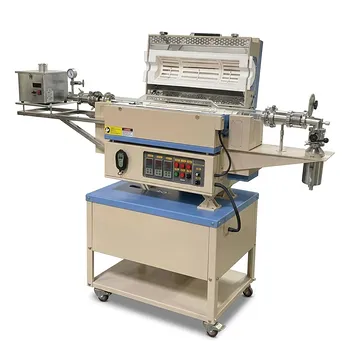
5 Inch Rotary Tube Furnace with Automatic Feeding and Receiving System 1200C Three Zone CVD Powder Processing