How do industrial-grade annealing furnaces ensure structural stability in advanced materials? - Expert Thermal Insights
Updated 3 months ago
Industrial-grade annealing furnaces ensure structural stability by providing a precise, uniform thermal environment that dictates the evolution of a material's microstructure. Through the rigid control of temperature curves, soaking times, and atmospheric chemistry, these systems allow for the uniform distribution of strengthening phases while preventing undesirable grain growth. This level of thermodynamic management transforms a raw metallic structure into a stable, high-performance material capable of resisting deformation and thermal degradation.
Core Takeaway: Industrial annealing furnaces secure material stability by synchronizing high-precision temperature fields with specific cooling rates to manage grain size, eliminate internal stresses, and optimize the distribution of secondary phases.
Engineering a Uniform Thermal Environment
Maintaining Stable Thermodynamic Fields
High-precision furnaces are designed to provide a consistent thermal field over extended periods, often at specific temperatures like 600°C or up to 1130°C for solution treatments. This stability is critical for ensuring that the material reaches a state of thermodynamic equilibrium, which eliminates performance fluctuations across the workpiece.
Managing Precipitation Kinetics
By maintaining a stable high-temperature environment, furnaces promote the uniform distribution of precipitated phases, such as Al20Cu2Mn3 dispersoids or nanoscale secondary gamma prime phases. These dispersoids act as internal anchors, enhancing the material's strength and ensuring long-term thermal stability in demanding applications.
Microstructural Optimization and Grain Stability
Inhibiting Grain Coarsening
Precise heat treatment effectively inhibits the coarsening of non-recrystallized grains, a process that would otherwise weaken the material. By controlling the "pinning" of grain boundaries through dispersed particles, the furnace ensures the alloy retains a fine-grained structure, which is essential for high-temperature durability.
Stress Relief and Dislocation Management
Industrial furnaces facilitate recovery and recrystallization in hot-rolled or rapidly solidified alloys, effectively eliminating dislocation accumulation and internal stress. In Fe-based amorphous alloys, this controlled relaxation eliminates "free volume," which significantly reduces coercivity and enhances magnetic induction.
The Role of Atmospheric and Environmental Control
Protective and Reactive Environments
Advanced furnaces, such as sealed tube furnaces, allow for the introduction of specific flow rates of inert or reactive gases. This controlled microenvironment is vital for synthesizing materials with specific surface morphologies or preventing oxidation that would compromise structural integrity.
Precision Temperature Curves
Beyond simple heating, industrial furnaces utilize high-precision control systems to execute complex temperature ramps and soaking times. This repeatability is the fundamental hardware requirement for ensuring that every batch of material meets strict statistical significance in its mechanical properties.
Understanding the Trade-offs
Balancing Strength and Ductility
While extended soaking times can maximize the distribution of strengthening phases, they also increase the risk of over-aging or unwanted phase transformations. Over-stabilizing a material can sometimes lead to brittleness, requiring a precise trade-off between peak strength and the necessary plasticity for the final application.
Energy Consumption vs. Precision
Maintaining an extremely uniform thermal field over large volumes requires significant energy input and sophisticated insulation. Engineers must often balance the need for extreme precision with the operational costs associated with maintaining high-temperature stability for long durations.
How to Apply This to Your Project
Selecting the right heat treatment strategy depends on your specific material goals and the mechanical demands of the end-use environment.
- If your primary focus is High-Temperature Strength: Prioritize furnaces that offer precise control over precipitation kinetics to maximize the density of dispersoids.
- If your primary focus is Electrical or Magnetic Performance: Focus on systems that excel at stress relief and the elimination of internal dislocations to reduce electron scattering or coercivity.
- If your primary focus is Structural Homogeneity: Utilize furnaces with proven thermal field uniformity to ensure consistent grain size across large or complex components.
The structural stability of advanced metals is not merely a product of their chemistry, but a direct result of the precise thermodynamic history dictated by the furnace.
Summary Table:
| Key Mechanism | Impact on Material Stability |
|---|---|
| Thermal Uniformity | Ensures thermodynamic equilibrium and prevents performance fluctuations. |
| Kinetics Management | Promotes uniform precipitation of strengthening phases and inhibits grain coarsening. |
| Atmosphere Control | Protects structural integrity by preventing oxidation through inert or reactive gas flow. |
| Stress Relaxation | Eliminates internal dislocations and manages free volume for optimized ductility/magnetism. |
Elevate Your Material Research with THERMUNITS
As a leading manufacturer of high-temperature laboratory equipment, THERMUNITS provides the precision tools required for advanced material science and industrial R&D. Our comprehensive range—including Muffle, Vacuum, Atmosphere, Tube, Rotary, and Hot Press furnaces, as well as CVD/PECVD systems, Electric Rotary Kilns, and Vacuum Induction Melting (VIM) furnaces—is engineered to deliver the exact thermodynamic control necessary for superior structural stability.
Whether you are optimizing precipitation kinetics or ensuring grain stability, our expert-grade thermal elements and systems provide the reliability your project demands. Contact our technical team today to discuss your specific heat treatment needs.
References
- Andrea Di Schino, Claudio Testani. Microstructure and Properties in Metals and Alloys (Volume 2). DOI: 10.3390/met14040473
Mentioned Products
- High Temperature Cold Wall Vacuum Furnace for Advanced Material Sintering and Annealing 1600C Heating Area 200x200x300mm
- 1200C Five Side Heating Muffle Furnace with Sliding Door 125L Volume High Temperature Heat Treatment System for Large Scale Sintering and Annealing
- High Temperature 1000C Vacuum Furnace with 8 Inch ID Chamber for Material Sintering and Research Annealing
- Large Bench Top 1700C High Temperature Muffle Furnace with 19L Chamber for Advanced Material Sintering and Annealing
- Five Side Heating Muffle Furnace High Purity Alumina Fiber 27L Chamber 1200C High Temperature Thermal Processing System for Sintering Annealing and Materials Research
People Also Ask
- What is the purpose of coating ceramic sheets with platinum paste? Achieve Stable High-Temp Ohmic Contacts
- What is the function of high-vacuum furnaces in (Mo2/3V1/3)n+1AlCn MAX phase synthesis? Ensure Purity & Diffusion.
- Why is high-vacuum annealing treatment essential in the preparation of multilayer composite separation membranes such as Pd/Ti?
- What Role Does a Vacuum Sintering Furnace Play in Ni-Mn-Ga Alloy Fabrication? Optimizing Porous Structures
- How does a vacuum or atmosphere sintering furnace contribute to the congener-welding process of carbon nitride membranes?

Tech Team · ThermUnits
Last updated on Jun 02, 2026
Related Products
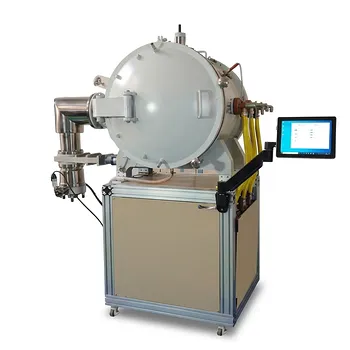
High Temperature Cold Wall Vacuum Furnace for Advanced Material Sintering and Annealing 1600C Heating Area 200x200x300mm
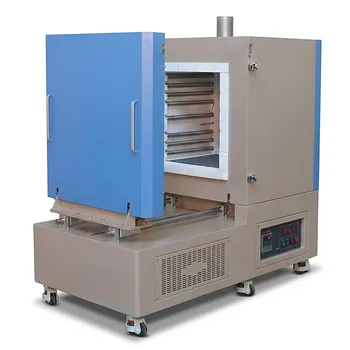
1200C Five Side Heating Muffle Furnace with Sliding Door 125L Volume High Temperature Heat Treatment System for Large Scale Sintering and Annealing
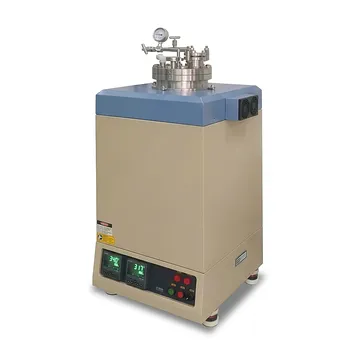
High Temperature 1000C Vacuum Furnace with 8 Inch ID Chamber for Material Sintering and Research Annealing
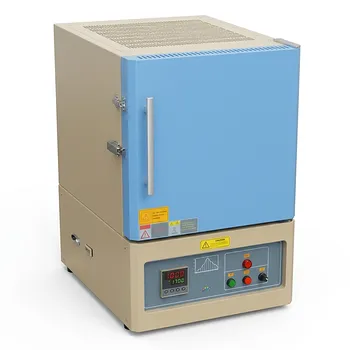
Large Bench Top 1700C High Temperature Muffle Furnace with 19L Chamber for Advanced Material Sintering and Annealing
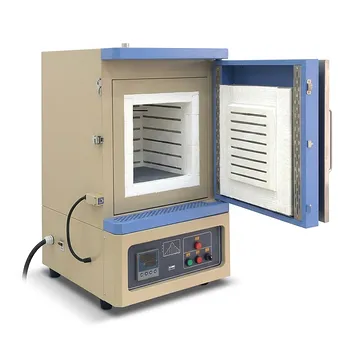
Five Side Heating Muffle Furnace High Purity Alumina Fiber 27L Chamber 1200C High Temperature Thermal Processing System for Sintering Annealing and Materials Research
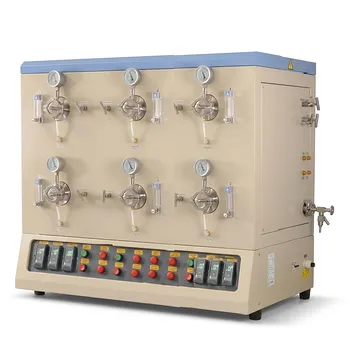
1200C High Throughput Multi Channel Tube Furnace with 50mm Quartz Tubes for Annealing and Material Phase Diagram Research
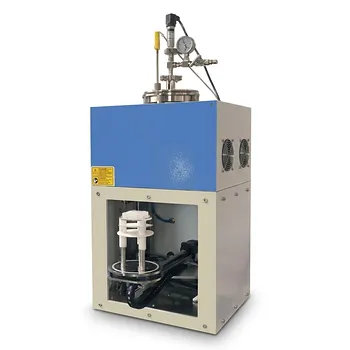
Rapid Thermal Processing Atmosphere Controlled Bottom Loading Furnace 1100C with 50C Per Second Heating Rate for Wafer Annealing
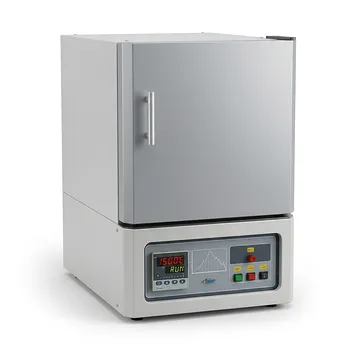
High Temperature 1500C Benchtop Muffle Furnace 3.6L Alumina Fiber Chamber Programmable Controller Sintering Annealing Carbonization Thermal Processing System
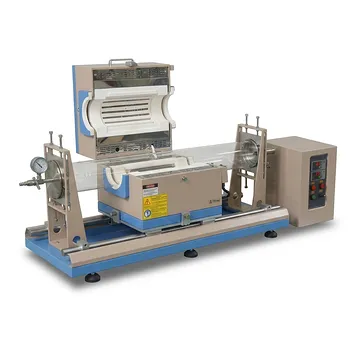
1200C High Temperature 5 Inch Sliding Tube Furnace for Rapid Thermal Processing RTP and Wafer Annealing
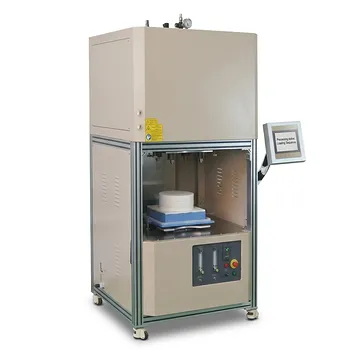
High Temperature Vertical Atmosphere Controlled Furnace with Automatic Bottom Loading and 1700°C Capacity for Advanced Material Research
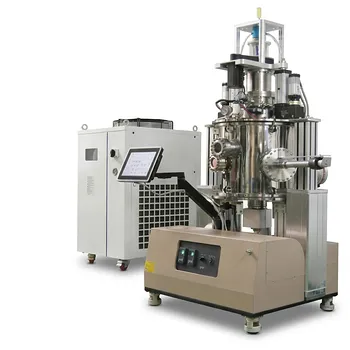
950C Rapid Thermal Processing Furnace for 12 Inch Wafer CSS Coating with Rotating Substrate Holder
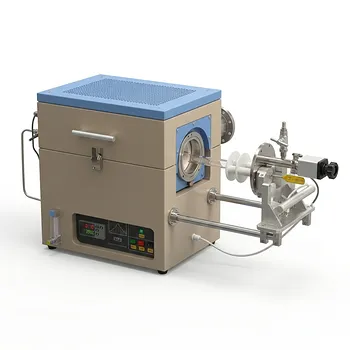
Compact Atmosphere Controlled Rapid Thermal Processing RTP Furnace with 4 Inch ID Quartz Tube 1100C
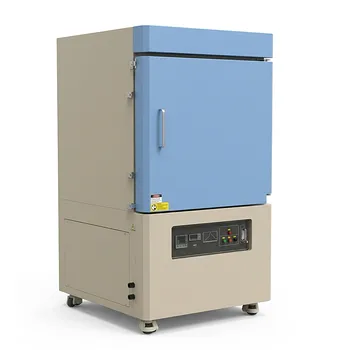
Industrial Large Box Furnace 1700C 216L High Temp Muffle Sintering System
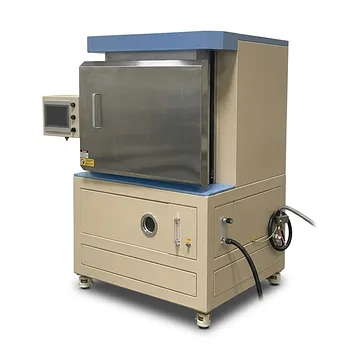
1650C High Temperature Atmosphere Controlled Box Furnace with 65L Chamber for Advanced Material Sintering and Industrial Heat Treatment
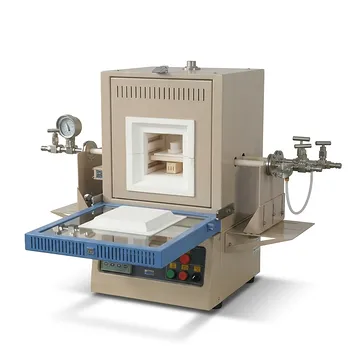
1700C Compact Hybrid Furnace with Dual Layer Box Sintering and Controlled Atmosphere Alumina Tubes
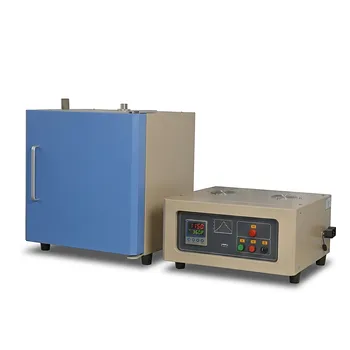
High Temperature Muffle Furnace with Alloy Chamber for Debinding and Sintering Applications
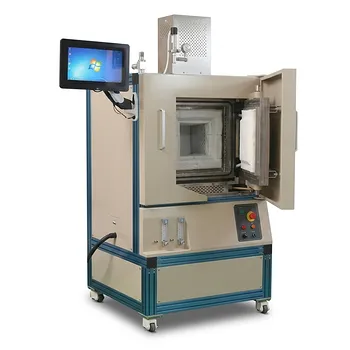
High Temperature Oxygen and Inert Atmosphere Controlled Furnace 8 Liter 1700C Sintering System for Advanced Materials RD
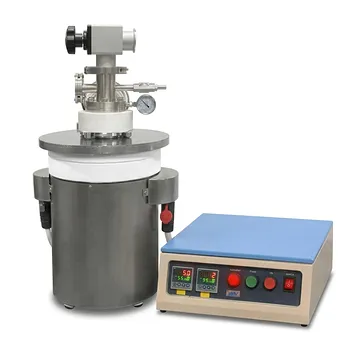
1100C High Temperature Vacuum Crucible Furnace with Quartz Chamber for Thermal Processing and Sintering
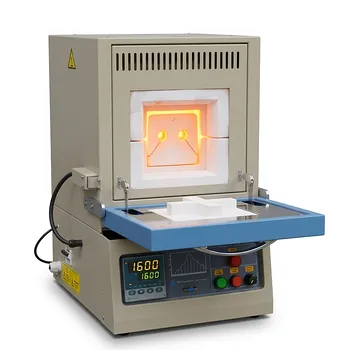
High Temperature Compact Muffle Furnace 1700 C with 30 Segment Programmable Controller and 1.7L Cubic Chamber