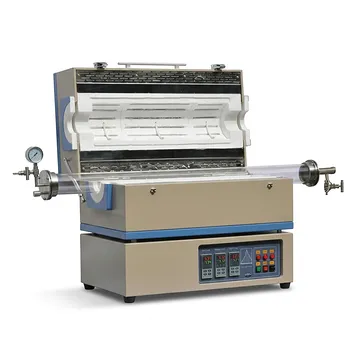
How does a high-temperature tube furnace facilitate the sintering of Bismuth Antimony Telluride (BiSbTe) materials?
Updated 3 months ago
The high-temperature tube furnace is the critical enabler for Bismuth Antimony Telluride (BiSbTe) sintering by providing a strictly controlled atmosphere and a stable thermal field. This environment allows for liquid-phase sintering induced by excess Tellurium (Te), achieving high material densification without the need for external pressure. By suppressing oxidation and managing lattice defects, the furnace directly optimizes the material's power factor and overall thermoelectric efficiency (zT).
The tube furnace transforms BiSbTe powder compacts into high-performance thermoelectric materials by facilitating atom migration and interface engineering within a protected, high-purity environment. It serves as a precision reactor where temperature and atmosphere are balanced to maximize conductivity and minimize thermal bypass.
Atmospheric Integrity and Oxidation Prevention
The Role of Forming Gas
Bismuth and Antimony are highly susceptible to oxidation at elevated temperatures, which can catastrophically degrade electrical performance. The tube furnace allows for the introduction of forming gas (typically a hydrogen-nitrogen mixture) or high-purity argon to purge oxygen. This reducing or inert environment ensures that the chemical composition of the BiSbTe remains stable during the heating cycle.
Preserving Elemental Stoichiometry
Precise atmosphere control prevents the volatile loss of components like Tellurium. By maintaining a sealed or controlled-flow environment, the furnace helps manage tellurium vacancies. Balancing these vacancies is essential for tuning the carrier concentration and achieving a high Seebeck coefficient.
Thermal Dynamics and Sintering Mechanisms
Facilitating Liquid-Phase Sintering
The furnace provides the specific thermal energy required to trigger liquid-phase sintering when excess Tellurium is present. This liquid phase acts as a medium that accelerates mass transport between BiSbTe particles. The result is a high degree of densification even under pressure-less conditions, which simplifies the manufacturing process.
Recrystallization and Grain Growth
Stable temperature fields promote the recrystallization of compacted films and powders. The furnace enables atoms to migrate across grain boundaries, increasing grain size and improving the material's crystallinity. Enhanced crystallinity reduces charge carrier scattering, which significantly boosts electrical conductivity.
Microstructural Evolution and Interface Engineering
Strengthening Nanosheet Connections
In composite or thin-film BiSbTe materials, the furnace facilitates the diffusion of atoms between adjacent nanosheets. This interface engineering transforms unstable surfaces into robust interface phases. These new phases strengthen physical connections and eliminate internal voids that would otherwise impede electron flow.
Suppression of Structural Defects
The uniform heating provided by a tube furnace ensures that the entire sample undergoes consistent phase transformation. This uniformity is vital for suppressing defects and ensuring a continuous conductive network throughout the composite. A well-controlled cooling rate further prevents the formation of secondary phases that could lower the zT value.
Understanding the Trade-offs
Temperature Precision vs. Tellurium Volatility
While higher temperatures accelerate sintering and densification, they also increase the vapor pressure of Tellurium. If the furnace temperature is not precisely controlled (often around 450 °C), excessive Tellurium loss can occur. This loss creates an imbalance in the carrier concentration, potentially shifting the material's semiconductor behavior and lowering efficiency.
Sintering Time vs. Grain Overgrowth
Extended holding times in the furnace can lead to excessive grain growth. While large grains generally improve mobility, they can also reduce the scattering of phonons at grain boundaries. Since phonon scattering is necessary to maintain low thermal conductivity, over-sintering may inadvertently decrease the overall thermoelectric performance.
Applying Furnace Parameters to Your Goal
How to Select Your Sintering Strategy
The optimization of BiSbTe depends entirely on your specific performance targets and material format.
- If your primary focus is maximizing electrical conductivity: Prioritize higher sintering temperatures and longer durations to promote grain growth and eliminate interface voids.
- If your primary focus is maintaining low thermal conductivity: Use shorter sintering cycles or lower temperatures to preserve nanostructures that effectively scatter phonons.
- If your primary focus is preventing material degradation: Ensure a strict forming gas flow (H2/N2) and utilize a tube furnace with high vacuum-tight integrity to eliminate oxygen traces.
The high-temperature tube furnace remains the definitive tool for bridging the gap between raw BiSbTe powders and high-efficiency thermoelectric devices.
Summary Table:
| Feature | Strategy in BiSbTe Sintering | Key Outcome |
|---|---|---|
| Atmosphere Control | Purging with forming gas ($H_2/N_2$) or Argon | Prevents oxidation; preserves stoichiometry |
| Liquid-Phase Sintering | Excess Tellurium (Te) at specific temperatures | High densification without external pressure |
| Thermal Uniformity | Stable recrystallization & grain growth | Enhanced electrical conductivity; lower defects |
| Interface Engineering | Diffusion-driven nanosheet bonding | Strengthened connections; eliminated voids |
| Process Tuning | Precise temperature (approx. 450 °C) & time | Balanced carrier concentration; optimized zT |
Maximize Your Thermoelectric Performance with THERMUNITS
Precision is the difference between average materials and high-efficiency thermoelectric devices. THERMUNITS is a leading manufacturer of high-temperature laboratory equipment specifically designed for material science and industrial R&D. Our specialized Tube Furnaces and Atmosphere Furnaces provide the vacuum-tight integrity and thermal stability required for the complex sintering of BiSbTe and other advanced composites.
From Muffle, Vacuum, and Rotary furnaces to advanced CVD/PECVD systems, Hot Press furnaces, and Vacuum Induction Melting (VIM) units, we offer a comprehensive range of thermal processing solutions. Let us help you achieve superior densification and optimized zT values with our state-of-the-art laboratory heat treatment equipment.
Ready to elevate your material research? Contact our technical experts at THERMUNITS today to find the ideal thermal solution for your laboratory!
References
- A. N. M. Tanvir, Yanliang Zhang. High-performance thermoelectric composites <i>via</i> scalable and low-cost ink processing. DOI: 10.1039/d4ee00866a
Mentioned Products
- Compact High Temperature 1600C Tube Furnace with 50mm Alumina Tube and Vacuum Flanges for Material Sintering
- Compact Vertical Split Quartz Tube Furnace with Stainless Steel Vacuum Flanges for Rapid Thermal Quenching and Controlled Atmosphere Material Processing
- High Temperature 1700C Vertical Tube Furnace for Powder Spherification and Material Sintering
- Compact Hybrid Muffle and Tube Furnace for 1000C Controlled Atmosphere Laboratory Material Sintering
- 1800C High Temperature Compact Vacuum Tube Furnace with 60mm OD Alumina Tube and Kanthal MoSi2 Heating Elements
People Also Ask
- What is the role of a high-temperature tube furnace in the calcination process of ZnO/In2O3 nanocomposites?
- Why is a high-temperature tube furnace required for CuAlO2 heat treatment? Master Phase Transformation Today
- Function of tube furnaces in cellulose aerogel carbonization? Achieve High-Performance Materials
- What role does a high-temperature tube furnace play in the carbonization? Mastering Precision Carbon Synthesis
- What role does a high-temperature tube furnace play in executing nitrogen absorption kinetic experiments? Expert Insights

Tech Team · ThermUnits
Last updated on Jun 02, 2026
Related Products

Compact High Temperature 1600C Tube Furnace with 50mm Alumina Tube and Vacuum Flanges for Material Sintering

Compact Vertical Split Quartz Tube Furnace with Stainless Steel Vacuum Flanges for Rapid Thermal Quenching and Controlled Atmosphere Material Processing

High Temperature 1700C Vertical Tube Furnace for Powder Spherification and Material Sintering
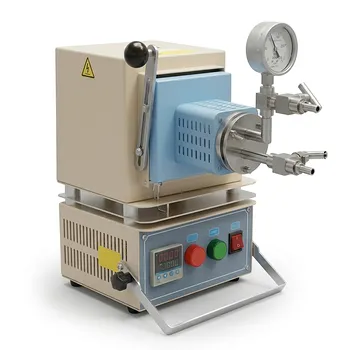
Compact Hybrid Muffle and Tube Furnace for 1000C Controlled Atmosphere Laboratory Material Sintering

1800C High Temperature Compact Vacuum Tube Furnace with 60mm OD Alumina Tube and Kanthal MoSi2 Heating Elements
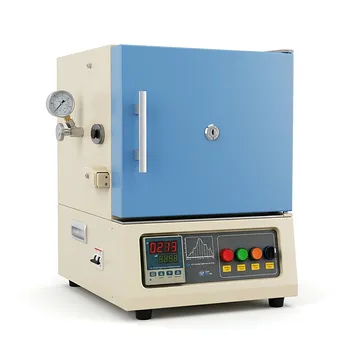
1200C Hybrid Muffle and Tube Furnace for Material Research with Dual Atmosphere Control Quartz Tubes
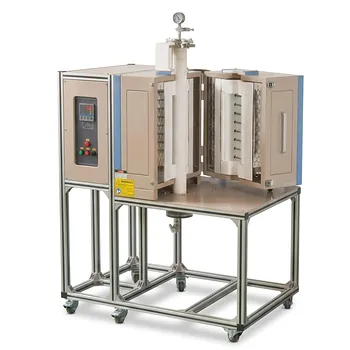
High Temperature 1700C Vertical Split Tube Furnace for Material Quenching and Single Crystal Growth
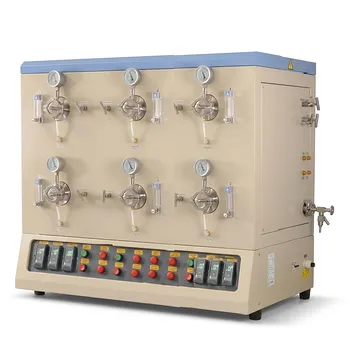
1200C High Throughput Multi Channel Tube Furnace with 50mm Quartz Tubes for Annealing and Material Phase Diagram Research
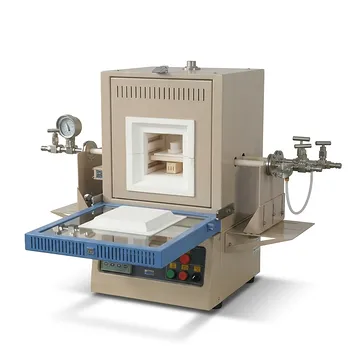
1700C Compact Hybrid Furnace with Dual Layer Box Sintering and Controlled Atmosphere Alumina Tubes

Vertical 1700C Vacuum and Atmosphere Tube Furnace with 80mm Alumina Tube
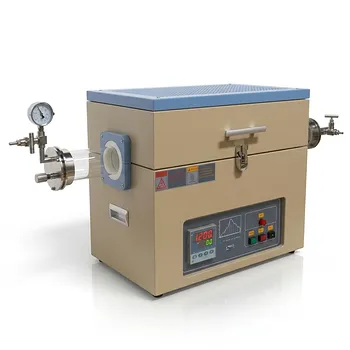
High Temperature 1200C Split Tube Furnace with Optional Quartz Tube Sizes and Vacuum Sealing Flanges for Material Science Research
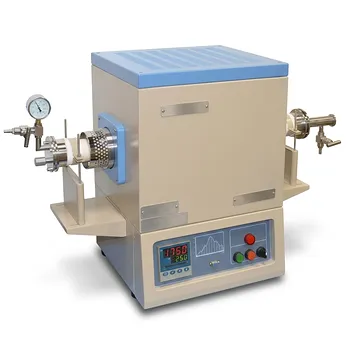
High Temperature Compact Vacuum Tube Furnace 1750C Max 60mm OD Alumina Tube
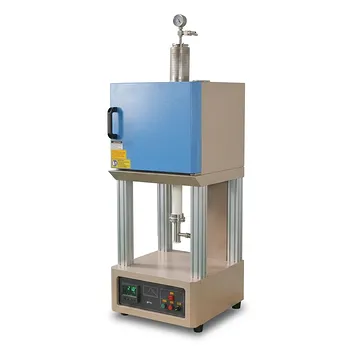
Hybrid High Temperature Tube and Box Furnace 1700C with 2 Inch Alumina Tube for Material Research

High Temperature Automated 5 Inch Tube Furnace for Autonomous Material Research and Advanced Laboratory R&D

1200°C 5 Inch Vertical Quartz Tube Furnace with Stainless Steel Vacuum Flanges
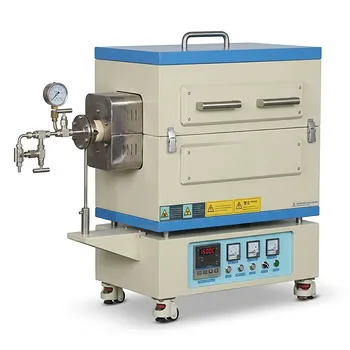
High Temperature Split Tube Furnace 1500C for Material Research Vacuum and Atmosphere Thermal Processing
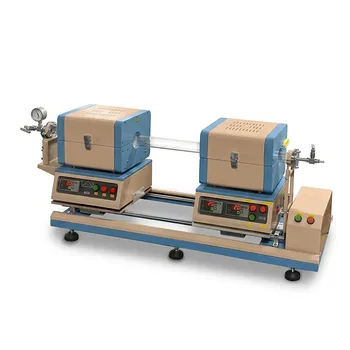
High Temperature 1200C Automatic Sliding Dual Zone Tube Furnace for 2D Transition Metal Dichalcogenides Growth and Material Sublimation Research

High Temperature 1700C Benchtop Tube Furnace with 5 Inch Heating Zone High Purity Alumina Tube and Vacuum Sealing Flanges
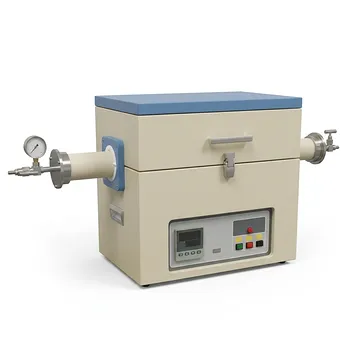
1250C Split Tube Furnace with 3 Inch Mullite Tube and Vacuum Sealing Flanges for Precision Thermal Processing