How does a laboratory tube furnace facilitate active site formation in Ag/alpha-Al2O3 catalysts? Optimize Your Results
Updated 3 months ago
A laboratory tube furnace serves as the critical environment for catalyst activation, transforming inert precursors into functional active sites through precise thermal and atmospheric control. During the calcination of $Ag/\alpha-Al_2O_3$ catalysts, the furnace provides a stable nitrogen atmosphere and a strictly maintained temperature—typically around $450^{\circ}C$—to induce the complete thermal decomposition of organic silver complex precursors. This process is the foundation for developing silver active centers with the specific oxidation states and microstructures required for high-performance epoxidation reactions.
Core Takeaway: The tube furnace facilitates active site formation by providing the exact energy and chemical environment needed to decompose precursors and anchor silver particles. Without this precision, the silver cannot achieve the specific oxidation states and dispersion necessary for catalytic activity.
Thermal Decomposition and Precursor Transformation
Achieving Complete Organic Breakdown
The primary function of the furnace is to provide the energy required to break chemical bonds within the organic silver complex precursors. At $450^{\circ}C$, the thermal energy is sufficient to ensure the complete removal of organic ligands, leaving behind pure silver components. If this decomposition is incomplete, residual carbon can poison the catalyst and block access to the silver surface.
Engineering Specific Oxidation States
The furnace environment directly influences the electronic state of the silver. By controlling the heat and duration of the calcination, the furnace allows for the formation of silver active centers with optimized oxidation states. These specific states are essential because they dictate how the catalyst interacts with reactants during the subsequent epoxidation process.
Controlling Microstructural Development
As the precursors decompose, the silver atoms must rearrange into specific microstructures on the $\alpha-Al_2O_3$ carrier. The furnace provides the stable thermal environment necessary for these atoms to migrate and form the precise geometric arrangements required for catalysis. This "structural tuning" is only possible when the temperature is held constant across the entire catalyst bed.
The Role of Atmosphere and Uniformity
Stabilizing the Nitrogen Environment
The use of a nitrogen atmosphere in the tube furnace prevents uncontrolled oxidation of the silver during the heating process. This inert environment ensures that the decomposition of the organic precursor is the dominant reaction, rather than combustion. This stability is vital for maintaining the integrity of the silver active centers as they form.
Ensuring Particle Dispersion and Preventing Agglomeration
A high-quality tube furnace maintains thermal uniformity, which is critical for ensuring that silver particles form at a nano- or micro-scale within the pores of the support. Precise temperature control prevents "hot spots" that would cause silver particles to melt together, or sinter. Avoiding this agglomeration ensures a high surface area, which maximizes the number of available active sites.
Removal of Volatile Byproducts
As the precursors decompose, they release volatile organic compounds and moisture that must be efficiently removed. The steady flow of gas within a tube furnace carries these byproducts away from the catalyst surface. This prevents secondary reactions between the byproducts and the forming silver sites, which could otherwise degrade catalyst performance.
Understanding the Trade-offs
Temperature vs. Surface Area
While higher temperatures ensure the complete removal of precursors, they also increase the risk of sintering the silver particles. Finding the "sweet spot"—such as the $450^{\circ}C$ mentioned—is a delicate balance between achieving chemical purity and maintaining a high active surface area. Excessive heat will inevitably lead to larger, less active silver clusters.
Atmosphere Purity and Catalyst Poisoning
The effectiveness of the calcination is highly dependent on the purity of the furnace atmosphere. Even trace amounts of oxygen or moisture in the nitrogen stream can alter the final oxidation state of the silver. Technical advisors must ensure that the furnace seals are airtight and the gas delivery system is high-purity to avoid inconsistent catalyst batches.
Optimizing Your Calcination Protocol
Success in catalyst preparation depends on aligning furnace parameters with your specific performance targets.
- If your primary focus is maximum initial activity: Prioritize precise temperature ramp rates to ensure uniform precursor decomposition without early-stage particle growth.
- If your primary focus is long-term stability: Focus on a slightly longer calcination time at a stable temperature to ensure all unstable functional groups are removed and the silver is firmly anchored to the $\alpha-Al_2O_3$ support.
- If your primary focus is selectivity in epoxidation: Ensure the nitrogen atmosphere is ultra-pure to strictly control the oxidation states of the silver active centers.
The laboratory tube furnace is the decisive tool for transforming raw chemical precursors into a sophisticated, high-performance silver catalyst.
Summary Table:
| Calcination Factor | Tube Furnace Role | Impact on Active Sites |
|---|---|---|
| Thermal Energy | Precise 450°C heat delivery | Ensures complete decomposition of organic silver precursors. |
| Atmosphere Control | High-purity Nitrogen flow | Prevents oxidation and ensures specific silver electronic states. |
| Thermal Uniformity | Constant heat across catalyst bed | Controls particle dispersion and prevents performance-killing sintering. |
| Byproduct Removal | Steady gas flow design | Efficiently carries away volatiles to prevent secondary reactions. |
Elevate Your Material Research with THERMUNITS
At THERMUNITS, we understand that catalyst performance depends on the precision of your thermal environment. As a leading manufacturer of high-temperature laboratory equipment, we specialize in providing material science and industrial R&D teams with advanced thermal processing solutions.
From our precision Tube and Vacuum Furnaces to advanced CVD/PECVD systems, Muffle, Rotary, and Hot Press furnaces, we offer the tools necessary to achieve specific oxidation states and optimal microstructures in your catalysts.
Ready to optimize your heat treatment protocols? Contact THERMUNITS Today to discuss your specific requirements with our technical experts!
References
- Adhika Setiawan, Srinivas Rangarajan. Expanding the Reaction Network of Ethylene Epoxidation on Partially Oxidized Silver Catalysts. DOI: 10.1021/acscatal.4c04521
Mentioned Products
- 900°C Max Rotary Tube Furnace with 8 Inch 310S Alloy Tube and Optional Multi Zone Heating for Industrial Material Calcination
- Dual Zone Rotary Tube Furnace for Uniform Powder Calcination 1000C 2 Inch Quartz Tube
- Twelve Zone 1700°C Multi Zone Split Tube Furnace with 100mm Alumina Processing Tube and Independent Temperature Gradient Control
- High Temperature 1700C Vertical Tube Furnace for Powder Spherification and Material Sintering
- Compact High Temperature 1600C Tube Furnace with 50mm Alumina Tube and Vacuum Flanges for Material Sintering
People Also Ask
- How does a rotary tube furnace improve the processing of granular materials? Enhance Uniformity and Reaction Kinetics
- Why use a rotary tube furnace for FACS carbonization? Ensure uniform morphology and prevent sphere agglomeration.
- Why is the precise optimization of residence time essential in the catalyst calcination process? Maximize Your Yields.
- In what ways do rotary tube furnaces enhance chemical and specialty mineral processing? Drive Precision and Uniformity.
- What parameters must operators control to maintain product quality in a rotary furnace? Master Your Heat Treatment.

Tech Team · ThermUnits
Last updated on Jun 02, 2026
Related Products
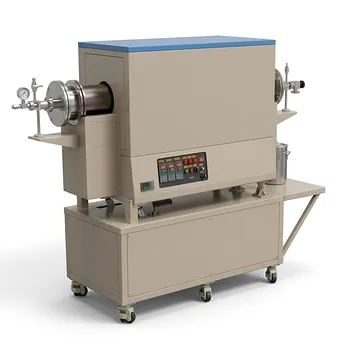
900°C Max Rotary Tube Furnace with 8 Inch 310S Alloy Tube and Optional Multi Zone Heating for Industrial Material Calcination
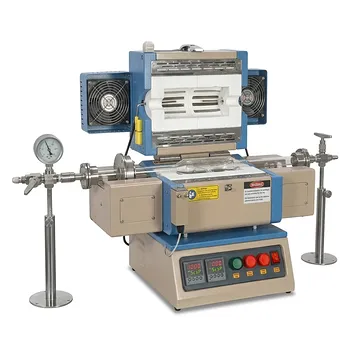
Dual Zone Rotary Tube Furnace for Uniform Powder Calcination 1000C 2 Inch Quartz Tube
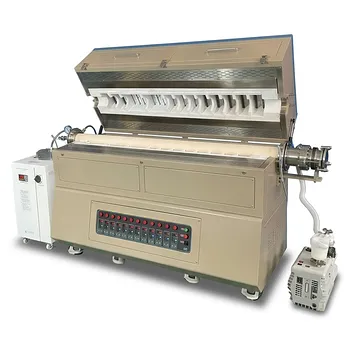
Twelve Zone 1700°C Multi Zone Split Tube Furnace with 100mm Alumina Processing Tube and Independent Temperature Gradient Control

High Temperature 1700C Vertical Tube Furnace for Powder Spherification and Material Sintering

Compact High Temperature 1600C Tube Furnace with 50mm Alumina Tube and Vacuum Flanges for Material Sintering
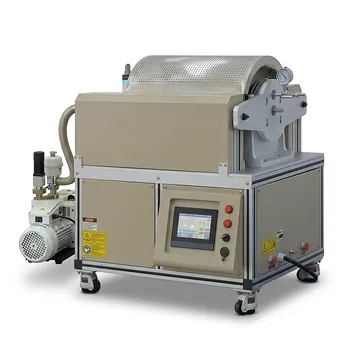
Automated 1200 C Tube Furnace for AI Material Research with 6 Inch OD and Sliding Flange

1800C High Temperature Compact Vacuum Tube Furnace with 60mm OD Alumina Tube and Kanthal MoSi2 Heating Elements
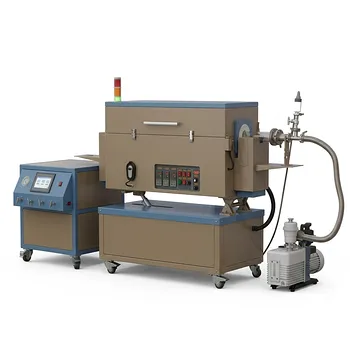
5 Inch Three Zone Rotary Tube Furnace with Integrated Gas Delivery System and 1200C Capability for Advanced Material CVD Processing
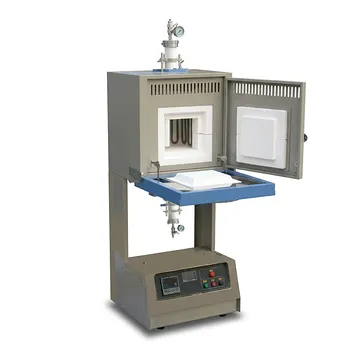
Vertical Hybrid High Temperature Furnace 1500C Alumina Tube SOFC Fuel Cell Testing Laboratory Heat Treatment Research Equipment

Vertical 1700C Vacuum and Atmosphere Tube Furnace with 80mm Alumina Tube
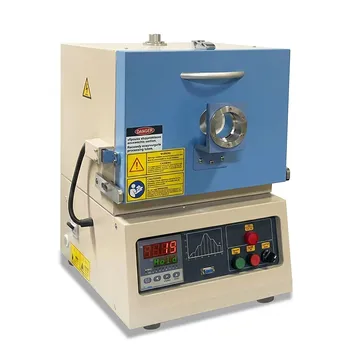
High Temperature Hybrid Muffle and Tube Furnace 1700C Programmable PID Controlled Box System with Vacuum Flange and Alumina Processing Tube
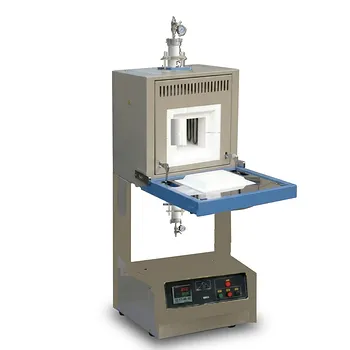
High Temperature Vertical Hybrid Furnace with Alumina Tube and SiC Heating for SOFC Coin Cell Testing and Atmosphere Processing
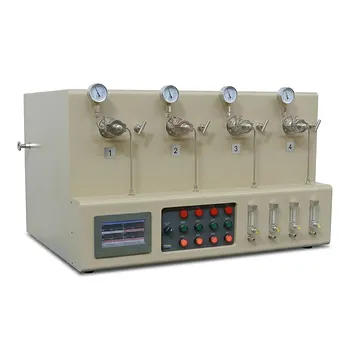
High Temperature 1700C 4 Channel Tube Furnace 1 Inch Alumina Tube for Hi-Throughput Annealing
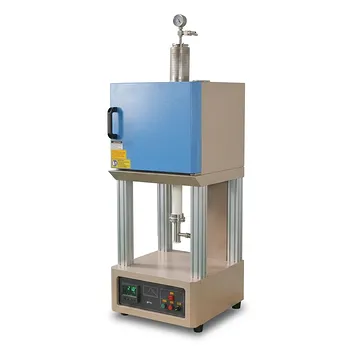
Hybrid High Temperature Tube and Box Furnace 1700C with 2 Inch Alumina Tube for Material Research
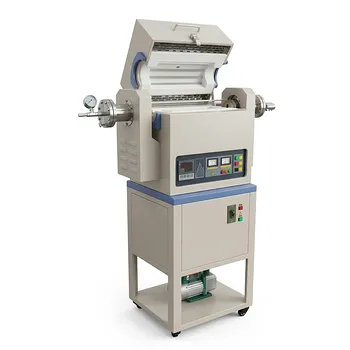
High Temperature Rotary Tilt Tubular Furnaces for Advanced Powder Sintering and Material Processing
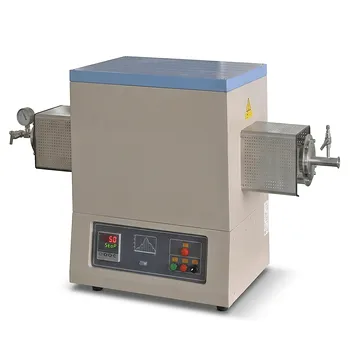
High Temperature 1700C Tube Furnace with 4 Inch OD Alumina Tube and Vacuum Sealing Flanges
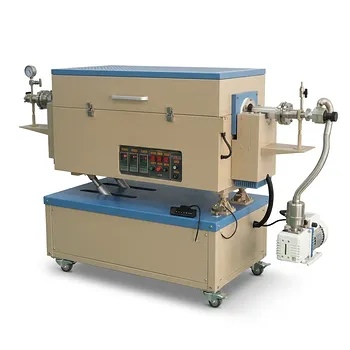
Three Zone Rotary Tube Furnace for High Temperature Powder Processing and Material Research

1750°C High Temperature Benchtop Vacuum Atmosphere Tube Furnace with Kanthal Super 1800 Heating Elements and 60mm Alumina Processing Tube

High Temperature Automated 5 Inch Tube Furnace for Autonomous Material Research and Advanced Laboratory R&D
