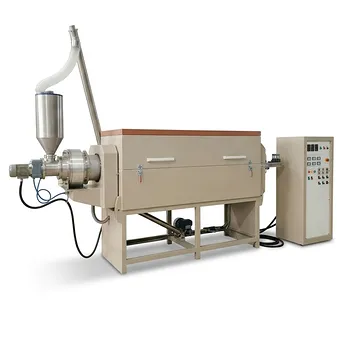
How does a laboratory tube furnace maintain biochar quality during pyrolysis? Master Precision Carbonization
Updated 3 months ago
A laboratory tube furnace maintains biochar quality by providing a strictly controlled, anaerobic thermal environment that ensures uniform thermochemical decomposition while preventing oxidative combustion. This is achieved through the integration of a sealed reaction chamber, precise programmable temperature profiles, and a continuous flow of inert gas—typically high-purity nitrogen—to isolate the biomass from oxygen.
The tube furnace acts as a precision reactor that transforms biomass into biochar by facilitating carbonization rather than combustion. By eliminating oxygen and regulating heat, it ensures the resulting product possesses a stable chemical skeleton and a highly developed pore structure.
The Role of Atmosphere Control in Biochar Purity
Eliminating Oxidative Combustion
A tube furnace uses a sealed tube design to create a strictly anaerobic or oxygen-limited environment. By introducing a constant flow of inert nitrogen (often at rates like 500 mL/min), the furnace displaces oxygen that would otherwise cause the biomass to burn into ash.
Preserving the Carbon Skeleton
Without oxygen, biomass undergoes pyrolysis—a process of thermal degradation rather than burning. This environment maximizes the retention of the carbon skeleton, ensuring the final biochar has the high carbon content and stable chemical composition required for research or industrial applications.
Facilitating Chemical Activation
The closed system allows for the introduction of specific activating agents such as CO2 or steam. These gases interact with the carbonized material to create functional surface groups and specific surface areas that define the biochar's ultimate adsorption performance.
Precision Thermal Management for Structural Integrity
Controlling the Decomposition of Biomass Components
Biomass consists of complex polymers: hemicellulose, cellulose, and lignin, each decomposing at different temperatures. The furnace's ability to maintain specific temperatures (often between 400°C and 600°C) ensures these components degrade in a controlled sequence to form a stable aromatic carbon skeleton.
The Impact of Programmable Heating Rates
Precise control over the heating rate (e.g., 10°C/min to 30°C/min) is critical for determining the biochar's physical properties. Controlled heating prevents internal pressure build-up from volatile gases, which helps in forming a consistent honeycomb microporous structure.
Uniformity through Dwell Time and Sintering
The furnace allows for specific residence times or "dwell times," where the material is held at a peak temperature for a set duration. This ensures the complete removal of volatile matter and allows the carbon elements to reorganize into stable graphitic or amorphous frameworks.
Understanding the Trade-offs and Pitfalls
Heating Rate vs. Pore Development
While rapid heating can increase throughput, it may lead to "cracking" or structural collapse of the biochar's delicate pore network. Conversely, extremely slow heating rates may optimize pore structure but can result in lower yields of certain volatile-derived compounds.
Gas Flow Dynamics and Temperature Gradients
Inadequate gas flow can allow volatile byproducts to re-condense on the biochar surface, potentially clogging pores and altering the chemical profile. Additionally, if the tube is too large or the sample too dense, thermal gradients may occur, leading to inconsistent carbonization between the outer and inner layers of the biomass.
How to Optimize Your Pyrolysis Process
Making the Right Choice for Your Goal
- If your primary focus is Maximum Surface Area: Utilize a slow heating rate (approx. 10°C/min) and introduce chemical activators like CO2 during the dwell phase to enhance micropore formation.
- If your primary focus is High Carbon Yield: Maintain a strictly anaerobic nitrogen environment at lower pyrolysis temperatures (near 400°C) to prevent the loss of carbon through excessive gasification.
- If your primary focus is Chemical Stability: Extend the dwell time at higher temperatures (600°C+) to ensure the complete reorganization of carbon into a stable, aromatic framework.
By mastering the balance between atmosphere, temperature, and time, the tube furnace transforms raw biomass into a high-performance, technically consistent carbon material.
Summary Table:
| Key Feature | Functional Role | Impact on Biochar Quality |
|---|---|---|
| Inert Gas Flow (N2) | Displaces oxygen | Prevents oxidative combustion; ensures high carbon purity. |
| Sealed Tube Design | Creates anaerobic environment | Facilitates pyrolysis over burning; preserves stable carbon skeleton. |
| Programmable Temp | Precise heating rates | Controls decomposition sequence; develops optimal pore structure. |
| Dwell Time Control | Regulated residence time | Ensures removal of volatiles; promotes stable aromatic framework. |
| Chemical Activation | Introduction of CO2/Steam | Enhances surface area and specific adsorption performance. |
Elevate Your Material Research with THERMUNITS
Achieving superior biochar quality requires absolute control over your thermal environment. THERMUNITS is a leading manufacturer of high-temperature laboratory equipment, providing the precision and reliability essential for material science and industrial R&D.
From specialized Tube Furnaces for biomass pyrolysis to advanced CVD/PECVD systems, Vacuum Induction Melting (VIM) furnaces, and Electric Rotary Kilns, we offer a comprehensive range of thermal solutions including Muffle, Vacuum, Atmosphere, and Hot Press furnaces. Our equipment is engineered to help you master heating rates, atmosphere purity, and structural integrity.
Ready to optimize your laboratory’s heat treatment efficiency? Contact our technical team today to discuss your application and discover how THERMUNITS can provide the perfect furnace solution for your research goals.
References
- Ahmed I. Osman, Pow‐Seng Yap. Synergistic technologies for a circular economy: upcycling waste plastics and biomass. DOI: 10.1007/s11705-024-2507-0
Mentioned Products
- Electric Rotary Kiln Small Rotary Furnace Biomass Pyrolysis Plant
- Gas Pre-Heating Tube Furnace for High Temperature Pyrolysis Reactors and Material Science Research
- High Temperature 1700C Vertical Tube Furnace for Powder Spherification and Material Sintering
- Electric Rotary Kiln Continuous Working Small Rotary Furnace Heating Pyrolysis Plant
- Compact Vertical Split Quartz Tube Furnace with Stainless Steel Vacuum Flanges for Rapid Thermal Quenching and Controlled Atmosphere Material Processing
People Also Ask
- How does the electric rotary kiln support environmental compliance and sustainability? Achieve Zero-Emission Production
- What are the maintenance and service life advantages of an electric rotary kiln? 25+ Year Longevity & Low Maintenance
- What thermal efficiency can be expected from an electric rotary kiln compared to fuel-fired alternatives? Gain 95% efficiency.
- How does the use of an electric rotary kiln facilitate CO2 capture in cement and lime production? Achieve High-Purity CCUS
- Which minerals and specialty chemicals are commonly processed using electric rotary kilns? Precision Thermal Processing Guide

Tech Team · ThermUnits
Last updated on Jun 03, 2026
Related Products
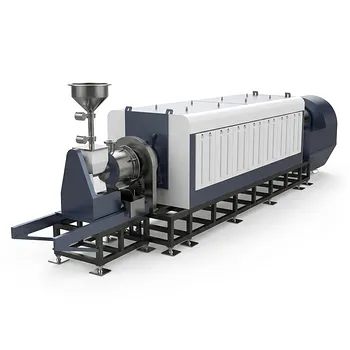
Electric Rotary Kiln Small Rotary Furnace Biomass Pyrolysis Plant
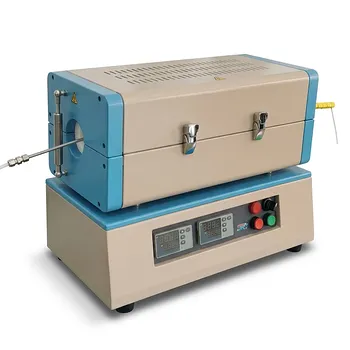
Gas Pre-Heating Tube Furnace for High Temperature Pyrolysis Reactors and Material Science Research

High Temperature 1700C Vertical Tube Furnace for Powder Spherification and Material Sintering
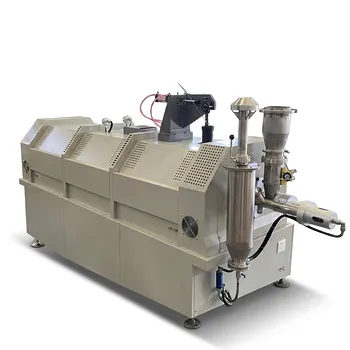
Electric Rotary Kiln Continuous Working Small Rotary Furnace Heating Pyrolysis Plant

Compact Vertical Split Quartz Tube Furnace with Stainless Steel Vacuum Flanges for Rapid Thermal Quenching and Controlled Atmosphere Material Processing

Compact High Temperature 1600C Tube Furnace with 50mm Alumina Tube and Vacuum Flanges for Material Sintering

1100C Tube Furnace with Vacuum Flange and Programmable Temperature Controller for Material Science and Industrial Heat Treatment

Vertical 1700C Vacuum and Atmosphere Tube Furnace with 80mm Alumina Tube

High Temperature 1700C Six Zone Split Tube Furnace with Alumina Tube and Water Cooled Flanges

High Temperature Automated 5 Inch Tube Furnace for Autonomous Material Research and Advanced Laboratory R&D
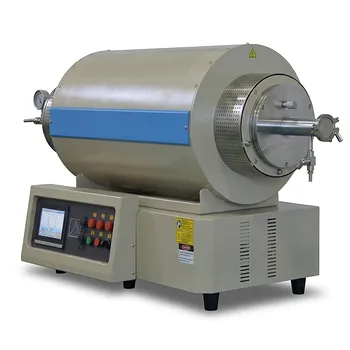
1200C Max Three Zone Tube Furnace 6 Inch OD Max with Tube and Flange
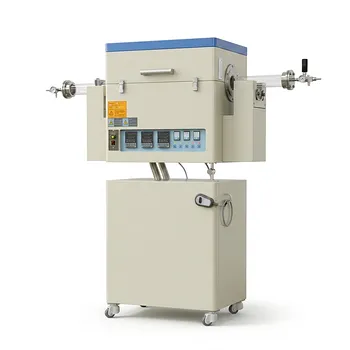
Three Temperature Zone Rotating Tube Furnace for Material Sintering and Controlled Atmospheric Heat Treatment
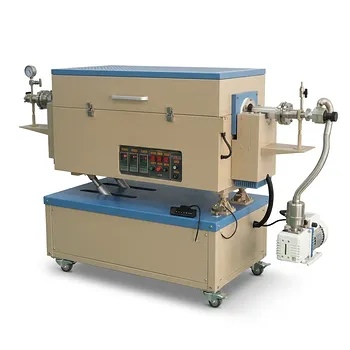
Three Zone Rotary Tube Furnace for High Temperature Powder Processing and Material Research
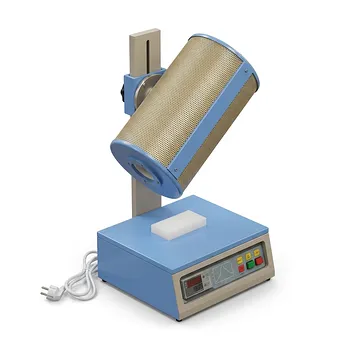
1100°C Vertical Laboratory Furnace for DIY Tubular Reactors with PID Temperature Controller

1800C High Temperature Compact Vacuum Tube Furnace with 60mm OD Alumina Tube and Kanthal MoSi2 Heating Elements
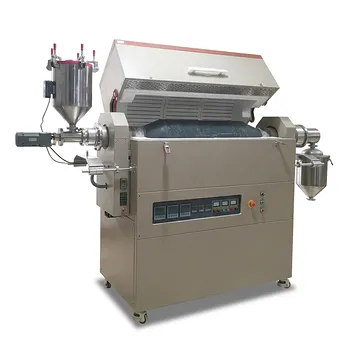
High Temperature Tilting Rotary Tubular Furnace for Continuous Powder Thermal Processing and Controlled Atmosphere Sintering

1200°C 5 Inch Vertical Quartz Tube Furnace with Stainless Steel Vacuum Flanges
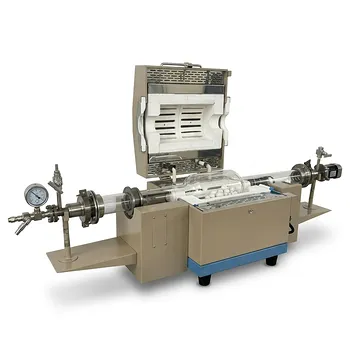
High Temperature Rotary Tube Furnace with Integrated Ball Milling and Gas Flow Function for Powder Nitriding
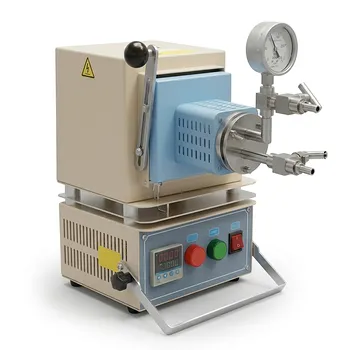
Compact Hybrid Muffle and Tube Furnace for 1000C Controlled Atmosphere Laboratory Material Sintering