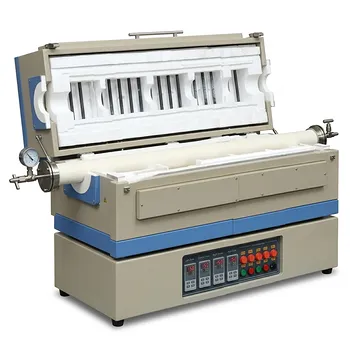
How does a programmed tube furnace facilitate OSDA removal in MgAlPO-5? Achieve Precise Catalyst Activation.
Updated 3 months ago
A programmed tube furnace removes organic structure-directing agents (OSDAs) from MgAlPO-5 catalysts through precisely controlled thermal oxidation. By utilizing specific temperature ramp profiles—typically 2.5 °C/min up to 600 °C—under a continuous airflow, the furnace effectively burns away residual templates like triethylamine. This critical post-treatment transforms the catalyst from a "clogged" synthesized state into an active, porous material ready for catalytic applications.
Core Takeaway: The programmed tube furnace acts as a precision tool that balances the aggressive energy needed for template oxidation with the delicate requirements of framework preservation. It ensures complete removal of organic species while safeguarding the microporous structure and acid site distribution of the MgAlPO-5 catalyst.
The Mechanics of Template Removal
Precision Temperature Ramping
A programmed furnace allows for a linear ramp rate, which is essential for managing the exothermic nature of organic decomposition. If the temperature rises too quickly, the rapid oxidation of triethylamine can create localized "hot spots" that exceed the thermal stability of the catalyst. By maintaining a slow ramp (e.g., 2.5 °C/min), the furnace ensures a steady, controlled removal of the OSDA without triggering a runaway reaction.
Continuous Atmosphere Management
The removal of OSDAs is an oxidation process that requires a constant supply of oxygen, often provided via continuous airflow or synthetic air. The tube furnace design ensures that the gas flows directly over and through the catalyst bed, carrying away gaseous combustion products like CO2 and NOx. This constant flushing prevents the re-deposition of carbonaceous coke, which could otherwise block the newly opened pores.
Transformation to the Active State
The primary goal of this thermal treatment is to transition the MgAlPO-5 from a precursor to a functional catalyst. As the organic templates are evacuated, the micropore volume is released, creating the internal surface area necessary for molecular diffusion. This process is what "activates" the catalyst, making its internal architecture accessible to reactants.
Preservation of Catalyst Integrity
Protecting Brønsted Acid Sites
The catalytic performance of MgAlPO-5 depends heavily on the presence of Brønsted acid sites. Excessive or uncontrolled heating can lead to dehydroxylation or structural defects that neutralize these sites. A programmed furnace provides the uniform thermal field necessary to remove the template at the lowest possible effective temperature, thereby preserving the density and strength of the acid sites.
Preventing Framework Collapse
MgAlPO-5 possesses a specific crystalline framework that can be sensitive to thermal shock or extreme temperatures. The precision control of a programmed furnace ensures the temperature does not spike beyond the 600 °C threshold. This prevents the sintering or collapse of the microporous structure, ensuring the final material maintains its intended crystalline phase and surface area.
Ensuring Uniform Treatment
In a tube furnace, the sample is typically placed in a "constant temperature zone" where the thermal gradient is minimal. This thermal uniformity is critical for MgAlPO-5 because it ensures that the catalyst at the center of the crucible receives the same treatment as the catalyst at the edges. Without this uniformity, a batch might contain a mix of under-calcined (blocked pores) and over-calcined (collapsed framework) material.
Understanding the Trade-offs
Temperature vs. Structural Stability
While higher temperatures (above 600 °C) ensure the absolute removal of all organic traces, they significantly increase the risk of lattice strain and site loss. The trade-off involves selecting a temperature high enough to achieve a "clean" pore system but low enough to avoid damaging the MgAlPO-5 framework.
Ramp Speed vs. Throughput
Slower ramp rates (like 2.5 °C/min) are safer for the catalyst but increase the total processing time and energy consumption. Increasing the ramp speed to improve throughput can lead to non-uniform heating and potential framework damage due to the rapid expansion of gases escaping the pores.
Gas Flow Rate and Thermal Gradients
High gas flow rates are excellent for removing decomposition products but can introduce cooling effects on one side of the sample. Finding the balance between sufficient oxygen supply and maintaining a stable, uniform temperature is a key operational challenge in tube furnace post-treatment.
How to Apply This to Your Project
When utilizing a programmed tube furnace for catalyst post-treatment, your settings should be dictated by your specific performance requirements.
- If your primary focus is Maximum Acidity: Use the lowest effective calcination temperature (e.g., 500-550 °C) and a very slow ramp rate to prevent the loss of Brønsted acid sites.
- If your primary focus is Pore Accessibility: Ensure a high flow rate of dry air or oxygen to completely oxidize OSDAs and prevent the formation of residual carbon (coking).
- If your primary focus is Structural Longevity: Limit the maximum temperature to 600 °C and utilize a programmed cooling phase to avoid thermal stress and cracking of the catalyst particles.
The programmed tube furnace is not merely a heater, but a sophisticated reactor that defines the final pore structure and chemical reactivity of the MgAlPO-5 catalyst.
Summary Table:
| Feature | Mechanism | Impact on MgAlPO-5 Catalyst |
|---|---|---|
| Precision Ramping | Controlled 2.5 °C/min ramp | Prevents localized hot spots & framework collapse |
| Atmosphere Control | Continuous airflow | Ensures complete template oxidation & prevents coking |
| Uniform Heating | Constant temperature zone | Guarantees consistent pore activation across batches |
| Thermal Limits | Precise 600 °C threshold | Preserves Brønsted acid sites and surface area |
Elevate Your Material Research with THERMUNITS
Precise thermal processing is the critical factor between a high-performance catalyst and a failed framework. As a leading manufacturer of high-temperature laboratory equipment, THERMUNITS provides the precision and reliability required for advanced material science and industrial R&D.
Our comprehensive range of thermal solutions is designed to meet the rigorous demands of catalyst activation and heat treatment:
- Advanced Furnaces: Tube, Muffle, Vacuum, Atmosphere, Rotary, and Hot Press models.
- Specialized Systems: CVD/PECVD systems, Dental Furnaces, and Vacuum Induction Melting (VIM) furnaces.
- Industrial Components: High-quality thermal elements and rotary kilns.
Ready to optimize your laboratory’s heat treatment efficiency?
Contact THERMUNITS today to explore how our tailored thermal solutions can enhance your research outcomes.
References
- Matthew E. Potter, Robert Raja. Combining computational and experimental studies to gain mechanistic insights for <i>n</i>-butane isomerisation with a model microporous catalyst. DOI: 10.1039/d4cy01035c
Mentioned Products
- 1100C Tube Furnace with Vacuum Flange and Programmable Temperature Controller for Material Science and Industrial Heat Treatment
- High Temperature Hybrid Muffle and Tube Furnace 1700C Programmable PID Controlled Box System with Vacuum Flange and Alumina Processing Tube
- 1500C Hybrid Muffle Tube Furnace 1.7L Box with 2 Inch Mullite Tube and Programmable PID Controller
- 1200C Tube Furnace with Internal Magnetic Sample Sliding for Direct Vaporizing Deposition and Rapid Thermal Processing
- High Temperature 1700C Vertical Tube Furnace for Powder Spherification and Material Sintering
People Also Ask
- What are the advantages of 1100°C tube furnaces for ORR catalysts? Boost Conductivity and Structural Stability.
- What role does a tube furnace play in PS template removal? Ensure ZnO/SiO2 Structural Integrity & High Performance.
- What core functions does a high-temperature vacuum tube furnace provide? Optimize np-CuSn Sintering & Joint Integrity
- What is the role of a high-temperature tube furnace in the calcination process of ZnO/In2O3 nanocomposites?
- What impact does the heating rate of a tube furnace have on biochar microstructure? Optimize Your Material R&D.

Tech Team · ThermUnits
Last updated on Jun 03, 2026
Related Products

1100C Tube Furnace with Vacuum Flange and Programmable Temperature Controller for Material Science and Industrial Heat Treatment
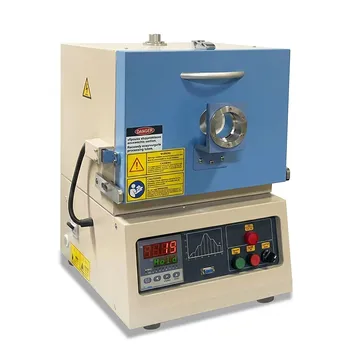
High Temperature Hybrid Muffle and Tube Furnace 1700C Programmable PID Controlled Box System with Vacuum Flange and Alumina Processing Tube
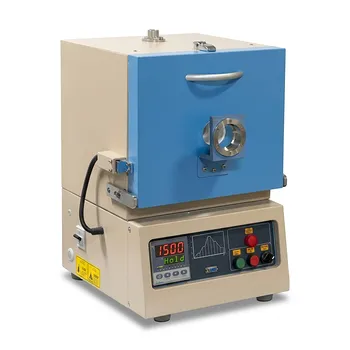
1500C Hybrid Muffle Tube Furnace 1.7L Box with 2 Inch Mullite Tube and Programmable PID Controller
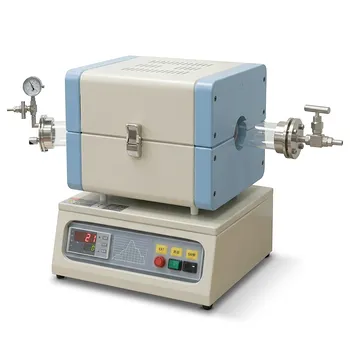
1200C Tube Furnace with Internal Magnetic Sample Sliding for Direct Vaporizing Deposition and Rapid Thermal Processing

High Temperature 1700C Vertical Tube Furnace for Powder Spherification and Material Sintering
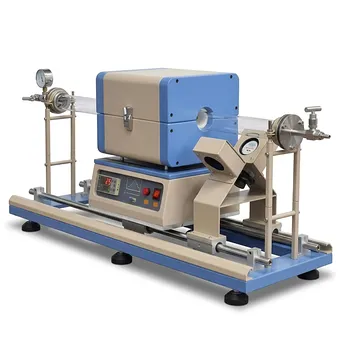
Automated Sliding Tube Furnace for Fast Heating and Cooling 2 Inch OD 1100C Max

1200C High Throughput Multi Channel Tube Furnace with 50mm Quartz Tubes for Annealing and Material Phase Diagram Research
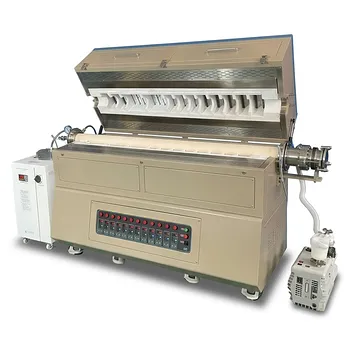
Twelve Zone 1700°C Multi Zone Split Tube Furnace with 100mm Alumina Processing Tube and Independent Temperature Gradient Control

Compact High Temperature 1600C Tube Furnace with 50mm Alumina Tube and Vacuum Flanges for Material Sintering
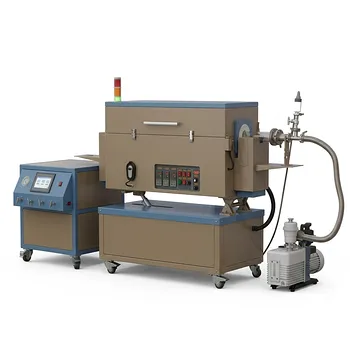
5 Inch Three Zone Rotary Tube Furnace with Integrated Gas Delivery System and 1200C Capability for Advanced Material CVD Processing
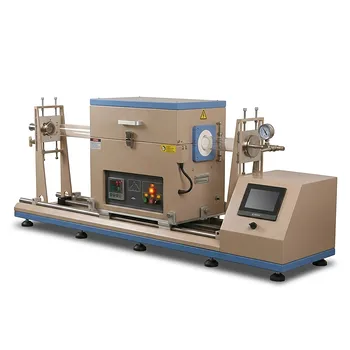
1200C Sliding Tube Furnace for Rapid Thermal Processing and CVD Graphene Growth with 100mm OD Capacity
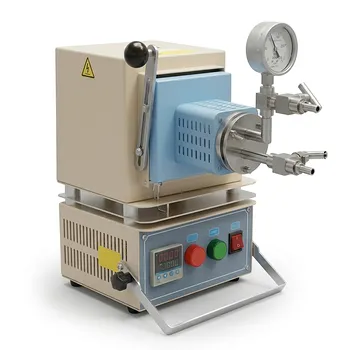
Compact Hybrid Muffle and Tube Furnace for 1000C Controlled Atmosphere Laboratory Material Sintering
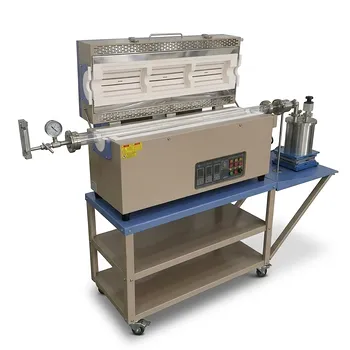
5 Inch Two Zone Rotary Tube Furnace 1100C for Powder CVD and Material Synthesis
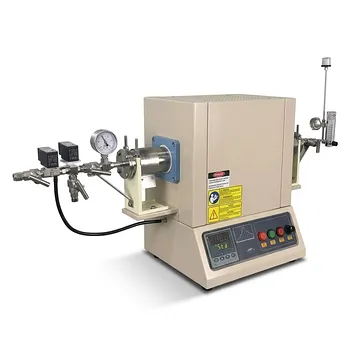
1500C Compact Hydrogen Gas Tube Furnace with 2 Inch Alumina Tube and Hydrogen Detector
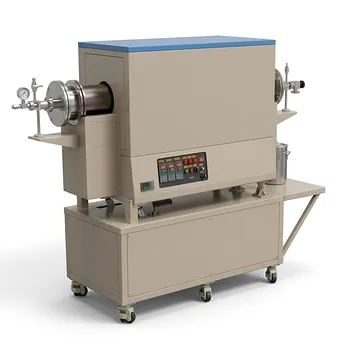
900°C Max Rotary Tube Furnace with 8 Inch 310S Alloy Tube and Optional Multi Zone Heating for Industrial Material Calcination
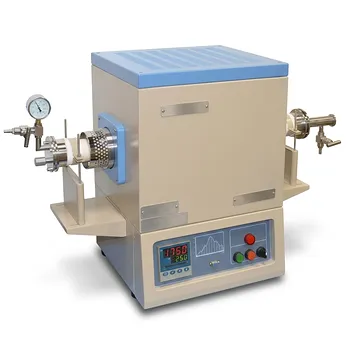
High Temperature Compact Vacuum Tube Furnace 1750C Max 60mm OD Alumina Tube
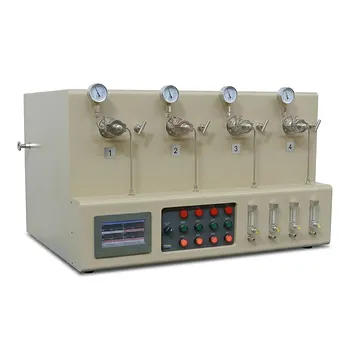
High Temperature 1700C 4 Channel Tube Furnace 1 Inch Alumina Tube for Hi-Throughput Annealing

Vertical 1700C Vacuum and Atmosphere Tube Furnace with 80mm Alumina Tube

1800C High Temperature Compact Vacuum Tube Furnace with 60mm OD Alumina Tube and Kanthal MoSi2 Heating Elements