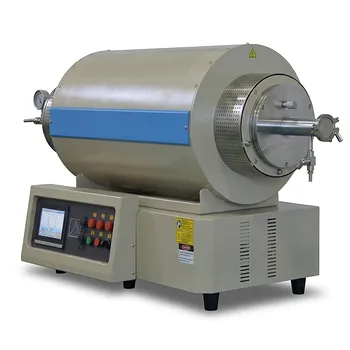
How does an Atmosphere Tube Furnace ensure interfacial bonding strength? Enhancing Adhesion in Heterogeneous Materials
Updated 3 months ago
Atmosphere Tube Furnaces achieve high interfacial bonding strength through a precise combination of high-temperature thermal activation and strictly controlled chemical environments. By facilitating atomic interdiffusion and managing thermal expansion mismatches, these furnaces create a cohesive chemical bond between dissimilar materials, such as ceramics and metals.
The core mechanism for bonding strength lies in the furnace's ability to provide a stable thermal field that drives atomic migration across the interface while simultaneously protecting the material chemistry through atmosphere regulation. This prevents the formation of weak layers and ensures a dense, integrated structure.
Facilitating Atomic Diffusion through Thermal Energy
Activating Mass Transport
The furnace provides the continuous thermal energy required to activate atomic vibrations and mutual migration across the material interface. At temperatures typically exceeding 0.6 times the melting point of the materials, atoms gain enough kinetic energy to move from their parent lattices into the adjacent material.
Driving Chemical Phase Formation
This thermal input promotes element interdiffusion, leading to the formation of thin oxide layers or intermetallic compounds. These new phases act as a chemical "bridge," transforming a weak mechanical contact into a robust chemical bond.
Enabling Solid-State Diffusion
By maintaining precision temperatures—often as high as 1350 °C—the furnace supports solid-state diffusion bonding without reaching the melting point of all components. This preserves the structural integrity of the individual materials while eliminating gaps at the interface.
Atmospheric Control as a Catalyst for Bonding
Preventing Surface Passivation
The use of inert protective atmospheres (such as Argon or Nitrogen) is critical to displace oxygen from the heating chamber. This prevents the accidental oxidation of metal surfaces, which would otherwise form a barrier and block atomic diffusion between the heterogeneous layers.
Regulating Surface Stoichiometry
Advanced furnaces allow for segmented control of hydrogen partial pressure, which can be used to reduce surface oxides or maintain specific stoichiometric ratios. This ensures that the interface remains chemically active and ready for bonding throughout the entire sintering cycle.
Suppressing Non-Target Phase Growth
By precisely controlling the gas environment, the furnace suppresses the formation of impurities that could compromise the bond. This is particularly vital when working with sensitive materials like perovskites or carbon-based composites that require a specific chemical balance to remain stable.
Mitigating Mechanical Failure during Cooling
Managing Linear Shrinkage Mismatch
Heterogeneous materials often have different linear shrinkage rates, which can lead to catastrophic cracking during cooling. The furnace’s multi-stage programmable cooling control allows for a slow, uniform reduction in temperature to mitigate these internal stresses.
Enhancing Final Density
The combination of high-temperature kinetics and atmospheric protection allows micro-parts to reach high densities (up to 95.3%). High density is a prerequisite for interfacial strength, as it minimizes the presence of pores that act as stress concentrators.
Understanding the Trade-offs
Process Speed vs. Internal Stress
While rapid heating can improve throughput, it often exacerbates thermal gradients across the interface of dissimilar materials. A slower, more deliberate heating and cooling curve is necessary for bonding strength, though it increases the overall processing time and energy consumption.
Atmosphere Purity and Cost
Achieving the highest vacuum levels or using ultra-high-purity gases ensures the best bonding quality but significantly increases operating costs. Finding the "minimum effective" atmospheric purity is a common challenge in scaling production.
Material Compatibility Limits
Even with perfect furnace control, some materials possess coefficient of thermal expansion (CTE) differences too great to overcome. In these cases, the furnace can only do so much; an intermediate "buffer" layer may still be required to prevent delamination.
Optimizing Your Sintering Process
When configuring your atmosphere tube furnace for co-sintering, your technical strategy should align with your specific material objectives.
- If your primary focus is Maximum Density: Prioritize the "soaking" phase at peak temperature to allow maximum time for atomic diffusion and pore elimination.
- If your primary focus is Oxidation Sensitivity: Utilize a reducing atmosphere (e.g., Ar-H2 mix) to actively strip oxygen from metal interfaces before diffusion begins.
- If your primary focus is Crack Prevention: Implement a multi-stage, slow-cooling program to allow internal stresses to relax as the materials contract at different rates.
- If your primary focus is Stoichiometric Precision: Use a furnace with mass flow controllers to provide segmented gas partial pressure regulation throughout the cycle.
By mastering the balance between thermal energy and chemical protection, the atmosphere tube furnace serves as the definitive tool for engineering high-strength interfaces in complex composite materials.
Summary Table:
| Key Mechanism | Function in Co-Sintering | Impact on Bonding Strength |
|---|---|---|
| Thermal Activation | Drives atomic interdiffusion and mass transport | Creates chemical bridges between dissimilar materials |
| Atmosphere Control | Prevents surface oxidation and regulates stoichiometry | Ensures active interfaces for dense, impurity-free structures |
| Programmable Cooling | Manages linear shrinkage and thermal stress | Minimizes cracking and delamination during contraction |
| Density Enhancement | Eliminates pores through soaking phases | Reaches up to 95.3% density to reduce stress concentrators |
Elevate Your Material Research with THERMUNITS
Achieving superior interfacial bonding in heterogeneous materials requires extreme precision in both temperature and environment. THERMUNITS is a leading manufacturer of high-temperature laboratory equipment specifically designed for the rigorous demands of material science and industrial R&D.
Our comprehensive range of thermal processing solutions includes:
- Atmosphere & Vacuum Tube Furnaces for precise gas and pressure control.
- Muffle, Rotary, and Hot Press Furnaces for versatile heat treatments.
- CVD/PECVD Systems for advanced thin-film and interface engineering.
- Vacuum Induction Melting (VIM) & Dental Furnaces for specialized applications.
Whether you are working with ceramics, metals, or complex composites, our equipment ensures the thermal stability and atmospheric purity needed to optimize your co-sintering results.
Ready to enhance your lab's efficiency? Contact our technical experts today to find the perfect furnace for your specific research goals.
References
- Al Basir, Nabilah Afiqah Mohd Radzuan. Debinding of Yttria-Stabilised Zirconia/Bimodal Stainless Steel 316L Bi-Materials Produced through Two-Component Micro-Powder Injection Moulding. DOI: 10.3390/polym16131831
Mentioned Products
- Vertical 1700C Vacuum and Atmosphere Tube Furnace with 80mm Alumina Tube
- 1200C Hybrid Muffle and Tube Furnace for Material Research with Dual Atmosphere Control Quartz Tubes
- 1200°C Atmosphere Controlled Automatic Bottom Loading Furnace with 6 Inch Quartz Tube
- Compact Hybrid Muffle and Tube Furnace for 1000C Controlled Atmosphere Laboratory Material Sintering
- Compact Vertical Split Quartz Tube Furnace with Stainless Steel Vacuum Flanges for Rapid Thermal Quenching and Controlled Atmosphere Material Processing
People Also Ask
- How is an industrial-grade vertical tube furnace utilized in smelting leaching residues? Enhance Metal Recovery Efficiency
- What is the function of a laboratory-grade vertical tube furnace in fast pyrolysis? Optimize Composite Research.
- How does a vertical tube furnace facilitate thermoelectric alloy melting? Precision synthesis for material homogeneity.
- Why is a thermocouple sensor indispensable for monitoring the vertical tube furnace during gallium oxide nanowire production? Optimize VLS Growth
- What are the advantages of using a vertical tube furnace for crucible experiments simulating steel-slag interactions?

Tech Team · ThermUnits
Last updated on Jun 03, 2026
Related Products

Vertical 1700C Vacuum and Atmosphere Tube Furnace with 80mm Alumina Tube
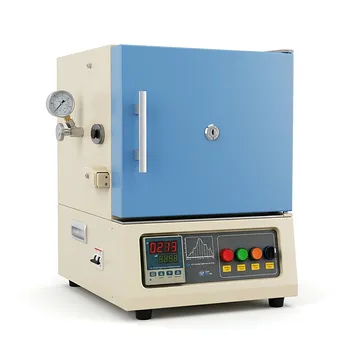
1200C Hybrid Muffle and Tube Furnace for Material Research with Dual Atmosphere Control Quartz Tubes
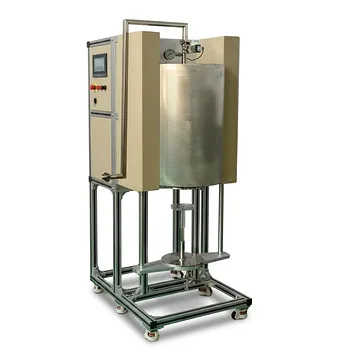
1200°C Atmosphere Controlled Automatic Bottom Loading Furnace with 6 Inch Quartz Tube
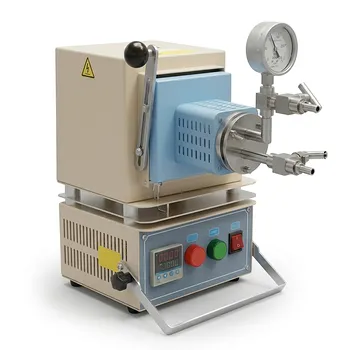
Compact Hybrid Muffle and Tube Furnace for 1000C Controlled Atmosphere Laboratory Material Sintering

Compact Vertical Split Quartz Tube Furnace with Stainless Steel Vacuum Flanges for Rapid Thermal Quenching and Controlled Atmosphere Material Processing

Three Zone Tube Furnace with 11 Inch or 15 Inch Quartz Tube and Hinged Flanges for Vacuum Atmosphere Heat Treatment
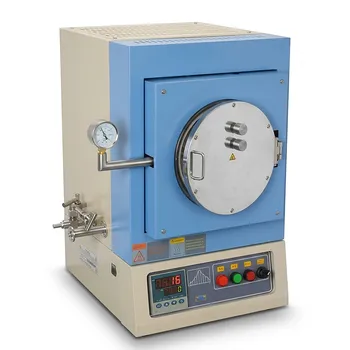
1100°C High Temperature Quartz Chamber Furnace 8 Inch OD with 7.6 Liter Capacity and Vacuum Atmosphere Capability
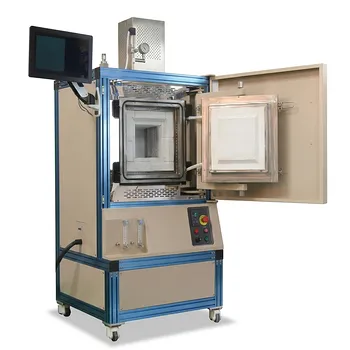
High Temperature Hydrogen Atmosphere Box Furnace 1650C Max Reducing Environment Material Synthesis System 8x8x8 Chamber

High Temperature 1700C Vertical Tube Furnace for Powder Spherification and Material Sintering

Compact High Temperature 1600C Tube Furnace with 50mm Alumina Tube and Vacuum Flanges for Material Sintering

High Temperature 1700C Tube Furnace with High Vacuum Turbomolecular Pump System and Multi Channel Mass Flow Controller Gas Mixer

High Temperature 1700C Six Zone Split Tube Furnace with Alumina Tube and Water Cooled Flanges

1800C High Temperature Compact Vacuum Tube Furnace with 60mm OD Alumina Tube and Kanthal MoSi2 Heating Elements

1100C Tube Furnace with Vacuum Flange and Programmable Temperature Controller for Material Science and Industrial Heat Treatment
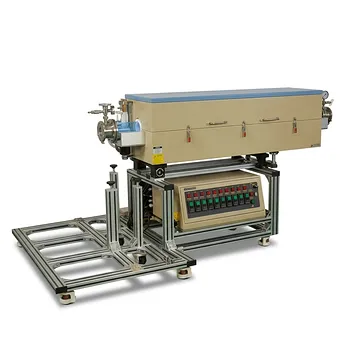
Ten Zone Multi Orientation Laboratory Tube Furnace for 1200C High Temperature Gradient Thermal Processing

High Temperature 1700C Benchtop Tube Furnace with 5 Inch Heating Zone High Purity Alumina Tube and Vacuum Sealing Flanges

1200C High Throughput Multi Channel Tube Furnace with 50mm Quartz Tubes for Annealing and Material Phase Diagram Research

High Temperature Automated 5 Inch Tube Furnace for Autonomous Material Research and Advanced Laboratory R&D

1700C Hydrogen Gas Tube Furnace with 60mm Alumina Process Tube and Integrated Hydrogen Safety Detector