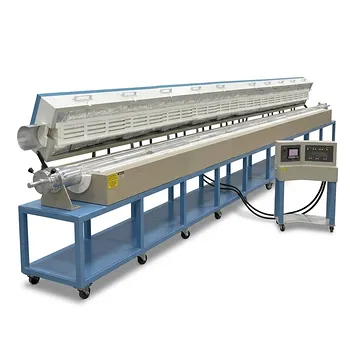
Why is a thermocouple sensor indispensable for monitoring the vertical tube furnace during gallium oxide nanowire production? Optimize VLS Growth
Updated 3 months ago
The thermocouple sensor is the essential feedback loop for maintaining the high-temperature stability required for gallium oxide nanowire synthesis. In the Vapor-Liquid-Solid (VLS) growth process, both the vapor pressure of gallium and the overall growth rate are exceptionally sensitive to thermal shifts. By providing real-time data, the thermocouple ensures the furnace maintains a precise 1000°C environment and tracks the critical temperature recovery period after the growth chamber is introduced.
Core Takeaway: A thermocouple transforms a vertical tube furnace from a simple heater into a precision instrument by regulating the exact thermodynamic conditions necessary for uniform gallium vapor transport and consistent nanowire crystallization.
Regulating the Vapor-Liquid-Solid (VLS) Mechanism
The Sensitivity of Gallium Vapor Pressure
In VLS growth, the precursor must reach a specific vapor pressure to transition into the liquid-solid phase effectively. Because gallium vapor pressure is highly temperature-dependent, even minor fluctuations can cause significant variations in the amount of precursor available at the substrate. The thermocouple enables the control system to suppress these fluctuations, maintaining a steady supply of gallium vapor.
Achieving Growth Rate Consistency
The rate at which nanowires elongate is directly tied to the thermal energy within the chamber. A stable 1000°C environment is the standard for high-quality gallium oxide production to ensure the growth rate remains predictable. Without the sensor’s real-time feedback, the growth rate would drift, leading to non-uniform nanowire lengths across a single batch.
Managing the Dynamics of a Vertical Configuration
Optimizing Thermal Convection
A vertical tube furnace utilizes a specific gravitational layout where the substrate is suspended, often exactly 9.5 cm above the crucible. This orientation relies on thermal convection to transport gallium vapor upward to the substrate surface. The thermocouple ensures the temperature gradient is steep and stable enough to drive this convection efficiently and uniformly.
Monitoring Temperature Recovery
When a growth chamber is first inserted into a preheated furnace, the internal temperature momentarily drops. The thermocouple is indispensable for monitoring the recovery curve, ensuring that the growth process only begins—and continues—under constant thermodynamic conditions. This prevents "cold-start" defects in the nanowire crystalline structure.
Mapping the Thermal Landscape
Identifying the Core Reaction Zone
A tube furnace does not have a perfectly uniform temperature throughout its entire length. High-precision thermocouples are used for temperature field mapping to identify the "sweet spot" or core reaction zone. This data allows technicians to place the substrate in the exact axial position where the temperature profile is most stable.
Calculating Heat Transfer and Loss
By comparing data from thermocouples placed inside the melting chamber versus those on the exterior walls, engineers can calculate conductive heat transfer. This information is vital for evaluating the effectiveness of ceramic fiber insulation and optimizing the furnace's structural design. It ensures that the heat is being directed into the reaction, rather than being lost to the environment.
Understanding the Trade-offs
Point Measurement vs. Volume Reality
A primary limitation of a thermocouple is that it provides a point measurement. While it tells you the temperature at the tip of the sensor, it may not reflect the temperature of the entire substrate surface if there are significant internal gradients.
Sensor Degradation at High Temperatures
Operating continuously at 1000°C can cause thermocouple drift or oxidation over time, especially in K-type sensors. If the sensor is not calibrated or replaced periodically, the "real" temperature inside the furnace may diverge from the digital readout, leading to subtle but damaging changes in nanowire crystallinity.
How to Apply This to Your Project
Recommendations for Implementation
- If your primary focus is Maximum Nanowire Uniformity: Prioritize the placement of a K-type thermocouple in the core reaction zone to ensure the heating system strictly follows your preset program.
- If your primary focus is Energy and Process Efficiency: Use dual-thermocouple monitoring (interior and exterior) to assess heat loss and verify the integrity of your furnace insulation.
- If your primary focus is Research Reproducibility: Conduct a full axial temperature mapping of your furnace tube to ensure the substrate and precursor are always placed in the identical thermal field across different runs.
Precise thermal control is the difference between a successful laboratory experiment and a scalable industrial process for high-purity nanomaterials.
Summary Table:
| Feature | Role in Nanowire Production | Key Advantage |
|---|---|---|
| VLS Regulation | Stabilizes gallium vapor pressure | Ensures consistent growth rates |
| Vertical Dynamics | Manages upward thermal convection | Uniform vapor transport to substrate |
| Recovery Monitoring | Tracks heat-up after chamber insertion | Prevents cold-start crystalline defects |
| Thermal Mapping | Identifies the core reaction zone | Guarantees axial placement precision |
Achieve Unmatched Precision with THERMUNITS
In the production of gallium oxide nanowires, thermal accuracy is the difference between a breakthrough and a failed experiment. THERMUNITS is a leading manufacturer of high-temperature laboratory equipment for material science and industrial R&D. We provide the high-stability thermal environments necessary for sensitive Vapor-Liquid-Solid (VLS) growth.
Our comprehensive range of solutions includes:
- Tube & Rotary Furnaces: Ideal for nanowire synthesis and chemical vapor deposition.
- CVD/PECVD Systems: Advanced setups for precise thin-film and nanostructure growth.
- Specialized Equipment: Including Muffle, Vacuum, Atmosphere, Hot Press furnaces, and Vacuum Induction Melting (VIM) systems.
- High-Quality Components: Thermal elements and sensors designed to withstand extreme R&D conditions.
Whether you are scaling an industrial process or conducting foundational research, THERMUNITS delivers the reliability you need.
Explore our thermal processing solutions and contact us today!
References
- G. A. Dorsey, W. E. Collins. The growth and characterization of Au-catalyzed gallium oxide nanowires. DOI: 10.1557/s43580-024-00843-y
Mentioned Products
- Vertical 1700C Vacuum and Atmosphere Tube Furnace with 80mm Alumina Tube
- 1100°C Split Vertical Tube Furnace with 80mm Quartz Tube and Stainless Steel Vacuum Flanges
- 500C Vacuum Vertical Tube Furnace 84mm OD Sample Rotation Lifting System
- High Temperature 1700C Vertical Tube Furnace for Powder Spherification and Material Sintering
- Split Vertical Tube Furnace with 1200C Quartz Tube and Stainless Steel Vacuum Flanges for Rapid Thermal Processing
People Also Ask
- How is an industrial-grade vertical tube furnace utilized in smelting leaching residues? Enhance Metal Recovery Efficiency
- What is the function of a laboratory-grade vertical tube furnace in fast pyrolysis? Optimize Composite Research.
- How does a vertical tube furnace facilitate thermoelectric alloy melting? Precision synthesis for material homogeneity.
- What are the advantages of using a vertical tube furnace for crucible experiments simulating steel-slag interactions?
- What is the role of a vertical tube furnace in steel wire heat transfer experiments? Expert precision for quenching.

Tech Team · ThermUnits
Last updated on Jun 02, 2026
Related Products

Vertical 1700C Vacuum and Atmosphere Tube Furnace with 80mm Alumina Tube
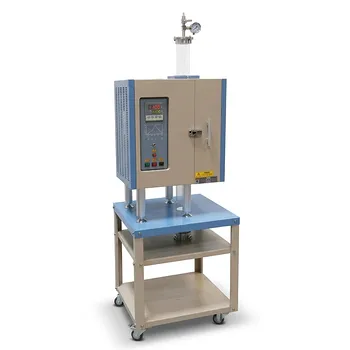
1100°C Split Vertical Tube Furnace with 80mm Quartz Tube and Stainless Steel Vacuum Flanges
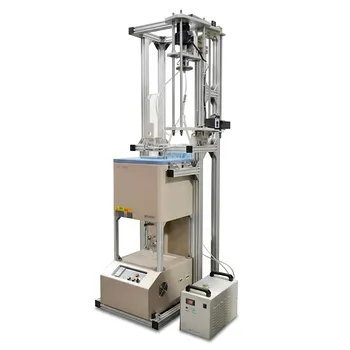
500C Vacuum Vertical Tube Furnace 84mm OD Sample Rotation Lifting System

High Temperature 1700C Vertical Tube Furnace for Powder Spherification and Material Sintering
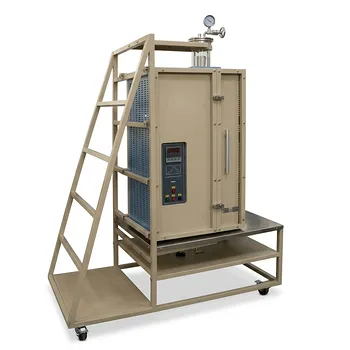
Split Vertical Tube Furnace with 1200C Quartz Tube and Stainless Steel Vacuum Flanges for Rapid Thermal Processing
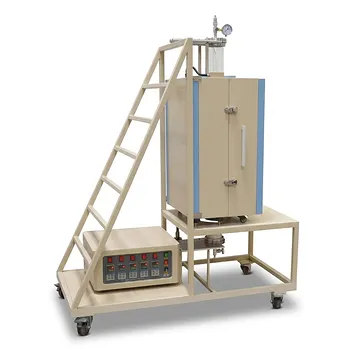
Five Zone Split Vertical Tube Furnace 1200C Max with 4 Inch Quartz Tube and Stainless Steel Vacuum Flanges
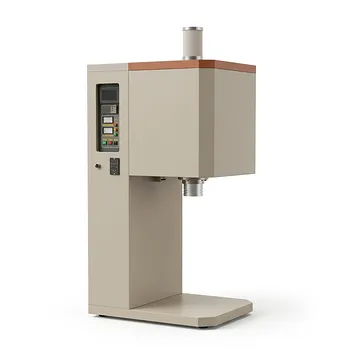
Vertical Openable Tube Furnace 0-1700c High Temperature Laboratory System for CVD and Vacuum Heat Treatment
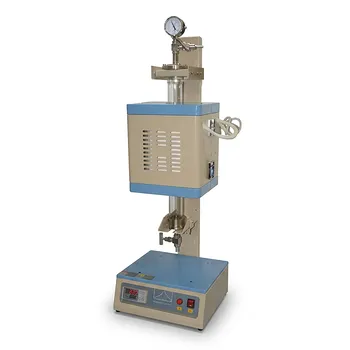
Compact Vertical Split Quartz Tube Furnace with Stainless Steel Vacuum Flanges for Rapid Thermal Quenching and Controlled Atmosphere Material Processing
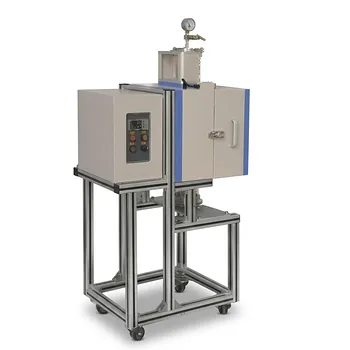
1200°C 5 Inch Vertical Quartz Tube Furnace with Stainless Steel Vacuum Flanges
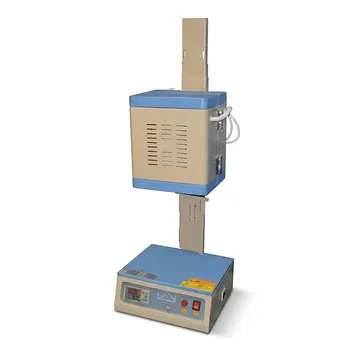
High Temperature Vertical Split Tube Furnace with PID Temperature Controller for 1 and 2 Inch Processing Tubes
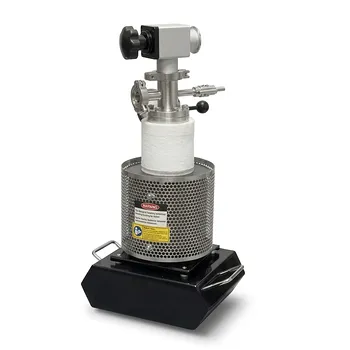
High Temperature 1100C Compact Top Loading Vertical Vacuum Tube Furnace for High Vacuum Noble Metal Melting and Material Research
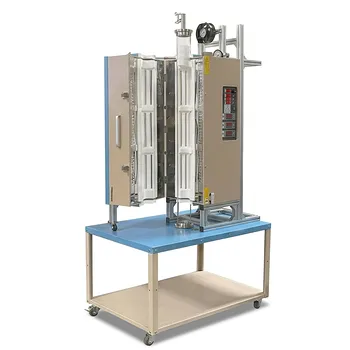
1200C Three Zone Split Vertical Tube Furnace 4 Inch Quartz Tube Stainless Steel Vacuum Flanges
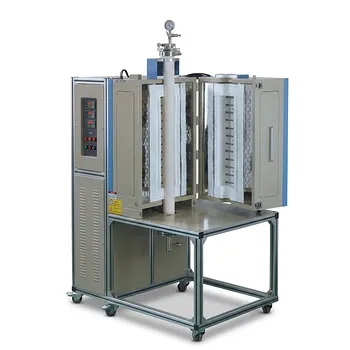
Three Zone Heating Split Vertical Tube Furnace 1700 High Temperature Vacuum Atmosphere Thermal Process System
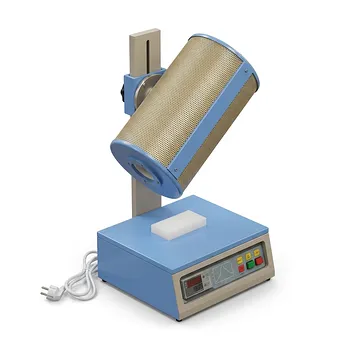
1100°C Vertical Laboratory Furnace for DIY Tubular Reactors with PID Temperature Controller
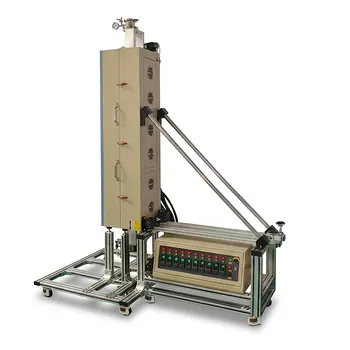
1200°C 10-Zone Split Tube Furnace with Horizontal and Vertical Mounting for Multi-Zone Thermal Gradients and Large Diameter Material Processing
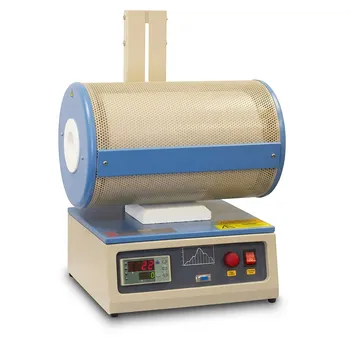
Multi Position Tube Furnace 1100C for Laboratory Material Research and Advanced Industrial Thermal Processing
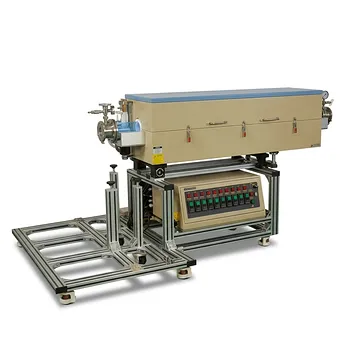
Ten Zone Multi Orientation Laboratory Tube Furnace for 1200C High Temperature Gradient Thermal Processing
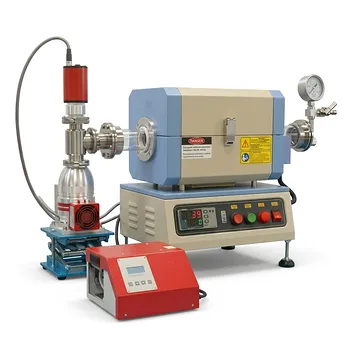
High Vacuum Compact Tube Furnace 1200C with Integrated Turbo Pump System and 8 Inch Heating Zone
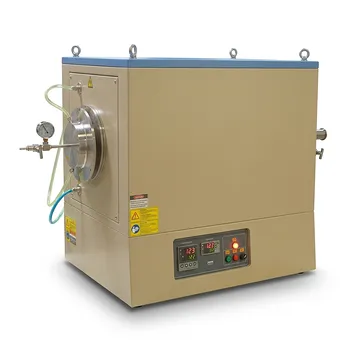
1100°C Large Diameter Quartz Tube Furnace with 24 Inch Heating Zone and Water Cooled Flanges