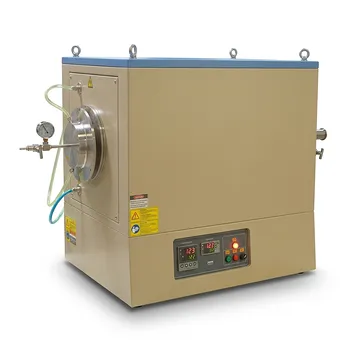
What is the function of a laboratory-grade vertical tube furnace in fast pyrolysis? Optimize Composite Research.
Updated 3 months ago
Rapid thermal processing in a vertical tube furnace is the critical mechanism for simulating industrial fast pyrolysis under controlled laboratory conditions. By allowing for the instantaneous introduction of samples into a pre-heated reaction zone (typically 400°C to 700°C), the equipment facilitates high heating rates and extremely short residence times. This specific configuration is essential for minimizing secondary chemical reactions and accurately capturing the release patterns of volatile gases like methane (CH4) and carbon monoxide (CO).
The laboratory-grade vertical tube furnace functions as a high-precision reactor that decouples primary thermal decomposition from secondary vapor-phase reactions. Its vertical alignment leverages gravity and gas flow to ensure that pyrolysis products exit the high-temperature zone rapidly, providing a clear window into the fundamental kinetics of composite degradation.
The Engineering Logic of Vertical Configuration
Minimizing Secondary Reactions
The primary advantage of a vertical orientation is the reduction of residence time for volatile products. In horizontal furnaces, vapors may linger in the hot zone, leading to "cracking" or secondary reactions that alter the chemical profile of the bio-oil or gas. The vertical design allows gravity and carrier gas flow to sweep these products into a cooling zone almost instantly.
Simulating Industrial Fast Heating
Industrial pyrolysis requires materials to reach reaction temperatures in seconds. A vertical tube furnace achieves this by dropping the composite sample directly into a stable, uniform thermal field. This "shock" heating is necessary to study how complex matrices, such as epoxy resins in wind turbine blades, break down without the influence of slow-heating transition phases.
Precise Gaseous Analysis
Because the furnace maintains a sealed, controlled environment, researchers can perform real-time monitoring of peak gas concentrations. By controlling the temperature setpoints precisely, the furnace reveals the exact thermal thresholds at which different combustible components are liberated from the composite structure.
Facilitating Material Recovery and Synthesis
Separation of Fiber and Matrix
In the recycling of composite materials like glass-fiber reinforced polymers, the furnace drives the thermal degradation of the polymer matrix (e.g., epoxy resin). By maintaining a specific temperature, the resin is gasified while the structural fibers remain intact. This allows for the evaluation of fiber recovery quality relative to varying temperature profiles.
Controlled Atmospheric Integrity
Most pyrolysis processes require an anaerobic (oxygen-free) environment to prevent the combustion of the sample. The vertical tube furnace provides a sealed chamber where high-purity nitrogen (N2) or other inert gases can be introduced. This ensures that the material undergoes true pyrolysis rather than oxidation, which is critical for creating high-quality carbon precursors.
Pore Network Development
For composites intended for use as activated carbon or adsorbents, the furnace manages the dehydration and carbonization stages. By precisely controlling the heating rate and holding time, the equipment facilitates the formation of complex micropore networks. This level of control is what determines the final surface area and adsorption performance of the resulting biochar.
Understanding the Trade-offs
Sample Size and Scalability
While excellent for kinetic studies, laboratory-grade furnaces are limited by small sample volumes. Results obtained from a few grams of material may not perfectly reflect the heat transfer challenges found in massive industrial reactors where "cold spots" can occur.
Thermal Gradients and Loading
Even in a high-quality furnace, the act of introducing a cold sample can cause a temporary local temperature drop. Researchers must balance the speed of sample introduction with the furnace's ability to recover its thermal setpoint to ensure data consistency.
Complex Atmosphere Simulation
While these furnaces can simulate boiler environments or industrial flues, the corrosive nature of some pyrolysis byproducts (like those from halogenated resins) can damage the quartz or ceramic tubes over time. This requires frequent maintenance and material compatibility checks.
How to Apply This to Your Research
If you are integrating a vertical tube furnace into your composite material workflow, consider your primary objective:
- If your primary focus is kinetic modeling: Prioritize a furnace with high-speed gas sampling ports and rapid-response thermocouples to capture the fastest reaction phases.
- If your primary focus is material recovery (e.g., carbon fibers): Focus on precise temperature uniformity across the "sweet spot" of the tube to ensure the fibers are not thermally damaged during resin removal.
- If your primary focus is chemical synthesis (e.g., carbon dots or biochar): Select a model with advanced mass flow controllers to maintain a strictly inert atmosphere and prevent oxidative mass loss.
The vertical tube furnace remains the gold standard for translating complex composite thermal degradation into quantifiable, repeatable scientific data.
Summary Table:
| Feature | Function in Fast Pyrolysis | Key Benefit |
|---|---|---|
| Vertical Alignment | Minimizes vapor residence time | Reduces secondary cracking reactions |
| Rapid Heating | Drops samples into a pre-heated zone | Simulates industrial fast-heating conditions |
| Sealed Chamber | Maintains anaerobic (N2) atmosphere | Prevents sample oxidation/combustion |
| Precision Control | Uniform thermal field management | Accurate mapping of gas release patterns |
| Material Recovery | Degrades polymer matrix thermally | Facilitates high-quality fiber reclamation |
Elevate Your Material Research with THERMUNITS Precision Solutions
As a leading manufacturer of high-temperature laboratory equipment, THERMUNITS provides the advanced thermal processing tools needed for cutting-edge material science and industrial R&D. Our vertical tube furnaces are engineered to provide the precise thermal thresholds and atmospheric integrity required for complex fast pyrolysis and composite degradation studies.
Our comprehensive range of solutions includes:
- Tube Furnaces (Vertical, Horizontal, & Rotary)
- Muffle, Vacuum, & Atmosphere Furnaces
- CVD/PECVD Systems
- Hot Press Furnaces & Vacuum Induction Melting (VIM)
- Dental Furnaces & Electric Rotary Kilns
- Thermal Elements & Laboratory Heat Treatment Accessories
Ready to optimize your laboratory workflow and achieve superior material recovery? Contact us today to consult with our experts and discover how THERMUNITS can bring value to your next project.
References
- Dongwang Zhang, Man Zhang. Experimental Study and Process Simulation on Pyrolysis Characteristics of Decommissioned Wind Turbine Blades. DOI: 10.3390/en17133229
Mentioned Products
- Vertical 1700C Vacuum and Atmosphere Tube Furnace with 80mm Alumina Tube
- 1100°C Split Vertical Tube Furnace with 80mm Quartz Tube and Stainless Steel Vacuum Flanges
- 500C Vacuum Vertical Tube Furnace 84mm OD Sample Rotation Lifting System
- High Temperature 1700C Vertical Tube Furnace for Powder Spherification and Material Sintering
- Split Vertical Tube Furnace with 1200C Quartz Tube and Stainless Steel Vacuum Flanges for Rapid Thermal Processing
People Also Ask
- How is an industrial-grade vertical tube furnace utilized in smelting leaching residues? Enhance Metal Recovery Efficiency
- How does a vertical tube furnace facilitate thermoelectric alloy melting? Precision synthesis for material homogeneity.
- Why is a thermocouple sensor indispensable for monitoring the vertical tube furnace during gallium oxide nanowire production? Optimize VLS Growth
- What are the advantages of using a vertical tube furnace for crucible experiments simulating steel-slag interactions?
- What is the role of a vertical tube furnace in steel wire heat transfer experiments? Expert precision for quenching.

Tech Team · ThermUnits
Last updated on Jun 02, 2026
Related Products

Vertical 1700C Vacuum and Atmosphere Tube Furnace with 80mm Alumina Tube
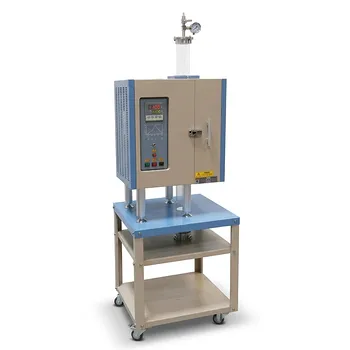
1100°C Split Vertical Tube Furnace with 80mm Quartz Tube and Stainless Steel Vacuum Flanges
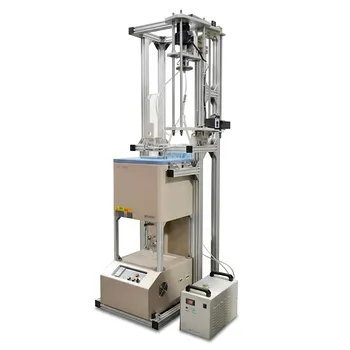
500C Vacuum Vertical Tube Furnace 84mm OD Sample Rotation Lifting System

High Temperature 1700C Vertical Tube Furnace for Powder Spherification and Material Sintering
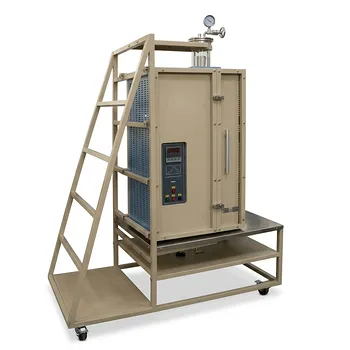
Split Vertical Tube Furnace with 1200C Quartz Tube and Stainless Steel Vacuum Flanges for Rapid Thermal Processing
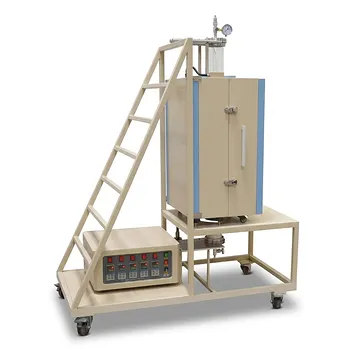
Five Zone Split Vertical Tube Furnace 1200C Max with 4 Inch Quartz Tube and Stainless Steel Vacuum Flanges
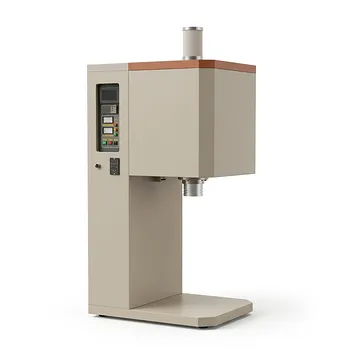
Vertical Openable Tube Furnace 0-1700c High Temperature Laboratory System for CVD and Vacuum Heat Treatment

Compact Vertical Split Quartz Tube Furnace with Stainless Steel Vacuum Flanges for Rapid Thermal Quenching and Controlled Atmosphere Material Processing
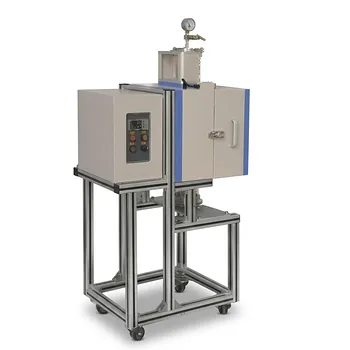
1200°C 5 Inch Vertical Quartz Tube Furnace with Stainless Steel Vacuum Flanges
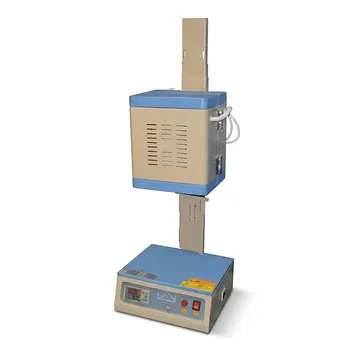
High Temperature Vertical Split Tube Furnace with PID Temperature Controller for 1 and 2 Inch Processing Tubes
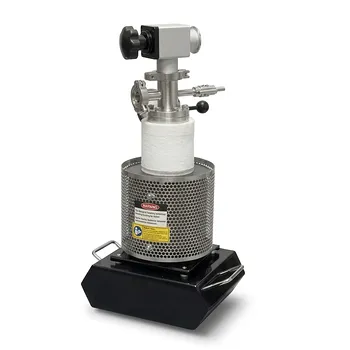
High Temperature 1100C Compact Top Loading Vertical Vacuum Tube Furnace for High Vacuum Noble Metal Melting and Material Research
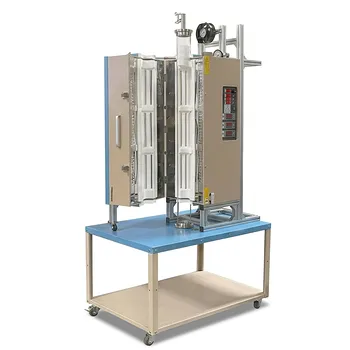
1200C Three Zone Split Vertical Tube Furnace 4 Inch Quartz Tube Stainless Steel Vacuum Flanges
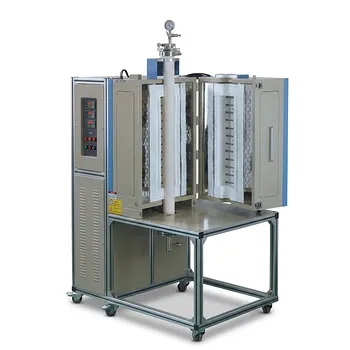
Three Zone Heating Split Vertical Tube Furnace 1700 High Temperature Vacuum Atmosphere Thermal Process System
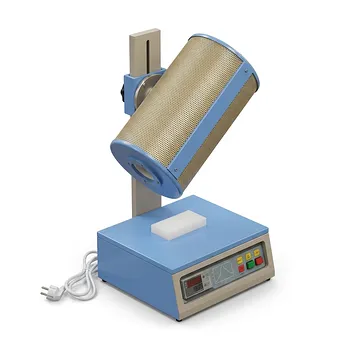
1100°C Vertical Laboratory Furnace for DIY Tubular Reactors with PID Temperature Controller
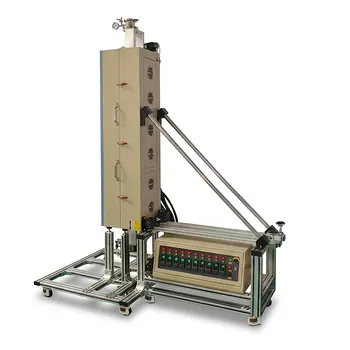
1200°C 10-Zone Split Tube Furnace with Horizontal and Vertical Mounting for Multi-Zone Thermal Gradients and Large Diameter Material Processing
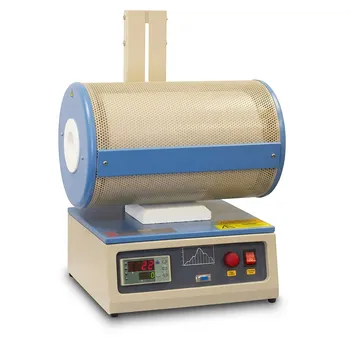
Multi Position Tube Furnace 1100C for Laboratory Material Research and Advanced Industrial Thermal Processing
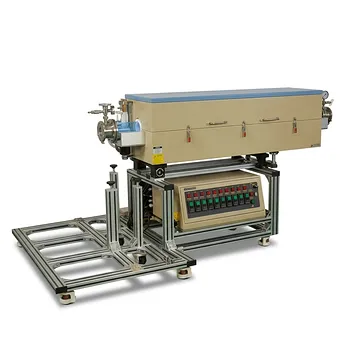
Ten Zone Multi Orientation Laboratory Tube Furnace for 1200C High Temperature Gradient Thermal Processing
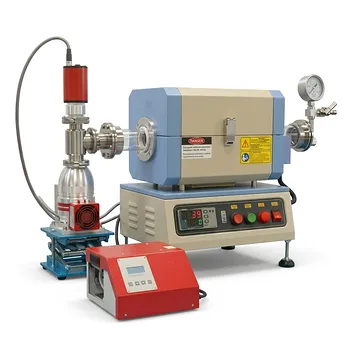
High Vacuum Compact Tube Furnace 1200C with Integrated Turbo Pump System and 8 Inch Heating Zone
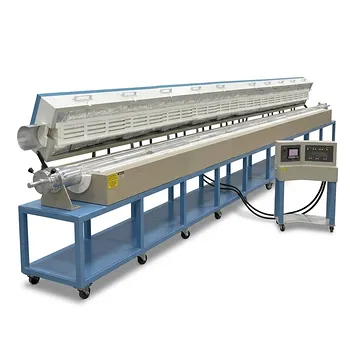
12 Zone Ultra Long Split Tube Furnace with 20 Foot Quartz Tube and 1100C Max Temperature