How does an atmosphere tube furnace ensure the correct valence state of cerium ions? Optimize Your Phosphor Synthesis
Updated 3 months ago
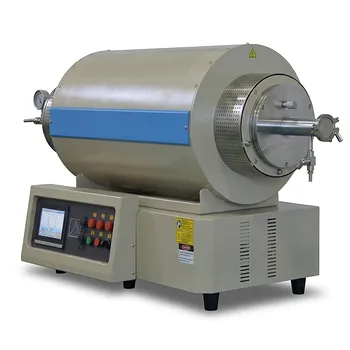
Maintaining the trivalent state of cerium (Ce³⁺) is achieved by strictly controlling the furnace's internal atmosphere to prevent oxidation. An atmosphere tube furnace facilitates this by introducing a specific reducing gas mixture—typically 95% Nitrogen (N₂) and 5% Hydrogen (H₂)—at a precise flow rate. This chemically active environment inhibits the transition of cerium into the non-luminescent tetravalent state (Ce⁴⁺), ensuring that the Ce³⁺ ions are successfully integrated into the CSSO crystal lattice to enable blue-to-near-infrared light conversion.
Core Takeaway: To synthesize CSSO:Ce,Cr,Li phosphors with high photoluminescence efficiency, an atmosphere tube furnace must be used to create a reducing environment that stabilizes cerium in its trivalent (Ce³⁺) state while eliminating oxygen-driven degradation.
The Chemical Mechanism of Valence Control
Preventing the Formation of Non-Luminescent Ce⁴⁺
In a standard air environment, cerium naturally tends to oxidize into its tetravalent state (Ce⁴⁺). This state is undesirable for phosphors because Ce⁴⁺ does not contribute to the luminescence required for energy conversion. The atmosphere tube furnace solves this by replacing air with a reducing gas, effectively starving the reaction of the oxygen needed for oxidation.
Facilitating Ce³⁺ Integration into the Lattice
For the phosphor to function, the cerium ions must occupy specific sites within the CSSO crystal lattice as trivalent ions. The controlled flow of hydrogen within the furnace acts as a reducing agent that actively maintains the trivalent Ce³⁺ state. This allows the ions to serve as the core activators for the transition of blue light into the near-infrared spectrum.
Precision Control in the Synthesis Environment
Managing Oxygen Partial Pressure
The effectiveness of the synthesis depends on the furnace’s ability to minimize oxygen partial pressure. By precisely regulating the mixture of nitrogen and hydrogen, the furnace creates a chemical equilibrium that favors the trivalent state. This level of control is what allows for the optimization of photoluminescence efficiency in advanced materials like CSSO.
Ensuring Temperature Uniformity and Material Purity
Beyond gas chemistry, the enclosed "tube" design of the furnace ensures high temperature uniformity across the precursor material. This uniformity is critical for the consistent pyrolysis of raw salts into target oxides. Additionally, the constant flow of gas removes byproduct gases, preventing impurity contamination that could interfere with the cerium valence state or grain size.
Understanding the Trade-offs and Pitfalls
The Risk of Incomplete Reduction
If the flow rate of the reducing gas is too low or the concentration of hydrogen is insufficient, incomplete reduction may occur. This results in a "mixed-valence" material where a portion of the cerium remains as Ce⁴⁺, significantly dulling the phosphor’s brightness.
Safety and Equipment Integrity
Using hydrogen, even at a 5% concentration, introduces safety requirements such as specialized venting and leak detection. Furthermore, maintaining a perfect seal on the tube furnace is mandatory; even a minor leak allows atmospheric oxygen to enter, which can immediately neutralize the reducing environment and ruin the batch.
How to Optimize Your Synthesis Process
Implementing Precise Atmosphere Protocols
The success of CSSO:Ce,Cr,Li synthesis relies on the rigorous management of the furnace environment.
- If your primary focus is Maximum Luminescence: Prioritize the precision of your gas mixing system to ensure a consistent 5% H₂ concentration, which is the threshold for effective reduction without excessive safety risk.
- If your primary focus is Material Purity: Ensure the furnace tube is thoroughly purged of ambient air before ramping up temperatures to prevent early-stage oxidation of the cerium precursors.
- If your primary focus is Scalability: Invest in high-accuracy mass flow controllers to maintain a stable reducing atmosphere regardless of the volume of material being processed.
A meticulously managed atmosphere tube furnace is the only way to ensure that cerium ions remain in the specific electronic state required for high-performance near-infrared phosphors.
Summary Table:
| Parameter | Ideal Specification | Functional Role |
|---|---|---|
| Atmosphere Type | Reducing (95% N₂ / 5% H₂) | Prevents oxidation of Ce³⁺ to non-luminescent Ce⁴⁺ |
| Cerium Valence | Trivalent State (Ce³⁺) | Acts as the core activator for NIR light conversion |
| Furnace Design | Sealed Tube | Maintains low oxygen partial pressure and gas purity |
| Thermal Profile | High Uniformity | Ensures consistent precursor pyrolysis and grain size |
| Gas Management | Precise Flow Control | Removes byproducts and maintains chemical equilibrium |
Achieve Superior Phosphor Performance with THERMUNITS Precision
In the demanding field of material science and industrial R&D, maintaining the delicate chemical balance of ions like Ce³⁺ is the difference between success and failure. THERMUNITS is a leading manufacturer of high-temperature laboratory equipment, providing the advanced atmosphere control necessary for cutting-edge phosphor synthesis.
Our comprehensive range of thermal processing solutions includes:
- Atmosphere & Tube Furnaces: Specifically designed for precise gas environment management.
- Vacuum, Muffle, & Rotary Furnaces: For versatile heat treatment needs.
- Advanced Systems: CVD/PECVD, Hot Press furnaces, and Vacuum Induction Melting (VIM) units.
- Specialized Equipment: Dental Furnaces, Electric Rotary Kilns, and high-quality Thermal Elements.
Ready to enhance your lab's efficiency and material purity? Contact us today to find the perfect thermal solution for your research.
References
- Ping Sui, Yuansheng Wang. A Ca<sub>3</sub>Sc<sub>2</sub>Si<sub>3</sub>O<sub>12</sub>:Ce<sup>3+</sup>,Cr<sup>3+</sup>,Li<sup>+</sup> phosphor-in-glass film for high-power laser-driven near-infrared lighting. DOI: 10.1039/d4tc03017f
Mentioned Products
- Vertical 1700C Vacuum and Atmosphere Tube Furnace with 80mm Alumina Tube
- 1200C Hybrid Muffle and Tube Furnace for Material Research with Dual Atmosphere Control Quartz Tubes
- 1200°C Atmosphere Controlled Automatic Bottom Loading Furnace with 6 Inch Quartz Tube
- Compact Hybrid Muffle and Tube Furnace for 1000C Controlled Atmosphere Laboratory Material Sintering
- Compact Vertical Split Quartz Tube Furnace with Stainless Steel Vacuum Flanges for Rapid Thermal Quenching and Controlled Atmosphere Material Processing
People Also Ask
- How is an industrial-grade vertical tube furnace utilized in smelting leaching residues? Enhance Metal Recovery Efficiency
- What is the function of a laboratory-grade vertical tube furnace in fast pyrolysis? Optimize Composite Research.
- How does a vertical tube furnace facilitate thermoelectric alloy melting? Precision synthesis for material homogeneity.
- Why is a thermocouple sensor indispensable for monitoring the vertical tube furnace during gallium oxide nanowire production? Optimize VLS Growth
- What are the advantages of using a vertical tube furnace for crucible experiments simulating steel-slag interactions?

Tech Team · ThermUnits
Last updated on Jun 02, 2026
Related Products

Vertical 1700C Vacuum and Atmosphere Tube Furnace with 80mm Alumina Tube
1200C Hybrid Muffle and Tube Furnace for Material Research with Dual Atmosphere Control Quartz Tubes
1200°C Atmosphere Controlled Automatic Bottom Loading Furnace with 6 Inch Quartz Tube
Compact Hybrid Muffle and Tube Furnace for 1000C Controlled Atmosphere Laboratory Material Sintering

Compact Vertical Split Quartz Tube Furnace with Stainless Steel Vacuum Flanges for Rapid Thermal Quenching and Controlled Atmosphere Material Processing

Three Zone Tube Furnace with 11 Inch or 15 Inch Quartz Tube and Hinged Flanges for Vacuum Atmosphere Heat Treatment
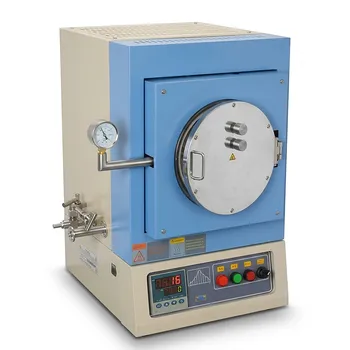
1100°C High Temperature Quartz Chamber Furnace 8 Inch OD with 7.6 Liter Capacity and Vacuum Atmosphere Capability
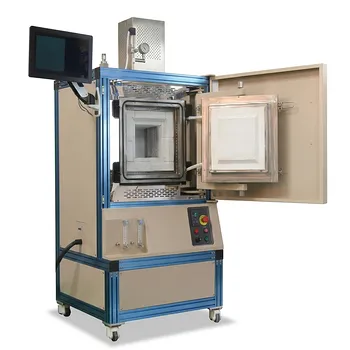
High Temperature Hydrogen Atmosphere Box Furnace 1650C Max Reducing Environment Material Synthesis System 8x8x8 Chamber

High Temperature 1700C Vertical Tube Furnace for Powder Spherification and Material Sintering

Compact High Temperature 1600C Tube Furnace with 50mm Alumina Tube and Vacuum Flanges for Material Sintering

High Temperature 1700C Tube Furnace with High Vacuum Turbomolecular Pump System and Multi Channel Mass Flow Controller Gas Mixer

High Temperature 1700C Six Zone Split Tube Furnace with Alumina Tube and Water Cooled Flanges

1800C High Temperature Compact Vacuum Tube Furnace with 60mm OD Alumina Tube and Kanthal MoSi2 Heating Elements

1100C Tube Furnace with Vacuum Flange and Programmable Temperature Controller for Material Science and Industrial Heat Treatment
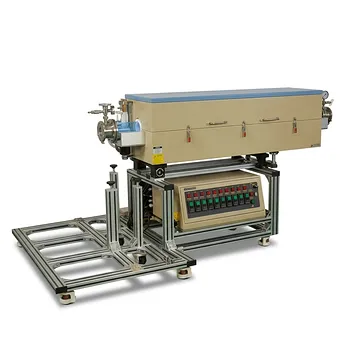
Ten Zone Multi Orientation Laboratory Tube Furnace for 1200C High Temperature Gradient Thermal Processing

High Temperature 1700C Benchtop Tube Furnace with 5 Inch Heating Zone High Purity Alumina Tube and Vacuum Sealing Flanges

1200C High Throughput Multi Channel Tube Furnace with 50mm Quartz Tubes for Annealing and Material Phase Diagram Research

High Temperature Automated 5 Inch Tube Furnace for Autonomous Material Research and Advanced Laboratory R&D

1700C Hydrogen Gas Tube Furnace with 60mm Alumina Process Tube and Integrated Hydrogen Safety Detector