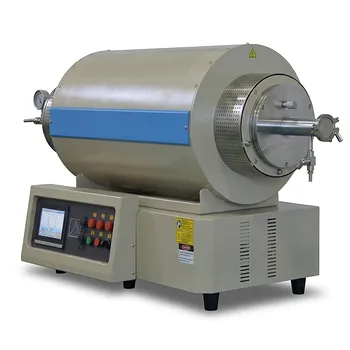
How does 900 °C treatment in an atmosphere tube furnace affect PtCo nanoparticles? | Optimize Catalyst Synthesis
Updated 3 months ago
Secondary high-temperature heat treatment at 900 °C acts as the definitive phase for transforming precursor elements into high-performance PtCo catalysts. By providing the necessary thermal energy within a controlled atmosphere, this process induces the alloying of platinum and cobalt while enabling the formation of ordered intermetallic structures. This specific temperature threshold is critical for achieving the precise atomic coordination required for superior catalytic activity and long-term structural stability.
Core Takeaway: A 900 °C heat treatment in an atmosphere tube furnace is essential for transitioning PtCo from a disordered mixture to an ordered intermetallic alloy, which maximizes oxygen reduction activity and prevents nanoparticle agglomeration through precise thermal management.
The Mechanisms of Alloying and Structural Ordering
Induction of Ordered Intermetallic Phases
The primary role of the 900 °C treatment is to provide sufficient kinetic energy for platinum and cobalt atoms to migrate into specific lattice positions. This migration facilitates the transition from a disordered solid solution to an ordered intermetallic structure, provided the Pt-to-Co ratio is appropriately adjusted.
Enhancement of Catalytic Activity
Ordered intermetallic structures are highly sought after because they significantly enhance oxygen reduction reaction (ORR) activity. The precise atomic arrangement achieved at high temperatures optimizes the electronic environment of the surface platinum atoms.
Improvement of Structural Stability
Beyond activity, the thermal treatment ensures long-term durability. The strong atomic bonding within the ordered PtCo lattice prevents the leaching of cobalt in acidic environments, which is a common failure mode in less stable catalysts.
Precise Thermal Field Control and Morphology
Impact of Controlled Heating Rates
Utilizing a specific heating rate, such as 5 °C/min, is vital to maintain a kinetic balance during the transition. This controlled ramp-up prevents sudden shifts in the material's framework, ensuring the uniform nucleation and growth of nanoparticles.
Regulating Particle Size and Distribution
The stable thermal environment of an atmosphere tube furnace ensures that nanoparticles are uniformly dispersed across the support substrate. Precise temperature maintenance prevents the localized hot spots that typically lead to uneven particle sizes.
Preventing Particle Agglomeration
High-temperature environments naturally carry the risk of sintering, where particles fuse together. The precision of the tube furnace allows for thorough carbonization of ligands (such as alginates), which helps anchor the metal nanoparticles and prevents them from clumping together.
Understanding the Trade-offs
Thermal Energy vs. Particle Growth
While 900 °C is necessary for alloying, excessive heat or prolonged exposure can lead to uncontrolled grain growth. This reduces the electrochemically active surface area (ECSA), potentially offsetting the gains made through alloying.
Atmospheric Sensitivity
The choice of atmosphere within the tube furnace is critical; any fluctuation in gas purity or flow can lead to unwanted oxidation or incomplete reduction. If the environment is not strictly controlled, the cobalt may form oxides rather than incorporating into the Pt lattice.
Material Integrity Risks
Rapid gas generation during the decomposition of sacrificial layers or ligands can cause structural failures like fiber bursting. Maintaining a balance between the decomposition rate and the substrate shrinkage is essential for preserving the hierarchical porous structure.
How to Apply This to Your Project
Making the Right Choice for Your Goal
To achieve the best results with PtCo nanoparticle synthesis, your approach should be tailored to your specific performance targets.
- If your primary focus is Maximum Catalytic Activity: Prioritize the 900 °C treatment with a slow 5 °C/min ramp to ensure the formation of highly ordered intermetallic phases.
- If your primary focus is High Surface Area: Focus on the carbonization of the support framework to ensure nanoparticles remain small and well-dispersed, even at high temperatures.
- If your primary focus is Long-Term Durability: Ensure the platinum-to-cobalt ratio is precisely calibrated before treatment to lock the atoms into a stable, leach-resistant lattice.
Precise thermal management at 900 °C is the bridge between a simple metallic mixture and a sophisticated, high-durability intermetallic catalyst.
Summary Table:
| Process Parameter | Impact on PtCo Nanoparticles | Strategic Benefit |
|---|---|---|
| 900 °C Thermal Energy | Facilitates atomic migration to lattice positions | Formation of ordered intermetallic phases |
| Controlled Atmosphere | Prevents cobalt oxidation during alloying | High chemical purity of the catalyst |
| 5 °C/min Heating Rate | Ensures kinetic balance and uniform growth | Precise control over nanoparticle size |
| Carbonization Control | Anchors metal particles to support substrate | Prevents sintering and particle agglomeration |
| Structural Ordering | Optimizes surface platinum electronic environment | Enhanced Oxygen Reduction Reaction (ORR) activity |
Elevate Your Catalyst Research with THERMUNITS Precision Thermal Solutions
Achieving superior intermetallic structures in PtCo nanoparticles requires the extreme thermal precision found in THERMUNITS equipment. As a leading manufacturer of high-temperature laboratory solutions for material science and industrial R&D, we provide the tools necessary for advanced heat treatment.
Our comprehensive range of equipment includes:
- Atmosphere and Vacuum Tube Furnaces for precise gas-controlled alloying.
- CVD/PECVD Systems for sophisticated nanoparticle deposition.
- Muffle, Rotary, and Hot Press Furnaces for versatile material processing.
- Vacuum Induction Melting (VIM) and Thermal Elements for specialized applications.
Whether you are focusing on maximizing catalytic activity or ensuring long-term structural stability, THERMUNITS delivers the uniform thermal fields your research demands.
Ready to optimize your thermal processing? Contact us today to find the perfect furnace for your laboratory!
References
- Yangdong Zhou, Siyu Ye. Unraveling a volcanic relationship of Co/N/C@Pt<sub><i>x</i></sub>Co catalysts toward oxygen electro-reduction. DOI: 10.1039/d3nr06647a
Mentioned Products
- Vertical 1700C Vacuum and Atmosphere Tube Furnace with 80mm Alumina Tube
- 1200C Hybrid Muffle and Tube Furnace for Material Research with Dual Atmosphere Control Quartz Tubes
- 1200°C Atmosphere Controlled Automatic Bottom Loading Furnace with 6 Inch Quartz Tube
- Compact Hybrid Muffle and Tube Furnace for 1000C Controlled Atmosphere Laboratory Material Sintering
- Compact Vertical Split Quartz Tube Furnace with Stainless Steel Vacuum Flanges for Rapid Thermal Quenching and Controlled Atmosphere Material Processing
People Also Ask
- How is an industrial-grade vertical tube furnace utilized in smelting leaching residues? Enhance Metal Recovery Efficiency
- What is the function of a laboratory-grade vertical tube furnace in fast pyrolysis? Optimize Composite Research.
- How does a vertical tube furnace facilitate thermoelectric alloy melting? Precision synthesis for material homogeneity.
- Why is a thermocouple sensor indispensable for monitoring the vertical tube furnace during gallium oxide nanowire production? Optimize VLS Growth
- What are the advantages of using a vertical tube furnace for crucible experiments simulating steel-slag interactions?

Tech Team · ThermUnits
Last updated on Jun 03, 2026
Related Products
Vertical 1700C Vacuum and Atmosphere Tube Furnace with 80mm Alumina Tube
1200C Hybrid Muffle and Tube Furnace for Material Research with Dual Atmosphere Control Quartz Tubes
1200°C Atmosphere Controlled Automatic Bottom Loading Furnace with 6 Inch Quartz Tube
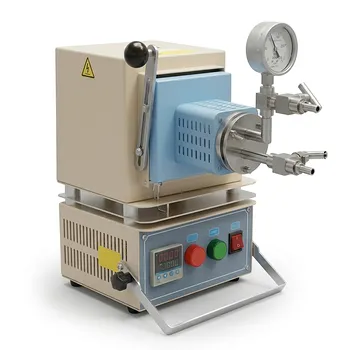
Compact Hybrid Muffle and Tube Furnace for 1000C Controlled Atmosphere Laboratory Material Sintering
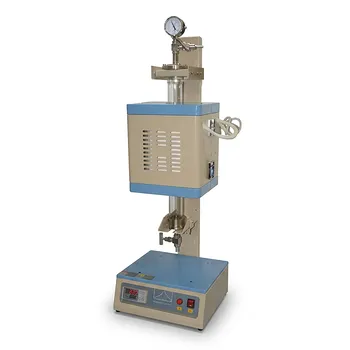
Compact Vertical Split Quartz Tube Furnace with Stainless Steel Vacuum Flanges for Rapid Thermal Quenching and Controlled Atmosphere Material Processing
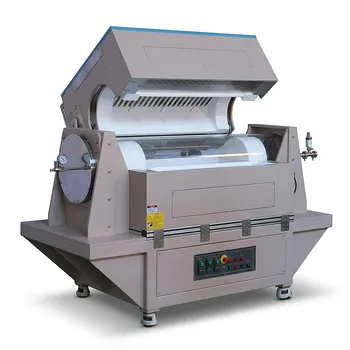
Three Zone Tube Furnace with 11 Inch or 15 Inch Quartz Tube and Hinged Flanges for Vacuum Atmosphere Heat Treatment
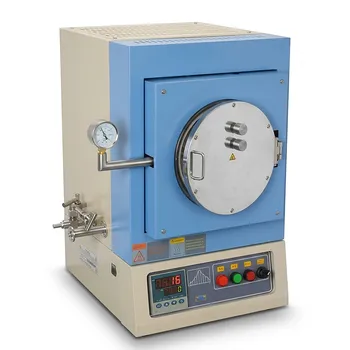
1100°C High Temperature Quartz Chamber Furnace 8 Inch OD with 7.6 Liter Capacity and Vacuum Atmosphere Capability
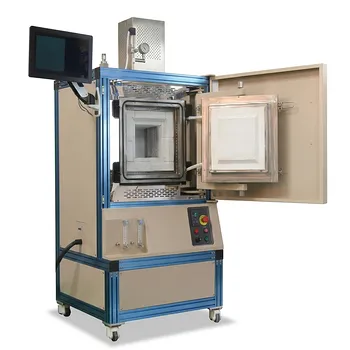
High Temperature Hydrogen Atmosphere Box Furnace 1650C Max Reducing Environment Material Synthesis System 8x8x8 Chamber

High Temperature 1700C Vertical Tube Furnace for Powder Spherification and Material Sintering

Compact High Temperature 1600C Tube Furnace with 50mm Alumina Tube and Vacuum Flanges for Material Sintering

High Temperature 1700C Tube Furnace with High Vacuum Turbomolecular Pump System and Multi Channel Mass Flow Controller Gas Mixer
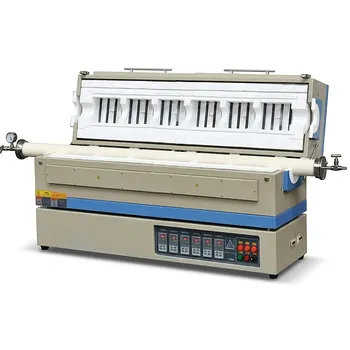
High Temperature 1700C Six Zone Split Tube Furnace with Alumina Tube and Water Cooled Flanges

1800C High Temperature Compact Vacuum Tube Furnace with 60mm OD Alumina Tube and Kanthal MoSi2 Heating Elements
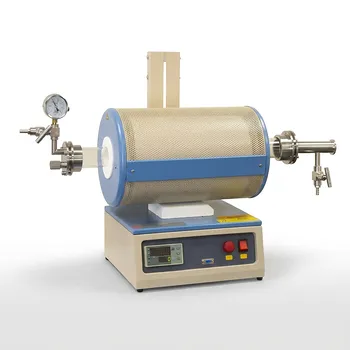
1100C Tube Furnace with Vacuum Flange and Programmable Temperature Controller for Material Science and Industrial Heat Treatment
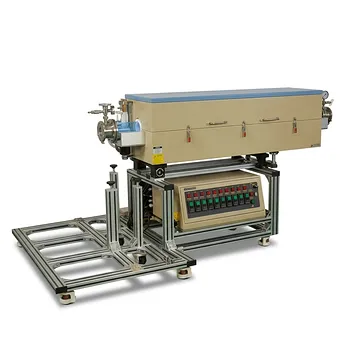
Ten Zone Multi Orientation Laboratory Tube Furnace for 1200C High Temperature Gradient Thermal Processing
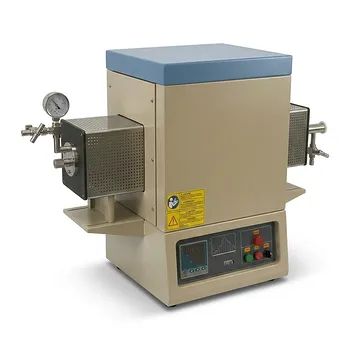
High Temperature 1700C Benchtop Tube Furnace with 5 Inch Heating Zone High Purity Alumina Tube and Vacuum Sealing Flanges
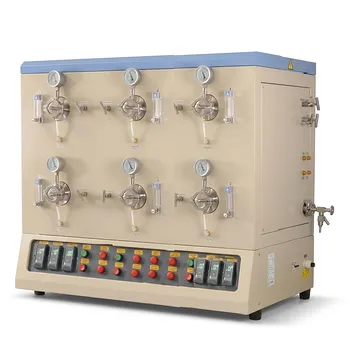
1200C High Throughput Multi Channel Tube Furnace with 50mm Quartz Tubes for Annealing and Material Phase Diagram Research

High Temperature Automated 5 Inch Tube Furnace for Autonomous Material Research and Advanced Laboratory R&D
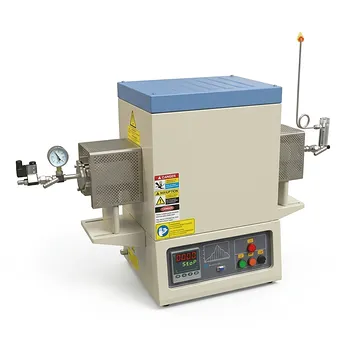
1700C Hydrogen Gas Tube Furnace with 60mm Alumina Process Tube and Integrated Hydrogen Safety Detector