How do the quartz tube and nitrogen flow within a tube furnace ensure the quality of synthesized MoS2? Purity Guide
Updated 3 months ago
The quartz tube and nitrogen flow are the fundamental safeguards for MoS2 purity and structural integrity.
These components work in tandem to isolate the reaction from the external environment while facilitating the precise delivery of precursors. The quartz tube provides a chemically inert, high-temperature reaction vessel that prevents contamination, while the nitrogen flow maintains a positive-pressure, oxygen-free atmosphere that suppresses the formation of unwanted molybdenum oxides.
High-quality MoS2 synthesis relies on the strict exclusion of oxygen and metallic impurities. By combining a sterile reaction chamber with a controlled inert gas stream, the system ensures that the chemical reaction between molybdenum and sulfur proceeds with high crystallinity and consistent electronic properties.
The Quartz Tube: A Sterile, High-Temperature Reaction Vessel
Maintaining Chemical Inertness and Purity
The high-purity quartz tube is chosen for its chemical inertness, meaning it does not react with molybdenum or sulfur precursors at elevated temperatures.
Unlike metal or low-grade ceramic tubes, high-purity quartz prevents the leaching of metal ion impurities—a risk that increases significantly at temperatures above 750°C.
This isolation is critical for synthesizing monolayer MoS2, as even trace contaminants can degrade carrier mobility and quench photoluminescence properties.
Establishing a Stable Thermal Zone
The quartz tube acts as the medium for the furnace's uniform thermal field, which is necessary for the consistent sublimation of solid precursors like Molybdenum Trioxide (MoO3).
By providing a stable heating environment, the tube ensures that the vaporization rate of sulfur and molybdenum remains predictable.
This stability allows for the growth of large-area, atomic-thin crystals with high consistency in their structural and electrical properties.
Nitrogen Flow: Atmospheric Control and Precursor Transport
Suppressing Oxidation and Impurity Formation
The nitrogen flow creates a positive pressure environment (approximately 2.9 psi) that effectively displaces oxygen and moisture from the reaction zone.
An oxygen-free environment is essential to suppress the oxidation of sulfides and prevent the formation of non-conductive molybdenum oxides.
This inert protection ensures the production of high-purity MoS2 crystal structures rather than contaminated or incomplete chemical phases.
Facilitating Precursor Vapor Dynamics
Nitrogen serves as a carrier gas, creating a stable laminar flow environment within the quartz tube.
This flow ensures the uniform delivery of precursor vapors to the substrate surface, which is a prerequisite for the growth of high-quality single-layer crystals.
By adjusting the flow rate, researchers can control the vapor deposition environment and the concentration of reactants, which directly influences the density of unsaturated edge sites in the resulting nanosheets.
Understanding the Trade-offs
Pressure and Flow Rate Sensitivity
While a positive pressure of 2.9 psi is standard, fluctuations in flow rate can lead to turbulence rather than laminar flow.
If the nitrogen flow is too high, it may sweep precursors out of the furnace before they can react; if too low, it may fail to maintain a completely oxygen-free environment.
Furthermore, while nitrogen is effective for many applications, some specialized processes like Oxygen-Assisted CVD (OA-CVD) intentionally introduce trace oxygen to modulate growth, requiring even more complex control systems.
Thermal Expansion and Material Stress
Quartz is durable but susceptible to thermal shock if heated or cooled too rapidly.
Rapid temperature changes can cause the tube to crack or degrade the vacuum seals at the ends of the furnace.
Maintaining the integrity of the quartz-to-metal seals is vital, as any leak will introduce oxygen, immediately compromising the crystalline quality of the MoS2.
How to Apply This to Your Project
Making the Right Choice for Your Goal
To achieve the best results in your synthesis, consider the following recommendations:
- If your primary focus is high carrier mobility: Ensure you are using high-purity quartz tubes (99.9%+) and maintain a strict nitrogen purge to eliminate metal ion leaching and oxygen contamination.
- If your primary focus is optimizing lithium-ion diffusion: Utilize the furnace’s temperature programming to facilitate calcination at 800°C, which can expand the MoS2 interlayer spacing from 0.64 nm to 0.69 nm.
- If your primary focus is large-area monolayer growth: Focus on stabilizing the laminar flow of nitrogen to ensure a uniform precursor concentration across the entire substrate surface.
By mastering the balance between thermal stability and atmospheric purity, you can consistently produce MoS2 with the precise electronic and structural characteristics required for advanced applications.
Summary Table:
| Component | Primary Function | Impact on MoS2 Quality |
|---|---|---|
| Quartz Tube | Chemical inertness & thermal stability | Prevents metal ion contamination and ensures uniform crystal growth. |
| Nitrogen Flow | Inert atmosphere & precursor transport | Suppresses oxidation and enables uniform vapor deposition for thin films. |
| Thermal Zone | Stable heating environment | Ensures predictable vaporization rates for consistent electronic properties. |
| Positive Pressure | Oxygen and moisture displacement | Maintains high-purity crystal structures and prevents non-conductive oxides. |
Elevate Your Material Research with THERMUNITS Precision
Achieving high-purity MoS2 synthesis requires uncompromising control over thermal and atmospheric variables. THERMUNITS is a leading manufacturer of high-temperature laboratory equipment specifically designed for material science and industrial R&D.
Our comprehensive range of thermal solutions—including Tube Furnaces, CVD/PECVD systems, Vacuum Atmosphere Furnaces, and Rotary Kilns—provides the stability and inert environments essential for advanced heat treatment. Whether you are developing monolayer crystals or optimizing lithium-ion diffusion, our equipment delivers the precision your work demands.
Ready to optimize your lab’s efficiency? Contact THERMUNITS Today to explore our specialized thermal processing equipment and find the perfect fit for your research goals!
References
- Noah Hurley, Yuankun Lin. Selective CW Laser Synthesis of MoS2 and Mixture of MoS2 and MoO2 from (NH4)2MoS4 Film. DOI: 10.3390/mi15020258
Mentioned Products
- High Temperature Tube Furnace 1500C with Sliding Flanges and 50mm OD for Rapid Thermal Processing Fast Heating and Cooling
- Vertical 1700C Vacuum and Atmosphere Tube Furnace with 80mm Alumina Tube
- 1100C Tube Furnace with Vacuum Flange and Programmable Temperature Controller for Material Science and Industrial Heat Treatment
- Compact High Temperature 1600C Tube Furnace with 50mm Alumina Tube and Vacuum Flanges for Material Sintering
- 900°C Max Rotary Tube Furnace with 8 Inch 310S Alloy Tube and Optional Multi Zone Heating for Industrial Material Calcination
People Also Ask
- How are high-temperature tube furnaces utilized to repair etching damage? Precision Lattice Restoration Solutions
- What core conditions does a high-temperature tube furnace provide for rGO aerogels? Mastering Precision Synthesis.
- What role does a high-temperature tube furnace play in CVD synthesis of silicon nanowires? Master VLS Growth Precision.
- How does precision tube furnace control influence CoFe nanoparticle formation? Master Your Bimetallic Synthesis.
- What role does a high-temperature tube furnace play in the sulfidation heat treatment of CoS@C/MXene nanocomposites? Guide

Tech Team · ThermUnits
Last updated on Jun 03, 2026
Related Products

High Temperature Tube Furnace 1500C with Sliding Flanges and 50mm OD for Rapid Thermal Processing Fast Heating and Cooling

Vertical 1700C Vacuum and Atmosphere Tube Furnace with 80mm Alumina Tube

1100C Tube Furnace with Vacuum Flange and Programmable Temperature Controller for Material Science and Industrial Heat Treatment

Compact High Temperature 1600C Tube Furnace with 50mm Alumina Tube and Vacuum Flanges for Material Sintering
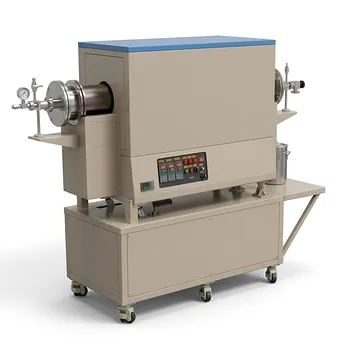
900°C Max Rotary Tube Furnace with 8 Inch 310S Alloy Tube and Optional Multi Zone Heating for Industrial Material Calcination

1700C Hydrogen Gas Tube Furnace with 60mm Alumina Process Tube and Integrated Hydrogen Safety Detector

High Temperature 1700C Tube Furnace with High Vacuum Turbomolecular Pump System and Multi Channel Mass Flow Controller Gas Mixer

5 Inch Three Zone Rotary Tube Furnace with Integrated Gas Delivery System and 1200C Capability for Advanced Material CVD Processing

1200C High Throughput Multi Channel Tube Furnace with 50mm Quartz Tubes for Annealing and Material Phase Diagram Research

Three Zone Tube Furnace with 11 Inch or 15 Inch Quartz Tube and Hinged Flanges for Vacuum Atmosphere Heat Treatment

1200°C 5 Inch Vertical Quartz Tube Furnace with Stainless Steel Vacuum Flanges
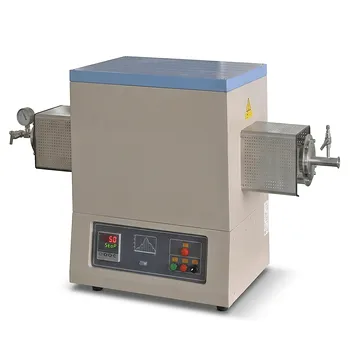
High Temperature 1700C Tube Furnace with 4 Inch OD Alumina Tube and Vacuum Sealing Flanges

High Temperature 1700C Benchtop Tube Furnace with 5 Inch Heating Zone High Purity Alumina Tube and Vacuum Sealing Flanges

Compact Vertical Split Quartz Tube Furnace with Stainless Steel Vacuum Flanges for Rapid Thermal Quenching and Controlled Atmosphere Material Processing

High Temperature 1700C Six Zone Split Tube Furnace with Alumina Tube and Water Cooled Flanges

1800C High Temperature Compact Vacuum Tube Furnace with 60mm OD Alumina Tube and Kanthal MoSi2 Heating Elements
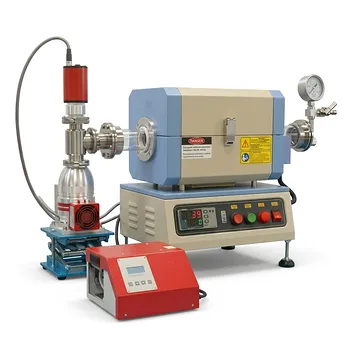
High Vacuum Compact Tube Furnace 1200C with Integrated Turbo Pump System and 8 Inch Heating Zone
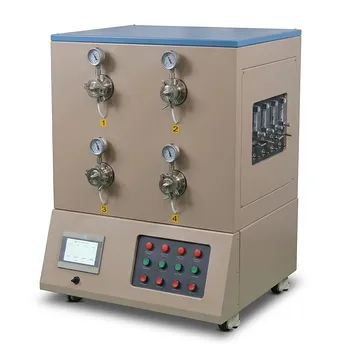
High Throughput 1200C Four Channel Tube Furnace with 3 Inch Quartz Tubes for Multi Zone Annealing and Material Research

High Temperature Automated 5 Inch Tube Furnace for Autonomous Material Research and Advanced Laboratory R&D
