How does a high-precision tube furnace facilitate the conversion of polymer precursors into active catalysts? Expert Guide
Updated 3 months ago
A high-precision tube furnace acts as a controlled chemical reactor that transforms inert polymers into functional catalytic materials. By maintaining a strictly regulated thermal environment and a specific gas atmosphere, the furnace drives the carbonization of the polymer precursor into a nitrogen-doped carbon matrix. This process simultaneously induces metal-nitrogen coordination, creating the active atomic sites necessary for catalysis while sculpting a hierarchical pore structure for optimized mass transport.
The tube furnace is the essential tool for converting complex polymer precursors into active catalysts because it provides the dual necessity of extreme thermal stability and precise atmospheric control. It ensures that precursors reorganize at the atomic level into specific crystalline phases without falling victim to over-reduction or structural collapse.
The Mechanisms of Thermal Transformation
A tube furnace does more than simply heat a sample; it facilitates a series of complex chemical and structural reorganizations.
Driving Carbonization and Matrix Formation
The furnace provides the high-energy environment—typically around 900 °C—required to break molecular bonds within the polymer. This thermal energy drives the carbonization process, stripping away volatile components and leaving behind a stable nitrogen-doped carbon matrix.
Coordinating Metal Active Centers
As the polymer framework transitions to carbon, the furnace's stable heat allows metal atoms within the precursor to migrate and coordinate with nitrogen atoms. This results in the formation of highly dispersed active centers, which are the engine of the catalyst's reactivity.
Sculpting Hierarchical Pore Structures
The tube furnace environment is critical for developing the catalyst's physical architecture. By controlling the rate of gas evolution during pyrolysis, the furnace promotes a hierarchical pore structure, ensuring the final material has the surface area required for high catalytic performance.
Precision Control of the Chemical Environment
The "high-precision" aspect of the tube furnace is what distinguishes it from standard heating elements, allowing for exact phase regulation.
Precise Atmosphere and Gas Dynamics
Unlike a standard box furnace, a tube furnace allows for the introduction of specific gases like pure Argon or Hydrogen/Argon mixtures. This control ensures that the precursor undergoes pyrolysis in an inert atmosphere or accurate reduction, preventing the material from reacting with oxygen or moisture.
Managing Heating Rates and Phase Purity
The ability to set specific heating rates, such as 5 °C/min, is vital for the simultaneous reduction and sulfidation of species. Stable temperature control prevents over-reduction—for example, ensuring iron precursors stop at the highly active magnetite (Fe3O4) phase rather than collapsing into less effective metallic iron.
Atomic Reorganization and Intermetallic Compounds
At specific temperatures (e.g., 600 °C), the furnace facilitates the atomic-scale rearrangement of metal species on their supports. This allows for the synthesis of highly ordered intermetallic compounds and carbon nitride (PCN) supports, providing a structural foundation for high-loading single-atom catalysts.
Understanding the Trade-offs
While the tube furnace is superior for precision, it requires a clear understanding of its limitations compared to other thermal methods.
Atmosphere vs. Throughput
Tube furnaces offer unparalleled atmospheric purity, making them ideal for sensitive reductions. However, they generally have smaller hot zones than box calcination furnaces, which are better suited for large-scale air-calcination of supports like calcium aluminate.
The Risk of Sintering
Precise temperature control is a safeguard against sintering, where high heat causes active nanoparticles to clump together. If the furnace calibration drifts, the resulting loss of active surface area can render the catalyst ineffective, regardless of the precursor's quality.
Complexity of Programming
Achieving the "perfect" catalyst often requires a complex, multi-stage heating curve. This level of precision demands more rigorous SOPs (Standard Operating Procedures) and maintenance compared to simpler thermal treatments, as even slight deviations can alter the final crystal structure.
Applying This Technology to Your Catalyst Project
To maximize the effectiveness of a tube furnace in your synthesis process, align your furnace parameters with your specific material goals.
How to Apply This to Your Project
- If your primary focus is Single-Atom Catalysis: Utilize the furnace to maintain a high-purity argon flow at 600°C to ensure the clean pyrolysis of nitrogen-rich precursors like melamine into carbon nitride supports.
- If your primary focus is Phase-Pure Metal Oxides: Use precise H2/Ar gas concentrations and stable temperature dwells (e.g., 300°C) to reduce precursors to specific phases like Fe3O4 while avoiding metallic iron formation.
- If your primary focus is Mass Transport and Porosity: Program slow ramp rates during the carbonization of organic long chains to allow for the steady evolution of gases, which creates the necessary hierarchical pore network.
Ultimately, the high-precision tube furnace serves as the bridge between a raw polymer mixture and a sophisticated, atomically-tuned catalytic engine.
Summary Table:
| Furnace Feature | Transformation Process | Resulting Catalyst Property |
|---|---|---|
| Atmospheric Control | Inert/Reducing Gas Flow | High phase purity & prevents oxidation |
| Precise Heating Ramps | Controlled gas evolution | Hierarchical pore structure for mass transport |
| Thermal Stability | 900°C Carbonization | Stable nitrogen-doped carbon matrix |
| Atomic Migration | Metal-Nitrogen coordination | Highly dispersed single-atom active centers |
Elevate Your Catalyst Synthesis with THERMUNITS
Precision is the difference between a failed reduction and a high-performance catalyst. THERMUNITS is a leading manufacturer of high-temperature laboratory equipment for material science and industrial R&D. Our high-precision Tube Furnaces, CVD/PECVD systems, and Atmosphere Furnaces provide the exact thermal stability and atmospheric purity required for advanced carbonization and atomic-scale reorganization.
Whether you are developing single-atom catalysts or complex intermetallic compounds, our comprehensive range of thermal processing solutions—including Vacuum, Rotary, and Hot Press furnaces—is designed to meet the rigorous demands of modern research.
Ready to optimize your heat treatment process? Contact our engineering team today to find the perfect furnace for your laboratory.
References
- Yiming Leng, Zhonghua Xiang. Macrocycle-based covalent-organic-polymer as efficient oxygen electrocatalysts for zinc-air flow batteries. DOI: 10.20517/cs.2023.64
Mentioned Products
- High Temperature Tube Furnace 1500C with Sliding Flanges and 50mm OD for Rapid Thermal Processing Fast Heating and Cooling
- Vertical 1700C Vacuum and Atmosphere Tube Furnace with 80mm Alumina Tube
- 1100C Tube Furnace with Vacuum Flange and Programmable Temperature Controller for Material Science and Industrial Heat Treatment
- Compact High Temperature 1600C Tube Furnace with 50mm Alumina Tube and Vacuum Flanges for Material Sintering
- 900°C Max Rotary Tube Furnace with 8 Inch 310S Alloy Tube and Optional Multi Zone Heating for Industrial Material Calcination
People Also Ask
- How are high-temperature tube furnaces utilized to repair etching damage? Precision Lattice Restoration Solutions
- What core conditions does a high-temperature tube furnace provide for rGO aerogels? Mastering Precision Synthesis.
- What role does a high-temperature tube furnace play in CVD synthesis of silicon nanowires? Master VLS Growth Precision.
- How does precision tube furnace control influence CoFe nanoparticle formation? Master Your Bimetallic Synthesis.
- What role does a high-temperature tube furnace play in the sulfidation heat treatment of CoS@C/MXene nanocomposites? Guide

Tech Team · ThermUnits
Last updated on Jun 03, 2026
Related Products

High Temperature Tube Furnace 1500C with Sliding Flanges and 50mm OD for Rapid Thermal Processing Fast Heating and Cooling

Vertical 1700C Vacuum and Atmosphere Tube Furnace with 80mm Alumina Tube

1100C Tube Furnace with Vacuum Flange and Programmable Temperature Controller for Material Science and Industrial Heat Treatment

Compact High Temperature 1600C Tube Furnace with 50mm Alumina Tube and Vacuum Flanges for Material Sintering
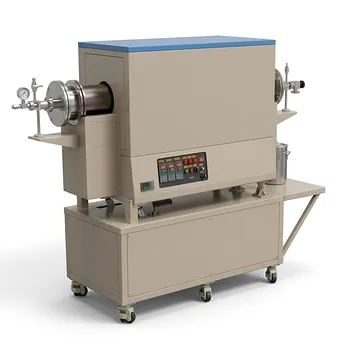
900°C Max Rotary Tube Furnace with 8 Inch 310S Alloy Tube and Optional Multi Zone Heating for Industrial Material Calcination

1700C Hydrogen Gas Tube Furnace with 60mm Alumina Process Tube and Integrated Hydrogen Safety Detector

High Temperature 1700C Tube Furnace with High Vacuum Turbomolecular Pump System and Multi Channel Mass Flow Controller Gas Mixer

5 Inch Three Zone Rotary Tube Furnace with Integrated Gas Delivery System and 1200C Capability for Advanced Material CVD Processing

Three Zone Tube Furnace with 11 Inch or 15 Inch Quartz Tube and Hinged Flanges for Vacuum Atmosphere Heat Treatment

1200C High Throughput Multi Channel Tube Furnace with 50mm Quartz Tubes for Annealing and Material Phase Diagram Research

1200°C 5 Inch Vertical Quartz Tube Furnace with Stainless Steel Vacuum Flanges

1800C High Temperature Compact Vacuum Tube Furnace with 60mm OD Alumina Tube and Kanthal MoSi2 Heating Elements

High Temperature 1700C Benchtop Tube Furnace with 5 Inch Heating Zone High Purity Alumina Tube and Vacuum Sealing Flanges
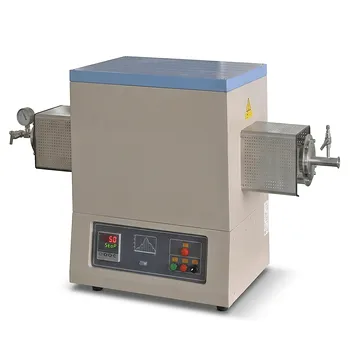
High Temperature 1700C Tube Furnace with 4 Inch OD Alumina Tube and Vacuum Sealing Flanges

Compact Vertical Split Quartz Tube Furnace with Stainless Steel Vacuum Flanges for Rapid Thermal Quenching and Controlled Atmosphere Material Processing

High Temperature 1700C Six Zone Split Tube Furnace with Alumina Tube and Water Cooled Flanges
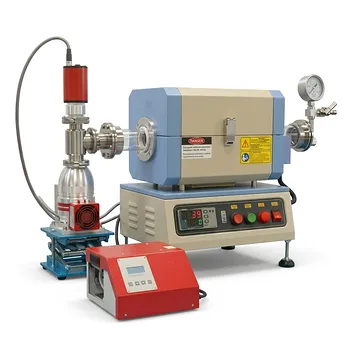
High Vacuum Compact Tube Furnace 1200C with Integrated Turbo Pump System and 8 Inch Heating Zone
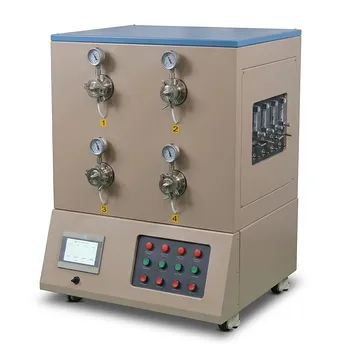
High Throughput 1200C Four Channel Tube Furnace with 3 Inch Quartz Tubes for Multi Zone Annealing and Material Research

High Temperature Automated 5 Inch Tube Furnace for Autonomous Material Research and Advanced Laboratory R&D
