What role does a tube furnace play in preparing Co,N-C@MoS2 catalysts? Master Precision Pyrolysis for Research
Updated 3 months ago
The tube furnace serves as the precision thermochemical reactor required to transform precursors into high-performance Co,N-C@MoS2 catalysts. Specifically, it provides a stable 900 °C environment under an inert Argon atmosphere to facilitate the dual processes of organic ligand carbonization and the reduction of cobalt ions into metallic elements. This controlled thermal treatment ensures the creation of a highly conductive, porous carbon framework that anchors the active catalytic sites.
The tube furnace functions as the critical environment for "one-pot" or multi-stage thermal transformations, enabling precise control over carbonization, metallic reduction, and atmospheric purity. By maintaining a uniform temperature field and isolating the sample from oxygen, it ensures the resulting material possesses the high crystallinity and site dispersion necessary for electrocatalytic activity.
Thermochemical Transformation of Precursors
Carbonization of Organic Ligands
The tube furnace provides the sustained high temperatures (typically 900 °C) necessary to convert metal-organic frameworks, such as ZIF-67, into nitrogen-doped amorphous carbon. This carbonization process creates a conductive matrix that facilitates electron transfer during catalytic reactions.
Reduction of Metallic Ions
Thermal energy within the furnace induces the reduction of cobalt ions into their metallic state. This process is essential for embedding metallic cobalt particles within the carbon layers, which serves to protect the active sites from leaching and ensures structural stability.
Formation of Porous Architectures
The controlled decomposition of precursors under heat leads to the development of a porous structure. This porosity is vital because it increases the accessible surface area, allowing reactants to reach the active catalytic sites more efficiently.
Environmental and Atmospheric Control
Preventing Oxidation via Argon Purge
The sealed nature of a tube furnace allows for a rigorous inert atmosphere, usually maintained by a continuous flow of Argon. This effectively isolates the sample from oxygen, preventing the unwanted oxidation of cobalt or molybdenum species that would otherwise deactivate the catalyst.
Precise Control of Gas-Phase Reactions
In the synthesis of Co,N-C@MoS2, the furnace facilitates the reaction between sulfur sources and metal precursors at specific temperatures. This environment is critical for the growth of MoS2 layers with high crystallinity, which are often grown directly onto the cobalt-nitrogen-carbon substrate.
Uniformity of the Thermal Field
A high-quality tube furnace provides a stable, long temperature zone that ensures every part of the precursor mixture experiences the same thermal history. This uniformity is what allows for the high dispersion of active sites, preventing the formation of large, inefficient aggregates.
Optimization of Material Properties
Regulation of Crystallinity
By adjusting the furnace temperature (often between 600 °C and 900 °C), researchers can tune the crystallinity of the MoS2 phase. Higher crystallinity generally improves the electrical conductivity and chemical stability of the catalyst, preventing it from converting into soluble molybdates during use.
Control of Heating Rates
The ability to set a precise heating ramp (such as 3–5 °C/min) is essential for controlling the rate of devolatilization. Managing this rate prevents the collapse of the internal nanostructure, ensuring the final material retains its intended microsphere or polyhedral morphology.
Anchoring Active Sites
The furnace environment facilitates thermal polycondensation, which firmly anchors metal atoms into the nitrogen-doped carbon lattice. This anchoring is what creates "single-atom" or highly dispersed "nano-alloy" sites that drive the material's catalytic performance.
Understanding the Trade-offs
Temperature vs. Surface Area
While higher temperatures (900 °C) improve carbon conductivity and crystallinity, they also increase the risk of sintering. Excessive heat can cause nanoparticles to fuse together, which significantly reduces the active surface area and overall catalytic efficiency.
Yield vs. Purity
Using high gas flow rates to ensure a pure inert environment can sometimes sweep away volatile sulfur or nitrogen species before they can react. This creates a trade-off where rigorous purging is necessary for purity but must be balanced to maintain the desired stoichiometric composition of the Co,N-C@MoS2 composite.
Structural Integrity vs. Reaction Speed
Rapid heating can speed up production but often leads to structural defects due to the violent release of gases from organic ligands. Conversely, very slow heating rates may lead to insufficient carbonization or phase separation, requiring a carefully optimized middle ground.
Strategic Implementation for Catalyst Synthesis
How to Apply This to Your Project
When utilizing a tube furnace for the preparation of Co,N-C@MoS2 catalytic materials, your approach should vary based on your specific performance requirements:
- If your primary focus is High Electrical Conductivity: Prioritize higher carbonization temperatures (800–900 °C) to maximize the graphitization of the carbon framework.
- If your primary focus is Maximal Active Site Dispersion: Utilize a slower heating ramp (3 °C/min) and ensure the precursors are perfectly mixed to prevent metallic sintering.
- If your primary focus is Chemical Stability in Acid: Target a temperature that optimizes the crystallinity of the MoS2 phase to prevent the formation of soluble molybdenum species.
- If your primary focus is High Porosity: Carefully monitor the gas evolution phase and consider using a lower argon flow rate to maintain a constructive internal pressure during pore formation.
The tube furnace is the decisive tool that bridges the gap between raw chemical precursors and a structured, high-performance electrocatalyst.
Summary Table:
| Key Role | Specific Function | Impact on Catalyst |
|---|---|---|
| Carbonization | High-temp (900°C) pyrolysis of ligands | Creates conductive N-doped carbon matrix |
| Metallic Reduction | Reduction of Cobalt ions to metallic state | Anchors active sites and prevents leaching |
| Atmosphere Control | Argon purge to isolate oxygen | Prevents oxidation of Mo and Co species |
| Thermal Uniformity | Stable, uniform temperature field | Ensures high dispersion and prevents sintering |
| Morphology Tuning | Precise heating ramp (3–5 °C/min) | Maintains porosity and internal nanostructure |
Elevate Your Material Synthesis with THERMUNITS
Advanced catalyst research demands uncompromising precision. THERMUNITS is a leading manufacturer of high-temperature laboratory equipment tailored for material science and industrial R&D. Our specialized Tube Furnaces and Atmosphere Furnaces provide the rigorous inert environments and uniform thermal fields necessary for high-performance Co,N-C@MoS2 synthesis.
From Vacuum and Muffle furnaces to advanced CVD/PECVD systems, Rotary kilns, and Vacuum Induction Melting (VIM) furnaces, we offer a comprehensive range of thermal processing solutions. Our equipment is designed to help you achieve perfect crystallinity, precise carbonization, and superior active site dispersion in every experiment.
Ready to enhance your lab's efficiency and material quality?
Contact our technical experts today to find the ideal furnace for your high-temperature applications.
References
- Tianming Wang, Shenghuang Lin. In Situ Growth of MoS<sub>2</sub> Onto Co‐Based MOF Derivatives Toward High‐Efficiency Quantum Dot‐Sensitized Solar Cells. DOI: 10.1002/advs.202406476
Mentioned Products
- High Temperature Tube Furnace 1500C with Sliding Flanges and 50mm OD for Rapid Thermal Processing Fast Heating and Cooling
- Vertical 1700C Vacuum and Atmosphere Tube Furnace with 80mm Alumina Tube
- 1100C Tube Furnace with Vacuum Flange and Programmable Temperature Controller for Material Science and Industrial Heat Treatment
- Compact High Temperature 1600C Tube Furnace with 50mm Alumina Tube and Vacuum Flanges for Material Sintering
- 900°C Max Rotary Tube Furnace with 8 Inch 310S Alloy Tube and Optional Multi Zone Heating for Industrial Material Calcination
People Also Ask
- How are high-temperature tube furnaces utilized to repair etching damage? Precision Lattice Restoration Solutions
- What core conditions does a high-temperature tube furnace provide for rGO aerogels? Mastering Precision Synthesis.
- What role does a high-temperature tube furnace play in CVD synthesis of silicon nanowires? Master VLS Growth Precision.
- How does precision tube furnace control influence CoFe nanoparticle formation? Master Your Bimetallic Synthesis.
- What role does a high-temperature tube furnace play in the sulfidation heat treatment of CoS@C/MXene nanocomposites? Guide

Tech Team · ThermUnits
Last updated on Jun 02, 2026
Related Products

High Temperature Tube Furnace 1500C with Sliding Flanges and 50mm OD for Rapid Thermal Processing Fast Heating and Cooling

Vertical 1700C Vacuum and Atmosphere Tube Furnace with 80mm Alumina Tube

1100C Tube Furnace with Vacuum Flange and Programmable Temperature Controller for Material Science and Industrial Heat Treatment

Compact High Temperature 1600C Tube Furnace with 50mm Alumina Tube and Vacuum Flanges for Material Sintering
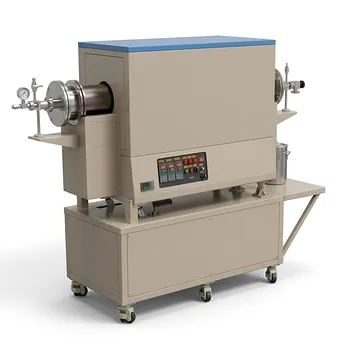
900°C Max Rotary Tube Furnace with 8 Inch 310S Alloy Tube and Optional Multi Zone Heating for Industrial Material Calcination

1700C Hydrogen Gas Tube Furnace with 60mm Alumina Process Tube and Integrated Hydrogen Safety Detector

High Temperature 1700C Tube Furnace with High Vacuum Turbomolecular Pump System and Multi Channel Mass Flow Controller Gas Mixer

5 Inch Three Zone Rotary Tube Furnace with Integrated Gas Delivery System and 1200C Capability for Advanced Material CVD Processing

Three Zone Tube Furnace with 11 Inch or 15 Inch Quartz Tube and Hinged Flanges for Vacuum Atmosphere Heat Treatment
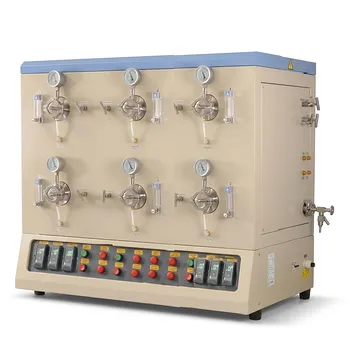
1200C High Throughput Multi Channel Tube Furnace with 50mm Quartz Tubes for Annealing and Material Phase Diagram Research

1200°C 5 Inch Vertical Quartz Tube Furnace with Stainless Steel Vacuum Flanges

1800C High Temperature Compact Vacuum Tube Furnace with 60mm OD Alumina Tube and Kanthal MoSi2 Heating Elements

High Temperature 1700C Benchtop Tube Furnace with 5 Inch Heating Zone High Purity Alumina Tube and Vacuum Sealing Flanges
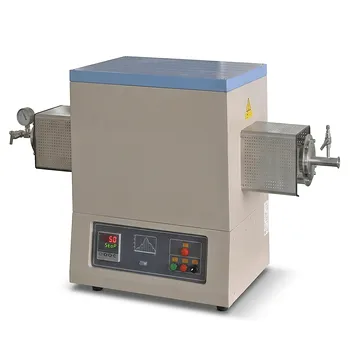
High Temperature 1700C Tube Furnace with 4 Inch OD Alumina Tube and Vacuum Sealing Flanges

High Temperature 1700C Six Zone Split Tube Furnace with Alumina Tube and Water Cooled Flanges

Compact Vertical Split Quartz Tube Furnace with Stainless Steel Vacuum Flanges for Rapid Thermal Quenching and Controlled Atmosphere Material Processing
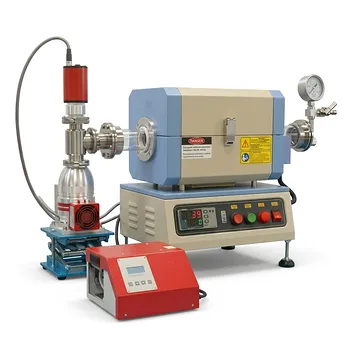
High Vacuum Compact Tube Furnace 1200C with Integrated Turbo Pump System and 8 Inch Heating Zone
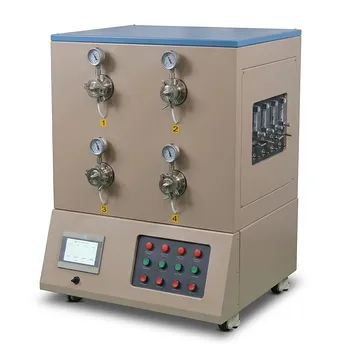
High Throughput 1200C Four Channel Tube Furnace with 3 Inch Quartz Tubes for Multi Zone Annealing and Material Research

High Temperature Automated 5 Inch Tube Furnace for Autonomous Material Research and Advanced Laboratory R&D
