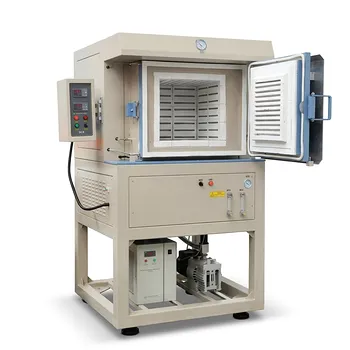
How does a box resistance furnace facilitate pore regulation in CCA biochar? Master Carbon Etching & Porosity Control
Updated 3 months ago
The high-temperature stage of a box resistance furnace facilitates pore regulation primarily through a process of controlled chemical etching and carbon ablation. By maintaining temperatures between 400°C and 600°C, the furnace drives a reaction between activating agents and the carbon framework, consuming carbon atoms to generate gases like CO, CO₂, and H₂. This internal "carving" transforms the dense biochar into a highly porous structure, significantly increasing the specific surface area for applications like electrolyte storage.
Core Takeaway: The box resistance furnace acts as a thermal reactor that regulates porosity by balancing carbon consumption with structural rearrangement. It uses high-temperature chemical etching to carve out micropores and mesopores while simultaneously stabilizing the metal-doped carbon matrix.
The Mechanism of Controlled Chemical Etching
Carbon Ablation and Gas Evolution
Within the 400-600°C range, the furnace provides the thermal energy necessary for activators (such as KOH) to react with the biochar's carbon framework. This reaction converts solid carbon into gaseous products, which escape and leave behind a complex network of micropores and mesopores.
Surface Area Expansion
This controlled removal of carbon atoms directly correlates to a massive increase in specific surface area. In typical activation scenarios, this process can nearly double the surface area—for example, increasing it from 445 m²/g to 885 m²/g—dramatically expanding the space available for ion storage.
Thermal Rearrangement and Matrix Stabilization
Removal of Volatile Components
The furnace environment facilitates the pyrolysis and removal of volatile components from the raw biomass. This initial "clearing" of the carbon matrix is essential for opening up the raw material and allowing activating agents to penetrate deeper into the structure.
Aromatization and Cross-linking
At higher activation temperatures (550°C to 650°C), the furnace promotes dehydration, cross-linking, and aromatization reactions. These chemical shifts strengthen the carbon framework, ensuring that the newly formed pores do not collapse under thermal or mechanical stress.
Metal Ion Distribution in CCA Biochar
In the specific case of Chromated Copper Arsenate (CCA) modified biochar, the furnace facilitates in-situ chemical reactions between the metal ions and the carbon framework. Precise temperature control ensures the formation of stable, polycrystalline phases that are distributed evenly across the porous surface, enhancing the material's catalytic properties.
Understanding the Trade-offs
The Risk of Over-Etching
If temperatures exceed the optimal range or the duration is too long, the etching process can become too aggressive. This leads to the collapse of micropore walls, effectively turning micropores into larger, less useful macropores and reducing the overall surface area.
Sintering and Pore Blockage
Excessive heat can cause sintering, where the material begins to fuse or the metal particles from the CCA modification agglomerate. This can physically block the pore entrances, preventing electrolyte ions or gas molecules from accessing the internal surface area.
Atmospheric Sensitivity
The effectiveness of pore regulation is highly dependent on a limited oxygen or inert atmosphere (usually nitrogen). Failure to maintain this environment can lead to the complete combustion of the carbon framework rather than controlled pore development.
How to Apply This to Your Project
Recommendations for Material Optimization
The following guidelines should help you calibrate your furnace settings based on your specific requirements:
- If your primary focus is maximizing specific surface area: Maintain the furnace between 400°C and 600°C with a steady soak time to allow for thorough chemical etching without structural collapse.
- If your primary focus is structural stability for long-term use: Utilize the higher end of the thermal range (up to 700°C) to encourage aromatization and carbon rearrangement, which strengthens the biochar matrix.
- If your primary focus is catalytic activity with CCA metals: Ensure an anaerobic calcination environment to prevent the oxidation of metal phases, which maintains the distribution of active sites across the pores.
By precisely controlling the thermal stages of the box resistance furnace, you can engineer a biochar structure that balances high porosity with the robust mechanical properties needed for advanced technical applications.
Summary Table:
| Stage / Mechanism | Temperature Range | Primary Impact on Biochar Structure |
|---|---|---|
| Chemical Etching | 400°C – 600°C | Creates micro/mesopores via gas evolution (CO, CO₂, H₂). |
| Carbon Ablation | 400°C – 600°C | Expands specific surface area (e.g., from 445 to 885 m²/g). |
| Aromatization | 550°C – 650°C | Strengthens carbon framework to prevent pore collapse. |
| Metal Stabilization | 400°C – 700°C | Facilitates in-situ metal ion distribution for catalytic activity. |
| Over-Etching Risk | > 700°C | Potential sintering and pore wall collapse, reducing surface area. |
Elevate Your Material Research with THERMUNITS Precision Control
Achieving the perfect pore structure in modified biochar requires exact thermal profiles and atmospheric stability. THERMUNITS is a leading manufacturer of high-temperature laboratory equipment specifically designed for material science and industrial R&D.
Our advanced thermal processing solutions, including Muffle, Vacuum, Atmosphere, Tube, Rotary, and Hot Press furnaces, as well as CVD/PECVD systems and vacuum induction melting furnaces (VIM), empower researchers to achieve superior uniformity and repeatability. Whether you are working on carbon activation, metal-doped catalysts, or complex heat treatments, we provide the tools you need for success.
Ready to optimize your activation process? Contact our engineering team today to find the ideal furnace solution for your laboratory!
References
- Meiling Huang, Changlei Xia. Sustainable Supercapacitor Electrode Based on Activated Biochar Derived from Preserved Wood Waste. DOI: 10.3390/f15010177
Mentioned Products
- 1400C Bottom Loaded Inert Gas Atmosphere Box Furnace with 125L Capacity and Precision Hydraulic Lift
- 1250 C Compact Vertical Box Furnace for Glovebox Material Research Air Sensitive Samples
- High Throughput Four Channel Box Furnace 1500C Max Independent Temperature Control Material Research Sintering System
- 1200C Hydrogen Atmosphere Box Furnace with 5 Heated Sides and 64L Chamber
- Bottom Loaded Inert Gas Atmosphere Box Furnace 1400C Maximum Temperature 125L High Capacity Laboratory Heat Treatment System
People Also Ask
- How does a box atmosphere furnace contribute to the pre-oxidation of MS-SOECs? Enhance Durability & Efficiency.
- How does a programmable Box Furnace facilitate the curing of silver inks? Expert Thermal Control for Silicon Substrates
- How does a box furnace facilitate the conversion of precursors in catalyst impregnation processes? Master Calcination
- How are electric heating elements designed to operate within carburizing atmospheres? Top Design Strategies Revealed
- What types of sealing systems are employed in atmosphere furnaces to ensure atmosphere integrity? Top Sealing Solutions

Tech Team · ThermUnits
Last updated on Jun 02, 2026
Related Products
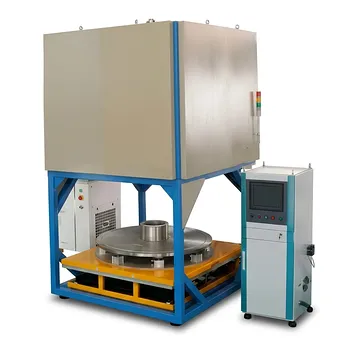
1400C Bottom Loaded Inert Gas Atmosphere Box Furnace with 125L Capacity and Precision Hydraulic Lift
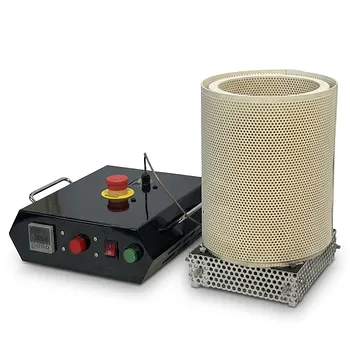
1250 C Compact Vertical Box Furnace for Glovebox Material Research Air Sensitive Samples
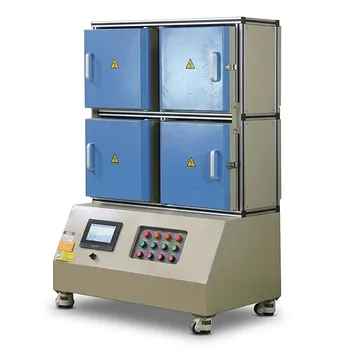
High Throughput Four Channel Box Furnace 1500C Max Independent Temperature Control Material Research Sintering System
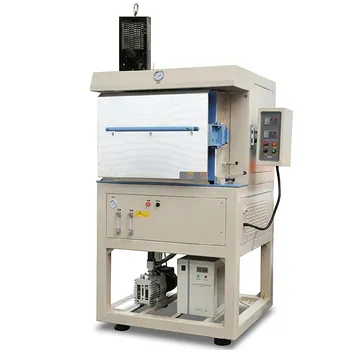
1200C Hydrogen Atmosphere Box Furnace with 5 Heated Sides and 64L Chamber
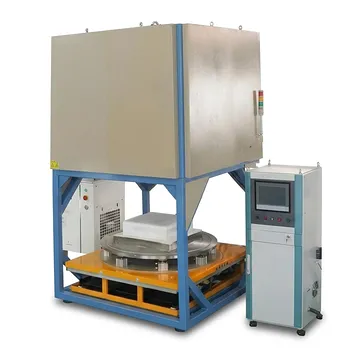
Bottom Loaded Inert Gas Atmosphere Box Furnace 1400C Maximum Temperature 125L High Capacity Laboratory Heat Treatment System
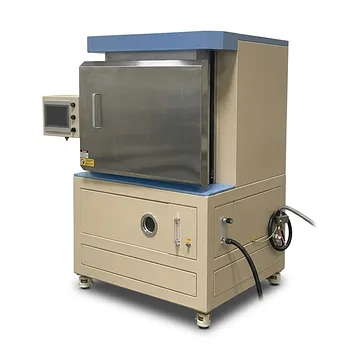
1650C High Temperature Atmosphere Controlled Box Furnace with 65L Chamber for Advanced Material Sintering and Industrial Heat Treatment
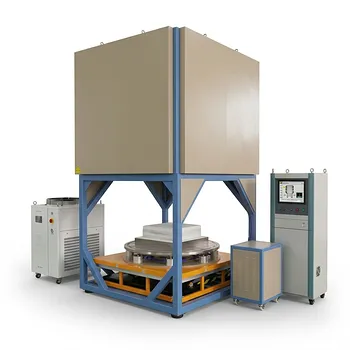
Bottom Loaded Inert Gas Atmosphere Box Furnace 1700C 1300C 216L Large Capacity Industrial Thermal Processing System
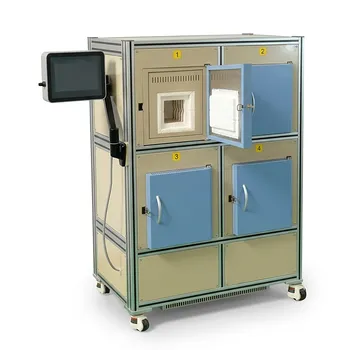
High Temperature Four Chamber Box Furnace for High Throughput Materials Research and Space Saving Thermal Processing
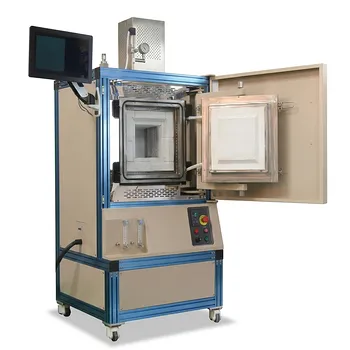
High Temperature Hydrogen Atmosphere Box Furnace 1650C Max Reducing Environment Material Synthesis System 8x8x8 Chamber
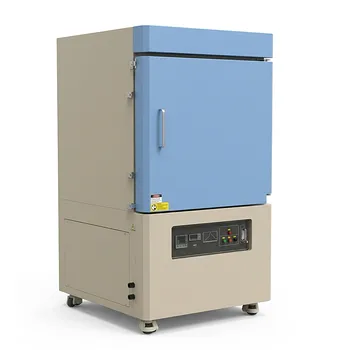
Industrial Large Box Furnace 1700C 216L High Temp Muffle Sintering System
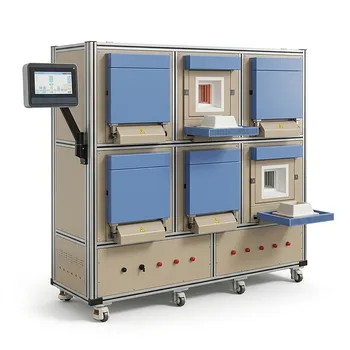
High Temperature 1700℃ Eight Chamber Box Furnace with Automatic Doors for Autonomous Material Research and High Throughput Heat Treatment
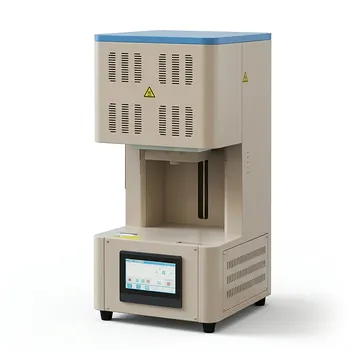
Automated 1700C High Temperature Bottom Loading Box Furnace with PC Software Control and Robotic Integration Capability
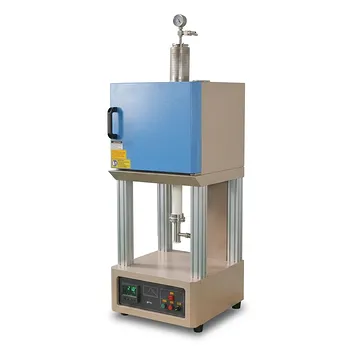
Hybrid High Temperature Tube and Box Furnace 1700C with 2 Inch Alumina Tube for Material Research
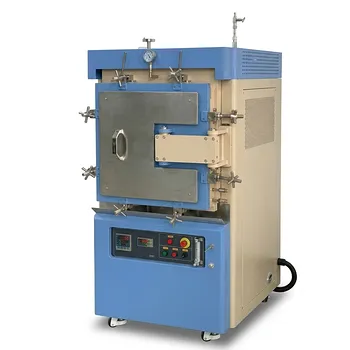
High Temperature Economic Hydrogen Gas Box Furnace 1600C Atmosphere Controlled Thermal Processing System 65L Capacity
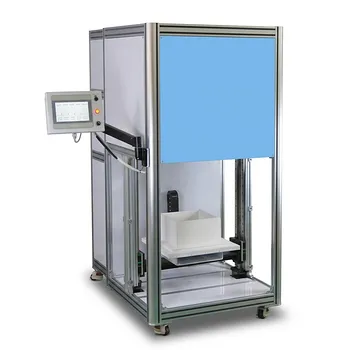
High Temperature 1600°C Three Zone Heated Bottom Loading Box Furnace with Rapid Thermal Processing Chamber 72L Volume
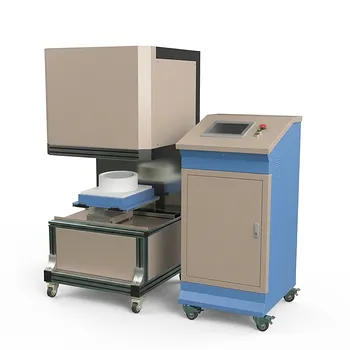
High Temperature Bottom Loading Box Furnace for Rapid Thermal Processing 1700C 40L Capacity
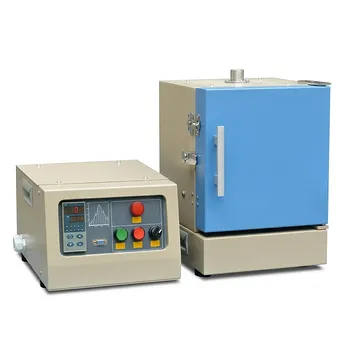
1200C Small Box Muffle Furnace with Separated Programmable Controller and 4.2L Alumina Fiber Chamber
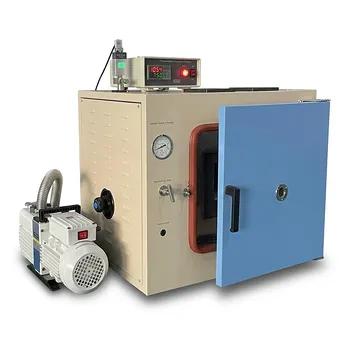
Compact High Vacuum Box Furnace 1050C Max 6.2L Ceramic Chamber Stainless Steel Shell Programmable Temperature Controller for Material Science Research
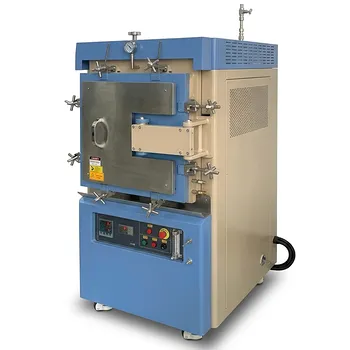
Atmosphere Controlled Muffle Furnace 1700C Maximum Temperature 80L High Capacity Vacuum Inert Gas Box Furnace