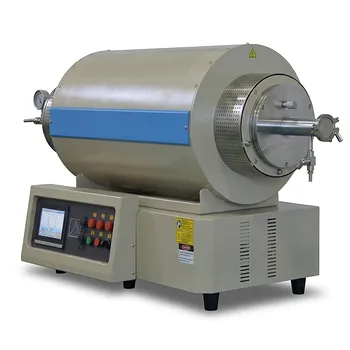
How does thermogravimetric analysis (TGA) assist in optimizing the sintering parameters? Achieve Precision Nanofibers
Updated 3 months ago
Thermogravimetric analysis (TGA) serves as the diagnostic "roadmap" for the sintering process by identifying the precise temperatures at which material decomposition and sulfur loss occur. By monitoring real-time mass changes in sulfur-doped precursors, TGA provides the exact temperature boundaries required to program an atmosphere tube furnace. This data ensures that the furnace operates at a temperature high enough to achieve carbonization but low enough to prevent the excessive loss of sulfur elements or a significant decrease in carbon yield.
TGA transforms sintering from a process of trial-and-error into a data-driven protocol. It identifies the thermal stability limits of the precursor, allowing for the precise calibration of furnace parameters to maximize both sulfur doping efficiency and structural integrity.
Identifying Critical Decomposition Nodes
Mapping Mass Loss to Chemical Transitions
TGA monitors the mass of the mixed precursor powders as they are heated, revealing specific nodes where organic decomposition and solid-phase reactions occur. These data points, often spanning ranges like 178°C to 430°C, indicate when the polymer structure begins to break down and transform into a conductive carbon framework.
Determining Component-Specific Stability
In biomass-derived nanofibers, TGA can distinguish between the decomposition points of different components such as hemicellulose, cellulose, and lignin. Knowing these specific temperatures allows researchers to set furnace dwell points that ensure the complete conversion of the precursor into stable biochar without destroying the desired fiber morphology.
Balancing Sulfur Retention and Carbon Yield
Preventing Overheating and Element Loss
Sulfur is highly volatile at high temperatures; TGA data is vital to establish an optimal carbonization range that prevents the "boiling off" of sulfur dopants. By identifying the temperature threshold where sulfur mass loss accelerates, the sintering parameters can be capped to preserve the maximum amount of sulfur within the carbon lattice.
Optimizing Thermodynamic Feedback
The feedback provided by TGA allows for the adjustment of the furnace's heating schedule to ensure that dehydrogenation and cross-linking happen in an orderly fashion. This controlled transformation is what allows the final material to maintain high conductivity while retaining its specialized sulfur-doped properties.
Refining the Furnace Sintering Profile
Precise Atmosphere and Temperature Control
The atmosphere tube furnace uses TGA data to implement high-precision heating curves within an inert environment, such as argon. The TGA results dictate the "hold" times at specific temperatures to allow for complete chemical reactions, such as metal oxide deoxidation or sulfur integration, before moving to the final calcination stage.
Enhancing Pore Development and Stability
TGA helps identify the specific nodes—such as 450°C or 730°C—where pore development is most active. By calibrating the furnace to these nodes, researchers can optimize the surface area and pore structure of the nanofibers, which is critical for applications like battery electrodes or catalysts.
Understanding the Trade-offs
Small-Scale Data vs. Large-Scale Sintering
While TGA provides precise thermal data, it typically uses milligram-scale samples which may heat more uniformly than the bulk loads in a tube furnace. You must account for thermal gradients within the furnace that do not exist in the controlled environment of a TGA crucible.
Dynamic vs. Static Environments
TGA is often conducted with a constant gas flow, but the atmosphere in a tube furnace can become saturated with decomposition byproducts if the flow rate is not properly managed. Relying solely on TGA temperatures without adjusting for the furnace’s specific gas dynamics can lead to incomplete reactions or unwanted secondary deposits on the nanofibers.
How to Apply This to Your Project
To successfully optimize your sintering parameters, use your TGA results to define the specific phases of your furnace program.
- If your primary focus is Maximum Sulfur Retention: Set the peak furnace temperature immediately below the TGA node where rapid sulfur mass loss is observed.
- If your primary focus is High Carbon Conductivity: Prioritize the TGA nodes that indicate the completion of polymer cross-linking, typically found at the higher end of the decomposition curve.
- If your primary focus is Fiber Morphology Preservation: Use TGA to identify the slowest decomposition rate zones and program the furnace with a lower heating rate (e.g., 2-5°C/min) through those specific windows.
By aligning furnace heating curves with TGA-derived decomposition nodes, you ensure the precise chemical transformation of nanofibers while minimizing energy waste and material degradation.
Summary Table:
| Optimization Phase | TGA Diagnostic Data | Furnace Parameter Adjustment |
|---|---|---|
| Decomposition Mapping | Identifies organic breakdown nodes | Sets precise dwell points for carbonization |
| Sulfur Retention | Detects sulfur volatility thresholds | Caps peak temperature to prevent element loss |
| Morphology Control | Monitors mass loss velocity | Calibrates heating rates (e.g., 2-5°C/min) |
| Pore Development | Pinpoints active gas evolution phases | Optimizes dwell times for high surface area |
Elevate Your Material Research with THERMUNITS
Achieving the perfect balance of sulfur doping and structural integrity in carbon nanofibers requires high-precision thermal equipment. As a leading manufacturer of high-temperature laboratory equipment for material science and industrial R&D, THERMUNITS provides the advanced thermal solutions you need to translate TGA data into high-performance results.
Whether you require Atmosphere Tube Furnaces, Vacuum Furnaces, CVD/PECVD systems, or specialized Hot Press and Rotary Kilns, our equipment is designed for rigorous research standards. Our solutions, including Muffle Furnaces, Dental Furnaces, Vacuum Induction Melting (VIM) units, and high-quality Thermal Elements, ensure uniform heating and precise atmosphere control for your most sensitive heat treatment processes.
Ready to optimize your sintering protocol?
Contact our expert team today to find the ideal furnace for your laboratory!
References
- Muge Ding, Wei Gao. Transforming Disposed Face Masks into S‐Doped Carbon Nanofibers for High Performance Supercapacitors. DOI: 10.1002/celc.202300751
Mentioned Products
- Vertical 1700C Vacuum and Atmosphere Tube Furnace with 80mm Alumina Tube
- 1200C Hybrid Muffle and Tube Furnace for Material Research with Dual Atmosphere Control Quartz Tubes
- 1200°C Atmosphere Controlled Automatic Bottom Loading Furnace with 6 Inch Quartz Tube
- Compact Hybrid Muffle and Tube Furnace for 1000C Controlled Atmosphere Laboratory Material Sintering
- Compact Vertical Split Quartz Tube Furnace with Stainless Steel Vacuum Flanges for Rapid Thermal Quenching and Controlled Atmosphere Material Processing
People Also Ask
- How is an industrial-grade vertical tube furnace utilized in smelting leaching residues? Enhance Metal Recovery Efficiency
- What is the function of a laboratory-grade vertical tube furnace in fast pyrolysis? Optimize Composite Research.
- How does a vertical tube furnace facilitate thermoelectric alloy melting? Precision synthesis for material homogeneity.
- Why is a thermocouple sensor indispensable for monitoring the vertical tube furnace during gallium oxide nanowire production? Optimize VLS Growth
- What are the advantages of using a vertical tube furnace for crucible experiments simulating steel-slag interactions?

Tech Team · ThermUnits
Last updated on Jun 03, 2026
Related Products
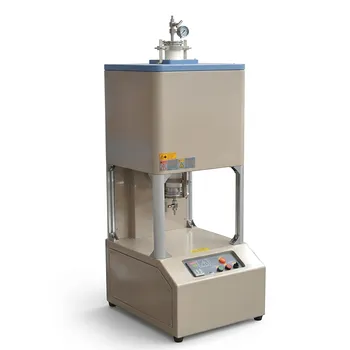
Vertical 1700C Vacuum and Atmosphere Tube Furnace with 80mm Alumina Tube
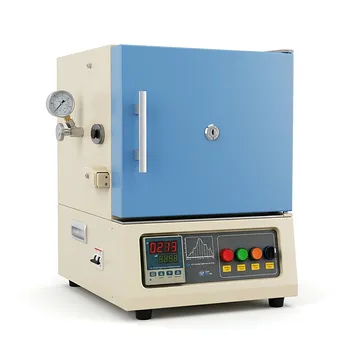
1200C Hybrid Muffle and Tube Furnace for Material Research with Dual Atmosphere Control Quartz Tubes
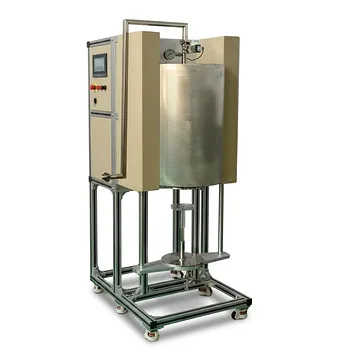
1200°C Atmosphere Controlled Automatic Bottom Loading Furnace with 6 Inch Quartz Tube
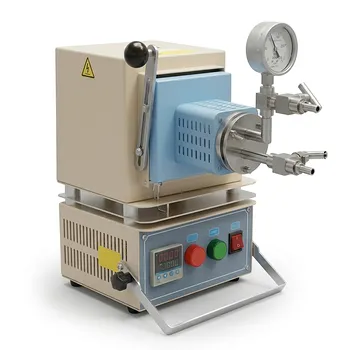
Compact Hybrid Muffle and Tube Furnace for 1000C Controlled Atmosphere Laboratory Material Sintering
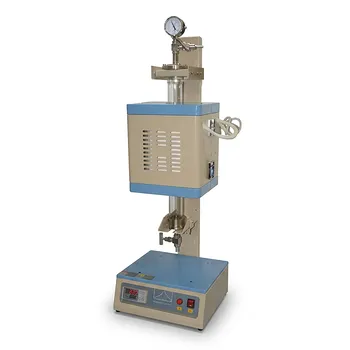
Compact Vertical Split Quartz Tube Furnace with Stainless Steel Vacuum Flanges for Rapid Thermal Quenching and Controlled Atmosphere Material Processing
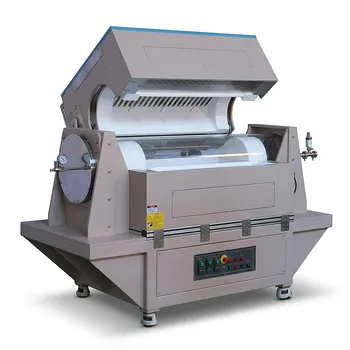
Three Zone Tube Furnace with 11 Inch or 15 Inch Quartz Tube and Hinged Flanges for Vacuum Atmosphere Heat Treatment
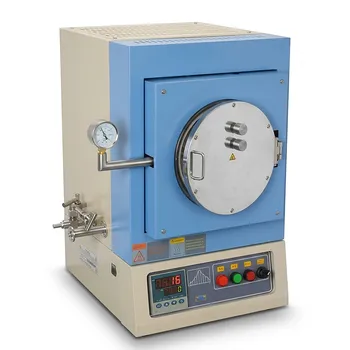
1100°C High Temperature Quartz Chamber Furnace 8 Inch OD with 7.6 Liter Capacity and Vacuum Atmosphere Capability
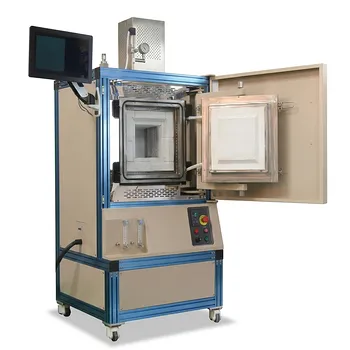
High Temperature Hydrogen Atmosphere Box Furnace 1650C Max Reducing Environment Material Synthesis System 8x8x8 Chamber

High Temperature 1700C Vertical Tube Furnace for Powder Spherification and Material Sintering

Compact High Temperature 1600C Tube Furnace with 50mm Alumina Tube and Vacuum Flanges for Material Sintering

High Temperature 1700C Tube Furnace with High Vacuum Turbomolecular Pump System and Multi Channel Mass Flow Controller Gas Mixer
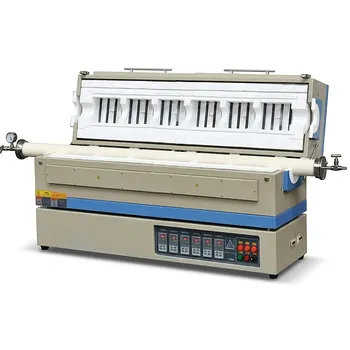
High Temperature 1700C Six Zone Split Tube Furnace with Alumina Tube and Water Cooled Flanges

1800C High Temperature Compact Vacuum Tube Furnace with 60mm OD Alumina Tube and Kanthal MoSi2 Heating Elements

1100C Tube Furnace with Vacuum Flange and Programmable Temperature Controller for Material Science and Industrial Heat Treatment
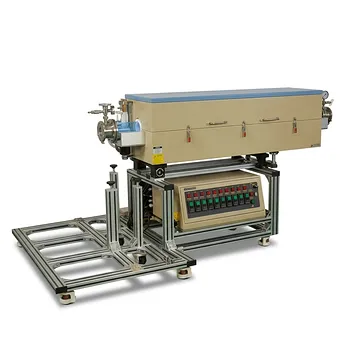
Ten Zone Multi Orientation Laboratory Tube Furnace for 1200C High Temperature Gradient Thermal Processing
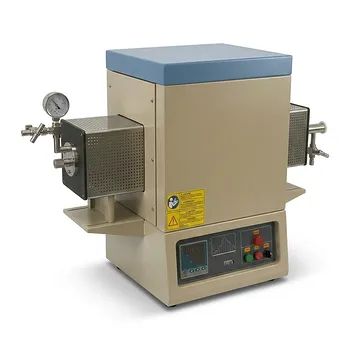
High Temperature 1700C Benchtop Tube Furnace with 5 Inch Heating Zone High Purity Alumina Tube and Vacuum Sealing Flanges
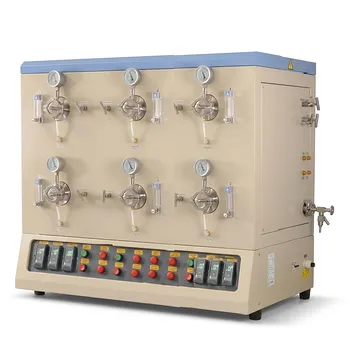
1200C High Throughput Multi Channel Tube Furnace with 50mm Quartz Tubes for Annealing and Material Phase Diagram Research

High Temperature Automated 5 Inch Tube Furnace for Autonomous Material Research and Advanced Laboratory R&D
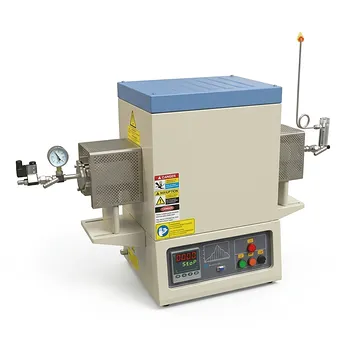
1700C Hydrogen Gas Tube Furnace with 60mm Alumina Process Tube and Integrated Hydrogen Safety Detector