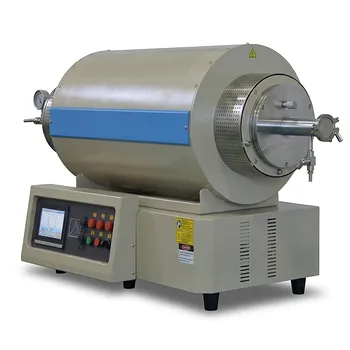
What are the advantages of an atmosphere tube furnace for LFP regeneration? Enhance Purity and Performance
Updated 5 months ago
Using an atmosphere tube furnace is critical for the regeneration of Lithium Iron Phosphate (LFP) because it provides a strictly controlled inert environment that prevents iron oxidation while optimizing the material's crystal structure. This specialized equipment ensures that divalent iron ($Fe^{2+}$) remains stable at high temperatures, facilitates the formation of a uniform conductive carbon coating, and allows for the precise annealing required to eliminate internal stresses and improve overall crystallinity.
Core Takeaway: The atmosphere tube furnace serves as the definitive tool for LFP regeneration by isolating the material from oxygen and providing the thermal precision necessary to restore its original electrochemical performance and electronic conductivity.
Safeguarding Chemical Integrity and Phase Purity
Prevention of $Fe^{2+}$ Oxidation
During high-temperature thermal treatment (ranging from 650°C to 750°C), divalent iron ($Fe^{2+}$) is highly susceptible to oxidation.
The atmosphere tube furnace utilizes a continuous flow of high-purity inert gases, such as argon or nitrogen (99.99%), to displace oxygen.
This isolation prevents the formation of trivalent iron ($Fe^{3+}$) impurities, which would otherwise degrade the material's capacity and destroy the olivine crystal structure.
Preservation of Oxidation States in Doped Materials
For regenerated LFP that includes dopants like sodium or aluminum, maintaining the correct oxidation state is even more complex.
The furnace environment ensures that these dopant ions effectively occupy the correct sites within the crystal lattice without being disrupted by unwanted chemical reactions.
This precise control is essential for achieving the optimal electrochemical performance expected from high-quality cathode materials.
Enhancing Electronic Conductivity and Structure
Facilitation of Uniform Carbon Coating
LFP inherently possesses low electronic conductivity, which is typically mitigated by a carbon coating layer.
The tube furnace environment allows organic carbon sources, such as glucose, to undergo pyrolysis (thermal decomposition) in the absence of oxygen.
This process results in a uniform, conductive carbon layer on the surface of the particles, significantly enhancing the material's rate capability.
Optimization of Crystallinity and Stress Relief
The final thermal stage at approximately 650°C acts as an annealing process to repair the lattice.
By providing a stable thermal environment, the furnace helps eliminate internal residual stresses that accumulate during the battery's lifecycle or the initial recycling steps.
This leads to improved crystallinity, which translates to faster lithium-ion diffusion and better long-term cycling stability.
Operational Advantages of the Tube Configuration
Precise Multi-Stage Temperature Control
Regeneration often requires distinct phases, such as 300°C pre-calcination followed by 700°C formal sintering.
Atmosphere tube furnaces offer programmable temperature profiles that allow for these precise transitions.
This ensures the complete decomposition of organic precursors and the stable formation of the single-phase monoclinic or olivine structures required for the cathode.
Effective Removal of Gaseous Byproducts
The configuration of a tube furnace facilitates the rapid removal of gaseous byproducts, such as water vapor or CO2, via the continuous gas flow.
By maintaining a low partial pressure of these byproducts within the reaction zone, the furnace drives the chemical equilibrium toward a purer final product.
This "sweeping" effect is vital for preventing side reactions that could lead to the formation of impurity phases.
Understanding the Trade-offs
- Throughput Limitations: Tube furnaces are generally designed for batch processing or small-scale continuous runs, which may limit their utility in high-volume industrial recycling compared to rotary kilns.
- Gas Consumption: Maintaining a strictly inert atmosphere requires a constant flow of high-purity gas, which increases the operational cost of the regeneration process.
- Thermal Gradients: While precise, larger tubes can sometimes experience temperature gradients between the center and the walls, requiring careful calibration to ensure material uniformity.
How to Apply This to Your Project
- If your primary focus is maximizing electronic conductivity: Ensure your furnace protocol includes a high-purity nitrogen flow to facilitate the uniform pyrolysis of carbon additives like glucose.
- If your primary focus is restoring structural stability: Prioritize a multi-stage heating profile that includes a dedicated annealing soak at 650°C to relieve internal lattice stresses.
- If your primary focus is preventing phase impurities: Use a tube furnace with high-quality seals and argon gas to ensure the total exclusion of oxygen, keeping iron in its $Fe^{2+}$ state.
Selecting an atmosphere tube furnace for LFP regeneration is the most reliable method to ensure the recovered material meets or exceeds the performance of virgin cathode powder.
Summary Table:
| Key Feature | Benefit for LFP Regeneration | Technical Mechanism |
|---|---|---|
| Inert Atmosphere | Prevents $Fe^{2+}$ to $Fe^{3+}$ oxidation | High-purity Ar/N2 oxygen displacement |
| Carbon Pyrolysis | Increases electronic conductivity | Uniform coating in oxygen-free environment |
| Multi-stage Heating | Optimal crystallinity & stress relief | Precise programmable temperature profiles |
| Gas Flow Design | Ensures high material purity | Efficient removal of $H_2O$ and $CO_2$ byproducts |
Elevate Your Battery Material Research with THERMUNITS
As a leading manufacturer of high-temperature laboratory equipment, THERMUNITS provides the precision thermal processing solutions essential for advanced material science and industrial R&D. Whether you are specializing in LFP regeneration or complex synthesis, our high-performance Atmosphere Tube Furnaces are engineered to deliver the strictly controlled environments and thermal accuracy your project demands.
Our comprehensive range includes:
- Tube & Rotary Furnaces for continuous or batch processing.
- Vacuum & Atmosphere Furnaces for sensitive chemical treatments.
- CVD/PECVD Systems and Vacuum Induction Melting (VIM) units.
- Specialized Muffle, Dental, and Hot Press Furnaces.
Ready to optimize your heat treatment results? Contact THERMUNITS today to discuss how our thermal elements and custom furnace solutions can accelerate your breakthrough.
References
- Chenchen Li, Peng Dong. Direct Regeneration of Degraded LiFePO4 Cathode via Reductive Solution Relithiation Regeneration Process. DOI: 10.3390/molecules29143340
Mentioned Products
- Vertical 1700C Vacuum and Atmosphere Tube Furnace with 80mm Alumina Tube
- 1200C Hybrid Muffle and Tube Furnace for Material Research with Dual Atmosphere Control Quartz Tubes
- 1200°C Atmosphere Controlled Automatic Bottom Loading Furnace with 6 Inch Quartz Tube
- Compact Hybrid Muffle and Tube Furnace for 1000C Controlled Atmosphere Laboratory Material Sintering
- Compact Vertical Split Quartz Tube Furnace with Stainless Steel Vacuum Flanges for Rapid Thermal Quenching and Controlled Atmosphere Material Processing
People Also Ask
- How is an industrial-grade vertical tube furnace utilized in smelting leaching residues? Enhance Metal Recovery Efficiency
- What is the function of a laboratory-grade vertical tube furnace in fast pyrolysis? Optimize Composite Research.
- How does a vertical tube furnace facilitate thermoelectric alloy melting? Precision synthesis for material homogeneity.
- Why is a thermocouple sensor indispensable for monitoring the vertical tube furnace during gallium oxide nanowire production? Optimize VLS Growth
- What are the advantages of using a vertical tube furnace for crucible experiments simulating steel-slag interactions?

Tech Team · ThermUnits
Last updated on Apr 14, 2026
Related Products

Vertical 1700C Vacuum and Atmosphere Tube Furnace with 80mm Alumina Tube
1200C Hybrid Muffle and Tube Furnace for Material Research with Dual Atmosphere Control Quartz Tubes
1200°C Atmosphere Controlled Automatic Bottom Loading Furnace with 6 Inch Quartz Tube
Compact Hybrid Muffle and Tube Furnace for 1000C Controlled Atmosphere Laboratory Material Sintering

Compact Vertical Split Quartz Tube Furnace with Stainless Steel Vacuum Flanges for Rapid Thermal Quenching and Controlled Atmosphere Material Processing
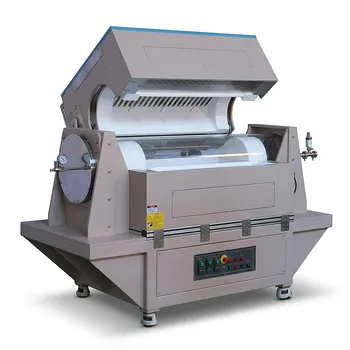
Three Zone Tube Furnace with 11 Inch or 15 Inch Quartz Tube and Hinged Flanges for Vacuum Atmosphere Heat Treatment

1100°C High Temperature Quartz Chamber Furnace 8 Inch OD with 7.6 Liter Capacity and Vacuum Atmosphere Capability
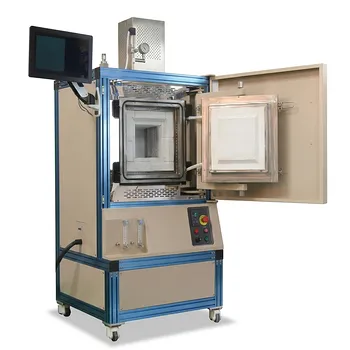
High Temperature Hydrogen Atmosphere Box Furnace 1650C Max Reducing Environment Material Synthesis System 8x8x8 Chamber

High Temperature 1700C Vertical Tube Furnace for Powder Spherification and Material Sintering

Compact High Temperature 1600C Tube Furnace with 50mm Alumina Tube and Vacuum Flanges for Material Sintering
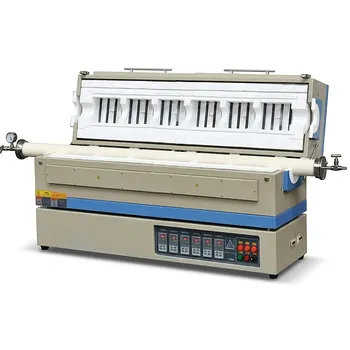
High Temperature 1700C Six Zone Split Tube Furnace with Alumina Tube and Water Cooled Flanges

High Temperature 1700C Tube Furnace with High Vacuum Turbomolecular Pump System and Multi Channel Mass Flow Controller Gas Mixer

1800C High Temperature Compact Vacuum Tube Furnace with 60mm OD Alumina Tube and Kanthal MoSi2 Heating Elements
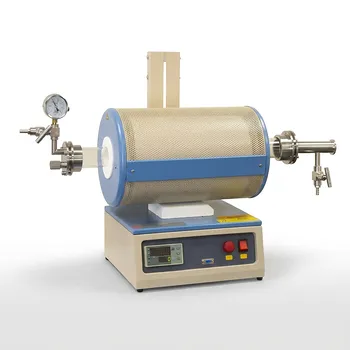
1100C Tube Furnace with Vacuum Flange and Programmable Temperature Controller for Material Science and Industrial Heat Treatment

High Temperature 1700C Benchtop Tube Furnace with 5 Inch Heating Zone High Purity Alumina Tube and Vacuum Sealing Flanges
Ten Zone Multi Orientation Laboratory Tube Furnace for 1200C High Temperature Gradient Thermal Processing
1200C High Throughput Multi Channel Tube Furnace with 50mm Quartz Tubes for Annealing and Material Phase Diagram Research

High Temperature Automated 5 Inch Tube Furnace for Autonomous Material Research and Advanced Laboratory R&D
1700C Hydrogen Gas Tube Furnace with 60mm Alumina Process Tube and Integrated Hydrogen Safety Detector