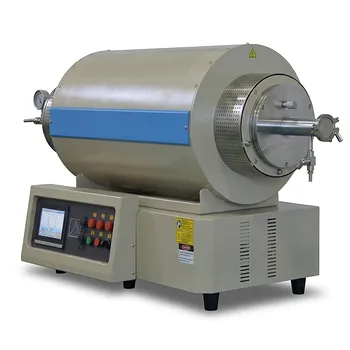
What are the advantages of using an atmosphere tube furnace for in-situ annealing? Superior Electrode Performance
Updated 5 months ago
The transition from mechanical pellet-pressing to in-situ thermal annealing represents a fundamental leap in electrode performance and structural integrity.
By utilizing an atmosphere tube furnace, researchers can eliminate the need for insulating polymer binders, creating a direct and robust interfacial bond between active materials and the substrate. This method significantly reduces interfacial resistance and optimizes ion diffusion channels, resulting in superior power density and long-term discharge stability in devices like zinc-air batteries.
In-situ annealing replaces the passive mechanical adhesion of pellet-pressing with active chemical bonding and precise atmospheric control. This ensures a high-purity, binder-free interface that maximizes charge transport efficiency while preserving the chemical stoichiometry of the electrode.
Enhancing Electrochemical Performance Through Structural Integrity
Eliminating the Burden of Polymeric Binders
Traditional pellet-pressing requires polymer binders to hold active materials together, but these materials are often electrically insulating. In-situ annealing in a tube furnace allows materials to bond directly to a graphene or metal substrate, removing these resistive barriers.
Optimizing Charge Transport and Ion Flux
The thermal process creates more efficient charge transport paths and ion diffusion channels within the electrode structure. By reducing the physical gaps common in pressed pellets, the furnace treatment significantly lowers internal resistance and enhances overall power output.
Strengthening the Interfacial Bond
High-temperature treatment fosters a stronger connection between the active material and the substrate than mechanical pressure alone can achieve. This robust interface prevents material delamination during repeated cycling, leading to much higher discharge stability.
Precision Control and Thermal Efficiency
Rapid Processing and Fine-Grain Structure
Atmosphere tube furnaces, particularly rapid thermal annealing (RTA) systems, can complete sintering in minutes rather than hours. This speed promotes the formation of unique fine-grain structures that are critical for optimizing the dielectric performance of the electrode.
Inhibiting Component Volatilization
Precise temperature control prevents the volatilization of volatile elements that often occurs during the prolonged heating cycles of traditional box furnaces. This ensures that the final electrode maintains the exact chemical composition intended by the researcher.
Protecting Ultra-Thin Layers and Ohmic Contacts
Instantaneous thermal treatment allows for the formation of low-resistance ohmic contacts without damaging sensitive components. This is especially vital for protecting the integrity of ultra-thin channels and gate dielectric layers in advanced semiconductor-based electrodes.
Chemical Stability and Atmosphere Regulation
Locking the Chemical State
Atmosphere furnaces allow for the use of buffering components, such as Ni-NiO pairs or specific CO/CO2 ratios. These buffers lock the chemical state of the sample, preventing non-stoichiometric changes that often plague materials processed in ambient air.
Suppressing Deep Atomic Diffusion
Rapid heating and cooling rates minimize the time available for impurity atoms to diffuse deep into the substrate. This suppression protects the physical integrity of the electrode and ensures that the observed performance is a result of the material itself, not chemical contamination.
Preventing Phase Decomposition
By regulating the oxygen partial pressure, the furnace prevents phase decomposition during high-temperature treatment. This ensures that the structural evolution of the electrode is driven by mechanical stress or design, rather than unwanted chemical fluctuations.
Understanding the Trade-offs
Equipment Complexity and Cost
While pellet-pressing is a relatively simple and inexpensive mechanical process, atmosphere tube furnaces require significant capital investment. Maintaining gas delivery systems, vacuum pumps, and precise sensors adds a layer of operational complexity.
Substrate Thermal Limits
Unlike cold-pressing, in-situ annealing subjects the entire electrode assembly to high temperatures. This limits the choice of substrates to materials that can withstand thermal stress without melting, warping, or undergoing unwanted phase changes.
Scalability and Throughput
Pellet-pressing can be easily adapted for high-volume batch production of standardized samples. In contrast, tube furnaces are often limited by the physical dimensions of the quartz tube, which can restrict the size or number of electrodes processed in a single run.
How to Apply This to Your Project
When choosing between these methods, consider the specific requirements of your electrochemical system and the sensitivity of your materials.
- If your primary focus is maximizing conductivity and power density: Utilize in-situ annealing in a tube furnace to create binder-free interfaces and reduce interfacial resistance.
- If your primary focus is rapid prototyping of standardized materials: Stick with traditional pellet-pressing to save time on setup and avoid the complexities of thermal management.
- If your primary focus is maintaining precise chemical stoichiometry: Use an atmosphere-controlled furnace with buffering agents to prevent oxidation or phase decomposition.
- If your primary focus is protecting ultra-thin or heat-sensitive layers: Implement Rapid Thermal Annealing (RTA) to achieve the necessary chemical reactions while minimizing total thermal exposure.
By prioritizing the chemical and structural integrity of the interface over mere mechanical adhesion, you can unlock the full potential of high-performance electrode materials.
Summary Table:
| Feature | In-Situ Annealing (Tube Furnace) | Pellet-Pressing (Traditional) |
|---|---|---|
| Interface Type | Strong chemical bonding (Binder-free) | Passive mechanical adhesion |
| Internal Resistance | Low (Optimized charge transport) | High (Resistive polymer binders) |
| Chemical Purity | High (Atmosphere control/buffers) | Moderate (Prone to oxidation) |
| Thermal Precision | High (Rapid processing/RTA) | Low (Mechanical focus only) |
| Structural Stability | High (Prevents delamination) | Moderate (Physical gaps possible) |
Maximize Your Material’s Electrochemical Potential with THERMUNITS
Transitioning from mechanical pressing to precise thermal annealing is critical for next-generation material science. THERMUNITS is a leading manufacturer of high-temperature laboratory equipment, providing the precision required for advanced electrode preparation.
Whether you need to eliminate resistive binders or ensure strict chemical stoichiometry, our comprehensive range of Tube, Vacuum, Atmosphere, Muffle, and Rotary Furnaces, as well as CVD/PECVD systems, are designed to meet the rigorous demands of industrial R&D.
Ready to upgrade your lab's capabilities? Contact us today to consult with our experts and find the ideal thermal processing solution tailored to your research goals.
References
- Jian Hu, Ningkang Sun. Facile Composition of CoNi and Graphene as a Free-Standing Cathode for a High-Performance Solid-State Zinc–Air Battery. DOI: 10.3390/en17092045
Mentioned Products
- Vertical 1700C Vacuum and Atmosphere Tube Furnace with 80mm Alumina Tube
- 1200C Hybrid Muffle and Tube Furnace for Material Research with Dual Atmosphere Control Quartz Tubes
- 1200°C Atmosphere Controlled Automatic Bottom Loading Furnace with 6 Inch Quartz Tube
- Compact Hybrid Muffle and Tube Furnace for 1000C Controlled Atmosphere Laboratory Material Sintering
- Compact Vertical Split Quartz Tube Furnace with Stainless Steel Vacuum Flanges for Rapid Thermal Quenching and Controlled Atmosphere Material Processing
People Also Ask
- How is an industrial-grade vertical tube furnace utilized in smelting leaching residues? Enhance Metal Recovery Efficiency
- What is the function of a laboratory-grade vertical tube furnace in fast pyrolysis? Optimize Composite Research.
- How does a vertical tube furnace facilitate thermoelectric alloy melting? Precision synthesis for material homogeneity.
- Why is a thermocouple sensor indispensable for monitoring the vertical tube furnace during gallium oxide nanowire production? Optimize VLS Growth
- What are the advantages of using a vertical tube furnace for crucible experiments simulating steel-slag interactions?

Tech Team · ThermUnits
Last updated on Apr 14, 2026
Related Products

Vertical 1700C Vacuum and Atmosphere Tube Furnace with 80mm Alumina Tube
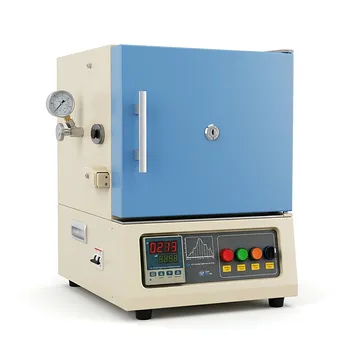
1200C Hybrid Muffle and Tube Furnace for Material Research with Dual Atmosphere Control Quartz Tubes
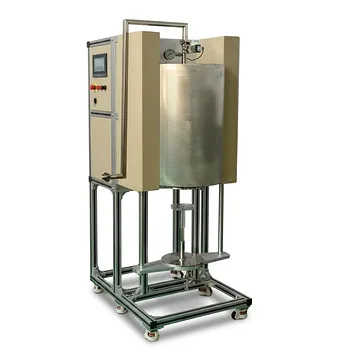
1200°C Atmosphere Controlled Automatic Bottom Loading Furnace with 6 Inch Quartz Tube
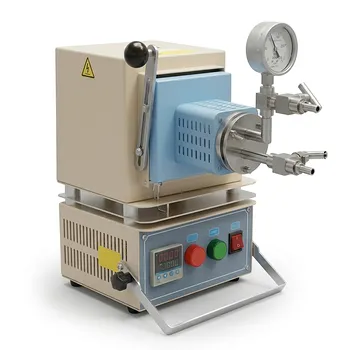
Compact Hybrid Muffle and Tube Furnace for 1000C Controlled Atmosphere Laboratory Material Sintering

Compact Vertical Split Quartz Tube Furnace with Stainless Steel Vacuum Flanges for Rapid Thermal Quenching and Controlled Atmosphere Material Processing
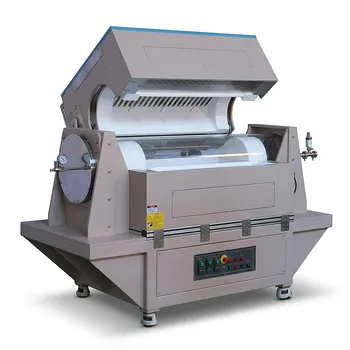
Three Zone Tube Furnace with 11 Inch or 15 Inch Quartz Tube and Hinged Flanges for Vacuum Atmosphere Heat Treatment
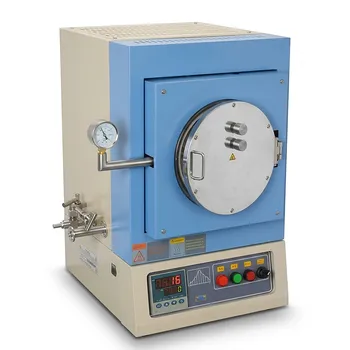
1100°C High Temperature Quartz Chamber Furnace 8 Inch OD with 7.6 Liter Capacity and Vacuum Atmosphere Capability
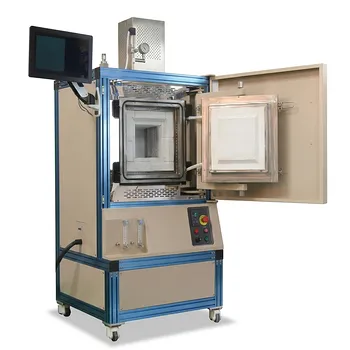
High Temperature Hydrogen Atmosphere Box Furnace 1650C Max Reducing Environment Material Synthesis System 8x8x8 Chamber

High Temperature 1700C Vertical Tube Furnace for Powder Spherification and Material Sintering

Compact High Temperature 1600C Tube Furnace with 50mm Alumina Tube and Vacuum Flanges for Material Sintering

High Temperature 1700C Tube Furnace with High Vacuum Turbomolecular Pump System and Multi Channel Mass Flow Controller Gas Mixer
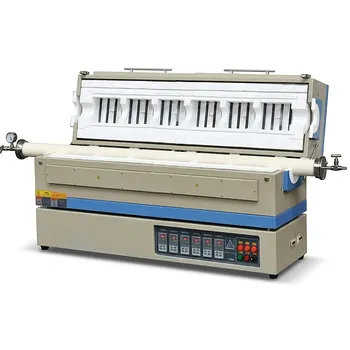
High Temperature 1700C Six Zone Split Tube Furnace with Alumina Tube and Water Cooled Flanges

1800C High Temperature Compact Vacuum Tube Furnace with 60mm OD Alumina Tube and Kanthal MoSi2 Heating Elements

1100C Tube Furnace with Vacuum Flange and Programmable Temperature Controller for Material Science and Industrial Heat Treatment
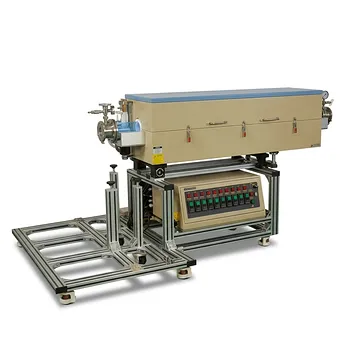
Ten Zone Multi Orientation Laboratory Tube Furnace for 1200C High Temperature Gradient Thermal Processing

High Temperature 1700C Benchtop Tube Furnace with 5 Inch Heating Zone High Purity Alumina Tube and Vacuum Sealing Flanges
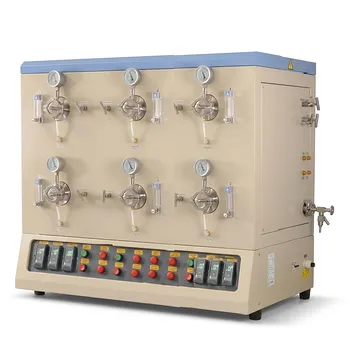
1200C High Throughput Multi Channel Tube Furnace with 50mm Quartz Tubes for Annealing and Material Phase Diagram Research

High Temperature Automated 5 Inch Tube Furnace for Autonomous Material Research and Advanced Laboratory R&D
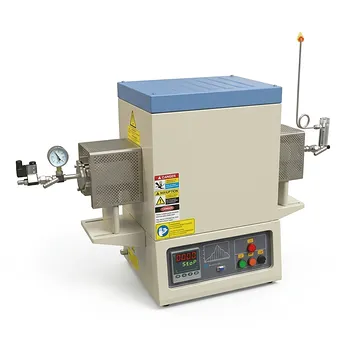
1700C Hydrogen Gas Tube Furnace with 60mm Alumina Process Tube and Integrated Hydrogen Safety Detector