What are the primary functions of an atmosphere tube furnace in HSP for VAGNAs? Master Graphene Synthesis Quality
Updated 3 months ago
The atmosphere tube furnace serves as the foundational reactor in Salt-Assisted Pyrolysis (HSP), providing the precise thermal and atmospheric control necessary to transform precursors into Vertically Aligned Graphene Nanosheet Arrays (VAGNAs). By maintaining a high-purity inert environment and temperatures up to 1000°C, the furnace facilitates deep carbonization and creates the specific thermodynamic conditions required for catalytic graphitization. This process enables critical mechanisms like potassium ion intercalation and $CO_2$ gas exfoliation, which are essential for guiding the vertical growth of the graphene sheets.
Core Takeaway: The atmosphere tube furnace is not merely a heat source, but a controlled chemical environment that enables the multi-step transformation of precursors through precise temperature regulation and inert gas management, ultimately forcing the vertical alignment of graphene nanosheets.
Managing the Chemical Reaction Environment
Providing an Inert Protective Atmosphere
The furnace maintains a high-purity nitrogen or argon environment to shield the carbon materials from oxidative degradation at extreme temperatures. This protection ensures that the carbonization process proceeds without the loss of material to combustion.
Controlling Reaction Stoichiometry
By regulating the flow and composition of gases, the furnace ensures that chemical reactions occur at specific stoichiometric ratios. This precision is vital for the repeatable preparation of functional nanomaterials like VAGNAs.
Managing Internal Gas Pressure
The furnace environment facilitates the exfoliation effect caused by the release of carbon dioxide gas. This internal gas pressure, generated within the material during heating, is a key driver in expanding the structures into nanosheets.
Driving the Salt-Assisted Transformation
Deep Carbonization and Thermal Polycondensation
The furnace provides a stable high-temperature field, typically reaching 1000°C, to drive the deep carbonization of the sample. In similar processes, such as the synthesis of graphitic carbon nitride, this thermal energy is what enables the polycondensation of raw materials into layered structures.
Catalytic Graphitization of Activation Salts
The furnace creates the necessary thermodynamic conditions for activation salts to catalyze the graphitization process. This step is crucial for converting amorphous carbon into high-quality, crystalline graphene structures.
Potassium Ion Intercalation
High-temperature stability allows for the effective intercalation of potassium ions into the carbon lattice. This mechanism, facilitated by the furnace's thermal field, is a primary factor in the structural evolution and alignment of the nanosheets.
Enabling Structural Verticality and Quality
Guidance of Vertical Growth
The combination of uniform heating and gas-flow dynamics within the tube furnace guides the self-assembly of graphene nanosheets. This results in the specific vertical alignment that defines VAGNA structures.
Generation of Active Sites
The thermal energy promotes the fracture of unstable oxygen-containing groups or edge sites on the graphene surface. This process generates in-situ active sites for further reactions without compromising the integrity of the host crystal lattice.
Uniformity of the Thermal Field
A high-temperature tube furnace ensures field uniformity, which is critical for achieving consistent results across the entire sample. This uniformity prevents localized defects and ensures that the graphene nanosheet arrays grow at an even rate.
Understanding the Trade-offs and Limitations
Thermal Lag and Gradient Challenges
While tube furnaces provide stable environments, they often suffer from thermal lag during rapid heating or cooling phases. This can lead to inconsistencies in the carbonization depth if the temperature ramp is not meticulously programmed.
Gas Flow Dynamics and Uniformity
The linear flow of gas through a tube can create "dead zones" or variations in gas concentration across the sample length. These variations can result in non-uniform exfoliation or inconsistent vertical alignment across a single batch.
High Operational Energy Demands
Maintaining temperatures at or near 1000°C for extended periods requires significant energy and specialized heating elements. This makes the process less cost-effective for large-scale industrial production compared to continuous-flow methods.
How to Apply This to Your Project
When utilizing an atmosphere tube furnace for VAGNA production, your settings should align with your specific material objectives:
- If your primary focus is high crystalline quality: Prioritize a slower temperature ramp and longer soaking time at 1000°C to maximize catalytic graphitization and defect healing.
- If your primary focus is maximum surface area/exfoliation: Optimize the gas flow rates to effectively manage the $CO_2$ exfoliation effect and potassium ion intercalation.
- If your primary focus is structural uniformity: Ensure the sample is placed in the center of the furnace's "constant temperature zone" and use high-purity argon to minimize any trace oxidation.
By mastering the furnace's thermodynamic and atmospheric variables, you can precisely tune the morphological and electrochemical properties of vertically aligned graphene.
Summary Table:
| Function | Key Mechanism | Benefit |
|---|---|---|
| Atmospheric Shielding | High-purity Inert Gas (Ar/N2) | Prevents oxidation and material loss |
| Thermal Driver | Stable field up to 1000°C | Deep carbonization and catalytic graphitization |
| Structural Guidance | Gas flow & pressure dynamics | Facilitates $CO_2$ exfoliation and vertical growth |
| Chemical Activation | Thermal polycondensation | Enables K-ion intercalation for structural evolution |
Elevate Your Material Research with THERMUNITS
Precision heat treatment is the cornerstone of advanced nanomaterial synthesis. THERMUNITS is a leading manufacturer specializing in high-performance equipment for material science and industrial R&D. Whether you are producing VAGNAs or exploring complex carbonization, our solutions provide the thermal uniformity and atmospheric control you need.
Our comprehensive range includes:
- Atmosphere & Tube Furnaces for precise gas management
- CVD/PECVD Systems for advanced chemical vapor deposition
- Vacuum, Muffle, and Hot Press Furnaces for diverse heat treatments
- Rotary Kilns & Vacuum Induction Melting (VIM) for industrial scaling
Don't let thermal lag or inconsistent gas flow compromise your results. Contact our experts today to find the ideal thermal processing solution for your laboratory's needs!
References
- Qincheng Yang, Mingxi Wang. Gram-scale production of vertically aligned holey graphene nanosheet arrays derived from a renewable biomass precursor <i>via</i> a facile hydrothermal/salt-assisted pyrolysis method for aqueous high-performance redox supercapacitors. DOI: 10.1039/d4ta01328j
Mentioned Products
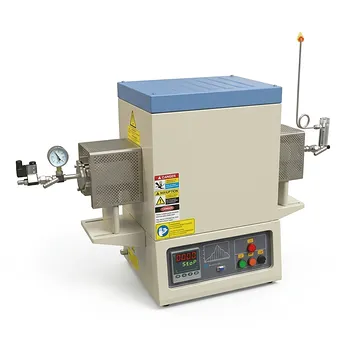
- Vertical 1700C Vacuum and Atmosphere Tube Furnace with 80mm Alumina Tube
- 1200C Hybrid Muffle and Tube Furnace for Material Research with Dual Atmosphere Control Quartz Tubes
- 1200°C Atmosphere Controlled Automatic Bottom Loading Furnace with 6 Inch Quartz Tube
- Compact Hybrid Muffle and Tube Furnace for 1000C Controlled Atmosphere Laboratory Material Sintering
- Compact Vertical Split Quartz Tube Furnace with Stainless Steel Vacuum Flanges for Rapid Thermal Quenching and Controlled Atmosphere Material Processing
People Also Ask
- Why is a thermocouple sensor indispensable for monitoring the vertical tube furnace during gallium oxide nanowire production? Optimize VLS Growth
- How is an industrial-grade vertical tube furnace utilized in smelting leaching residues? Enhance Metal Recovery Efficiency
- How does a vertical tube furnace facilitate thermoelectric alloy melting? Precision synthesis for material homogeneity.
- What is the function of a laboratory-grade vertical tube furnace in fast pyrolysis? Optimize Composite Research.
- Why is a vertical tube furnace preferred for Ga2O3 CVD? Optimize Convection & Nanowire Growth

Tech Team · ThermUnits
Last updated on Jun 03, 2026
Related Products

Vertical 1700C Vacuum and Atmosphere Tube Furnace with 80mm Alumina Tube
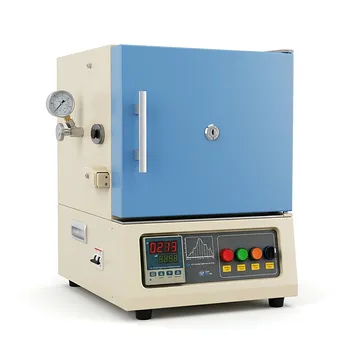
1200C Hybrid Muffle and Tube Furnace for Material Research with Dual Atmosphere Control Quartz Tubes
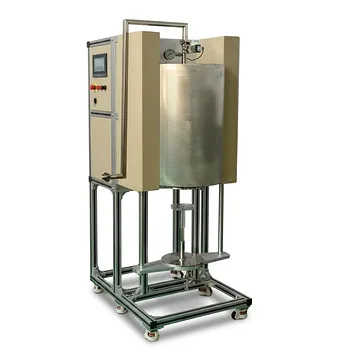
1200°C Atmosphere Controlled Automatic Bottom Loading Furnace with 6 Inch Quartz Tube
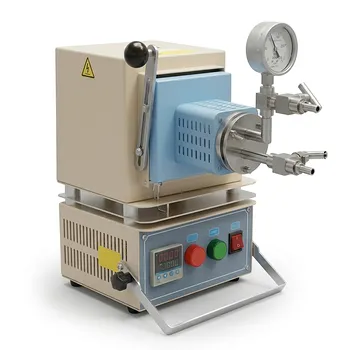
Compact Hybrid Muffle and Tube Furnace for 1000C Controlled Atmosphere Laboratory Material Sintering
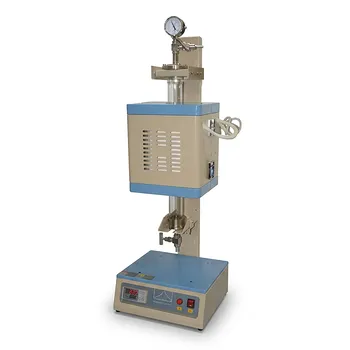
Compact Vertical Split Quartz Tube Furnace with Stainless Steel Vacuum Flanges for Rapid Thermal Quenching and Controlled Atmosphere Material Processing
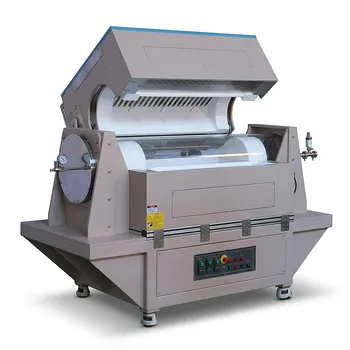
Three Zone Tube Furnace with 11 Inch or 15 Inch Quartz Tube and Hinged Flanges for Vacuum Atmosphere Heat Treatment
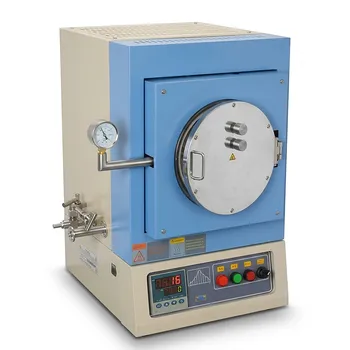
1100°C High Temperature Quartz Chamber Furnace 8 Inch OD with 7.6 Liter Capacity and Vacuum Atmosphere Capability
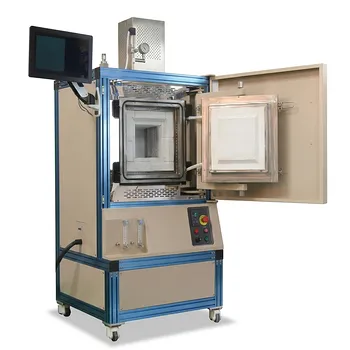
High Temperature Hydrogen Atmosphere Box Furnace 1650C Max Reducing Environment Material Synthesis System 8x8x8 Chamber

High Temperature 1700C Vertical Tube Furnace for Powder Spherification and Material Sintering

Compact High Temperature 1600C Tube Furnace with 50mm Alumina Tube and Vacuum Flanges for Material Sintering

High Temperature 1700C Tube Furnace with High Vacuum Turbomolecular Pump System and Multi Channel Mass Flow Controller Gas Mixer
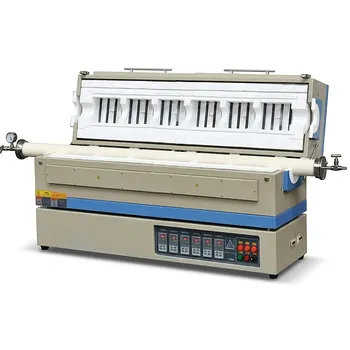
High Temperature 1700C Six Zone Split Tube Furnace with Alumina Tube and Water Cooled Flanges

1800C High Temperature Compact Vacuum Tube Furnace with 60mm OD Alumina Tube and Kanthal MoSi2 Heating Elements
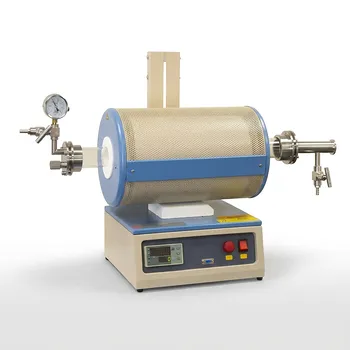
1100C Tube Furnace with Vacuum Flange and Programmable Temperature Controller for Material Science and Industrial Heat Treatment

High Temperature 1700C Benchtop Tube Furnace with 5 Inch Heating Zone High Purity Alumina Tube and Vacuum Sealing Flanges
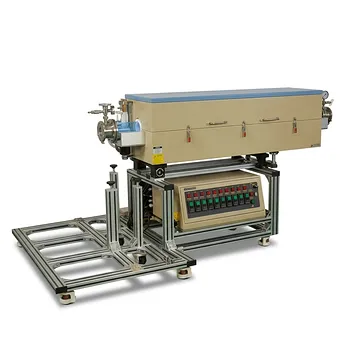
Ten Zone Multi Orientation Laboratory Tube Furnace for 1200C High Temperature Gradient Thermal Processing
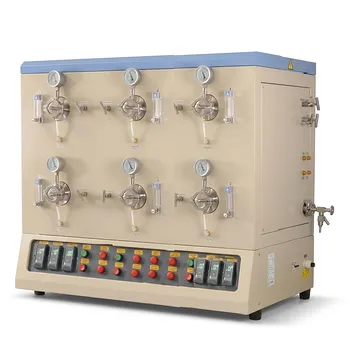
1200C High Throughput Multi Channel Tube Furnace with 50mm Quartz Tubes for Annealing and Material Phase Diagram Research

High Temperature Automated 5 Inch Tube Furnace for Autonomous Material Research and Advanced Laboratory R&D
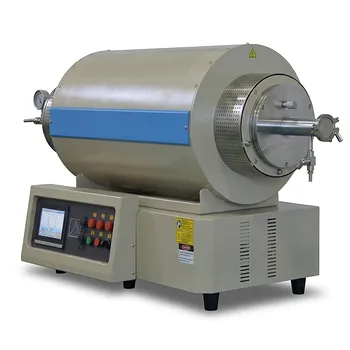
1200C Max Three Zone Tube Furnace 6 Inch OD Max with Tube and Flange