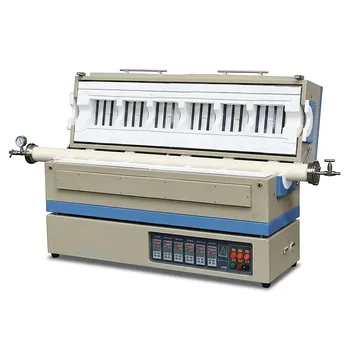
What are the primary functions of an industrial tube furnace during the solution treatment of IN625 composite materials?
Updated 3 months ago
The primary function of an industrial tube furnace in the solution treatment of IN625 composite materials is to provide a highly controlled, 1150 °C thermal environment that homogenizes the alloy's microstructure. This process is essential for dissolving brittle dendritic structures, facilitating the diffusion of alloying elements, and inducing strategic carbide precipitation. By maintaining these precise conditions, the furnace eliminates residual stresses from previous manufacturing stages while ensuring the stability of the material’s final properties.
Core Takeaway: A tube furnace serves as the critical physical foundation for the solution treatment of IN625, using uniform radial heating to transform a stressed, non-uniform "as-manufactured" structure into a stabilized, high-performance composite matrix.
Achieving Microstructural Homogenization
Dissolution of Dendritic Structures
In the "as-cast" or "as-printed" state, IN625 composites often exhibit a segregated dendritic structure that can compromise mechanical integrity. The tube furnace provides the sustained high temperatures necessary to break down these patterns and dissolve them back into the primary matrix.
Facilitating Elemental Diffusion
High-temperature treatment provides the kinetic energy required for atoms to move across the metallic lattice. This elemental diffusion ensures that the chemical composition of the IN625 composite is uniform throughout the part, preventing localized weak points.
Strategic Carbide Precipitation
The furnace environment allows for the controlled precipitation of carbides at specific locations within the microstructure. When precisely managed at 1150 °C, these precipitates can strengthen the material and enhance its resistance to creep and fatigue.
Managing Material Integrity and Stress
Relief of Residual Manufacturing Stresses
Processes like additive manufacturing or casting leave behind significant internal tensions known as residual stresses. The stable thermal energy of the tube furnace allows these stresses to relax, preventing the finished part from warping or cracking during service.
Atmospheric Protection and Isolation
Tube furnaces are designed to isolate the sample from external contaminants while providing a controlled atmosphere. This is vital for superalloys like IN625, where preventing oxidation or nitrogen pickup is necessary to maintain the purity of the conductive network and the photocatalytically active surface.
Uniformity Through Radial Heating
The cylindrical geometry of the tube furnace ensures uniform radial heating, which is superior to standard box furnaces for small-to-medium samples. This uniformity prevents thermal gradients that could lead to uneven grain growth or inconsistent material properties.
Understanding the Trade-offs
Size and Geometry Constraints
While tube furnaces offer unmatched thermal uniformity, they are physically limited by the diameter of the work tube. Large or irregularly shaped industrial components may not fit, requiring larger batch-type furnaces that might offer less precision.
Heating and Cooling Rates
Precise control often comes at the cost of speed; the heating and cooling rates must be carefully managed to avoid thermal shock. Rapid quenching, sometimes required after solution treatment, can be more difficult to execute within a sealed tube environment compared to open-atmosphere systems.
Throughput Limitations
Tube furnaces are typically used for high-precision, low-volume batches rather than continuous mass production. This makes them ideal for specialized R&D or high-value aerospace components but potentially less cost-effective for high-volume commercial manufacturing.
Applying Thermal Processing to Your Project
Recommendations for Material Optimization
- If your primary focus is Maximum Toughness: Use the tube furnace to ensure the full dissolution of brittle carbides into the austenite matrix at temperatures between 1150 °C and 1200 °C.
- If your primary focus is Stress Relief: Prioritize the precise control of the cooling ramp-down to prevent the re-introduction of thermal tensions after the solution treatment is complete.
- If your primary focus is Chemical Purity: Utilize the furnace’s ability to maintain an inert or reducing atmosphere to prevent the oxidation of the composite during high-temperature cycles.
The industrial tube furnace remains the definitive tool for achieving the precise microstructural state required for high-performance IN625 composite applications.
Summary Table:
| Key Function | Primary Benefit | Technical Mechanism |
|---|---|---|
| Homogenization | Structural Uniformity | Dissolves brittle dendrites and promotes elemental diffusion |
| Stress Relief | Dimensional Stability | Relaxes residual manufacturing tensions via stable thermal energy |
| Atmospheric Control | Material Purity | Prevents oxidation and nitrogen pickup in superalloys |
| Radial Heating | Thermal Consistency | Cylindrical design ensures uniform grain growth and properties |
Achieve Superior Material Performance with THERMUNITS
Maximize your research and production efficiency with high-precision thermal solutions from THERMUNITS, a leading manufacturer of high-temperature laboratory equipment for material science and industrial R&D. Our specialized Tube Furnaces provide the critical 1150 °C environment and radial heating uniformity required for optimal IN625 solution treatment.
We offer a comprehensive range of thermal processing systems tailored to your specific needs, including:
- Furnaces: Muffle, Vacuum, Atmosphere, Tube, Rotary, and Hot Press.
- Advanced Systems: CVD/PECVD systems, Vacuum Induction Melting (VIM), and Electric Rotary Kilns.
- Specialized Equipment: Dental Furnaces, Thermal Elements, and custom heat treatment solutions.
Ready to elevate your lab's capabilities? Contact our expert team today to find your ideal solution!
References
- Serena Lerda, Sara Biamino. Microstructural Stability of IN625 Reinforced by the Addition of TiC Produced by Laser Powder Bed Fusion after Prolonged Thermal Exposure. DOI: 10.3390/ma17184532
Mentioned Products
- 1100C Tube Furnace with Vacuum Flange and Programmable Temperature Controller for Material Science and Industrial Heat Treatment
- Laboratory Tilting Rotary Tubular Furnaces for Material Science and Industrial Heat Treatment
- 900°C Max Rotary Tube Furnace with 8 Inch 310S Alloy Tube and Optional Multi Zone Heating for Industrial Material Calcination
- Compact High Temperature 1600C Tube Furnace with 50mm Alumina Tube and Vacuum Flanges for Material Sintering
- High Temperature Dual Zone Tube Furnace for Material Science Research and Professional Thermal Processing
People Also Ask
- What are the advantages of 1100°C tube furnaces for ORR catalysts? Boost Conductivity and Structural Stability.
- What role does a tube furnace play in PS template removal? Ensure ZnO/SiO2 Structural Integrity & High Performance.
- What core functions does a high-temperature vacuum tube furnace provide? Optimize np-CuSn Sintering & Joint Integrity
- What is the role of a high-temperature tube furnace in the calcination process of ZnO/In2O3 nanocomposites?
- What impact does the heating rate of a tube furnace have on biochar microstructure? Optimize Your Material R&D.

Tech Team · ThermUnits
Last updated on Jun 02, 2026
Related Products

1100C Tube Furnace with Vacuum Flange and Programmable Temperature Controller for Material Science and Industrial Heat Treatment
Laboratory Tilting Rotary Tubular Furnaces for Material Science and Industrial Heat Treatment
900°C Max Rotary Tube Furnace with 8 Inch 310S Alloy Tube and Optional Multi Zone Heating for Industrial Material Calcination

Compact High Temperature 1600C Tube Furnace with 50mm Alumina Tube and Vacuum Flanges for Material Sintering
High Temperature Dual Zone Tube Furnace for Material Science Research and Professional Thermal Processing
Compact Split Tube Furnace with Integrated Vacuum System and Precision Temperature Calibrator
1500C Compact Hydrogen Gas Tube Furnace with 2 Inch Alumina Tube and Hydrogen Detector

High Temperature 1700C Vertical Tube Furnace for Powder Spherification and Material Sintering
Compact Hybrid Muffle and Tube Furnace for 1000C Controlled Atmosphere Laboratory Material Sintering
1650C High Temperature Atmosphere Controlled Box Furnace with 65L Chamber for Advanced Material Sintering and Industrial Heat Treatment
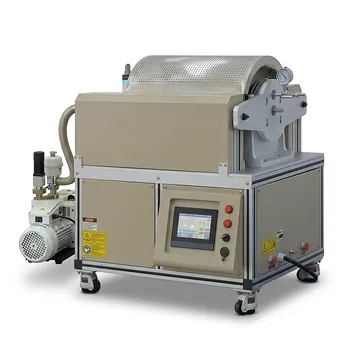
Automated 1200 C Tube Furnace for AI Material Research with 6 Inch OD and Sliding Flange

1800C High Temperature Compact Vacuum Tube Furnace with 60mm OD Alumina Tube and Kanthal MoSi2 Heating Elements
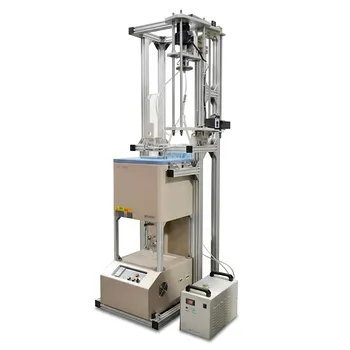
500C Vacuum Vertical Tube Furnace 84mm OD Sample Rotation Lifting System

High Temperature 1700C Six Zone Split Tube Furnace with Alumina Tube and Water Cooled Flanges

High Temperature Automated 5 Inch Tube Furnace for Autonomous Material Research and Advanced Laboratory R&D

Vertical 1700C Vacuum and Atmosphere Tube Furnace with 80mm Alumina Tube
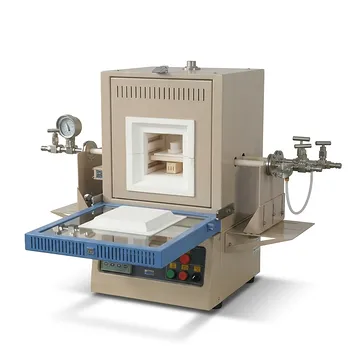
1700C Compact Hybrid Furnace with Dual Layer Box Sintering and Controlled Atmosphere Alumina Tubes
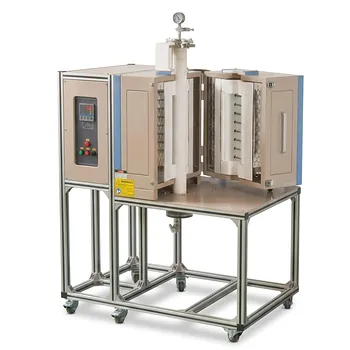
High Temperature 1700C Vertical Split Tube Furnace for Material Quenching and Single Crystal Growth
High Temperature Bottom Loading Vertical Furnace 1700C Dual Stage Sample Processing System 18L Large Capacity Thermal Treatment Equipment