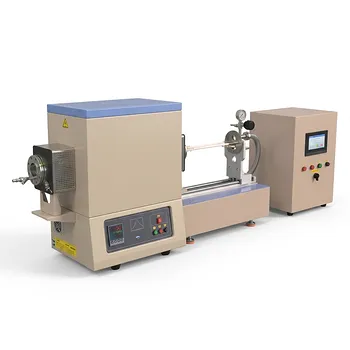
What are the process advantages of using an induction furnace for ZrB2–SiC vs SPS? Scalability & Near-Net Shape Benefits
Updated 3 months ago
The primary advantages of using an induction furnace with graphite heating elements for ZrB2–SiC are its capacity for large-scale production, the ability to form complex near-net shapes, and significantly lower post-processing costs. While Spark Plasma Sintering (SPS) excels in speed and grain control, the induction-based pressureless method provides the geometric flexibility and thermal uniformity required for industrial-grade ultra-high temperature ceramics (UHTCs).
While SPS provides rapid densification through pressure and pulsed current, induction furnace sintering leverages an isothermal graphite environment to produce large, complex components that are economically unfeasible to manufacture via other methods.
Scalability and Geometric Versatility
Large-Scale Component Fabrication
Unlike SPS, which is typically constrained by the size of the pressing die and the capacity of the power supply to maintain current density, induction furnaces can accommodate significantly larger workpieces. This makes it the preferred choice for industrial-scale production of ZrB2–SiC parts.
Near-Net Shape Manufacturing
The pressureless nature of this process allows for the creation of complex geometries that would be impossible to achieve under the uniaxial pressure required by SPS. By sintering parts closer to their final form, manufacturers avoid the extreme difficulty and expense of machining ultra-hard ceramic materials.
Thermal Uniformity and Stress Management
The Role of the Graphite Susceptor
In an induction system, the graphite cavity acts as a susceptor, absorbing electromagnetic energy to generate heat while functioning as a high-performance isothermal container. This setup ensures a uniform thermal field distribution at temperatures reaching up to 2150°C.
Minimizing Internal Thermal Stress
Because the heat is distributed evenly through the graphite environment rather than being localized by a direct current, internal thermal stress is minimized. This uniformity is critical for preventing cracks and structural failures in large ceramic bodies during the cooling phase.
Chemical Synergy and Surface Activation
Maintaining a Reducing Atmosphere
The graphite heating elements and crucibles naturally create a reducing atmosphere at high temperatures. This environment is essential for the chemical stability of UHTCs like ZrB2–SiC during long sintering cycles.
Removal of Oxide Scales
This reducing atmosphere works in tandem with sintering additives to remove oxygen impurities from the surface of ZrB2 particles. Eliminating these oxide scales is a prerequisite for achieving high densification without the need for external mechanical pressure.
Understanding the Trade-offs
Grain Growth and Densification Time
SPS utilizes pulsed current and high pressure (often around 60 MPa) to achieve densification in as little as 20 to 60 minutes. This speed effectively inhibits excessive grain growth, resulting in a finer microstructure and potentially superior mechanical properties compared to the longer cycles of an induction furnace.
Dependency on Chemical Additives
Pressureless sintering in an induction furnace relies heavily on chemical additives (like silicon nitride) to promote material flow and densification. Without the "force" of SPS, achieving theoretical density requires precise control over the powder chemistry and longer dwell times at peak temperatures.
Making the Right Choice for Your Goal
To determine which sintering process aligns with your technical requirements, consider the following strategic priorities:
- If your primary focus is complex geometry: Use an induction furnace to achieve near-net shapes and minimize the need for costly diamond grinding on ultra-hard surfaces.
- If your primary focus is maximum grain refinement: Choose Spark Plasma Sintering (SPS) to take advantage of rapid heating rates that bypass the grain-coarsening temperature regimes.
- If your primary focus is industrial throughput: Opt for induction furnace sintering, as it allows for the simultaneous processing of larger batches or significantly larger individual components.
Induction-based pressureless sintering remains the definitive solution for transforming ZrB2–SiC into large, functional components where economic scalability and geometric complexity are the primary drivers.
Summary Table:
| Feature | Induction Sintering (Pressureless) | Spark Plasma Sintering (SPS) |
|---|---|---|
| Component Size | Large-scale, industrial capacity | Limited by die & power capacity |
| Geometry | Complex near-net shapes | Simple, uniaxial geometries |
| Thermal Uniformity | Isothermal graphite susceptor | Localized current heating |
| Post-Processing | Low (minimized diamond grinding) | High (expensive machining required) |
| Sintering Time | Longer dwell cycles | Rapid (20–60 minutes) |
Optimize Your UHTC Production with THERMUNITS
Are you looking to scale your ZrB2–SiC fabrication or manufacture complex near-net shapes? THERMUNITS is a leading manufacturer of high-temperature laboratory equipment for material science and industrial R&D. We offer specialized solutions for ultra-high temperature ceramics, ensuring the thermal uniformity and chemical stability required for high-performance materials.
From Vacuum Induction Melting (VIM) and Vacuum Furnaces to Muffle, Atmosphere, Tube, and Hot Press systems, our equipment is engineered to reduce your post-processing costs and enhance industrial throughput. Whether you are working on CVD/PECVD or advanced heat treatments, we have the thermal expertise to support your innovation.
Contact THERMUNITS today to consult with our experts and find the perfect thermal processing solution for your laboratory or industrial scale-up.
References
- Mohammad Sarhangian, Mehri Mashhadi. The impact of Si3N4 incorporation on the mechanical characteristics of ZrB2–SiC nanocomposite sintered via pressureless method. DOI: 10.1016/j.heliyon.2024.e33269
Mentioned Products
- Ultra High Temperature 2300C Induction Heated Graphite Tube Furnace with Infrared Control
- High Temperature Vacuum Graphitization Chamber Furnace 2800C Graphite Heating Elements Bottom Loading
- Induction Heating System with Temperature Control for High Temperature Vacuum Sintering and Melting
- High Pressure 600T Vacuum Induction Hot Press Furnace for Advanced Material Heat Treatment and Sintering
- High Temperature Mini Induction Heating Furnace 1600C Laboratory Material Melting System
People Also Ask
- How does a high-temp furnace enhance thermal conductivity of graphene & CNT films? Superior Material Graphitization
- What conditions does a graphitization furnace provide for pitch-based carbon? Achieve Superior Crystalline Quality
- Why is an ultra-high temperature graphitization furnace required for coal-based graphite? Unlock Crystalline Performance
- What core technical conditions must an ultra-high temperature graphitization furnace meet? Achieve 2800°C Peak Performance
- Why is a high-temperature graphitization furnace needed for ZrC/SiC/C ceramic aerogels? Master UHTC Synthesis at 1700°C

Tech Team · ThermUnits
Last updated on Jun 02, 2026
Related Products
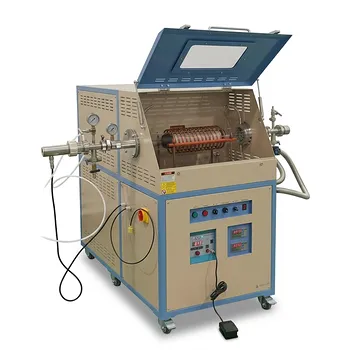
Ultra High Temperature 2300C Induction Heated Graphite Tube Furnace with Infrared Control
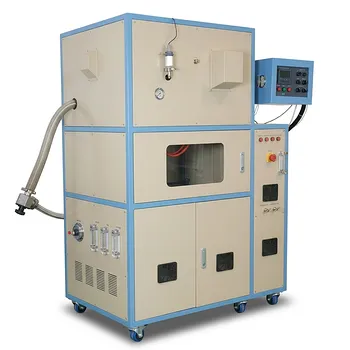
High Temperature Vacuum Graphitization Chamber Furnace 2800C Graphite Heating Elements Bottom Loading
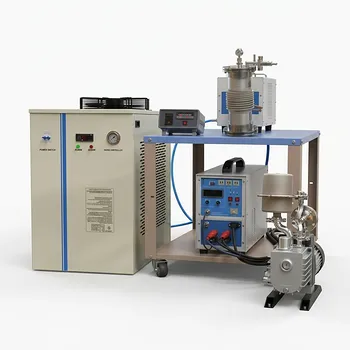
Induction Heating System with Temperature Control for High Temperature Vacuum Sintering and Melting
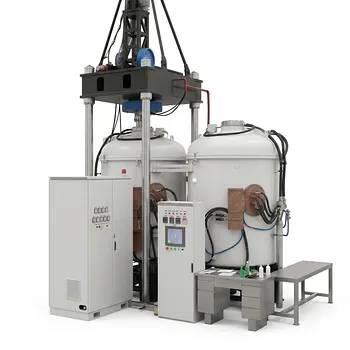
High Pressure 600T Vacuum Induction Hot Press Furnace for Advanced Material Heat Treatment and Sintering
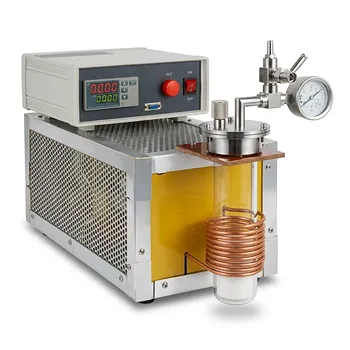
High Temperature Mini Induction Heating Furnace 1600C Laboratory Material Melting System
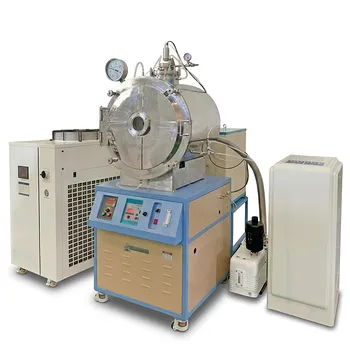
Ultra High Temperature Induction Heated Vacuum Furnace with Molten Salt Electrolysis Capability and 3000 Degree Precision Control
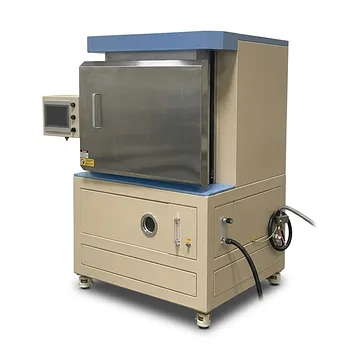
1650C High Temperature Atmosphere Controlled Box Furnace with 65L Chamber for Advanced Material Sintering and Industrial Heat Treatment
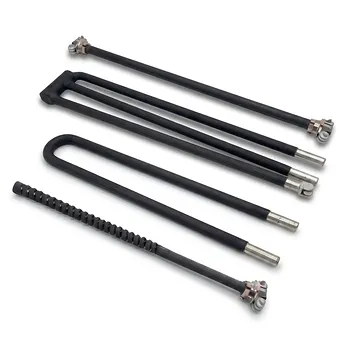
Silicon Carbide SiC Thermal Heating Elements for Industrial Electric Furnaces
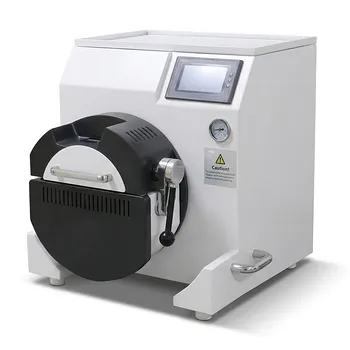
Desktop Induction Melting Furnace with Automatic Rotary Casting Function up to 1700C for Advanced Metal Alloy Research
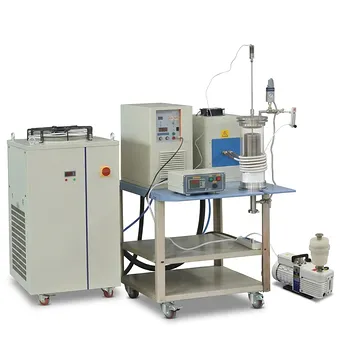
High Temperature Induction Melting System with Multi Cavity Crucible and 15KW Precision Digital Temperature Control
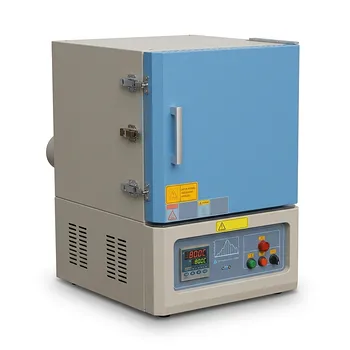
1800C Bench Top Muffle Furnace 18 Liters with Kanthal Super 1900 Heating Elements for High Purity Ceramic Sintering and Material Research
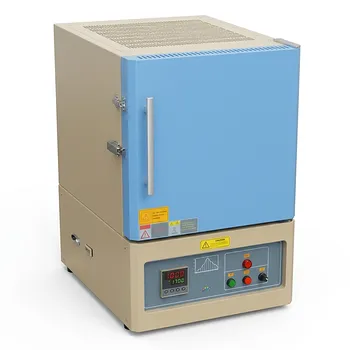
Large Bench Top 1700C High Temperature Muffle Furnace with 19L Chamber for Advanced Material Sintering and Annealing
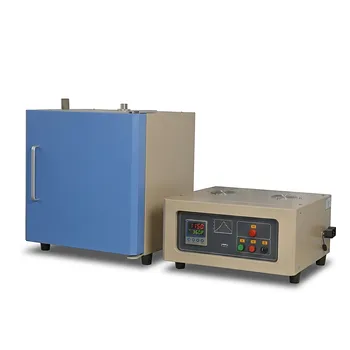
High Temperature Muffle Furnace with Alloy Chamber for Debinding and Sintering Applications
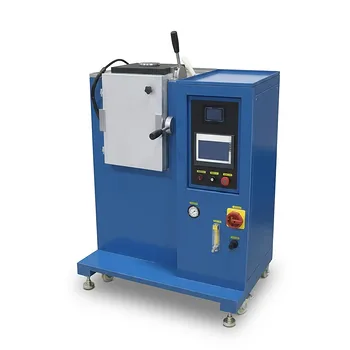
High Throughput Induction Melting and Casting Furnace for Superalloy Research 1700C Atmosphere Controlled Multi Sample System
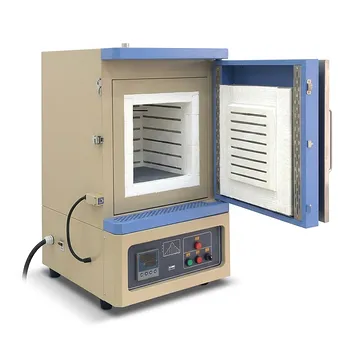
Five Side Heating Muffle Furnace High Purity Alumina Fiber 27L Chamber 1200C High Temperature Thermal Processing System for Sintering Annealing and Materials Research

High Temperature 1700C Vertical Tube Furnace for Powder Spherification and Material Sintering

1800C High Temperature Compact Vacuum Tube Furnace with 60mm OD Alumina Tube and Kanthal MoSi2 Heating Elements
1100C High Temperature Vacuum Crucible Furnace with Quartz Chamber for Thermal Processing and Sintering
High Temperature 1000C Vacuum Furnace with 8 Inch ID Chamber for Material Sintering and Research Annealing