What are the specific stages of the zirconia sintering process in a dental furnace? 4 Key Steps for Strength & Aesthetics
Updated 5 months ago
The zirconia sintering process is a highly controlled thermal sequence essential for transforming porous ceramic blanks into durable dental restorations. This process occurs in four specific stages: preheating or drying to remove moisture, a controlled ramp-up to peak temperatures (typically between 1,400°C and 1,600°C), a dwell or soak period for atomic fusion, and a controlled cooling phase to ensure structural integrity.
Sintering is the critical transition where zirconia achieves its final density, mechanical strength, and translucency through solid-state diffusion. Precise control of temperature and timing is non-negotiable to prevent material failure or aesthetic defects.
Stage 1: Preheating and Drying
Removing Residual Moisture
The initial stage focuses on the gentle removal of any residual moisture or binders present in the milled zirconia body. If heating occurs too rapidly at this stage, trapped moisture can turn into steam, leading to internal pressure and potential fractures.
Preparing the Material Structure
This phase serves as a thermal buffer, ensuring the entire restoration reaches a uniform temperature before the intensive ramp-up begins. It sets the foundation for a stable sintering cycle, particularly for complex or large-span bridges.
Stage 2: Controlled Ramp to Sintering Temperature
Managing the Heating Rate
During this stage, the furnace increases the temperature at a specific rate, which can reach up to 120°C per minute in specialized rapid-sintering units. This ramp facilitates the initial rearrangement of zirconia powder particles as they begin to move closer together.
Thermal Profiles and Material Type
Different types of zirconia, such as 3Y-TZP or 5Y-Zirconia, require specific thermal profiles to manage their unique shrinkage rates. Precise ramp control ensures that the material contracts uniformly, which is vital for maintaining the accurate fit of the denture.
Stage 3: The Dwell or Soak Period
Achieving Densification Through Diffusion
At peak temperatures—often maintained at 1,450°C to 1,550°C—the material undergoes solid-state diffusion. During this "soak" time, atoms migrate across particle boundaries, causing powder particles to fuse and eliminate internal micropores.
Finalizing Optical and Mechanical Properties
The duration of the dwell period directly determines the grain growth and phase transformation of the zirconia. This is the moment when the restoration achieves its final translucency, high hardness, and fracture resistance required for clinical use.
Stage 4: Controlled Cooling
Preventing Thermal Shock
Once densification is complete, the furnace must lower the temperature in a strictly regulated manner. Rapid, uncontrolled cooling can cause thermal shock, leading to microcracking or the complete shattering of the ceramic structure.
Stabilizing the Phase Composition
Controlled cooling allows for proper phase transformation strengthening, where the zirconia structure stabilizes into its high-strength polycrystalline state. This ensures the restoration can withstand the significant biting forces present in the oral environment.
Understanding the Trade-offs and Pitfalls
Speed vs. Material Longevity
While rapid sintering can complete a cycle in under an hour, it requires high-performance furnaces and specific zirconia formulations (like 5Y). Pushing standard zirconia through a fast cycle may lead to decreased flexural strength or compromised grain boundaries.
Temperature Accuracy and Aesthetics
If the peak temperature is too high, grains grow excessively large, which can make the material more brittle. Conversely, under-sintering due to low temperatures or insufficient dwell time leaves residual porosity, resulting in an opaque, "chalky" appearance and weakened mechanical properties.
How to Apply This to Your Project
Selecting the Right Sintering Strategy
The choice of sintering profile should always align with the material manufacturer’s specifications and the specific goals of the restoration.
- If your primary focus is immediate clinical restoration: Utilize a high-speed sintering furnace and 5Y-zirconia to complete the process in under sixty minutes without sacrificing grain stability.
- If your primary focus is maximum translucency for multi-layer zirconia: Prioritize a longer dwell time and precise isothermal holding to ensure optimal light transmission and color accuracy.
- If your primary focus is large-span bridge structural integrity: Employ a slower ramp-up and extended cooling phase to minimize internal stress and ensure uniform dimensional shrinkage.
By mastering these four stages, dental professionals ensure that every zirconia restoration meets the rigorous demands of both functional durability and natural aesthetics.
Summary Table:
| Stage | Core Purpose | Key Parameters & Impact |
|---|---|---|
| 1. Preheating & Drying | Remove moisture and binders | Prevents internal pressure and fractures. |
| 2. Controlled Ramp | Particle rearrangement | Heating rates up to 120°C/min; manages uniform shrinkage. |
| 3. Dwell or Soak | Densification via diffusion | Peak 1,450°C–1,550°C; determines hardness and translucency. |
| 4. Controlled Cooling | Phase stabilization | Prevents thermal shock; ensures high-strength state. |
Achieve Perfect Sintering Results with THERMUNITS
Precision in the sintering cycle is the difference between a successful restoration and a material failure. THERMUNITS is a leading manufacturer of high-temperature laboratory equipment, providing the advanced thermal control necessary for superior material science and dental R&D. Our specialized Dental Furnaces are engineered to handle complex sintering profiles with absolute accuracy.
Beyond dental applications, we offer a comprehensive range of thermal solutions, including:
- Muffle, Vacuum, and Atmosphere Furnaces
- Tube, Rotary, and Hot Press Furnaces
- CVD/PECVD Systems & Vacuum Induction Melting (VIM) Furnaces
- Thermal Elements & Laboratory Heat Treatment Equipment
Enhance your lab's efficiency and ensure the structural integrity of your materials. Contact THERMUNITS Today to discuss your specific heat treatment requirements!
Mentioned Products
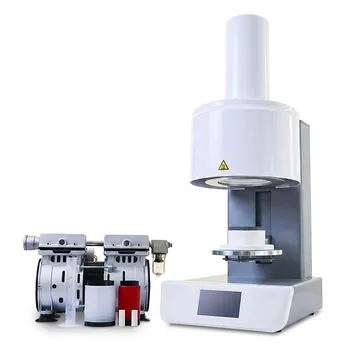
- Dental Porcelain Zirconia Sintering Ceramic Vacuum Press Furnace
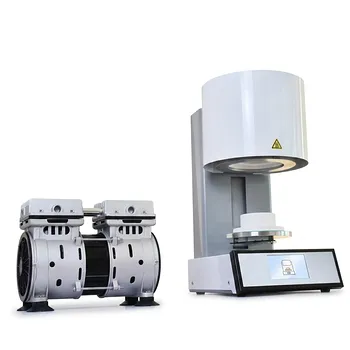
- Vacuum Dental Porcelain Sintering Furnace for High Precision Ceramic Restorations
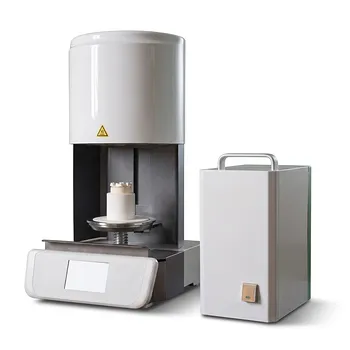
- Dental Porcelain Zirconia Sintering Ceramic Furnace Chairside with Transformer
- Ultra High Temperature Bench Top Muffle Furnace 1750C Sintering System with Kanthal Super Heating Elements and Precision Digital Control
- 1800C Bench Top Muffle Furnace 18 Liters with Kanthal Super 1900 Heating Elements for High Purity Ceramic Sintering and Material Research
People Also Ask
- How do zirconia sintering furnaces differ from porcelain firing furnaces? Key Technical & Performance Differences
- How do sintering and firing differ in a dental furnace? Master the key techniques for flawless restorations.
- What is the importance of dental furnaces in material science research and development? Keys to Ceramic Innovation
- How does a dental furnace prevent material cracking during rapid thermal cycles? Master Precision Thermal Control
- What is the role of a programmable logic controller (PLC) in modern dental furnace operations? Enhance Sintering Precision.

Tech Team · ThermUnits
Last updated on Apr 14, 2026
Related Products
Dental Porcelain Zirconia Sintering Ceramic Vacuum Press Furnace
Vacuum Dental Porcelain Sintering Furnace for High Precision Ceramic Restorations
Dental Porcelain Zirconia Sintering Ceramic Furnace Chairside with Transformer
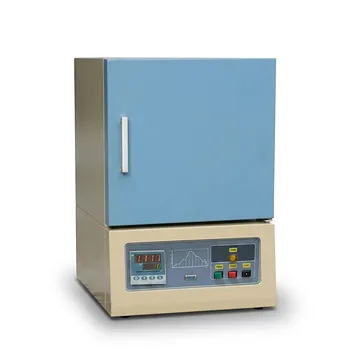
Ultra High Temperature Bench Top Muffle Furnace 1750C Sintering System with Kanthal Super Heating Elements and Precision Digital Control
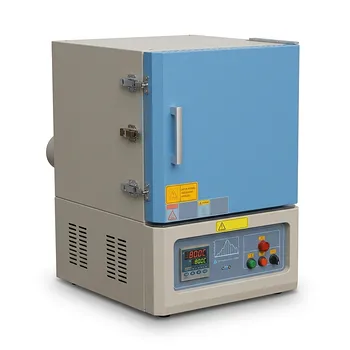
1800C Bench Top Muffle Furnace 18 Liters with Kanthal Super 1900 Heating Elements for High Purity Ceramic Sintering and Material Research
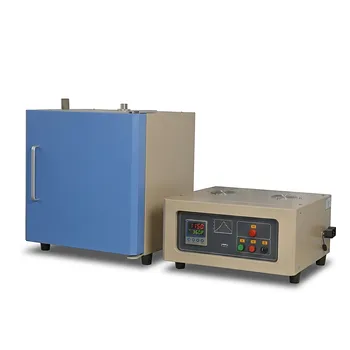
High Temperature Muffle Furnace with Alloy Chamber for Debinding and Sintering Applications
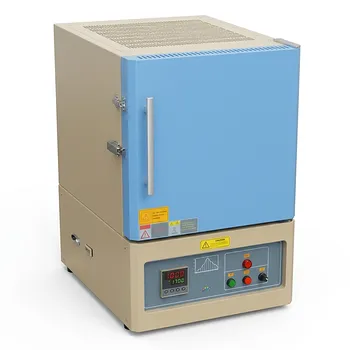
Large Bench Top 1700C High Temperature Muffle Furnace with 19L Chamber for Advanced Material Sintering and Annealing

1100°C High Temperature Quartz Chamber Furnace 8 Inch OD with 7.6 Liter Capacity and Vacuum Atmosphere Capability
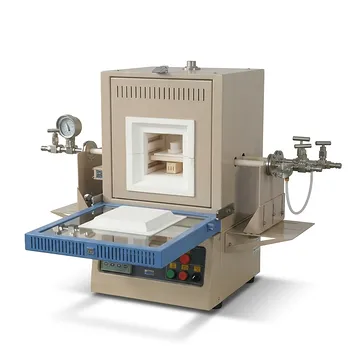
1700C Compact Hybrid Furnace with Dual Layer Box Sintering and Controlled Atmosphere Alumina Tubes
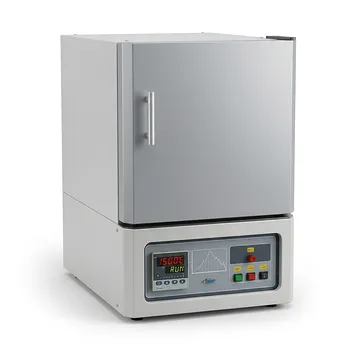
High Temperature 1500C Benchtop Muffle Furnace 3.6L Alumina Fiber Chamber Programmable Controller Sintering Annealing Carbonization Thermal Processing System
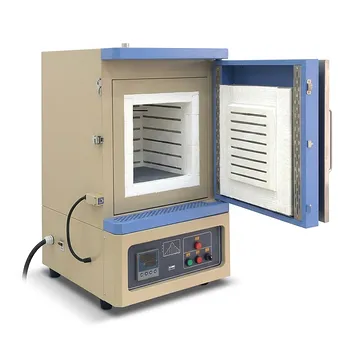
Five Side Heating Muffle Furnace High Purity Alumina Fiber 27L Chamber 1200C High Temperature Thermal Processing System for Sintering Annealing and Materials Research
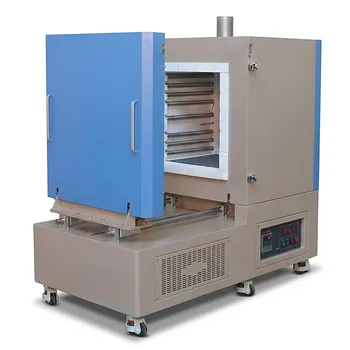
1200C Five Side Heating Muffle Furnace with Sliding Door 125L Volume High Temperature Heat Treatment System for Large Scale Sintering and Annealing
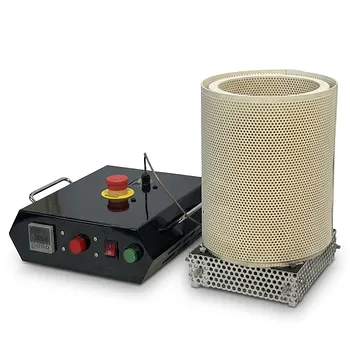
1250 C Compact Vertical Box Furnace for Glovebox Material Research Air Sensitive Samples
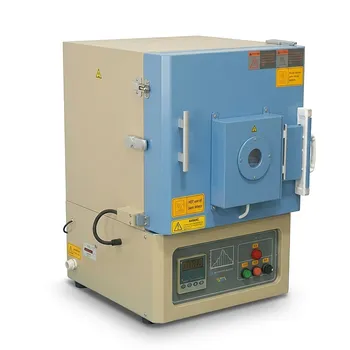
High Temperature Benchtop Muffle Furnace 1500C with 3.6L Chamber and Quartz Observation Window
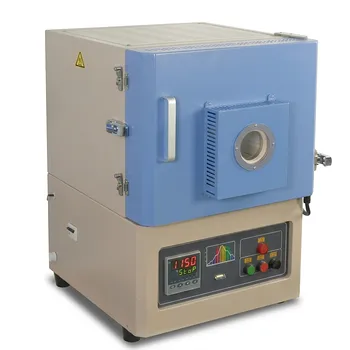
High Temperature Benchtop Muffle Furnace with Quartz Observation Window for Thermal Imaging and Material Analysis
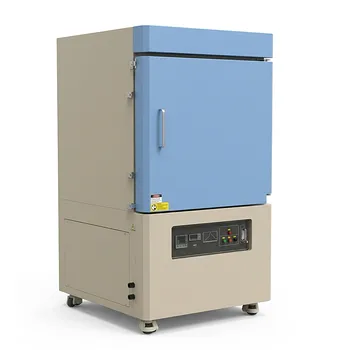
Industrial Large Box Furnace 1700C 216L High Temp Muffle Sintering System

1200°C 5 Inch Vertical Quartz Tube Furnace with Stainless Steel Vacuum Flanges
Atmosphere Controlled Muffle Furnace 1700C Maximum Temperature 80L High Capacity Vacuum Inert Gas Box Furnace
Compact 1000C Muffle Furnace with Programmable Controller and 2 Inch Top Port for Vacuum and Atmosphere Material Research