What are the technical advantages of using a secondary annealing furnace? Enhance Phase Purity and Material Performance
Updated 3 months ago
Secondary annealing is the essential step for achieving phase purity and structural maturity. While initial spray pyrolysis quickly forms precursor particles, it often leaves the material in a disordered or impure state. A secondary furnace provides the precise thermal energy and atmospheric control required to drive cation rearrangement, eliminate residual contaminants, and stabilize the final crystal structure for high-performance applications.
Core Takeaway: A secondary annealing furnace acts as a finishing stage that transforms "as-synthesized" powders into functional materials by facilitating atomic-level structural organization and surface purification that are unattainable during the rapid residence times of primary pyrolysis.
Optimizing Crystalline Structure and Phase Development
The Role of Cation Rearrangement
During initial pyrolysis, rapid cooling often "freezes" ions in sub-optimal positions. A secondary furnace provides the sustained thermal energy necessary for cations, such as lithium and cobalt, to migrate onto their correct lattice sites.
This rearrangement is critical for the development of the electrochemically active layered R3-m structure. This structural maturity directly translates to significantly enhanced specific capacity and cycling stability in battery materials.
Extending Effective Residence Time
Primary spray pyrolysis is often limited by short reaction windows within the spray stream. A secondary furnace allows for a constant temperature platform that can be maintained for several hours.
This extended residence time ensures that complex phases, such as Ni-Y2O3 composites, have sufficient time to fully nucleate and mature. Without this stage, the material may remain a mixture of unreacted precursors or metastable intermediates.
Precision Control of Material Chemistry and Purity
Atmospheric Purification and Carbon Removal
Solid residues from pyrolysis can be contaminated with black carbonaceous materials, which degrade the quality of products like recovered glass fibers. By utilizing an oxidative air atmosphere at approximately 550 °C, these impurities are completely removed.
The result is a high-quality, clean product suitable for high-value reuse. This level of chemical refining is difficult to achieve in the fast-moving environment of a primary pyrolysis reactor.
Refinement via Reducing Environments
For advanced carbon materials and nanodiamonds, a secondary furnace can provide a reducing atmosphere (such as a 5% H2/Ar mixture). This environment is decisive for eliminating residual functional groups.
These precise gas-mixing capabilities facilitate the evolution and stabilization of internal nanostructures. This process refines the chemical matrix beyond what is possible during the initial synthesis phase.
Managing Morphology and Particle Uniformity
Preventing Sintering and Agglomeration
Maintaining a high specific surface area is critical for nanoparticles, such as magnetite (Fe3O4). A secondary furnace with superior heat distribution uniformity prevents excessive sintering during the final curing stage.
By controlling the heating rate and temperature gradients, manufacturers can keep particle sizes within the desired 30-50 nm range. This prevents the particles from fusing together, which would otherwise diminish their functional properties.
Influence on Electronic Properties
Precise thermal control during post-treatment directly impacts the band gap of synthesized nanoparticles. For materials like magnetite, maintaining a stable thermal environment ensures the expected 2-3 eV band gap is achieved.
This level of precision allows for the tuning of electronic and optical characteristics. This makes the material reliable for specific industrial or scientific applications.
Understanding the Trade-offs
Thermal Budget and Energy Costs
Implementing a secondary annealing stage adds a significant energy footprint to the production process. The requirement for several hours of sustained heating at high temperatures increases the total cost per kilogram of material produced.
Risk of Grain Growth
While annealing improves crystallinity, excessive time or temperature can lead to unwanted grain growth. If the process is not tightly monitored, the nanoparticles may lose their unique "nano" properties as they coalesce into larger, less active structures.
Complexity in Atmosphere Management
Maintaining a precise gas mixture (like H2/Ar) requires sophisticated gas-mixing and monitoring equipment. Any leak or fluctuation in the atmosphere can result in inconsistent batches or even safety hazards in the case of flammable reducing gases.
How to Apply This to Your Project
When integrating a secondary annealing step, your specific material goal should dictate the furnace configuration and parameters.
- If your primary focus is Battery Performance: Prioritize long-duration, stable temperature platforms to ensure full cation ordering and R3-m phase development.
- If your primary focus is Material Purity: Utilize an oxidative air atmosphere furnace specifically to burn off carbonaceous residues and organic contaminants.
- If your primary focus is Nanoparticle Precision: Select a furnace with high heat distribution uniformity to prevent sintering and maintain specific surface area.
- If your primary focus is Chemical Modification: Employ a furnace with precise gas-mixing capabilities to create the reducing environments necessary for nanostructure stabilization.
By strategically applying post-heat treatment, you transition from producing simple powders to engineering high-performance technical materials.
Summary Table:
| Feature | Technical Advantage | Targeted Benefit |
|---|---|---|
| Cation Rearrangement | Stabilizes R3-m layered structures | Higher specific capacity in batteries |
| Extended Residence Time | Ensures full nucleation of complex phases | Eliminates metastable intermediates |
| Atmospheric Control | Oxidative or reducing environments | Chemical purification & carbon removal |
| Thermal Uniformity | Precise heat distribution | Prevents sintering of nanoparticles |
| Electronic Tuning | Stable thermal environment | Optimized band gap and optical properties |
Maximize Your Material Performance with THERMUNITS
Transition from simple powders to high-performance technical materials with precision thermal processing. THERMUNITS is a leading manufacturer of high-temperature laboratory equipment for material science and industrial R&D. We provide the advanced tools necessary for critical post-heat treatments, ensuring your spray pyrolysis products achieve peak structural maturity.
Our comprehensive range of thermal processing solutions includes:
- Furnaces: Muffle, Vacuum, Atmosphere, Tube, Rotary, and Hot Press Furnaces.
- Advanced Systems: CVD/PECVD systems, Vacuum Induction Melting (VIM), and Electric Rotary Kilns.
- Specialized Equipment: Dental Furnaces, Thermal Elements, and custom heat treatment solutions.
Ready to enhance your lab's efficiency and material purity? Contact our experts today to find the perfect thermal solution!
References
- Manar Almazrouei, Adam Boies. Synthesis Pathway of Layered-Oxide Cathode Materials for Lithium-Ion Batteries by Spray Pyrolysis. DOI: 10.1021/acsami.4c06503
Mentioned Products
- 1200C Five Side Heating Muffle Furnace with Sliding Door 125L Volume High Temperature Heat Treatment System for Large Scale Sintering and Annealing
- 1500C Three Zone Vertical Pyrolysis Furnace for Nanoparticle Synthesis and Advanced Oxide Coating
- High Temperature Cold Wall Vacuum Furnace for Advanced Material Sintering and Annealing 1600C Heating Area 200x200x300mm
- Vertical Openable Tube Furnace 0-1700c High Temperature Laboratory System for CVD and Vacuum Heat Treatment
- Electric Rotary Kiln Continuous Working Small Rotary Furnace Heating Pyrolysis Plant
People Also Ask
- What is the role of the muffle furnace in h-BN precursor preparation? Optimize Morphology and Chemical Purity.
- How does the heating mechanism of a muffle furnace differ from that of an open-flame furnace? Indirect vs Direct Heat
- Why is the muffle design advantageous for the production of ceramics and glass? Ensure Purity and Structural Integrity
- What are the benefits of using muffle furnaces in pharmaceutical and biomedical applications? Maximize Purity & Compliance
- What are the typical operating temperature ranges for standard and advanced muffle furnaces? Expert Temperature Guide.

Tech Team · ThermUnits
Last updated on Jun 02, 2026
Related Products
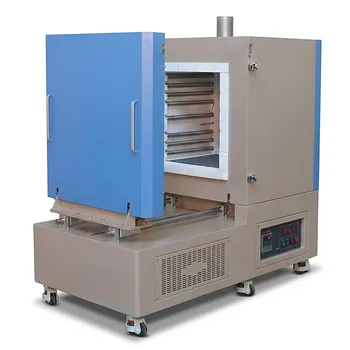
1200C Five Side Heating Muffle Furnace with Sliding Door 125L Volume High Temperature Heat Treatment System for Large Scale Sintering and Annealing
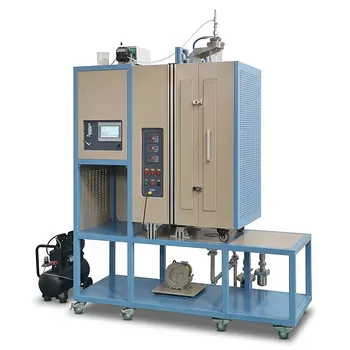
1500C Three Zone Vertical Pyrolysis Furnace for Nanoparticle Synthesis and Advanced Oxide Coating
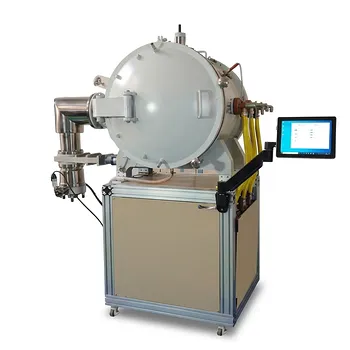
High Temperature Cold Wall Vacuum Furnace for Advanced Material Sintering and Annealing 1600C Heating Area 200x200x300mm
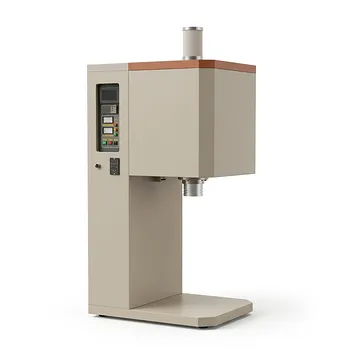
Vertical Openable Tube Furnace 0-1700c High Temperature Laboratory System for CVD and Vacuum Heat Treatment
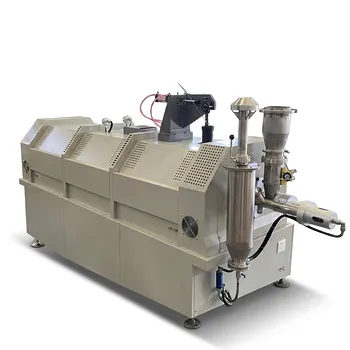
Electric Rotary Kiln Continuous Working Small Rotary Furnace Heating Pyrolysis Plant
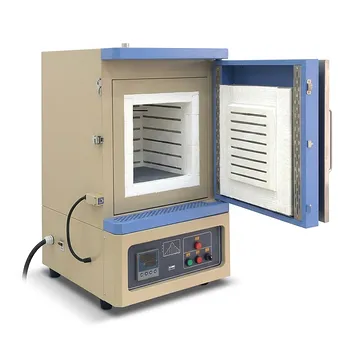
Five Side Heating Muffle Furnace High Purity Alumina Fiber 27L Chamber 1200C High Temperature Thermal Processing System for Sintering Annealing and Materials Research
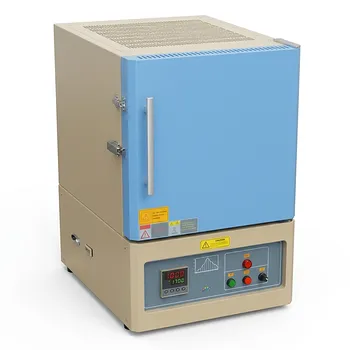
Large Bench Top 1700C High Temperature Muffle Furnace with 19L Chamber for Advanced Material Sintering and Annealing
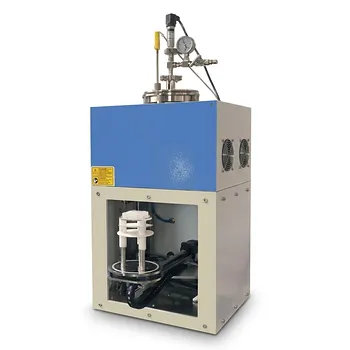
Rapid Thermal Processing Atmosphere Controlled Bottom Loading Furnace 1100C with 50C Per Second Heating Rate for Wafer Annealing
Rapid Thermal Processing Furnace 1100C Atmosphere Controlled Bottom Loading RTP System for Wafer Annealing and Catalysis Research
High Temperature 1500C Benchtop Muffle Furnace 3.6L Alumina Fiber Chamber Programmable Controller Sintering Annealing Carbonization Thermal Processing System
High Temperature Dual Zone Tube Furnace for Material Science Research and Professional Thermal Processing
High Temperature 1000C Vacuum Furnace with 8 Inch ID Chamber for Material Sintering and Research Annealing
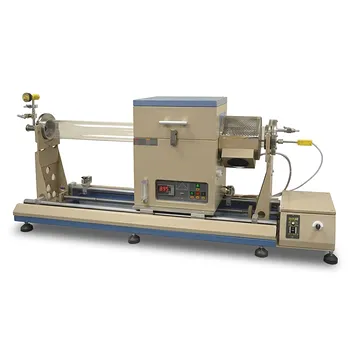
900 ºC Max Sliding RTP Tube Furnace with Rapid IR Heating and 4 Inch OD Quartz Tube
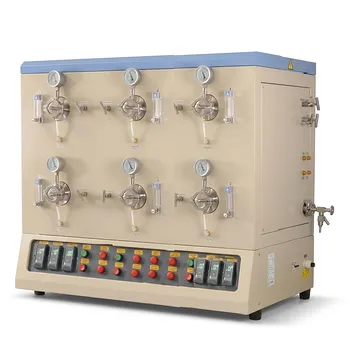
1200C High Throughput Multi Channel Tube Furnace with 50mm Quartz Tubes for Annealing and Material Phase Diagram Research
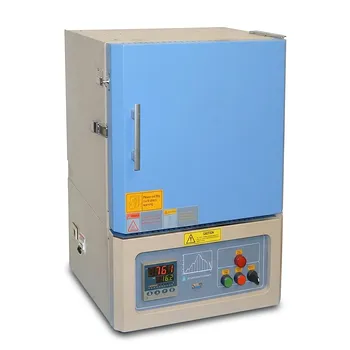
High Temperature 1700C Bench Top Muffle Furnace with Alumina Fiber Insulation and 3.6L Chamber Capacity for Precision Sintering and Heat Treatment
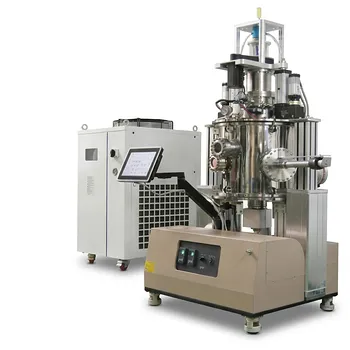
950C Rapid Thermal Processing Furnace for 12 Inch Wafer CSS Coating with Rotating Substrate Holder
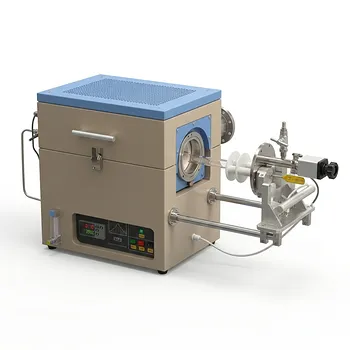
Compact Atmosphere Controlled Rapid Thermal Processing RTP Furnace with 4 Inch ID Quartz Tube 1100C
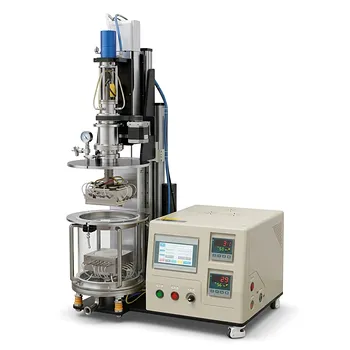
High Temperature 800C Rapid Thermal Processing Furnace with Rotating Sample Holder for Close Spaced Sublimation and Thin Film Solar Cell Research
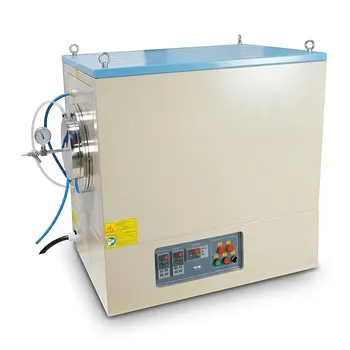
Dual Zone Tube Furnace 1100C with 11 Inch Quartz Tube and Vacuum Flanges for 8 Inch Wafer Processing
