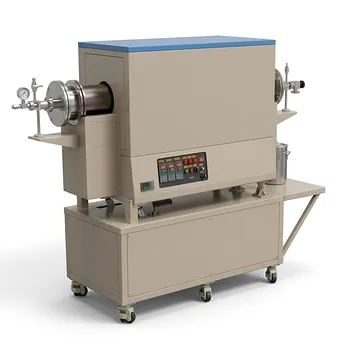
What core experimental conditions does a horizontal tube furnace provide for catalytic graphitization at 1300°C? Guide
Updated 3 months ago
For catalytic graphitization at 1300°C, a horizontal tube furnace provides three essential pillars: a high-purity inert atmosphere, precise kinetic heating control, and a stable, uniform thermal field. These conditions are mandatory to facilitate the dissolution of amorphous carbon into catalysts and its subsequent precipitation into long-range ordered graphite crystals without the risk of oxidation.
The horizontal tube furnace serves as a controlled micro-reactor that stabilizes the thermodynamic environment required for carbon atom rearrangement. By maintaining atmospheric purity and thermal uniformity, the system ensures that the catalyst—such as nickel, zinc, or iron—effectively drives the transformation of biochar or precursors into crystalline graphite.
Thermal Dynamics and Kinetic Control
Precise Heating Rate Management
The furnace must execute specific heating profiles, often maintaining rates such as 20°C/min, to reach the 1300°C threshold. This controlled ramp-up is critical because it dictates the rate at which organic precursors decompose and interact with the catalyst.
High-Temperature Stability and Retention
At 1300°C, the furnace provides a stable high-temperature zone that provides the thermal energy necessary to overcome atomic diffusion barriers. This stability is maintained over a designated retention time, allowing carbon atoms sufficient time to migrate and form ordered hexagonal lattices.
Thermal Field Uniformity
Superior thermal field uniformity ensures that the mixture of carbon source and catalyst is heated evenly throughout the tube. Without this uniformity, variations in temperature would lead to inconsistent graphitization levels and non-uniform pore structures in the final material.
Atmospheric Integrity and Chemical Protection
Inert Atmosphere Injection
The furnace maintains an inert atmosphere through the continuous injection of high-purity nitrogen (N2) or argon (Ar). This displacement of oxygen is vital to prevent the carbon source from combusting or oxidizing before it can undergo graphitization.
Pressure and Sealing Precision
High-purity tube furnaces utilize advanced sealing mechanisms to maintain the integrity of the protective gas environment. This precision prevents the ingress of atmospheric contaminants that could poison the metallic catalysts or introduce lattice defects into the growing graphite layers.
Support for Reducing Environments
In many catalytic processes, the furnace must support a reducing atmosphere (often involving nitrogen or hydrogen). This environment is necessary to reduce metallic centers into active nanoparticles, which then act as templates for the growth of graphite shells or layers.
Understanding Technical Trade-offs
Heating Element Longevity vs. Temperature
Operating consistently at 1300°C nears the upper limits for some metallic heating elements, often requiring silicon carbide (SiC) or graphite elements. While graphite elements allow for higher temperatures, they require a strictly oxygen-free environment to prevent the heating elements themselves from degrading.
Gas Flow Rates and Thermal Gradients
Increasing the flow rate of inert gases ensures high purity but can introduce unwanted thermal gradients or "cold spots" near the gas inlet. Balancing gas velocity with the furnace’s ability to maintain a uniform 1300°C zone is a common challenge in experimental scaling.
Ceramic vs. Quartz Tube Limitations
While quartz tubes are excellent for purity and visibility, they begin to soften near 1200°C and can devitrify. For 1300°C applications, alumina (ceramic) tubes are generally required for structural integrity, though they are more susceptible to thermal shock if cooled too rapidly.
Optimizing the Furnace Environment for Your Application
To achieve the best results in catalytic graphitization, your furnace parameters should be aligned with your specific precursor and catalyst combination.
- If your primary focus is high crystalline purity: Prioritize a high-purity argon atmosphere and longer retention times at 1300°C to allow for maximum lattice defect elimination.
- If your primary focus is nanostructure control (e.g., M@G structures): Focus on the precision of the cooling rate and gas flow ratios to control the precipitation of carbon atoms onto the catalyst surface.
- If your primary focus is high-throughput biochar conversion: Optimize the heating ramp (e.g., 20°C/min) to balance energy efficiency with the kinetic requirements of the carbon rearrangement.
Precise control over the furnace's thermal and atmospheric variables is the definitive factor in successfully transforming amorphous carbon into high-quality, ordered graphite.
Summary Table:
| Experimental Parameter | Requirement for 1300°C | Key Benefit for Graphitization |
|---|---|---|
| Atmosphere Control | High-purity Inert (Ar/N2) or Reducing | Prevents carbon oxidation and activates metallic catalysts. |
| Thermal Stability | Uniform Field at 1300°C | Ensures consistent crystalline lattice formation across samples. |
| Heating Kinetics | Precise Ramp (e.g., 20°C/min) | Manages precursor decomposition and atom migration rates. |
| Tube Material | Alumina (Ceramic) | Provides structural integrity and resistance to thermal shock. |
Elevate Your Material Research with THERMUNITS
Achieving the perfect 1300°C environment for catalytic graphitization requires equipment that balances thermal precision with atmospheric integrity. THERMUNITS is a leading manufacturer of high-performance laboratory heat treatment equipment, specializing in solutions for material science and industrial R&D.
Our extensive range includes:
- Tube & Rotary Furnaces: Optimized for uniform thermal fields and gas control.
- Vacuum & Atmosphere Furnaces: Designed for high-purity experimental conditions.
- Advanced Systems: CVD/PECVD, Muffle, Hot Press, and Vacuum Induction Melting (VIM) furnaces.
- Specialized Equipment: Dental furnaces, electric rotary kilns, and premium thermal elements.
Whether you are scaling biochar conversion or perfecting nanostructure control, our expert team is ready to help you find the ideal thermal solution.
Contact THERMUNITS today to discuss your project requirements
References
- Ziyi Shi, Weihong Yang. Bio-based anode material production for lithium–ion batteries through catalytic graphitization of biochar: the deployment of hybrid catalysts. DOI: 10.1038/s41598-024-54509-8
Mentioned Products
- High Temperature 1700C Vertical Tube Furnace for Powder Spherification and Material Sintering
- Ten Zone Multi Orientation Laboratory Tube Furnace for 1200C High Temperature Gradient Thermal Processing
- Multi Position Tube Furnace 1100C for Laboratory Material Research and Advanced Industrial Thermal Processing
- Vertical Openable Tube Furnace 0-1700c High Temperature Laboratory System for CVD and Vacuum Heat Treatment
- Ultra High Temperature 2300C Induction Heated Graphite Tube Furnace with Infrared Control
People Also Ask
- What role does a high-temperature vertical tube furnace play in simulating high-carbon ferromanganese slag formation?
- What functions does a vertical high-temperature tube furnace perform? Master Industrial Sintering & R&D Simulation
- What impact does the heating rate of a tube furnace have on biochar microstructure? Optimize Your Material R&D.
- What is the primary function of a high-temperature tube furnace in Cu1-N-C synthesis? Precision Thermal Control.
- High-Temp Tube Furnace Role in Converting Microbial Proteins to Iron Single-Atom Sites: Expert Synthesis Guide

Tech Team · ThermUnits
Last updated on Jun 02, 2026
Related Products

High Temperature 1700C Vertical Tube Furnace for Powder Spherification and Material Sintering
Ten Zone Multi Orientation Laboratory Tube Furnace for 1200C High Temperature Gradient Thermal Processing
Multi Position Tube Furnace 1100C for Laboratory Material Research and Advanced Industrial Thermal Processing
Vertical Openable Tube Furnace 0-1700c High Temperature Laboratory System for CVD and Vacuum Heat Treatment
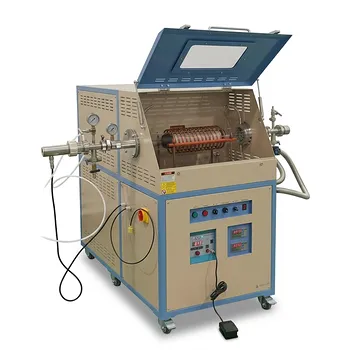
Ultra High Temperature 2300C Induction Heated Graphite Tube Furnace with Infrared Control

High Temperature 1700C Tube Furnace with High Vacuum Turbomolecular Pump System and Multi Channel Mass Flow Controller Gas Mixer
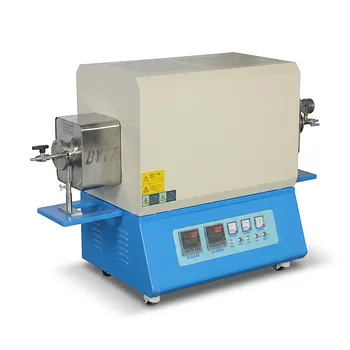
High Temperature Dual Zone Split Tube Furnace for Advanced Atmosphere Sintering and Vacuum CVD Applications
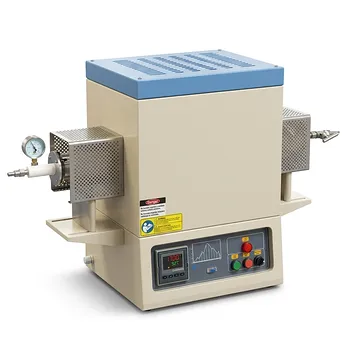
High Temperature Three Zone Tube Furnace 1700C with Alumina Tube and Water Cooled Flanges
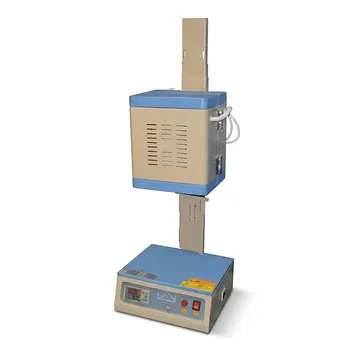
High Temperature Vertical Split Tube Furnace with PID Temperature Controller for 1 and 2 Inch Processing Tubes

1200°C 5 Inch Vertical Quartz Tube Furnace with Stainless Steel Vacuum Flanges
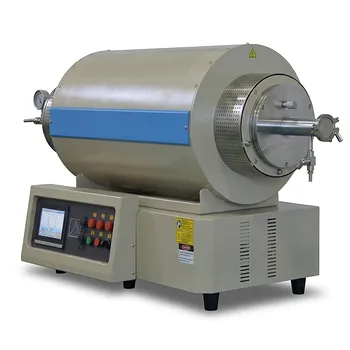
1200C Max Three Zone Tube Furnace 6 Inch OD Max with Tube and Flange

High Temperature 1700C Benchtop Tube Furnace with 5 Inch Heating Zone High Purity Alumina Tube and Vacuum Sealing Flanges

High Temperature Automated 5 Inch Tube Furnace for Autonomous Material Research and Advanced Laboratory R&D
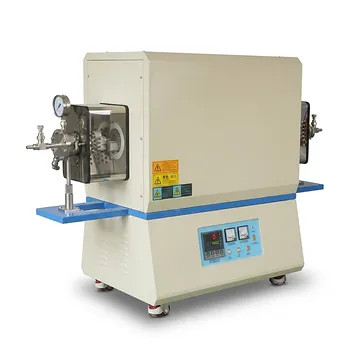
High Temperature 1800C Atmosphere Tube Furnace for CVD Research and Vacuum Sintering Precision Heat Treatment
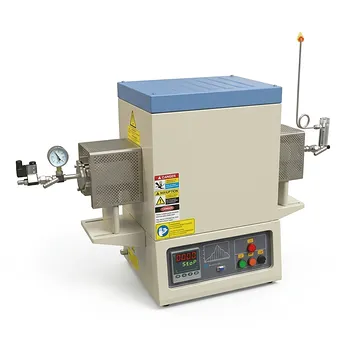
1700C Hydrogen Gas Tube Furnace with 60mm Alumina Process Tube and Integrated Hydrogen Safety Detector

Compact High Temperature 1600C Tube Furnace with 50mm Alumina Tube and Vacuum Flanges for Material Sintering
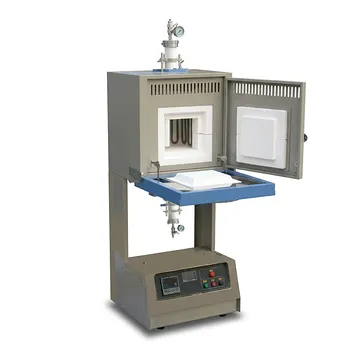
Vertical Hybrid High Temperature Furnace 1500C Alumina Tube SOFC Fuel Cell Testing Laboratory Heat Treatment Research Equipment

Vertical 1700C Vacuum and Atmosphere Tube Furnace with 80mm Alumina Tube
Split Vertical Tube Furnace with 1200C Quartz Tube and Stainless Steel Vacuum Flanges for Rapid Thermal Processing