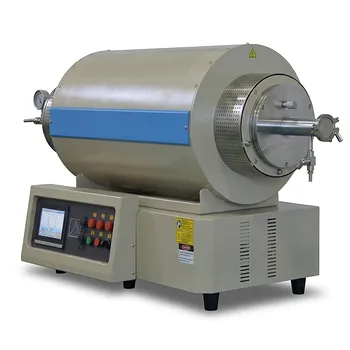
What conditions does a tube furnace provide for PBA to Co3ZnC@NC? Master precise material synthesis.
Updated 3 months ago
The atmosphere tube furnace acts as a controlled reactor providing two indispensable conditions: a precisely regulated thermal field (typically 700 °C) and a high-purity inert atmosphere (N2). These conditions drive the pyrolysis and in-situ reduction of the PBA precursors, enabling the formation of nitrogen-doped carbon-encapsulated carbides while preventing unwanted oxidation of active metal components.
The core function of the tube furnace is to provide the energy required for chemical decomposition while strictly excluding oxygen. This dual-control mechanism ensures that organic ligands transform into a nitrogen-doped carbon matrix that successfully encapsulates metallic carbides.
The Role of Controlled Thermal Fields in Material Synthesis
Driving Pyrolysis and Thermal Decomposition
The furnace provides a stable high-temperature environment that facilitates the pyrolysis of the metal-organic framework skeleton. At temperatures like 700 °C, the organic ligands within the PBA precursors undergo thermal decomposition. This process is the foundation for creating the nitrogen-doped porous carbon matrix that characterizes the final composite.
Facilitating In-Situ Reduction and Atomic Diffusion
Thermal energy provides the necessary power for atomic diffusion, allowing disordered atoms to rearrange into ordered structures. In the synthesis of Co3ZnC@NC, the furnace environment triggers the in-situ reduction of metal ions. This allows the metals to transition into their carbide forms while being simultaneously anchored within the carbon framework.
Managing Atom Aggregation
Precise control over the heating rate and holding time is critical for managing the physical distribution of metals. By maintaining specific thermal conditions, the furnace helps suppress the random aggregation of metal atoms. This ensures that the resulting metallic nanoparticles remain highly dispersed and encapsulated rather than forming large, inactive clumps.
Chemical Shielding and Phase Control through Atmosphere
Prevention of Oxidative Degradation
The maintenance of a high-purity nitrogen (N2) inert atmosphere is chemically essential to protect the material. At high temperatures, active metal components and carbon substrates are highly susceptible to oxidation. The furnace’s superior sealing and constant gas flow prevent the formation of unwanted metal oxides, preserving the integrity of the Co3ZnC phase.
Shaping the Core-Shell Architecture
The interaction between the thermal energy and the inert atmosphere facilitates the unique core-shell structure of the composite. As the organic components carbonize, the lack of oxygen allows the nitrogen to stay embedded within the carbon lattice. This results in a nitrogen-doped carbon shell that effectively encapsulates the carbide core, providing both stability and conductivity.
Creating a Reducing Environment
While N2 is commonly used for inertness, specific furnace setups can provide reducing atmospheres (such as Ar/H2 blends). These conditions further ensure that metal ions are reduced to their desired metallic or intermetallic states. This chemical environment is the "engine" that transforms the precursor into a functional catalyst.
Understanding the Trade-offs
Temperature Precision vs. Phase Purity
If the temperature is too low, the pyrolysis of the organic framework may be incomplete, leading to poor conductivity. Conversely, excessive temperatures can cause the collapse of the porous structure or the unwanted volatilization of zinc. Achieving the specific Co3ZnC@NC phase requires a narrow thermal window where reduction occurs without destroying the carbon morphology.
Atmosphere Purity and Sealing Risks
The primary risk in tube furnace operations is a breach in atmospheric integrity. Even trace amounts of oxygen leaking into the tube can cause the carbon framework to burn away or the metal carbides to convert into oxides. This necessitates rigorous monitoring of gas flow rates and the quality of the furnace seals.
How to Apply This to Your Synthesis Project
When utilizing an atmosphere tube furnace for precursor transformation, your operational strategy should align with your specific material goals:
- If your primary focus is high surface area: Use a moderate heating rate and a slightly lower carbonization temperature to prevent the pores from collapsing.
- If your primary focus is maximum graphitization: Prioritize higher temperatures (e.g., 800 °C - 900 °C) to increase the crystallinity of the nitrogen-doped carbon shell.
- If your primary focus is preventing metal leaching: Ensure a strict inert flow and a stable dwell time to guarantee that the carbon shell fully encapsulates the carbide core.
The precision of the tube furnace is the deciding factor in whether a precursor successfully evolves into a high-performance composite or fails as a bulk oxide.
Summary Table:
| Key Condition | Role in Synthesis | Material Outcome |
|---|---|---|
| Thermal Field (700°C) | Drives pyrolysis and in-situ reduction | Nitrogen-doped carbon matrix |
| Inert Atmosphere (N2) | Prevents oxidative degradation | Phase purity of metallic carbides |
| Precise Dwell Time | Manages atomic aggregation | Highly dispersed nanoparticles |
| Sealing Integrity | Protects core-shell architecture | Stable encapsulated structures |
Elevate Your Material Synthesis with THERMUNITS
Ready to achieve superior precision in your R&D projects?
At THERMUNITS, we understand that the success of complex transformations—like converting PBA precursors into high-performance composites—depends on absolute atmospheric integrity and thermal stability. As a leading manufacturer of high-temperature laboratory equipment, we provide the tools you need to prevent oxidation and master phase purity.
Our comprehensive range includes:
- Atmosphere & Tube Furnaces (Optimized for N2, Ar, and H2 environments)
- Vacuum & CVD/PECVD Systems for advanced thin-film and carbon research
- Muffle, Rotary, and Hot Press Furnaces for industrial-grade heat treatment
- Vacuum Induction Melting (VIM) and specialized Dental Furnaces
Contact our technical experts today to discuss how our thermal processing solutions can enhance your laboratory’s efficiency and research outcomes.
References
- Xiangyu Tan, Xin Cai. Cobalt–zinc carbides embedded in N-doped porous carbon nanospheres as polysulfide mediators for efficient lithium–sulfur batteries. DOI: 10.1039/d4ra04657a
Mentioned Products
- Vertical 1700C Vacuum and Atmosphere Tube Furnace with 80mm Alumina Tube
- 1200C Hybrid Muffle and Tube Furnace for Material Research with Dual Atmosphere Control Quartz Tubes
- 1200°C Atmosphere Controlled Automatic Bottom Loading Furnace with 6 Inch Quartz Tube
- Compact Hybrid Muffle and Tube Furnace for 1000C Controlled Atmosphere Laboratory Material Sintering
- Compact Vertical Split Quartz Tube Furnace with Stainless Steel Vacuum Flanges for Rapid Thermal Quenching and Controlled Atmosphere Material Processing
People Also Ask
- How is an industrial-grade vertical tube furnace utilized in smelting leaching residues? Enhance Metal Recovery Efficiency
- What is the function of a laboratory-grade vertical tube furnace in fast pyrolysis? Optimize Composite Research.
- How does a vertical tube furnace facilitate thermoelectric alloy melting? Precision synthesis for material homogeneity.
- Why is a thermocouple sensor indispensable for monitoring the vertical tube furnace during gallium oxide nanowire production? Optimize VLS Growth
- What are the advantages of using a vertical tube furnace for crucible experiments simulating steel-slag interactions?

Tech Team · ThermUnits
Last updated on Jun 03, 2026
Related Products

Vertical 1700C Vacuum and Atmosphere Tube Furnace with 80mm Alumina Tube
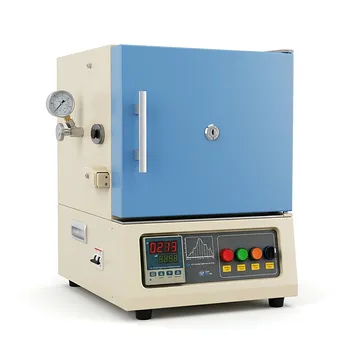
1200C Hybrid Muffle and Tube Furnace for Material Research with Dual Atmosphere Control Quartz Tubes
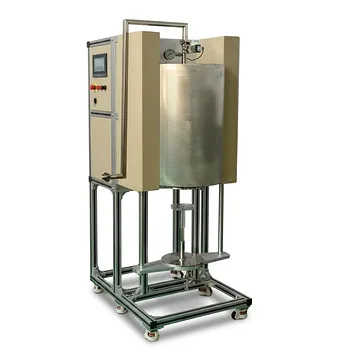
1200°C Atmosphere Controlled Automatic Bottom Loading Furnace with 6 Inch Quartz Tube
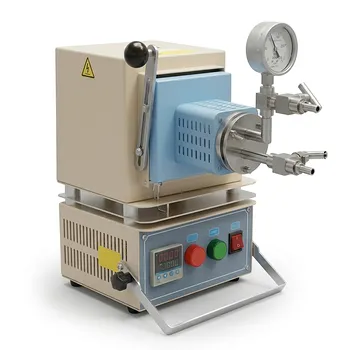
Compact Hybrid Muffle and Tube Furnace for 1000C Controlled Atmosphere Laboratory Material Sintering

Compact Vertical Split Quartz Tube Furnace with Stainless Steel Vacuum Flanges for Rapid Thermal Quenching and Controlled Atmosphere Material Processing

Three Zone Tube Furnace with 11 Inch or 15 Inch Quartz Tube and Hinged Flanges for Vacuum Atmosphere Heat Treatment
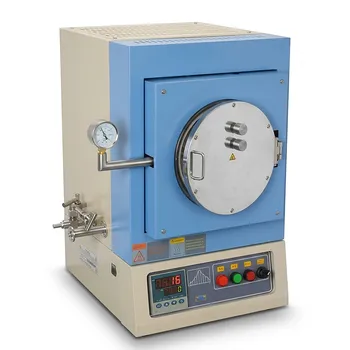
1100°C High Temperature Quartz Chamber Furnace 8 Inch OD with 7.6 Liter Capacity and Vacuum Atmosphere Capability
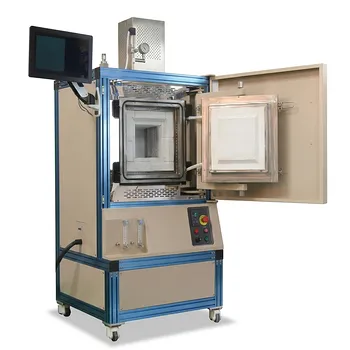
High Temperature Hydrogen Atmosphere Box Furnace 1650C Max Reducing Environment Material Synthesis System 8x8x8 Chamber

High Temperature 1700C Vertical Tube Furnace for Powder Spherification and Material Sintering

Compact High Temperature 1600C Tube Furnace with 50mm Alumina Tube and Vacuum Flanges for Material Sintering

High Temperature 1700C Tube Furnace with High Vacuum Turbomolecular Pump System and Multi Channel Mass Flow Controller Gas Mixer

High Temperature 1700C Six Zone Split Tube Furnace with Alumina Tube and Water Cooled Flanges

1800C High Temperature Compact Vacuum Tube Furnace with 60mm OD Alumina Tube and Kanthal MoSi2 Heating Elements

1100C Tube Furnace with Vacuum Flange and Programmable Temperature Controller for Material Science and Industrial Heat Treatment
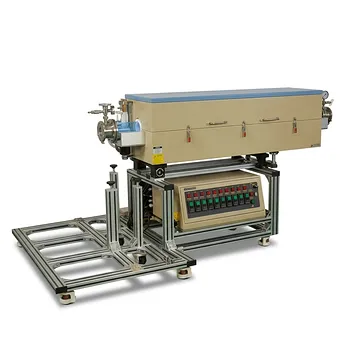
Ten Zone Multi Orientation Laboratory Tube Furnace for 1200C High Temperature Gradient Thermal Processing

High Temperature 1700C Benchtop Tube Furnace with 5 Inch Heating Zone High Purity Alumina Tube and Vacuum Sealing Flanges
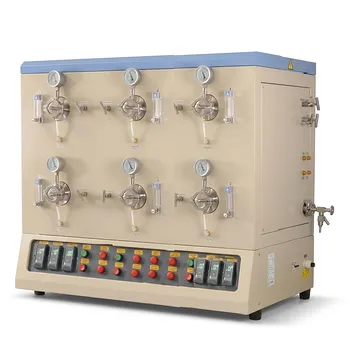
1200C High Throughput Multi Channel Tube Furnace with 50mm Quartz Tubes for Annealing and Material Phase Diagram Research

High Temperature Automated 5 Inch Tube Furnace for Autonomous Material Research and Advanced Laboratory R&D
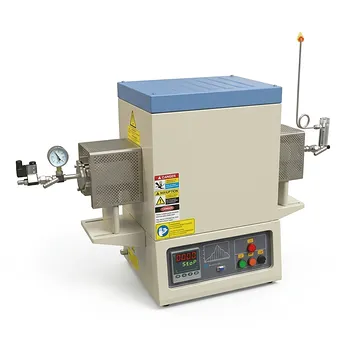
1700C Hydrogen Gas Tube Furnace with 60mm Alumina Process Tube and Integrated Hydrogen Safety Detector