What critical experimental conditions does an atmosphere tube furnace provide during the heat treatment of MoO2@HCNF?
Updated 3 months ago
The atmosphere tube furnace provides a strictly controlled inert environment and precise temperature programming necessary to transform precursor materials into MoO2@HCNF. Specifically, it facilitates the simultaneous carbonization of the shell polymer and the decomposition of the molybdenum source into MoO2 crystals while creating a hollow core through controlled decomposition, all while preventing material oxidation.
Core Takeaway: The atmosphere tube furnace acts as a hermetically sealed reactor that synchronizes chemical decomposition and structural formation. It ensures that MoO2@HCNF achieves its desired hollow morphology and high phase purity by isolating the material from atmospheric oxygen during high-temperature thermal processing.
Maintaining Chemical Purity through Inert Isolation
Prevention of Active Material Oxidation
The most critical function of the furnace is its airtight design, which allows for the complete displacement of oxygen. By maintaining a flowing nitrogen (N2) atmosphere, the furnace prevents the molybdenum source and the resulting MoO2 from reacting with oxygen to form undesired oxides.
Protection of the Carbon Skeleton
During the high-temperature phase, the carbonized shell is highly susceptible to combustion if even trace amounts of oxygen are present. The furnace ensures the high purity of the electrode material by providing a stable, non-reactive environment that preserves the integrity of the carbon nanofibers.
Precision Control of Structural Transformation
Targeted Temperature Programming
The synthesis of MoO2@HCNF requires specific thermal profiles, such as maintaining a constant 600 degrees Celsius. High-precision control systems allow for specific heating rates and isothermal stages, which are essential for the material to complete its phase transition under exact thermodynamic conditions.
Facilitating the "Hollow" Morphology
The tube furnace provides the thermal energy required for the core material to decompose, which is the mechanism that creates the internal hollow cavity. This occurs simultaneously with the carbonization of the outer shell polymer, a process that requires the furnace to provide a stable thermal field to avoid structural collapse.
Regulation of Crystal Growth
By controlling the duration and intensity of the heat treatment, the furnace promotes the decomposition of metal precursors into active oxide phases. This ensures that the MoO2 crystals are distributed correctly within the carbon framework, which is vital for the material’s performance as an electrode.
Understanding the Trade-offs and Challenges
Flow Rate vs. Temperature Uniformity
While a high flow rate of nitrogen ensures a pure atmosphere, it can create thermal gradients within the tube. If the gas is not pre-heated or the flow is too aggressive, it may lead to uneven carbonization or localized variations in crystal quality across the sample boat.
Seal Integrity at High Temperatures
The reliance on an airtight environment means that the integrity of the furnace seals (often O-rings or vacuum flanges) is a single point of failure. At temperatures near 600°C or higher, any minor leak can introduce oxygen, leading to the unintentional oxidation of the molybdenum species and a loss of electrochemical performance.
How to Apply These Conditions to Your Synthesis
Effective heat treatment requires balancing the atmosphere's purity with the precision of the temperature ramp. Use the following guidelines based on your specific synthesis goals:
- If your primary focus is Phase Purity: Ensure the furnace gas path is purged with high-purity nitrogen for at least 30 minutes prior to heating to eliminate all residual oxygen.
- If your primary focus is Hollow Morphology: Focus on the ramp rate; a slower temperature increase allows the core to decompose and escape through the shell without rupturing the carbon structure.
- If your primary focus is Defect Engineering: Use the furnace's precise flow regulation to maintain a specific pressure, which can help in regulating oxygen vacancies or the doping state of the MoO2 crystals.
The atmosphere tube furnace is the fundamental tool for achieving the precise chemical stoichiometry and structural complexity required for high-performance MoO2@HCNF electrode materials.
Summary Table:
| Key Condition | Primary Function | Impact on MoO2@HCNF Synthesis |
|---|---|---|
| Inert Atmosphere (N2) | Oxygen displacement | Prevents oxidation of MoO2 and the carbon skeleton |
| Temperature Programming | Isothermal control (600°C) | Ensures precise phase transition and thermodynamic stability |
| Controlled Decomposition | Uniform thermal field | Facilitates core removal to create hollow morphology |
| Airtight Sealing | Vacuum-tight isolation | Maintains high chemical purity and prevents structural defects |
Optimize Your Advanced Material Synthesis with THERMUNITS
Achieving the precise stoichiometry and hollow structure required for high-performance electrode materials like MoO2@HCNF demands world-class thermal control. THERMUNITS is a leading manufacturer of high-temperature laboratory equipment dedicated to material science and industrial R&D.
We provide a comprehensive range of thermal processing solutions designed for precision and reliability, including:
- Atmosphere & Vacuum Tube Furnaces for targeted gas-phase reactions.
- Muffle & Chamber Furnaces for standard heat treatment.
- CVD/PECVD Systems for advanced thin-film and nanomaterial growth.
- Rotary Kilns, Hot Press Furnaces, and Vacuum Induction Melting (VIM) units for specialized industrial applications.
Whether you are focusing on phase purity, hollow morphology, or defect engineering, our equipment delivers the stable environment your research requires. Contact us today to discuss your project requirements!
References
- Na Feng, Bing Liu. Stable Structure and Fast Ion Diffusion: A Flexible MoO2@Carbon Hollow Nanofiber Film as a Binder-Free Anode for Sodium-Ion Batteries with Superior Kinetics and Excellent Rate Capability. DOI: 10.3390/polym16111452
Mentioned Products
- Vertical 1700C Vacuum and Atmosphere Tube Furnace with 80mm Alumina Tube
- 1200C Hybrid Muffle and Tube Furnace for Material Research with Dual Atmosphere Control Quartz Tubes
- 1200°C Atmosphere Controlled Automatic Bottom Loading Furnace with 6 Inch Quartz Tube
- Compact Hybrid Muffle and Tube Furnace for 1000C Controlled Atmosphere Laboratory Material Sintering
- Compact Vertical Split Quartz Tube Furnace with Stainless Steel Vacuum Flanges for Rapid Thermal Quenching and Controlled Atmosphere Material Processing
People Also Ask
- How is an industrial-grade vertical tube furnace utilized in smelting leaching residues? Enhance Metal Recovery Efficiency
- What is the function of a laboratory-grade vertical tube furnace in fast pyrolysis? Optimize Composite Research.
- How does a vertical tube furnace facilitate thermoelectric alloy melting? Precision synthesis for material homogeneity.
- Why is a thermocouple sensor indispensable for monitoring the vertical tube furnace during gallium oxide nanowire production? Optimize VLS Growth
- What are the advantages of using a vertical tube furnace for crucible experiments simulating steel-slag interactions?

Tech Team · ThermUnits
Last updated on Jun 02, 2026
Related Products

Vertical 1700C Vacuum and Atmosphere Tube Furnace with 80mm Alumina Tube
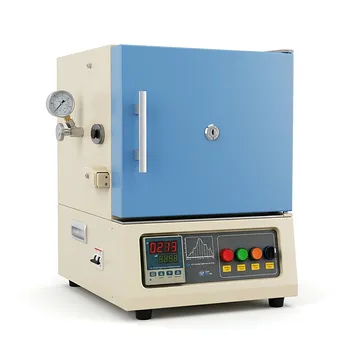
1200C Hybrid Muffle and Tube Furnace for Material Research with Dual Atmosphere Control Quartz Tubes
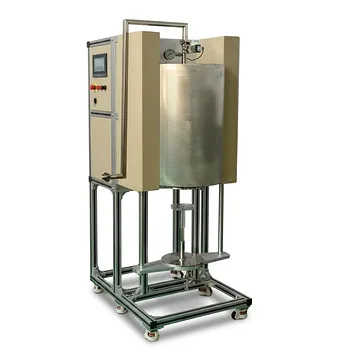
1200°C Atmosphere Controlled Automatic Bottom Loading Furnace with 6 Inch Quartz Tube
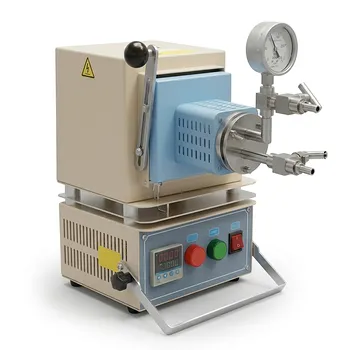
Compact Hybrid Muffle and Tube Furnace for 1000C Controlled Atmosphere Laboratory Material Sintering

Compact Vertical Split Quartz Tube Furnace with Stainless Steel Vacuum Flanges for Rapid Thermal Quenching and Controlled Atmosphere Material Processing

Three Zone Tube Furnace with 11 Inch or 15 Inch Quartz Tube and Hinged Flanges for Vacuum Atmosphere Heat Treatment
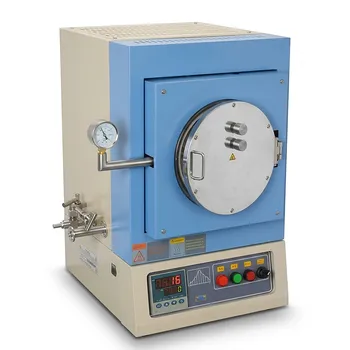
1100°C High Temperature Quartz Chamber Furnace 8 Inch OD with 7.6 Liter Capacity and Vacuum Atmosphere Capability
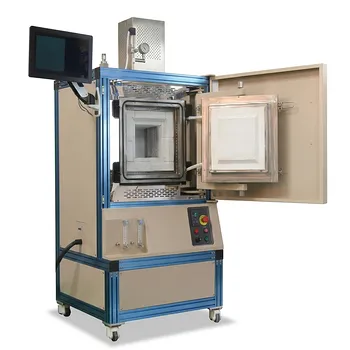
High Temperature Hydrogen Atmosphere Box Furnace 1650C Max Reducing Environment Material Synthesis System 8x8x8 Chamber

High Temperature 1700C Vertical Tube Furnace for Powder Spherification and Material Sintering

Compact High Temperature 1600C Tube Furnace with 50mm Alumina Tube and Vacuum Flanges for Material Sintering

High Temperature 1700C Tube Furnace with High Vacuum Turbomolecular Pump System and Multi Channel Mass Flow Controller Gas Mixer

High Temperature 1700C Six Zone Split Tube Furnace with Alumina Tube and Water Cooled Flanges

1800C High Temperature Compact Vacuum Tube Furnace with 60mm OD Alumina Tube and Kanthal MoSi2 Heating Elements

1100C Tube Furnace with Vacuum Flange and Programmable Temperature Controller for Material Science and Industrial Heat Treatment
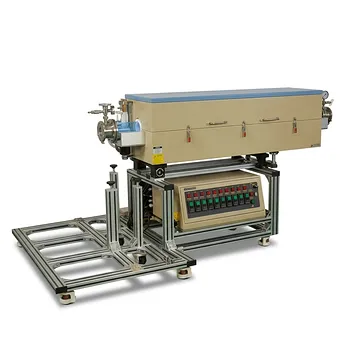
Ten Zone Multi Orientation Laboratory Tube Furnace for 1200C High Temperature Gradient Thermal Processing

High Temperature 1700C Benchtop Tube Furnace with 5 Inch Heating Zone High Purity Alumina Tube and Vacuum Sealing Flanges

1200C High Throughput Multi Channel Tube Furnace with 50mm Quartz Tubes for Annealing and Material Phase Diagram Research

High Temperature Automated 5 Inch Tube Furnace for Autonomous Material Research and Advanced Laboratory R&D
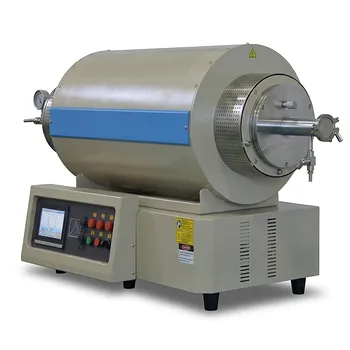
1200C Max Three Zone Tube Furnace 6 Inch OD Max with Tube and Flange
