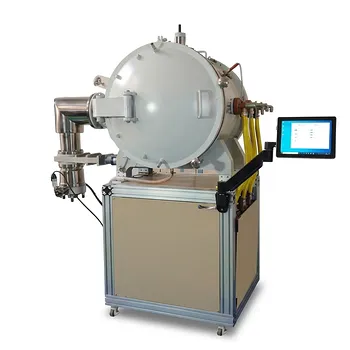
What is the critical role of a high-vacuum oven in the processing of battery electrode coatings? Maximize Cell Stability.
Updated 3 months ago
The high-vacuum oven is the essential technical tool used to eliminate residual solvents and trace moisture from battery electrode coatings after they are applied to current collectors. By combining heat with a low-pressure environment, these ovens ensure the complete removal of high-boiling-point solvents like N-Methyl-2-pyrrolidone (NMP). This process is fundamental to preventing internal side reactions, maximizing adhesion, and ensuring the long-term stability of the battery cell.
Core Takeaway: High-vacuum ovens provide a controlled environment that removes volatile contaminants at reduced temperatures, safeguarding the electrode's structural integrity while preventing the oxidative degradation of sensitive materials.
Eliminating Chemical Volatiles and Moisture
The Complete Removal of High-Boiling-Point Solvents
Battery electrodes are typically coated using a slurry that includes NMP, a solvent with a high boiling point that is notoriously difficult to remove. A high-vacuum oven lowers the boiling point of these solvents, allowing them to evaporate completely without requiring extreme heat that could damage the binder.
Safeguarding Against Electrolyte Side Reactions
Residual solvents or moisture trapped within the electrode pores can react with the electrolyte once the battery is assembled. These side reactions generate gas and consume active materials, leading to swelling, capacity loss, and potential safety hazards.
Critical Moisture Control for Advanced Chemistries
For moisture-sensitive technologies like sodium-ion batteries, even trace amounts of water can trigger electrolyte decomposition. Thorough vacuum drying is a prerequisite for achieving high Initial Coulombic Efficiency (ICE) and ensuring consistent cycling performance.
Optimizing the Physical Interface
Enhancing Adhesion and Conductivity
The vacuum environment significantly increases the adhesion strength between the active material and the current collector (aluminum or copper foil). This robust bond is critical for maintaining electrical conductivity and preventing the delamination of the coating during the mechanical stresses of charging and discharging.
Ensuring Pore Purity for Electrolyte Wetting
By clearing the microscopic pores of the electrode of all residual molecules, the vacuum oven ensures the purity of the internal structure. This allows the liquid electrolyte to fully infiltrate and "wet" the micropores, which is essential for rapid ion transport and high power density.
Preserving Surface Integrity
Processing in a vacuum prevents the surface oxidation of carbon materials and metal foils that would otherwise occur in high-temperature air. Maintaining a clean, non-oxidized surface is vital for minimizing internal resistance and preserving the electrochemical activity of the electrode.
Understanding the Trade-offs
Balancing Temperature and Time
While vacuum ovens allow for lower drying temperatures (often around 60°C to 80°C), the process can be time-consuming. Shortening the cycle time by increasing the temperature risks oxidative degradation or "skinning" of the coating, where the surface dries too fast and traps solvent underneath.
Uniformity and Throughput Challenges
Maintaining uniform heat distribution in a vacuum is technically difficult because air cannot transfer heat via convection. Relying solely on conduction or radiation can lead to thermal gradients, meaning some electrodes in a batch may not be as dry as others, potentially leading to performance variations across a production lot.
Making the Right Choice for Your Goal
How to Apply This to Your Project
- If your primary focus is maximizing battery cycle life: Prioritize longer vacuum dwell times at moderate temperatures to ensure the absolute removal of trace moisture and NMP.
- If your primary focus is processing sodium-ion or high-nickel chemistries: Utilize high-precision vacuum drying to reach extremely low moisture levels, as these materials are hypersensitive to atmospheric humidity.
- If your primary focus is high-rate performance (power density): Ensure the vacuum level is sufficient to fully clear electrode micropores, facilitating rapid electrolyte infiltration and ion movement.
Proper implementation of high-vacuum drying is the definitive step in transforming a coated foil into a high-performance, stable electrochemical component.
Summary Table:
| Key Process Role | Technical Benefit | Impact on Battery Performance |
|---|---|---|
| Solvent Removal | Eliminates NMP and volatiles | Prevents swelling and internal gas generation |
| Moisture Control | Dehydrates sensitive chemistries | Boosts Initial Coulombic Efficiency (ICE) |
| Adhesion Promotion | Strengthens coating-foil bond | Enhances electrical conductivity and longevity |
| Pore Purification | Clears electrode microstructures | Facilitates rapid electrolyte wetting and ion flow |
| Surface Protection | Prevents oxidation in vacuum | Minimizes internal resistance and preserves activity |
Elevate Your Battery R&D with THERMUNITS
As a leading manufacturer of high-temperature laboratory equipment, THERMUNITS provides the precision thermal solutions required for advanced material science and industrial R&D. Our comprehensive range includes high-performance Vacuum Ovens, Muffle, Atmosphere, Tube, Rotary, and Hot Press furnaces, as well as CVD/PECVD systems, Dental Furnaces, and Vacuum Induction Melting (VIM) equipment.
Optimizing electrode drying is a definitive step in ensuring electrochemical stability. Let our experts help you select the ideal thermal processing solution to enhance your lab's efficiency and battery cell performance. Contact us today to explore our custom solutions!
References
- Jasreet Kaur, José A. Alarco. Sustainable Manufacturing of Graphitic Carbon from Bio‐Waste Using Flash Heating for Anode Material of Lithium‐Ion Batteries with Optimal Performance. DOI: 10.1002/adsu.202300610
Mentioned Products
- High Vacuum Compact Tube Furnace 1200C with Integrated Turbo Pump System and 8 Inch Heating Zone
- High Temperature Cold Wall High Vacuum Chamber Furnace 1400C for Advanced Material Processing
- High Temperature 1000C Vacuum Furnace with 8 Inch ID Chamber for Material Sintering and Research Annealing
- Ultra High Temperature Induction Heated Vacuum Furnace with Molten Salt Electrolysis Capability and 3000 Degree Precision Control
- High Temperature Vacuum Lamination Hot Press Furnace Machine for Semiconductor Wafer Bonding and Advanced Composite Thermal Processing
People Also Ask
- What core functions does a high-temperature vacuum tube furnace provide? Optimize np-CuSn Sintering & Joint Integrity
- What is the primary function of a high vacuum tube furnace in the in-situ grain growth experiments of silicon steel?
- Why is a high-vacuum tube furnace required for the pyrolysis phase of BCMoMn electrocatalysts? Key for Catalyst Precision
- What are the functions of a tube furnace in PCC annealing? Optimize Carbonization & Porosity
- What is the Role of Vacuum Tube Furnaces in Ti1-xAlxN Research? Master Age Hardening & Stability

Tech Team · ThermUnits
Last updated on Jun 02, 2026
Related Products
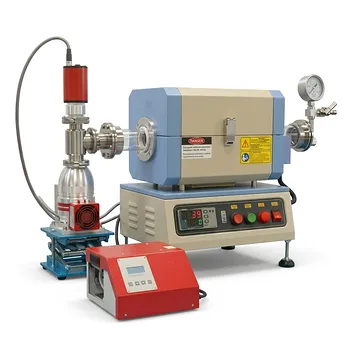
High Vacuum Compact Tube Furnace 1200C with Integrated Turbo Pump System and 8 Inch Heating Zone
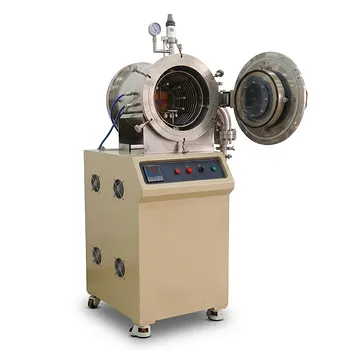
High Temperature Cold Wall High Vacuum Chamber Furnace 1400C for Advanced Material Processing
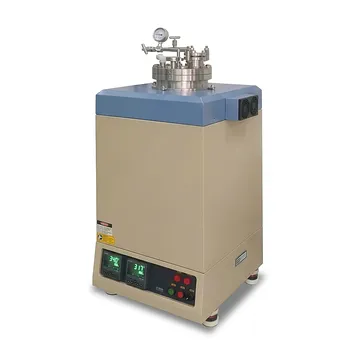
High Temperature 1000C Vacuum Furnace with 8 Inch ID Chamber for Material Sintering and Research Annealing
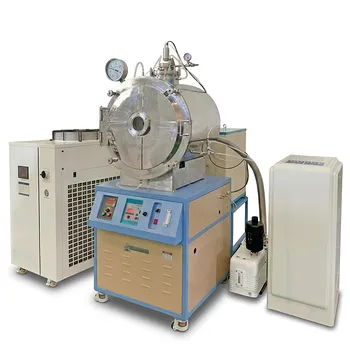
Ultra High Temperature Induction Heated Vacuum Furnace with Molten Salt Electrolysis Capability and 3000 Degree Precision Control
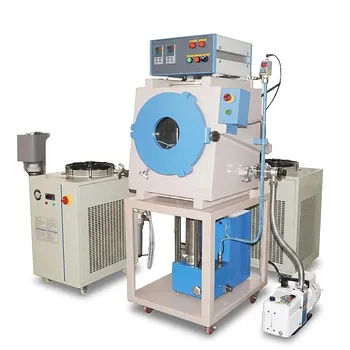
High Temperature Vacuum Lamination Hot Press Furnace Machine for Semiconductor Wafer Bonding and Advanced Composite Thermal Processing
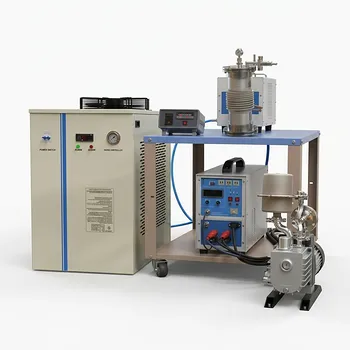
Induction Heating System with Temperature Control for High Temperature Vacuum Sintering and Melting
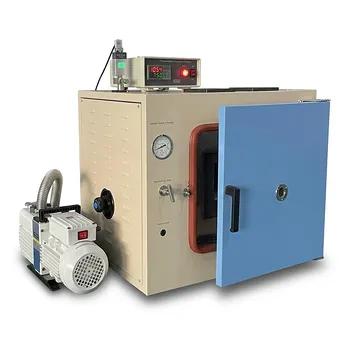
Compact High Vacuum Box Furnace 1050C Max 6.2L Ceramic Chamber Stainless Steel Shell Programmable Temperature Controller for Material Science Research