What is the Role of Vacuum Tube Furnaces in Ti1-xAlxN Research? Master Age Hardening & Stability
Updated 3 months ago
A high vacuum tube furnace is the essential instrument for inducing and observing the metastable phase evolution of wurtzite $Ti_{1-x}Al_xN$ thin films. It provides the precise high-temperature environment (typically 950°C to 1200°C) required to supply activation energy for atomic diffusion, which triggers spinodal decomposition. This controlled process leads to the formation of nanoscale titanium-rich and aluminum-rich domains, directly enabling the study of age hardening and thermal stability without the interference of surface oxidation.
Core Takeaway: The high vacuum tube furnace acts as a controlled thermal laboratory that isolates internal structural transformations from environmental factors. By driving spinodal decomposition in a contaminant-free environment, it allows researchers to quantify how nanoscale phase separations enhance the hardness and durability of $Ti_{1-x}Al_xN$ coatings.
Facilitating Controlled Atomic Diffusion
The Role of Activation Energy
In wurtzite $Ti_{1-x}Al_xN$ systems, the thin films are often deposited in a metastable state that requires external energy to transition toward equilibrium. The tube furnace provides a steady thermal load that supplies the activation energy necessary for atoms to migrate within the lattice structure.
Initiating Spinodal Decomposition
As the temperature rises within the furnace, the supersaturated solid solution undergoes spinodal decomposition. This is a spontaneous mechanism where the film separates into coherent, nanoscale Ti-rich and Al-rich domains, which is the fundamental driver of the age hardening effect.
Mapping Phase Transformation Pathways
By utilizing isothermal annealing at specific intervals, researchers can use the furnace to map the transformation pathways of the film. This helps identify the exact temperature thresholds where the material transitions from a single-phase wurtzite structure to a complex, hardened nanocomposite.
Preserving Material Integrity through Vacuum Isolation
Preventing Surface Oxidation
At the high temperatures required for $Ti_{1-x}Al_xN$ study (often exceeding 1000°C), titanium and aluminum are highly reactive with oxygen. A high vacuum environment (often below $10^{-3}$ Pa or $10^{-6}$ mbar) is critical to ensure that the observed changes are due to intrinsic structural evolution rather than the formation of surface oxides.
Eliminating Impurity Contamination
The vacuum state removes residual gases that could lead to interstitial contamination, which would skew hardness measurements. This isolation allows for a "clean" look at how internal grain growth and phase separation affect the mechanical properties of the coating.
Simulating Extreme Industrial Environments
High vacuum furnaces can also be used to simulate the refractory conditions encountered in industrial cutting or aerospace applications. By maintaining stable pressure and temperature, the furnace proves whether the thin film can maintain its piezoelectric or mechanical performance near its melting or decomposition limits.
Understanding the Trade-offs
Thermal Gradient Challenges
While tube furnaces offer excellent isolation, maintaining temperature uniformity across the entire length of the tube can be difficult. If the sample is not placed in the "sweet spot" of the heating elements, the resulting phase transformation data may be inconsistent or inaccurate.
Throughput and Cooling Rates
Vacuum annealing is a time-intensive process because the furnace must be evacuated and then cooled slowly to prevent thermal shock or vacuum seal failure. This low throughput can be a bottleneck in research projects requiring a high volume of samples with varying annealing durations.
Equipment Sensitivity and Cost
Maintaining a high vacuum (low oxygen partial pressure) requires expensive pumping systems and rigorous maintenance. Any minor leak in the furnace seals at 1200°C can lead to the total oxidation of the $Ti_{1-x}Al_xN$ film, ruining the sample and potentially damaging the furnace interior.
How to Apply This to Your Project
Making the Right Choice for Your Goal
- If your primary focus is determining peak hardness: Use the furnace to conduct a series of isothermal anneals between 800°C and 1100°C to identify the exact point of maximum spinodal decomposition.
- If your primary focus is oxidation resistance: Compare the structural integrity of films annealed in a high vacuum versus those annealed in a low-purity inert gas environment.
- If your primary focus is industrial durability: Utilize the furnace for cyclic thermal testing to observe how the $Ti_{1-x}Al_xN$ lattice handles repeated expansion and contraction.
By precisely controlling the thermal and atmospheric variables, the high vacuum tube furnace transforms $Ti_{1-x}Al_xN$ from a simple coating into a high-performance, engineered material with predictable age-hardening characteristics.
Summary Table:
| Feature | Function in Research | Key Impact on Ti1-xAlxN Study |
|---|---|---|
| High Temperature | Supplies activation energy | Triggers spinodal decomposition of metastable phases |
| High Vacuum | Eliminates oxygen/impurities | Prevents surface oxidation; ensures intrinsic data |
| Isothermal Control | Thermal load stability | Maps phase transformation pathways and hardness peaks |
| Controlled Environment | Vacuum isolation | Simulates extreme industrial and refractory conditions |
Elevate Your Material Research with THERMUNITS
Precision is non-negotiable when studying the complex metastable phase evolution of $Ti_{1-x}Al_xN$ thin films. As a leading manufacturer of high-temperature laboratory equipment, THERMUNITS provides the advanced thermal processing solutions required for high-impact material science and industrial R&D.
Our comprehensive range of equipment includes high-precision Tube Furnaces, Vacuum and Atmosphere Furnaces, CVD/PECVD systems, Vacuum Induction Melting (VIM) furnaces, and Muffle Furnaces. We empower researchers to drive spinodal decomposition and quantify age hardening without the interference of contaminants.
Don't let oxidation or temperature fluctuations compromise your thin film integrity. Contact us today to find the perfect thermal solution for your laboratory and experience the THERMUNITS advantage in heat treatment excellence!
References
- J. Salamania, Magnus Odén. High temperature decomposition and age hardening of single-phase wurtzite <mml:math xmlns:mml="http://www.w3.org/1998/Math/MathML"><mml:mrow><mml:msub><mml:mi>Ti</mml:mi><mml:mrow><mml:mn>1</mml:mn><mml:mo>−</mml:mo><mml:mi>x</mml:mi></mml:mrow></mml:msub><mml:msub><mml:mi>Al</mml:mi><mml:mi>x</mml:mi></mml:msub><mml:mi mathvariant="normal">N</mml:mi></mml:mrow></mml:math> thin films grown by cathodic arc deposition. DOI: 10.1103/physrevmaterials.8.013602
Mentioned Products
- 1800C High Temperature Compact Vacuum Tube Furnace with 60mm OD Alumina Tube and Kanthal MoSi2 Heating Elements
- 1750°C High Temperature Benchtop Vacuum Atmosphere Tube Furnace with Kanthal Super 1800 Heating Elements and 60mm Alumina Processing Tube
- High Vacuum Compact Tube Furnace 1200C with Integrated Turbo Pump System and 8 Inch Heating Zone
- High Temperature 1700C Tube Furnace with High Vacuum Turbomolecular Pump System and Multi Channel Mass Flow Controller Gas Mixer
- 1200C High Temperature 5 Inch Split Vacuum Tube Furnace with 12 Inch Heating Zone and Separated PID Controller
People Also Ask
- What core functions does a high-temperature vacuum tube furnace provide? Optimize np-CuSn Sintering & Joint Integrity
- What is the primary function of a high-temperature tube furnace in Cu1-N-C synthesis? Precision Thermal Control.
- What impact does the heating rate of a tube furnace have on biochar microstructure? Optimize Your Material R&D.
- Role of Tube Furnace in KNNLST Ceramic Synthesis: Achieve High Phase Purity and Thermal Uniformity
- What is the role of a high-temperature tube furnace in the preparation of S-C3N4? Master Precision Material Synthesis

Tech Team · ThermUnits
Last updated on Jun 03, 2026
Related Products

1800C High Temperature Compact Vacuum Tube Furnace with 60mm OD Alumina Tube and Kanthal MoSi2 Heating Elements
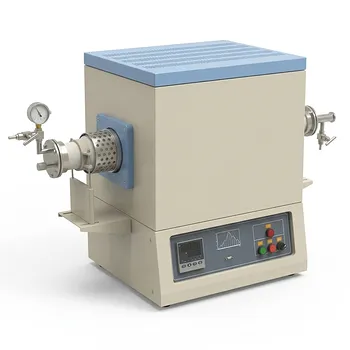
1750°C High Temperature Benchtop Vacuum Atmosphere Tube Furnace with Kanthal Super 1800 Heating Elements and 60mm Alumina Processing Tube
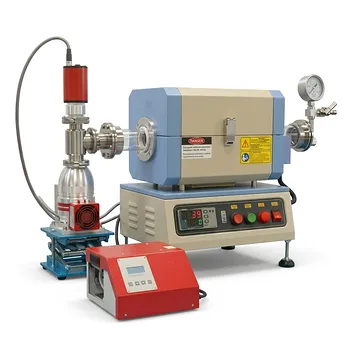
High Vacuum Compact Tube Furnace 1200C with Integrated Turbo Pump System and 8 Inch Heating Zone

High Temperature 1700C Tube Furnace with High Vacuum Turbomolecular Pump System and Multi Channel Mass Flow Controller Gas Mixer
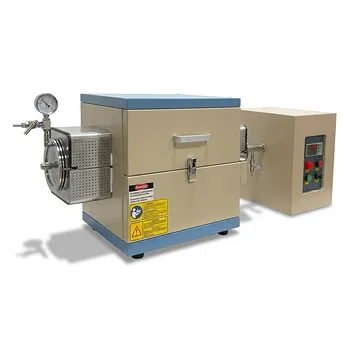
1200C High Temperature 5 Inch Split Vacuum Tube Furnace with 12 Inch Heating Zone and Separated PID Controller
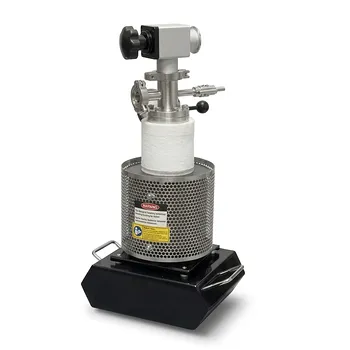
High Temperature 1100C Compact Top Loading Vertical Vacuum Tube Furnace for High Vacuum Noble Metal Melting and Material Research
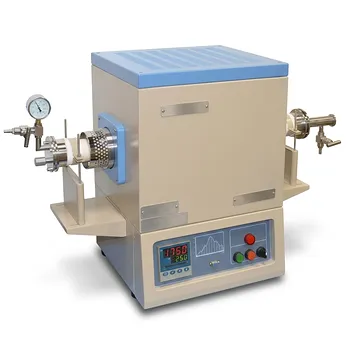
High Temperature Compact Vacuum Tube Furnace 1750C Max 60mm OD Alumina Tube
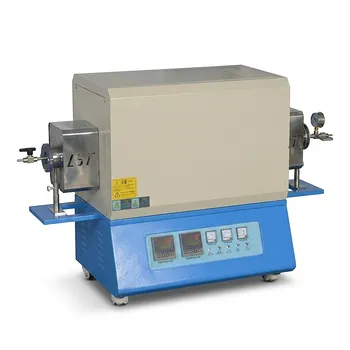
High Temperature Dual Zone Vacuum Tube Furnace for Material Research and CVD Processing

Compact High Temperature 1600C Tube Furnace with 50mm Alumina Tube and Vacuum Flanges for Material Sintering

High Temperature 1700C Benchtop Tube Furnace with 5 Inch Heating Zone High Purity Alumina Tube and Vacuum Sealing Flanges

High Temperature Automated 5 Inch Tube Furnace for Autonomous Material Research and Advanced Laboratory R&D
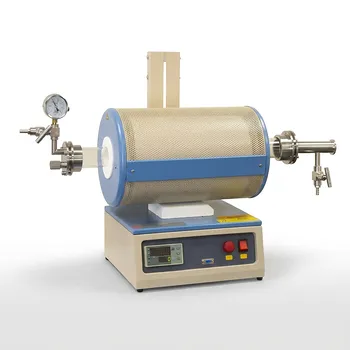
1100C Tube Furnace with Vacuum Flange and Programmable Temperature Controller for Material Science and Industrial Heat Treatment
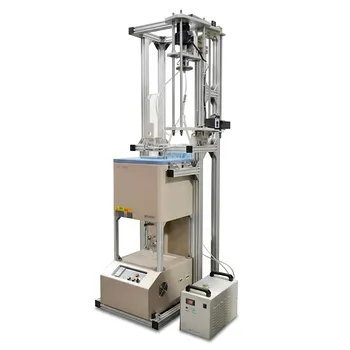
500C Vacuum Vertical Tube Furnace 84mm OD Sample Rotation Lifting System

High Temperature 1700C Vertical Tube Furnace for Powder Spherification and Material Sintering
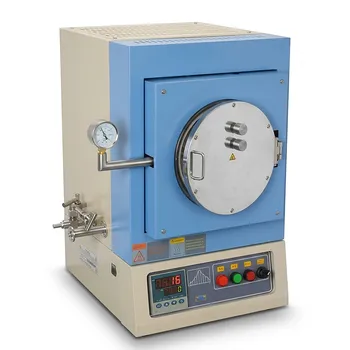
1100°C High Temperature Quartz Chamber Furnace 8 Inch OD with 7.6 Liter Capacity and Vacuum Atmosphere Capability
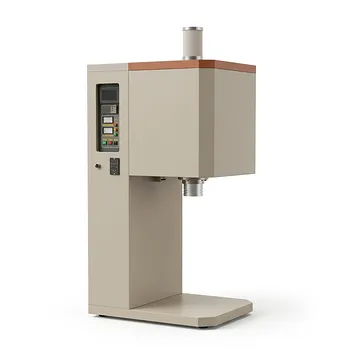
Vertical Openable Tube Furnace 0-1700c High Temperature Laboratory System for CVD and Vacuum Heat Treatment
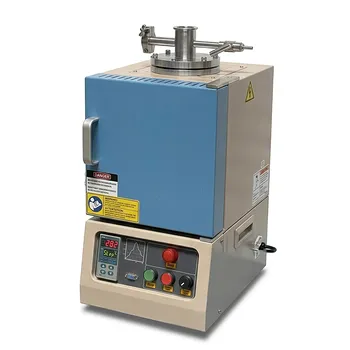
High Temperature Hybrid Muffle and Tube Furnace with Vacuum Capability and PID Control
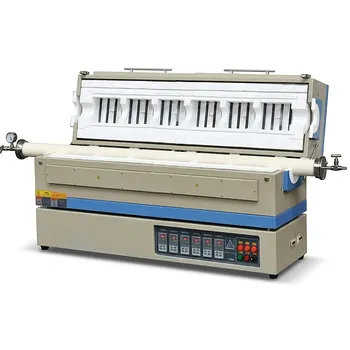
High Temperature 1700C Six Zone Split Tube Furnace with Alumina Tube and Water Cooled Flanges
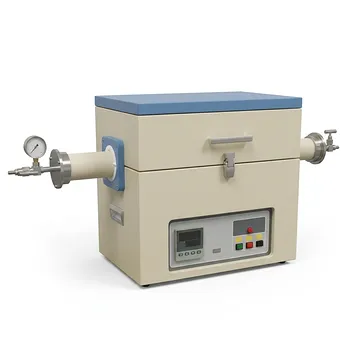
1250C Split Tube Furnace with 3 Inch Mullite Tube and Vacuum Sealing Flanges for Precision Thermal Processing
