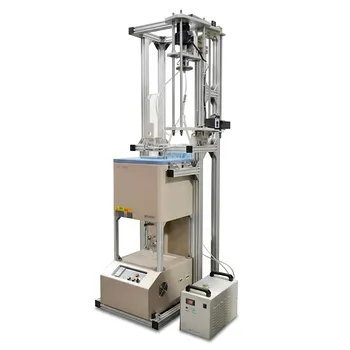
Why is a high-vacuum tube furnace required for the pyrolysis phase of BCMoMn electrocatalysts? Key for Catalyst Precision
Updated 3 months ago
A high-vacuum tube furnace is essential for BCMoMn pyrolysis because it provides a strictly oxygen-free environment and precise thermal regulation. This specialized equipment prevents the oxidative loss of the biomass carbon matrix while facilitating the delicate "in-situ" transformation of metal ions into high-performance catalytic phases.
Core Takeaway: The high-vacuum tube furnace serves as a controlled chemical reactor that protects the carbon backbone from combustion and dictates the precise atomic arrangement of Mo and Mn active sites, which is impossible in standard atmospheric conditions.
Protecting the Structural Integrity of the Catalyst
Prevention of Oxidative Carbon Loss
At the high temperatures required for pyrolysis, carbon materials react violently with oxygen to form CO2. A high-vacuum environment removes residual air, ensuring the biomass converts into a stable carbon matrix rather than burning away into ash.
Facilitating Carbonization over Combustion
By excluding oxygen, the furnace allows for the "aromatization" of the carbon structure. This process transforms raw organic precursors into conductive, nitrogen-doped carbon nanostructures that serve as the foundation for the electrocatalyst.
Regulation of Functional Groups
The stable, oxygen-limited environment allows for the precise regulation of surface functional groups. This control is vital for determining how the final biochar interacts with the metal ions during the synthesis process.
Engineering the Active Catalytic Sites
Precise Control of Heating Rates
The tube furnace allows for specific ramp rates, such as 3 °C/min, which are critical for guiding chemical transitions. Slow, controlled heating prevents the rapid aggregation of metals, allowing them to form stable Mo2C and Mn7C3 clusters instead of large, inactive particles.
Formation of Atomically Dispersed Sites
A key goal of BCMoMn synthesis is the creation of MnN4 active sites, where manganese is atomically dispersed within a nitrogen-doped lattice. The furnace provides the thermal energy necessary to overcome activation barriers, allowing metal atoms to anchor securely into nitrogen-doped defects.
Thermodynamic Phase Transformation
The furnace creates a "thermochemical environment" where precursors can undergo phase changes into active catalyst phases. This includes the reduction of metal ions and the effective doping of heteroatoms (like Nitrogen or Boron) into the carbon or metal lattice.
Understanding the Trade-offs
Equipment Sensitivity and Vacuum Integrity
The primary risk in using a high-vacuum tube furnace is the failure of seals or vacuum pumps. Even a microscopic leak can introduce enough oxygen to oxidize the metal sites or degrade the carbon support, ruining the entire catalyst batch.
Thermal Gradients and Uniformity
While tube furnaces provide stable environments, the "hot zone" must be carefully calibrated. If the sample is too large or poorly positioned, temperature gradients can lead to non-uniform catalyst activity, where some sections are over-calcined and others are under-processed.
Atmosphere Complexity
Maintaining a high vacuum is often paired with the introduction of specific gases (like Argon or H2). Managing the flow rates and purity of these gases adds a layer of operational complexity and cost compared to simpler muffle furnaces.
How to Apply This to Your Project
To achieve the best results with BCMoMn or similar electrocatalysts, consider your specific research or production objectives:
- If your primary focus is maximizing active site density: Use a slow heating rate (2-3 °C/min) and high-purity inert gas flow to ensure metal atoms anchor at defect sites without aggregating.
- If your primary focus is carbon matrix conductivity: Prioritize higher pyrolysis temperatures (above 800 °C) in a strict vacuum to increase the degree of graphitization and aromatization.
- If your primary focus is structural reproducibility: Ensure the sample is placed precisely in the center of the furnace's constant temperature zone and verify vacuum levels before starting the heating cycle.
By mastering the atmospheric and thermal variables of the tube furnace, you can precisely engineer the atomic landscape of your electrocatalyst for peak performance.
Summary Table:
| Key Feature | Impact on BCMoMn Pyrolysis |
|---|---|
| High-Vacuum Environment | Prevents oxidative carbon loss and ensures a stable carbon matrix. |
| Precise Thermal Control | Guides heating rates (e.g., 3°C/min) to prevent metal aggregation. |
| Controlled Atmosphere | Facilitates nitrogen-doping and formation of MnN4/Mo2C active sites. |
| Phase Transformation | Provides thermodynamic energy for reducing ions into catalytic phases. |
| Thermal Uniformity | Ensures consistent graphitization and structural reproducibility. |
Elevate Your Electrocatalyst Research with THERMUNITS
Achieving the delicate atomic balance required for high-performance BCMoMn electrocatalysts demands uncompromising thermal precision. THERMUNITS is a leading manufacturer of high-temperature laboratory equipment, providing the advanced thermal processing solutions essential for material science and industrial R&D.
Whether you are focusing on CVD/PECVD systems, Vacuum Induction Melting (VIM), or require specialized Vacuum, Atmosphere, or Tube furnaces for precise pyrolysis, our equipment ensures:
- Strict Atmosphere Integrity: Prevent unwanted oxidation with superior vacuum seals.
- Controlled Thermal Profiles: Achieve exact heating rates for atomically dispersed active sites.
- Reliable Performance: Uniform hot zones and durable heating elements for reproducible results.
Our comprehensive range also includes Muffle, Rotary, Hot Press, and Dental Furnaces, along with specialized Electric Rotary Kilns and high-quality Thermal Elements.
Ready to optimize your heat treatment process?
Contact THERMUNITS Today to discuss your specific research requirements and find the perfect thermal solution for your laboratory.
References
- Chengyu Zhang, Zhisheng Yu. Electronic configuration regulation of single-atomic Mn sites mediated by Mo/Mn clusters for an efficient hydrogen evolution reaction. DOI: 10.1039/d3sc06053e
Mentioned Products
- High Vacuum Compact Tube Furnace 1200C with Integrated Turbo Pump System and 8 Inch Heating Zone
- 1750°C High Temperature Benchtop Vacuum Atmosphere Tube Furnace with Kanthal Super 1800 Heating Elements and 60mm Alumina Processing Tube
- 1800C High Temperature Compact Vacuum Tube Furnace with 60mm OD Alumina Tube and Kanthal MoSi2 Heating Elements
- High Temperature 1700C Tube Furnace with High Vacuum Turbomolecular Pump System and Multi Channel Mass Flow Controller Gas Mixer
- High Temperature Compact Vacuum Tube Furnace 1750C Max 60mm OD Alumina Tube
People Also Ask
- What core functions does a high-temperature vacuum tube furnace provide? Optimize np-CuSn Sintering & Joint Integrity
- What is the primary function of a high vacuum tube furnace in the in-situ grain growth experiments of silicon steel?
- What are the functions of a tube furnace in PCC annealing? Optimize Carbonization & Porosity
- What is the Role of Vacuum Tube Furnaces in Ti1-xAlxN Research? Master Age Hardening & Stability
- What role does a High Vacuum Tube Furnace play in La2O2S synthesis? Achieve High Purity and Phase Stability

Tech Team · ThermUnits
Last updated on Jun 02, 2026
Related Products
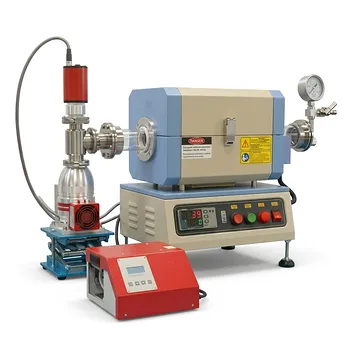
High Vacuum Compact Tube Furnace 1200C with Integrated Turbo Pump System and 8 Inch Heating Zone
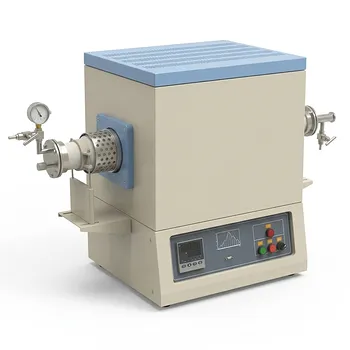
1750°C High Temperature Benchtop Vacuum Atmosphere Tube Furnace with Kanthal Super 1800 Heating Elements and 60mm Alumina Processing Tube

1800C High Temperature Compact Vacuum Tube Furnace with 60mm OD Alumina Tube and Kanthal MoSi2 Heating Elements

High Temperature 1700C Tube Furnace with High Vacuum Turbomolecular Pump System and Multi Channel Mass Flow Controller Gas Mixer
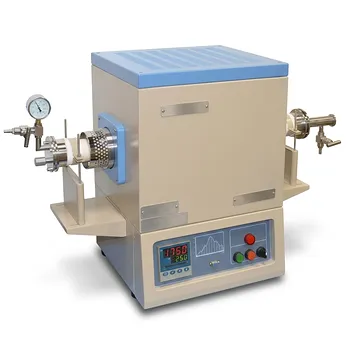
High Temperature Compact Vacuum Tube Furnace 1750C Max 60mm OD Alumina Tube
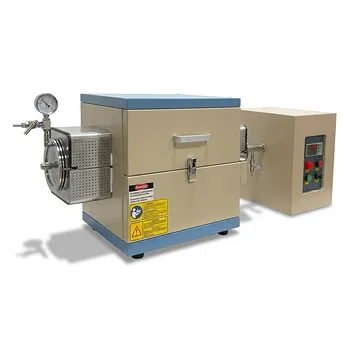
1200C High Temperature 5 Inch Split Vacuum Tube Furnace with 12 Inch Heating Zone and Separated PID Controller
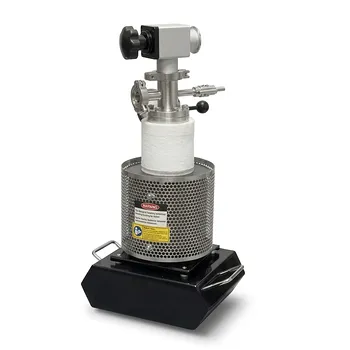
High Temperature 1100C Compact Top Loading Vertical Vacuum Tube Furnace for High Vacuum Noble Metal Melting and Material Research
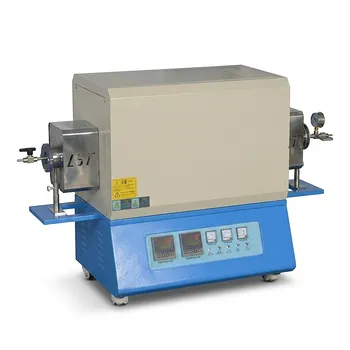
High Temperature Dual Zone Vacuum Tube Furnace for Material Research and CVD Processing

Compact High Temperature 1600C Tube Furnace with 50mm Alumina Tube and Vacuum Flanges for Material Sintering
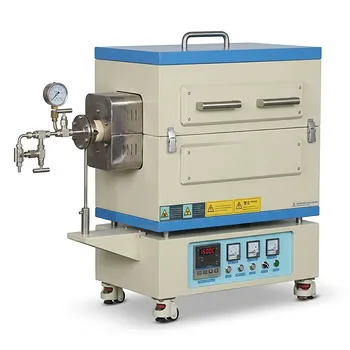
High Temperature Split Tube Furnace 1500C for Material Research Vacuum and Atmosphere Thermal Processing

High Temperature 1700C Benchtop Tube Furnace with 5 Inch Heating Zone High Purity Alumina Tube and Vacuum Sealing Flanges

High Temperature Automated 5 Inch Tube Furnace for Autonomous Material Research and Advanced Laboratory R&D
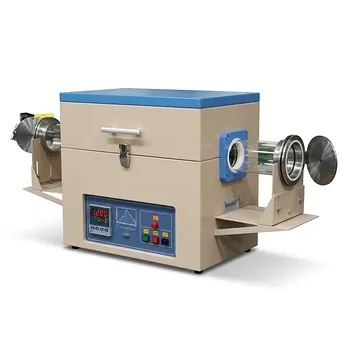
High Temperature 1200C Split Tube Furnace with Hinged Vacuum Flanges and 4 Inch Quartz Tube for Laboratory Research
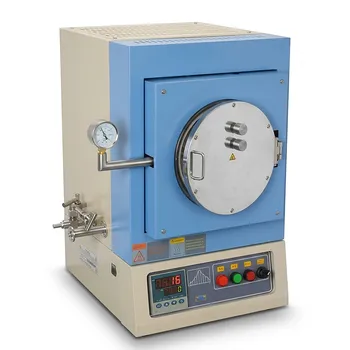
1100°C High Temperature Quartz Chamber Furnace 8 Inch OD with 7.6 Liter Capacity and Vacuum Atmosphere Capability

High Temperature 1700C Vertical Tube Furnace for Powder Spherification and Material Sintering
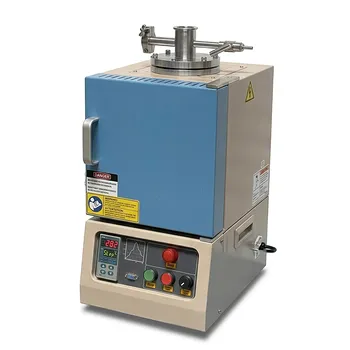
High Temperature Hybrid Muffle and Tube Furnace with Vacuum Capability and PID Control
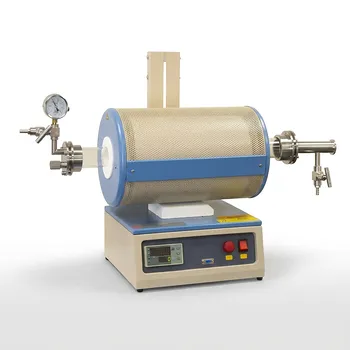
1100C Tube Furnace with Vacuum Flange and Programmable Temperature Controller for Material Science and Industrial Heat Treatment

Vertical 1700C Vacuum and Atmosphere Tube Furnace with 80mm Alumina Tube
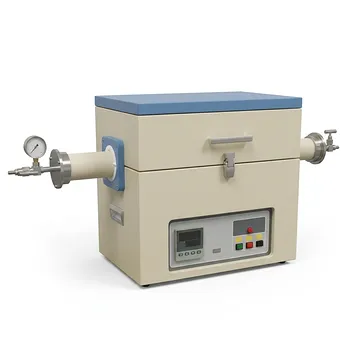
1250C Split Tube Furnace with 3 Inch Mullite Tube and Vacuum Sealing Flanges for Precision Thermal Processing