What is the primary function of a high vacuum tube furnace in the in-situ grain growth experiments of silicon steel?
Updated 3 months ago
The primary function of a high vacuum tube furnace in silicon steel research is to provide a pristine, high-temperature annealing environment that prevents surface oxidation. By maintaining a vacuum level of less than 1 x 10⁻⁴ Pa, the furnace eliminates atmospheric contaminants that would otherwise form reaction layers on the metal surface. This purity is essential for accurately simulating and tracking the physical processes of grain growth and texture differentiation without external chemical interference.
Core Takeaway: A high vacuum tube furnace ensures that grain boundary migration in silicon steel is driven solely by internal energetics rather than being inhibited by surface oxidation or reaction layers. It transforms the furnace from a simple heater into a precision instrument for fundamental metallurgical observation.
Preserving Surface Chemistry and Material Integrity
Prevention of Surface Oxidation
At high temperatures, silicon steel is highly reactive with oxygen, which can form a restrictive oxide scale. The high vacuum environment (less than 1 x 10⁻⁴ Pa) effectively removes these reactive gases from the heating chamber. This allows researchers to observe the true behavior of the metal surface throughout the entire thermal cycle.
Retention of Active Alloying Elements
Silicon steel often contains active elements like silicon and aluminum that are critical for its magnetic properties. High vacuum conditions prevent the oxidative loss of these elements, ensuring the sample maintains its precise chemical composition ratio. Maintaining this stoichiometry is vital for the results to be applicable to industrial-scale electrical steel production.
Elimination of Internal Gas Impurities
The furnace environment facilitates the "vacuum firing" effect, where dissolved gases like hydrogen or nitrogen are driven out of the bulk material. This degassing process results in a cleaner microstructure, which is necessary for high-precision in-situ measurements. By removing these impurities, researchers can ensure that experimental data reflects the material's intrinsic properties.
Facilitating Accurate Grain Boundary Dynamics
Eliminating Kinetic Interference
In standard atmospheres, surface reaction layers can act as physical pins that impede the movement of grain boundaries. By preventing these layers, the high vacuum furnace allows for an unhindered grain boundary migration rate. This creates a "clean room" for atoms, where the kinetics of grain growth are governed only by temperature and time.
Precise Control of Thermal Sequences
High-precision tube furnaces allow for the execution of complex temperature curves, including rapid heating and isothermal holding. This control is necessary to isolate specific stages of grain growth and texture differentiation. Stability in the thermal environment ensures that any observed changes in grain structure are due to the thermal program rather than fluctuations in the furnace.
Supporting In-Situ Observation
Because the surface remains clean and free of decarburization or scale, in-situ monitoring tools can gather accurate data. This is critical for techniques like thermal voltage measurement or diffraction, which require a direct "view" of the material's internal transformations. Without the high vacuum, the data collected would often reflect the characteristics of the oxide crust rather than the steel itself.
Understanding the Trade-offs and Technical Constraints
Risks of Elemental Sublimation
While high vacuum prevents oxidation, it can also lower the boiling point of certain alloying elements. At extremely high temperatures, there is a risk that volatile components may sublimate or evaporate from the sample surface. Researchers must balance the need for a deep vacuum with the vapor pressure limits of the specific steel alloy being studied.
Thermal Transfer Limitations
In a vacuum, heat transfer occurs primarily through radiation rather than conduction or convection. This can lead to slower heating rates or potential temperature gradients within larger or irregularly shaped samples. Ensuring thermal uniformity requires precise furnace design and careful placement of thermocouples near the silicon steel sample.
How to Apply This to Your Research Goal
Recommendations for Experimental Success
- If your primary focus is fundamental grain kinetics: Prioritize maintaining a vacuum level below 1 x 10⁻⁴ Pa to ensure that surface pinning by oxides is completely eliminated.
- If your primary focus is magnetic property optimization: Use the vacuum environment to strictly control the retention of silicon and aluminum while degassing impurities like nitrogen.
- If your primary focus is in-situ monitoring accuracy: Ensure the furnace stability is high enough to prevent thermal noise from distorting your microstructure transformation data.
By utilizing a high vacuum tube furnace, you remove the "environmental noise" of oxidation, allowing for a pure and repeatable study of how silicon steel grains evolve at the microscopic level.
Summary Table:
| Key Function | Technical Impact | Research Value |
|---|---|---|
| Oxidation Prevention | Vacuum level < 1 x 10⁻⁴ Pa | Ensures clean surfaces for true metallurgical observation. |
| Element Retention | Prevents loss of Si and Al | Maintains precise chemical stoichiometry for magnetic properties. |
| Vacuum Degassing | Removes H₂ and N₂ impurities | Eliminates internal gas interference in microstructure analysis. |
| Kinetic Freedom | Removes surface pinning layers | Allows unhindered grain boundary migration and growth studies. |
| Thermal Control | Precise PID programmed curves | Isolates specific stages of texture differentiation accurately. |
Elevate Your Material Science Research with THERMUNITS
As a leading manufacturer of high-temperature laboratory equipment, THERMUNITS provides the precision and reliability required for advanced metallurgical studies. Our specialized High Vacuum Tube Furnaces are designed to deliver the ultra-clean environments (up to 1 x 10⁻⁴ Pa) necessary for successful in-situ grain growth experiments in silicon steel and other sensitive alloys.
Beyond tube furnaces, we offer a comprehensive suite of thermal processing solutions for industrial R&D, including:
- Muffle & Atmosphere Furnaces for diverse heat treatments.
- Vacuum Induction Melting (VIM) & Hot Press Furnaces for advanced material synthesis.
- CVD/PECVD Systems for thin-film and carbon research.
- Rotary Kilns & Dental Furnaces tailored to specific industrial workflows.
Don't let atmospheric contamination compromise your data. Contact us today to discuss your research requirements with our technical experts and find the perfect thermal solution for your laboratory.
References
- Songtao Chang, Liang Zuo. Texture-Differentiated Grain Growth in Silicon Steel: Experiments and Modeling. DOI: 10.3390/ma17123037
Mentioned Products
- High Vacuum Compact Tube Furnace 1200C with Integrated Turbo Pump System and 8 Inch Heating Zone
- 1800C High Temperature Compact Vacuum Tube Furnace with 60mm OD Alumina Tube and Kanthal MoSi2 Heating Elements
- 1750°C High Temperature Benchtop Vacuum Atmosphere Tube Furnace with Kanthal Super 1800 Heating Elements and 60mm Alumina Processing Tube
- 1200C High Temperature 5 Inch Split Vacuum Tube Furnace with 12 Inch Heating Zone and Separated PID Controller
- High Temperature 1700C Tube Furnace with High Vacuum Turbomolecular Pump System and Multi Channel Mass Flow Controller Gas Mixer
People Also Ask
- What core functions does a high-temperature vacuum tube furnace provide? Optimize np-CuSn Sintering & Joint Integrity
- Why is a high-vacuum tube furnace required for the pyrolysis phase of BCMoMn electrocatalysts? Key for Catalyst Precision
- What are the functions of a tube furnace in PCC annealing? Optimize Carbonization & Porosity
- What is the Role of Vacuum Tube Furnaces in Ti1-xAlxN Research? Master Age Hardening & Stability
- What role does a High Vacuum Tube Furnace play in La2O2S synthesis? Achieve High Purity and Phase Stability

Tech Team · ThermUnits
Last updated on Jun 03, 2026
Related Products
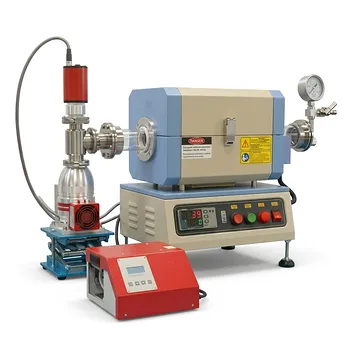
High Vacuum Compact Tube Furnace 1200C with Integrated Turbo Pump System and 8 Inch Heating Zone

1800C High Temperature Compact Vacuum Tube Furnace with 60mm OD Alumina Tube and Kanthal MoSi2 Heating Elements
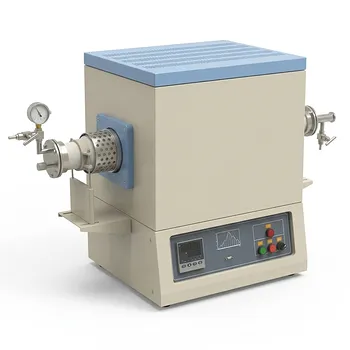
1750°C High Temperature Benchtop Vacuum Atmosphere Tube Furnace with Kanthal Super 1800 Heating Elements and 60mm Alumina Processing Tube
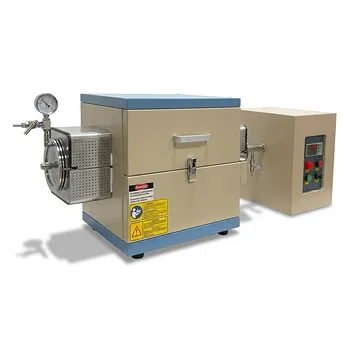
1200C High Temperature 5 Inch Split Vacuum Tube Furnace with 12 Inch Heating Zone and Separated PID Controller

High Temperature 1700C Tube Furnace with High Vacuum Turbomolecular Pump System and Multi Channel Mass Flow Controller Gas Mixer
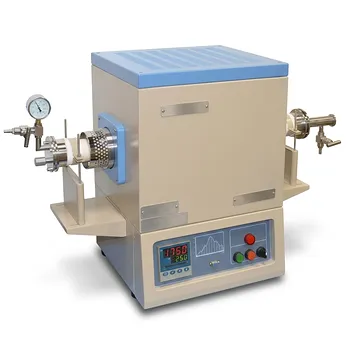
High Temperature Compact Vacuum Tube Furnace 1750C Max 60mm OD Alumina Tube
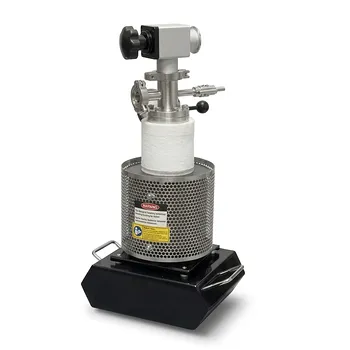
High Temperature 1100C Compact Top Loading Vertical Vacuum Tube Furnace for High Vacuum Noble Metal Melting and Material Research

Compact High Temperature 1600C Tube Furnace with 50mm Alumina Tube and Vacuum Flanges for Material Sintering
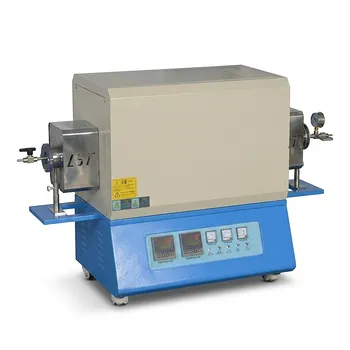
High Temperature Dual Zone Vacuum Tube Furnace for Material Research and CVD Processing
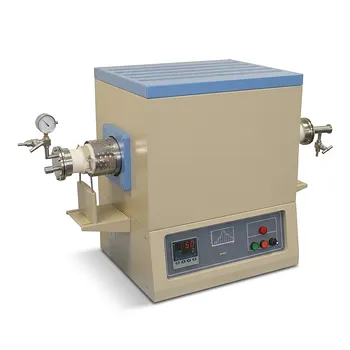
1700C High Temperature Alumina Tube Furnace with 18 Inch Heated Zone and Vacuum Sealing Flanges

High Temperature Automated 5 Inch Tube Furnace for Autonomous Material Research and Advanced Laboratory R&D
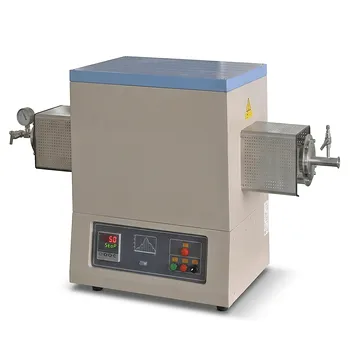
High Temperature 1700C Tube Furnace with 4 Inch OD Alumina Tube and Vacuum Sealing Flanges

High Temperature 1700C Benchtop Tube Furnace with 5 Inch Heating Zone High Purity Alumina Tube and Vacuum Sealing Flanges
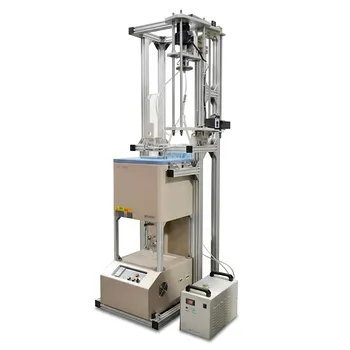
500C Vacuum Vertical Tube Furnace 84mm OD Sample Rotation Lifting System
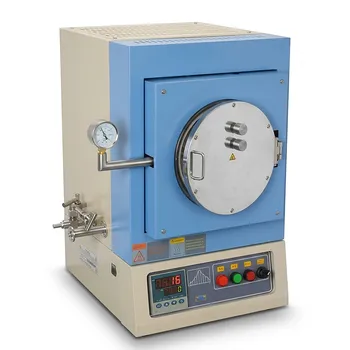
1100°C High Temperature Quartz Chamber Furnace 8 Inch OD with 7.6 Liter Capacity and Vacuum Atmosphere Capability
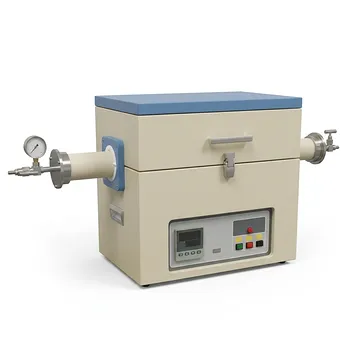
1250C Split Tube Furnace with 3 Inch Mullite Tube and Vacuum Sealing Flanges for Precision Thermal Processing
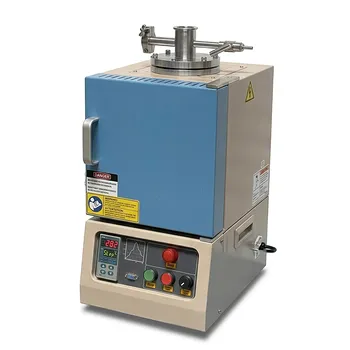
High Temperature Hybrid Muffle and Tube Furnace with Vacuum Capability and PID Control

1100C Tube Furnace with Vacuum Flange and Programmable Temperature Controller for Material Science and Industrial Heat Treatment

High Temperature 1700C Vertical Tube Furnace for Powder Spherification and Material Sintering
