What is the function of a tube resistance furnace in HIsmelt research? Precision Simulation for Smelting Kinetics
Updated 3 months ago
The tube resistance furnace functions as a high-precision thermal reactor that provides the controlled high-temperature environment necessary for simulating the HIsmelt smelting reduction process. Typically operating between 1475°C and 1525°C, it ensures that iron-bearing slag is completely melted and maintained at a constant temperature, providing the physical foundation for calculating kinetic parameters and reduction rates.
The tube resistance furnace is the critical infrastructure for HIsmelt research, enabling the isolation of temperature as a variable by maintaining a stable, isothermal reaction zone. This precision allows researchers to accurately observe the chemical kinetics of iron oxide reduction under conditions that mimic industrial smelting.
Providing a Controlled Thermal Foundation
Maintaining Isothermal Conditions
In kinetic research, temperature stability is paramount to ensuring that reaction rate data is not skewed by thermal fluctuations. The furnace establishes a stable thermal field distribution, which allows researchers to investigate how specific temperature increments directly impact the reduction rate of iron oxides.
Ensuring Complete Slag Liquefaction
The furnace reaches temperatures high enough (up to 1525°C) to ensure that iron-bearing slag reaches a fully molten state. This transition is essential for HIsmelt simulation, as the smelting reduction kinetics depend on the interaction between the liquid slag and the reducing agents.
High-Precision Temperature Regulation
Equipped with high-accuracy temperature control systems and silicon carbide heating elements, these furnaces minimize the temperature gradients that could lead to inconsistent data. This level of control is necessary for determining the activation energy and other fundamental kinetic properties of the smelting process.
Simulating the Complex Reaction Environment
Control of Atmospheric Composition
By using high-purity alumina reaction tubes, the furnace provides a chemically inert environment that can be flooded with complex gas mixtures like N2, CO, and CO2. This allows researchers to simulate the specific atmospheres found within a HIsmelt reactor while preventing unwanted side reactions with the equipment.
Sample Suspension and Positioning
Vertical tube furnace configurations often utilize suspension devices to place the sample precisely in the center of the constant temperature zone. This ensures that the entire sample experiences a uniform heat flux, which is critical for obtaining reliable metallization rate data.
Mechanical Interaction and Phase Freezing
Advanced vertical furnaces feature mechanical release devices that allow for instantaneous water quenching of samples. By dropping the sample from the high-temperature zone into a cooling medium, researchers can "freeze" the high-temperature phase equilibrium and microscopic structure for later analysis.
Understanding the Trade-offs
Thermal Gradients and Zone Limitations
While the furnace provides a stable thermal field, the "constant temperature zone" is physically limited to a specific length within the tube. If a sample is too large or improperly positioned, different parts of the material may experience temperature gradients, leading to non-uniform reduction and inaccurate kinetic modeling.
Material Compatibility and Contamination
Although high-purity alumina is thermally stable and chemically inert, it can still react with certain aggressive slags or vapors at extreme temperatures. Over time, the reaction tube may suffer from thermal shock or chemical erosion, which can introduce impurities into the experiment or lead to structural failure of the tube.
Scaling and Industrial Realism
A laboratory tube furnace is a static environment, whereas an actual HIsmelt plant is a highly dynamic system with significant turbulence. While the furnace is excellent for fundamental kinetic studies, it cannot fully replicate the fluid dynamics and mass transfer conditions of a full-scale industrial smelting vessel.
How to Apply This to Your Research
Implementing the Right Experimental Setup
When utilizing a tube resistance furnace for HIsmelt or similar metallurgical research, your approach should be dictated by your primary analytical goal.
- If your primary focus is Kinetic Accuracy: Prioritize a furnace with a long constant-temperature zone and high-precision PID controllers to ensure the reaction remains strictly isothermal.
- If your primary focus is Microstructural Analysis: Utilize a vertical configuration equipped with a quick-release quench mechanism to preserve the high-temperature phase equilibrium.
- If your primary focus is Atmospheric Impact: Ensure the use of high-purity alumina tubes and calibrated gas flow meters to precisely control the N2-CO-CO2 ratios during the reduction process.
By precisely controlling the thermal and chemical environment, the tube resistance furnace transforms complex smelting reactions into measurable, scientific data.
Summary Table:
| Feature | Function in HIsmelt Research | Research Benefit |
|---|---|---|
| Isothermal Control | Maintains stable 1475°C - 1525°C environment | Ensures accurate kinetic parameter and activation energy calculation |
| Atmosphere Regulation | Controls N2, CO, and CO2 gas mixtures | Accurately simulates industrial smelting reduction conditions |
| High-Purity Alumina | Provides a chemically inert reaction tube | Prevents sample contamination and withstands aggressive slag |
| Quenching Mechanism | Enables rapid mechanical sample release | "Freezes" high-temperature phases for microstructural analysis |
| Sample Positioning | Centers samples in the constant temperature zone | Ensures uniform heat flux and reliable metallization rate data |
Optimize Your Metallurgical Research with THERMUNITS Precision
Are you looking to achieve higher accuracy in your smelting reduction or material science experiments? THERMUNITS is a leading manufacturer of high-temperature laboratory equipment, providing the precision and reliability required for advanced industrial R&D.
Our extensive range of thermal processing solutions includes:
- Tube Furnaces & Rotary Kilns for precise kinetic studies.
- Muffle, Vacuum, and Atmosphere Furnaces for versatile heat treatment.
- CVD/PECVD Systems for advanced material synthesis.
- Vacuum Induction Melting (VIM) & Hot Press Furnaces for specialized metallurgy.
- Dental Furnaces & Thermal Elements for specific laboratory needs.
From simulating HIsmelt processes to developing new alloys, THERMUNITS delivers the thermal stability and atmospheric control your research demands.
Contact our technical experts today to find the perfect furnace for your lab!
References
- Zhenyang Wang, Song Zhang. Kinetics Analysis of Iron Oxide Reduction by Solid Carbon in HIsmelt Ironmaking Slag. DOI: 10.2355/isijinternational.isijint-2023-306
Mentioned Products
- Automated 1200 C Tube Furnace for AI Material Research with 6 Inch OD and Sliding Flange
- 1000C Mini Tube Furnace with 20mm Quartz Tube and Vacuum Flanges for Material Science Research and Controlled Atmosphere Small Sample Processing
- 1200C Hybrid Muffle and Tube Furnace for Material Research with Dual Atmosphere Control Quartz Tubes
- High Throughput 1200C Four Channel Tube Furnace with 3 Inch Quartz Tubes for Multi Zone Annealing and Material Research
- 1200C High Throughput Multi Channel Tube Furnace with 50mm Quartz Tubes for Annealing and Material Phase Diagram Research
People Also Ask
- Why is it necessary to heat a tube furnace to 900 °C for high-temperature burn-out? Ensure Data Precision & Longevity
- What are the technical advantages of using a tube-in-tube design within a tube furnace? Enhance Thin-Film Uniformity
- What are the advantages of Mesh Bias in Mist CVD? Improve Thin Film Quality & Uniformity.
- What is the primary role of a Tubular Furnace in the preparation of biochar? Precise Thermal Control for Biochar R&D
- What role does a Tubular Furnace play during the pyrolysis stage of BNBT-xBMN thin film preparation? Essential Insights

Tech Team · ThermUnits
Last updated on Jun 02, 2026
Related Products
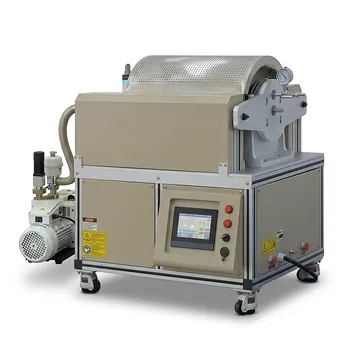
Automated 1200 C Tube Furnace for AI Material Research with 6 Inch OD and Sliding Flange
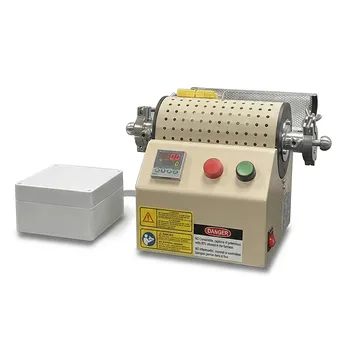
1000C Mini Tube Furnace with 20mm Quartz Tube and Vacuum Flanges for Material Science Research and Controlled Atmosphere Small Sample Processing
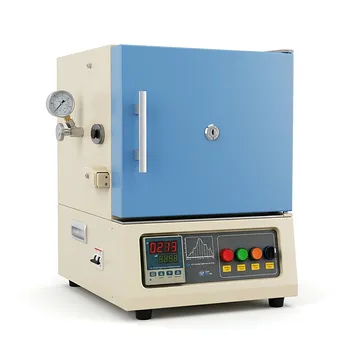
1200C Hybrid Muffle and Tube Furnace for Material Research with Dual Atmosphere Control Quartz Tubes
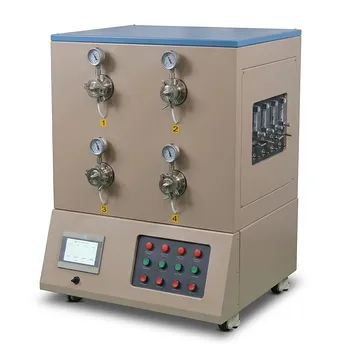
High Throughput 1200C Four Channel Tube Furnace with 3 Inch Quartz Tubes for Multi Zone Annealing and Material Research

1200C High Throughput Multi Channel Tube Furnace with 50mm Quartz Tubes for Annealing and Material Phase Diagram Research

High Temperature 1700C Vertical Tube Furnace for Powder Spherification and Material Sintering
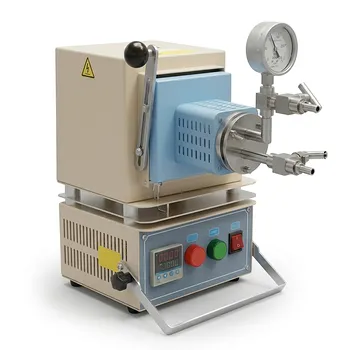
Compact Hybrid Muffle and Tube Furnace for 1000C Controlled Atmosphere Laboratory Material Sintering
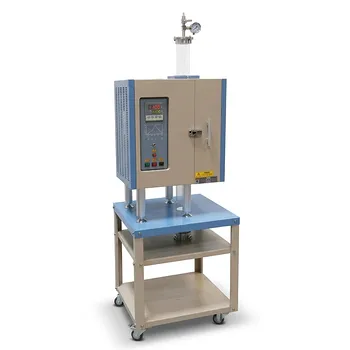
1100°C Split Vertical Tube Furnace with 80mm Quartz Tube and Stainless Steel Vacuum Flanges

Compact High Temperature 1600C Tube Furnace with 50mm Alumina Tube and Vacuum Flanges for Material Sintering

Vertical 1700C Vacuum and Atmosphere Tube Furnace with 80mm Alumina Tube
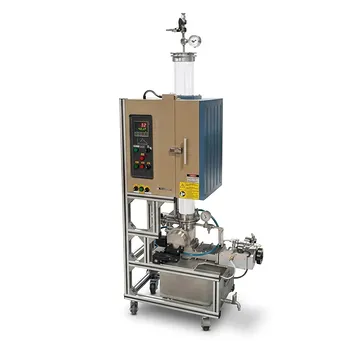
1200C High Temperature Atmosphere Controlled Vertical Quenching Tube Furnace with 4 Inch Quartz Tube

1200°C 5 Inch Vertical Quartz Tube Furnace with Stainless Steel Vacuum Flanges
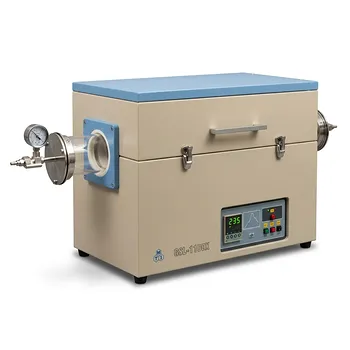
Single Zone Tube Furnace 5 Inch Quartz Tube 36 Inch Heating Zone Vacuum Flanges

1800C High Temperature Compact Vacuum Tube Furnace with 60mm OD Alumina Tube and Kanthal MoSi2 Heating Elements
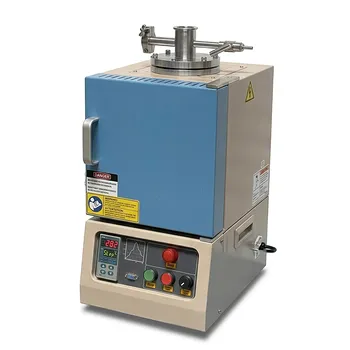
High Temperature Hybrid Muffle and Tube Furnace with Vacuum Capability and PID Control
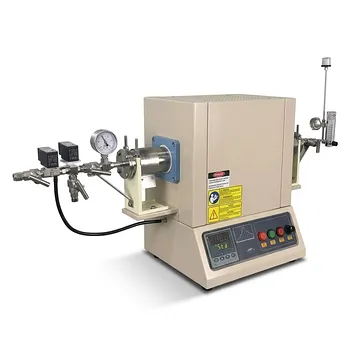
1500C Compact Hydrogen Gas Tube Furnace with 2 Inch Alumina Tube and Hydrogen Detector
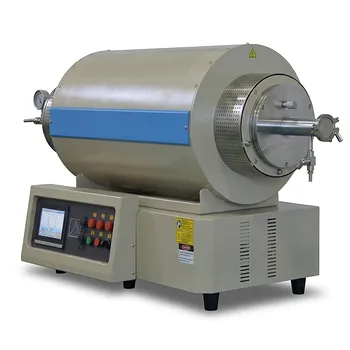
1200C Max Three Zone Tube Furnace 6 Inch OD Max with Tube and Flange
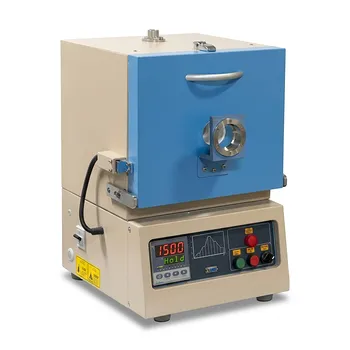
1500C Hybrid Muffle Tube Furnace 1.7L Box with 2 Inch Mullite Tube and Programmable PID Controller
1700C Compact Hybrid Furnace with Dual Layer Box Sintering and Controlled Atmosphere Alumina Tubes
