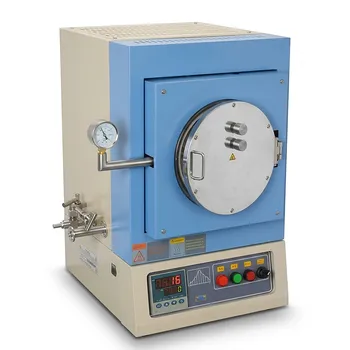
What role does a Tubular Furnace play during the pyrolysis stage of BNBT-xBMN thin film preparation? Essential Insights
Updated 3 months ago
In the preparation of BNBT-xBMN thin films, the Tubular Furnace acts as the critical thermal regulator during the pyrolysis stage, occurring at approximately 410°C. It utilizes precisely controlled heating curves to drive the complete decomposition and removal of organic additives, solvent residues, and metal-organic frameworks.
The Tubular Furnace provides the thermal energy and environmental stability required to transform liquid precursors into a dense, crack-free solid foundation. By ensuring uniform temperature distribution, it prevents the localized thermal stresses that lead to structural failure before the crystallization process begins.
The Mechanism of Organic Removal and Decomposition
During the synthesis of complex ceramic thin films like BNBT-xBMN, the removal of non-essential chemical components is a delicate phase that dictates the final material quality.
Precise Decomposition of Metal-Organic Frameworks
The furnace provides a stable 410°C environment necessary to break the chemical bonds of organic additives and solvents. This ensures that the metal-organic precursors are stripped of their carbonaceous backbones, leaving behind the desired inorganic skeleton.
Prevention of Residual Impurities
A controlled heating curve is essential to ensure that decomposition is complete and systematic. If the temperature is inconsistent, residual organic matter may remain trapped, which can later cause defects or impede the electrical performance of the thin film.
Thermal Uniformity and Structural Integrity
The physical quality of a thin film is often determined by how evenly it is heated during its transition from a wet layer to a solid phase.
Mitigating Localized Thermal Stress
High-quality Tubular Furnaces focus on temperature field uniformity within the heating chamber. Without this uniformity, different areas of the film would expand and contract at different rates, leading to significant thermal stress.
Elimination of Micro-Cracks
By providing a consistent thermal environment, the furnace prevents the formation of micro-cracks. This is vital for establishing a dense, continuous foundation that is durable enough to withstand the subsequent high-temperature crystallization process.
Establishing the Foundation for Crystallization
The pyrolysis stage is not merely a cleaning step; it is the structural preparation for the final ceramic phase.
Creating a Dense Inorganic Base
The furnace’s ability to facilitate a slow, steady removal of volatiles allows the film to settle into a dense morphology. This high density is a prerequisite for achieving superior dielectric properties and high breakdown field strength in the final product.
Influence on Subsequent Processing
While the pyrolysis occurs at 410°C, it sets the stage for the 700°C annealing and crystallization phases. An expertly pyrolyzed film ensures that grain growth during the later stages is uniform and that interlaminar stresses are manageable.
Understanding the Trade-offs
Achieving the perfect pyrolysis environment requires balancing several conflicting technical factors.
- Heating Rate vs. Output Quality: Rapid heating may increase throughput but often leads to "bubbling" or gas entrapment as solvents evaporate too quickly, compromising film density.
- Temperature Precision vs. Operational Cost: Maintaining ultra-uniform temperature fields often requires advanced furnace designs and higher energy consumption, but it is necessary to prevent structural failure in multi-layer coatings.
- Atmosphere Control: While pyrolysis for BNBT-xBMN focuses on temperature, failing to manage the furnace atmosphere can lead to unintended oxidation or reduction of the metal components.
How to Optimize Your Pyrolysis Strategy
To achieve the best results for BNBT-xBMN thin film preparation, your furnace parameters should align with your specific material objectives.
- If your primary focus is Maximum Film Density: Prioritize a slow ramp-up rate and a high-quality furnace with a verified uniform temperature zone to ensure all organics are removed without creating voids.
- If your primary focus is Preventing Structural Cracks: Ensure the Tubular Furnace is calibrated for precise cooling curves, as sudden temperature drops after pyrolysis can be just as damaging as uneven heating.
- If your primary focus is High Breakdown Strength (BDS): Focus on the total removal of metal-organic frameworks at the 410°C mark to ensure no carbon residues remain to create conductive paths within the dielectric.
The Tubular Furnace is the architectural tool that ensures the BNBT-xBMN thin film transitions from a chemical precursor to a high-performance electronic material without structural compromise.
Summary Table:
| Key Aspect | Role in Pyrolysis Stage | Impact on Thin Film Quality |
|---|---|---|
| Organic Removal | Decomposition of solvents/additives at 410°C | Eliminates impurities and carbon residues |
| Thermal Uniformity | Mitigating localized thermal stresses | Prevents micro-cracks and structural failure |
| Density Control | Facilitating slow, steady volatile removal | Ensures a dense, inorganic solid foundation |
| Pre-Crystallization | Preparing the layer for 700°C annealing | Enables uniform grain growth and high BDS |
Enhance Your Research Precision with THERMUNITS
As a global leader in high-temperature laboratory equipment, THERMUNITS empowers material science and industrial R&D with advanced thermal processing solutions. Our comprehensive range includes Tube, Muffle, Vacuum, Atmosphere, and Rotary furnaces, as well as CVD/PECVD systems, Hot Press furnaces, and Electric Rotary Kilns designed for absolute temperature uniformity.
Achieve superior thin film density and structural integrity for your BNBT-xBMN projects with our expert-engineered heating elements and control systems. Contact our technical experts today to find the perfect heat treatment solution for your lab!
References
- Jianhua Wu, Yong Li. Excellent Energy Storage and Photovoltaic Performances in Bi0.45Na0.45Ba0.1TiO3-Based Lead-Free Ferroelectricity Thin Film. DOI: 10.3390/ceramics7030068
Mentioned Products
- High Temperature Rotary Tilt Tubular Furnaces for Advanced Powder Sintering and Material Processing
- Compact High Temperature 1600C Tube Furnace with 50mm Alumina Tube and Vacuum Flanges for Material Sintering
- 1100C Tube Furnace with Vacuum Flange and Programmable Temperature Controller for Material Science and Industrial Heat Treatment
- High Temperature 1700C Vertical Tube Furnace for Powder Spherification and Material Sintering
- Vertical 1700C Vacuum and Atmosphere Tube Furnace with 80mm Alumina Tube
People Also Ask
- How does a rotary tube furnace improve the processing of granular materials? Enhance Uniformity and Reaction Kinetics
- What parameters must operators control to maintain product quality in a rotary furnace? Master Your Heat Treatment.
- What are the typical operating temperature ranges and mechanical specifications for rotary furnaces? A Complete Guide
- How does the rotation speed of a rotary furnace affect the material processing? Optimize Residence Time & Heat Uniformity
- How do rotary furnaces contribute to effective hazardous waste management and thermal treatment? - High Efficiency Solutions

Tech Team · ThermUnits
Last updated on Jun 03, 2026
Related Products
High Temperature Rotary Tilt Tubular Furnaces for Advanced Powder Sintering and Material Processing

Compact High Temperature 1600C Tube Furnace with 50mm Alumina Tube and Vacuum Flanges for Material Sintering

1100C Tube Furnace with Vacuum Flange and Programmable Temperature Controller for Material Science and Industrial Heat Treatment

High Temperature 1700C Vertical Tube Furnace for Powder Spherification and Material Sintering

Vertical 1700C Vacuum and Atmosphere Tube Furnace with 80mm Alumina Tube

Three Zone Tube Furnace with 11 Inch or 15 Inch Quartz Tube and Hinged Flanges for Vacuum Atmosphere Heat Treatment

1800C High Temperature Compact Vacuum Tube Furnace with 60mm OD Alumina Tube and Kanthal MoSi2 Heating Elements
Automated 1200 C Tube Furnace for AI Material Research with 6 Inch OD and Sliding Flange
1200C Max Three Zone Tube Furnace 6 Inch OD Max with Tube and Flange

High Temperature 1700C Six Zone Split Tube Furnace with Alumina Tube and Water Cooled Flanges
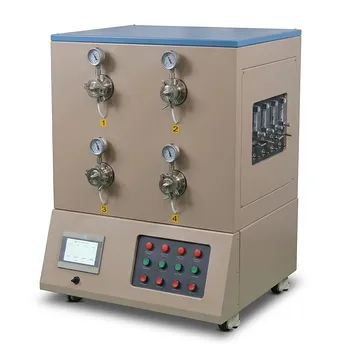
High Throughput 1200C Four Channel Tube Furnace with 3 Inch Quartz Tubes for Multi Zone Annealing and Material Research
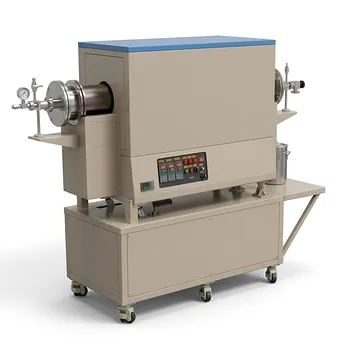
900°C Max Rotary Tube Furnace with 8 Inch 310S Alloy Tube and Optional Multi Zone Heating for Industrial Material Calcination
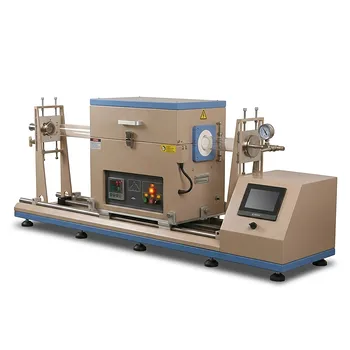
1200C Sliding Tube Furnace for Rapid Thermal Processing and CVD Graphene Growth with 100mm OD Capacity

High Temperature Automated 5 Inch Tube Furnace for Autonomous Material Research and Advanced Laboratory R&D

1700C Hydrogen Gas Tube Furnace with 60mm Alumina Process Tube and Integrated Hydrogen Safety Detector

High Temperature 1700C Benchtop Tube Furnace with 5 Inch Heating Zone High Purity Alumina Tube and Vacuum Sealing Flanges
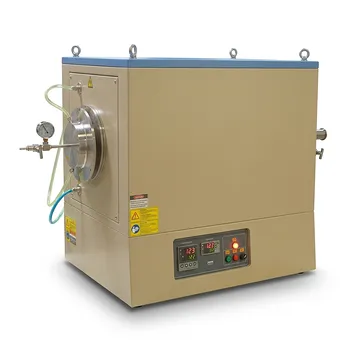
1100°C Large Diameter Quartz Tube Furnace with 24 Inch Heating Zone and Water Cooled Flanges

1200C High Throughput Multi Channel Tube Furnace with 50mm Quartz Tubes for Annealing and Material Phase Diagram Research

1200°C 5 Inch Vertical Quartz Tube Furnace with Stainless Steel Vacuum Flanges