What is the primary role of a Tubular Furnace in the preparation of biochar? Precise Thermal Control for Biochar R&D
Updated 3 months ago
The tubular furnace serves as the primary reactor for the controlled thermal degradation of biomass. It provides a precise high-temperature thermal field while simultaneously maintaining an inert atmosphere through the continuous injection of gases like nitrogen. This specific environment ensures that waste coffee grounds undergo slow pyrolysis under anaerobic conditions, facilitating the conversion of organic precursors into carbon-rich biochar without allowing the material to combust.
The primary role of a tubular furnace is to provide a highly controllable, oxygen-free environment that balances temperature, heating rates, and residence times. This precision allows for the repeatable transformation of raw biomass into biochar with specific chemical and structural properties.
Orchestrating Thermal Precision
The tubular furnace allows researchers to dictate the exact energy profile applied to the biomass.
Controlling Heating Rates and Residence Times
Unlike bulk heating methods, a tube furnace can maintain specific heating rates, such as 10 °C/min, which is critical for consistent carbonization. By regulating the residence time—the duration the biomass stays at a target temperature—the furnace ensures the thorough chemical degradation of hemicellulose, cellulose, and lignin.
Achieving Temperature Uniformity
The horizontal or vertical design of the heating elements ensures a uniform thermal field across the biomass sample. This uniformity is essential for producing a homogenous biochar product where every particle has reached the same degree of carbonization.
Facilitating Thermochemical Degradation
By providing temperatures typically ranging from 300 °C to 900 °C, the furnace enables the break-down of complex organic polymers. This process effectively increases the fixed carbon content while significantly reducing the volatile matter within the waste coffee grounds.
Maintaining Atmosphere Integrity
The exclusion of oxygen is the most critical function of the furnace during the pyrolysis phase.
Establishing Anaerobic Conditions
Continuous injection of high-purity nitrogen creates an inert environment that prevents the oxidation of carbon materials. Without this protection, the biomass would simply catch fire and turn to ash rather than forming a stable biochar skeleton.
Engineering Pore Structure and Surface Chemistry
The controlled atmosphere allows for the formation of specific pore structures and functional groups on the biochar surface. By managing the gas flow and temperature, the furnace can produce biochar with high porosity, which is vital for applications like filtration or soil amendment.
Enabling Graphitization and Stability
In higher temperature ranges (600–800 °C), the furnace facilitates the transition of organic matter into graphitized structures. This enhances the thermal conductivity and full-spectrum absorption capacity of the resulting material, turning waste into high-performance photothermal biochar.
Understanding the Trade-offs
While highly precise, the use of a tubular furnace involves specific limitations that must be managed.
Scalability and Throughput Constraints
Tubular furnaces are primarily laboratory or pilot-scale instruments, meaning they handle relatively small batches of biomass compared to industrial kilns. This makes them ideal for research and high-value material production but less efficient for bulk waste processing.
Energy Consumption and Cooling Times
Maintaining high temperatures for extended residence times, such as four hours at 500 °C, requires significant energy input. Additionally, the sealed nature of the tube means cooling times can be lengthy, slowing down the overall production cycle for multiple samples.
Gas Flow Management Risks
If the nitrogen flow rate is too low, localized oxidation can occur from trace oxygen or outgassed volatiles. Conversely, excessive flow rates may carry away fine biochar particles or disrupt the thermal stability within the tube.
How to Apply This to Your Project
To achieve the best results when preparing biochar from waste coffee grounds, your approach should be dictated by your end-use requirements.
- If your primary focus is maximizing solid yield: Operate at lower pyrolysis temperatures (approximately 300–400 °C) with a slow heating rate to preserve the carbon skeleton.
- If your primary focus is high surface area and porosity: Utilize higher temperatures (above 600 °C) and longer residence times to fully drive off volatile matter and open the pore structure.
- If your primary focus is kinetic studies or reproducibility: Strictly standardize your heating rate (e.g., 10 °C/min) and nitrogen flow to ensure every batch is chemically identical.
The tubular furnace is the indispensable tool for transforming raw organic waste into a sophisticated, engineered carbon material with predictable performance characteristics.
Summary Table:
| Key Feature | Role in Biochar Preparation | Core Benefit for R&D |
|---|---|---|
| Inert Atmosphere | Displaces oxygen using N2 | Prevents combustion; ensures high carbon yield |
| Thermal Precision | Regulates heating rates (e.g. 10°C/min) | Consistent chemical degradation of lignin/cellulose |
| Uniform Heat Field | Even distribution across sample | Homogenous biochar with repeatable properties |
| Residence Control | Manages duration at peak temp | Tailored pore structure and surface chemistry |
Elevate Your Biochar Research with THERMUNITS Precision
As a leading manufacturer of high-temperature laboratory equipment for material science and industrial R&D, THERMUNITS provides the advanced thermal processing solutions you need to transform biomass into high-performance materials. Our comprehensive range includes Tube, Rotary, Muffle, Vacuum, and Atmosphere furnaces, as well as CVD/PECVD systems, Electric Rotary Kilns, and Hot Press furnaces, all designed for unmatched precision and reliability.
Whether you are engineering specific pore structures or optimizing fixed carbon yield, our equipment ensures perfect uniformity and repeatable results. Let us help you accelerate your heat treatment projects with our expert-grade solutions.
Ready to optimize your lab's performance?
→ Contact THERMUNITS Today
References
- Taisiia Sokolova, Valeriia Sokolova. Preparation and Study of Acid-Base and Ion-Exchange Properties of Biochar from Waste Coffee Grounds. DOI: 10.12912/27197050/193052
Mentioned Products
- High Temperature Tilting Rotary Tubular Furnace for Continuous Powder Thermal Processing and Controlled Atmosphere Sintering
- High Temperature Rotary Tilt Tubular Furnaces for Advanced Powder Sintering and Material Processing
- Compact High Temperature 1600C Tube Furnace with 50mm Alumina Tube and Vacuum Flanges for Material Sintering
- 1100C Tube Furnace with Vacuum Flange and Programmable Temperature Controller for Material Science and Industrial Heat Treatment
- High Temperature 1700C Vertical Tube Furnace for Powder Spherification and Material Sintering
People Also Ask
- What is the role of a controlled rotary tube furnace in pre-sulfidation of NiMo catalysts? Optimize Active Phase Formation
- How does a rotary tube furnace improve the processing of granular materials? Enhance Uniformity and Reaction Kinetics
- What parameters must operators control to maintain product quality in a rotary furnace? Master Your Heat Treatment.
- What are the typical operating temperature ranges and mechanical specifications for rotary furnaces? A Complete Guide
- Why use a rotary tube furnace for FACS carbonization? Ensure uniform morphology and prevent sphere agglomeration.

Tech Team · ThermUnits
Last updated on Jun 02, 2026
Related Products
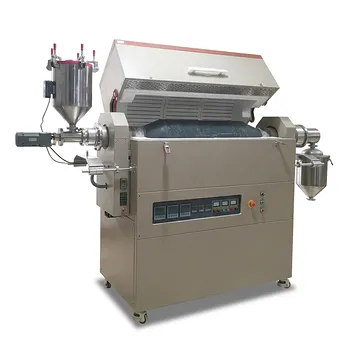
High Temperature Tilting Rotary Tubular Furnace for Continuous Powder Thermal Processing and Controlled Atmosphere Sintering
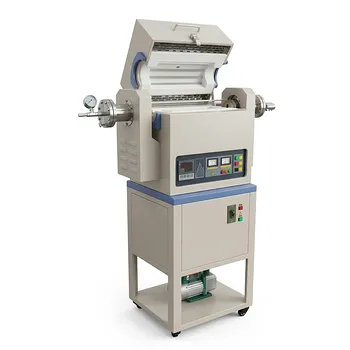
High Temperature Rotary Tilt Tubular Furnaces for Advanced Powder Sintering and Material Processing

Compact High Temperature 1600C Tube Furnace with 50mm Alumina Tube and Vacuum Flanges for Material Sintering

1100C Tube Furnace with Vacuum Flange and Programmable Temperature Controller for Material Science and Industrial Heat Treatment

High Temperature 1700C Vertical Tube Furnace for Powder Spherification and Material Sintering

Vertical 1700C Vacuum and Atmosphere Tube Furnace with 80mm Alumina Tube

1800C High Temperature Compact Vacuum Tube Furnace with 60mm OD Alumina Tube and Kanthal MoSi2 Heating Elements
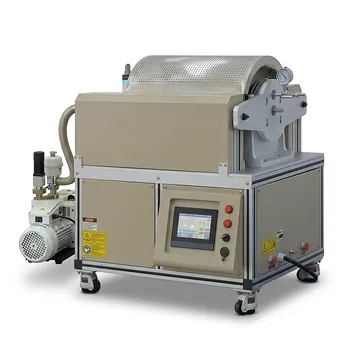
Automated 1200 C Tube Furnace for AI Material Research with 6 Inch OD and Sliding Flange

Three Zone Tube Furnace with 11 Inch or 15 Inch Quartz Tube and Hinged Flanges for Vacuum Atmosphere Heat Treatment
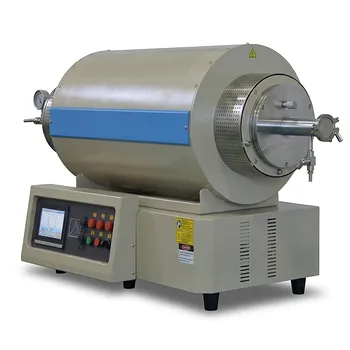
1200C Max Three Zone Tube Furnace 6 Inch OD Max with Tube and Flange

High Temperature 1700C Six Zone Split Tube Furnace with Alumina Tube and Water Cooled Flanges
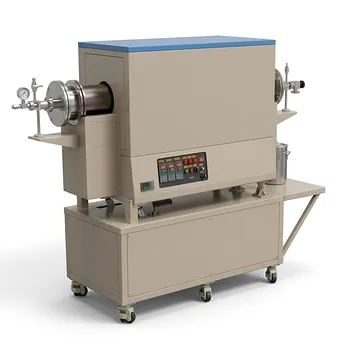
900°C Max Rotary Tube Furnace with 8 Inch 310S Alloy Tube and Optional Multi Zone Heating for Industrial Material Calcination
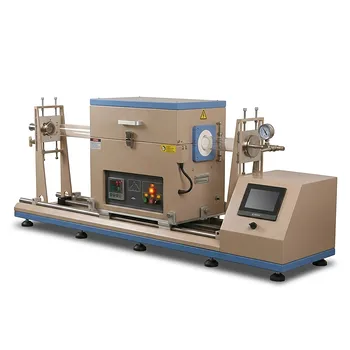
1200C Sliding Tube Furnace for Rapid Thermal Processing and CVD Graphene Growth with 100mm OD Capacity

High Temperature Automated 5 Inch Tube Furnace for Autonomous Material Research and Advanced Laboratory R&D

High Temperature 1700C Benchtop Tube Furnace with 5 Inch Heating Zone High Purity Alumina Tube and Vacuum Sealing Flanges
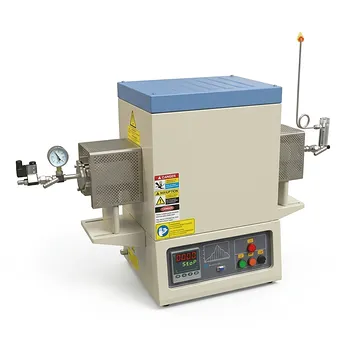
1700C Hydrogen Gas Tube Furnace with 60mm Alumina Process Tube and Integrated Hydrogen Safety Detector
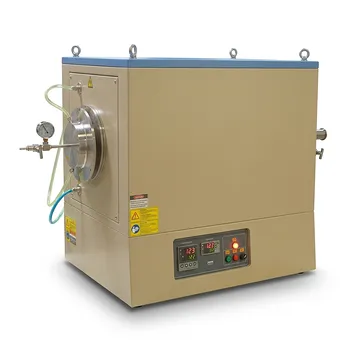
1100°C Large Diameter Quartz Tube Furnace with 24 Inch Heating Zone and Water Cooled Flanges
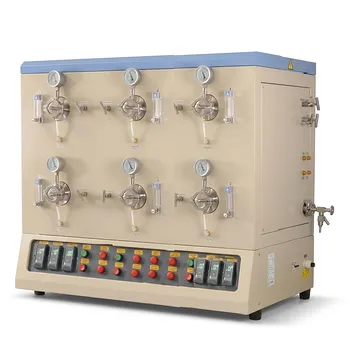
1200C High Throughput Multi Channel Tube Furnace with 50mm Quartz Tubes for Annealing and Material Phase Diagram Research

1200°C 5 Inch Vertical Quartz Tube Furnace with Stainless Steel Vacuum Flanges
