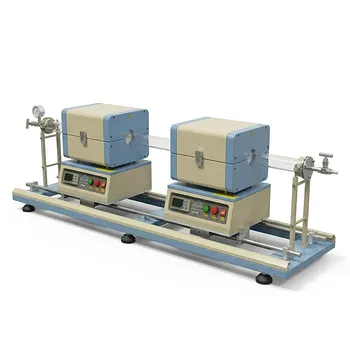
What are the technical advantages of using a tube-in-tube design within a tube furnace? Enhance Thin-Film Uniformity
Updated 3 months ago
The tube-in-tube design is a specialized architecture used to master fluid dynamics and chemical concentration gradients during thin-film deposition. By nesting a smaller vessel within the primary furnace tube, this configuration stabilizes gas flow dynamics and maintains a high local vapor concentration directly above the substrate. This effectively suppresses turbulence and ensures uniform vapor transport, which is essential for achieving superior pixel consistency and high film quality in large-area applications, such as all-inorganic perovskite arrays.
The tube-in-tube configuration shifts the focus from bulk furnace conditions to the micro-environment surrounding the substrate. By isolating the reaction zone, it ensures that vapor density and flow stability remain high, providing the precision required for high-performance material synthesis.
Stabilizing Gas Flow Dynamics
Suppressing Fluid Turbulence
The inner tube acts as a physical barrier that restricts the expansion of reaction gases. This restriction forces the gas into a more laminar flow pattern, preventing the chaotic turbulence often found in large-volume furnace tubes.
Ensuring Uniform Vapor Transport
By guiding the reactant stream through a tighter channel, the design ensures that precursor vapors are distributed evenly across the substrate surface. This consistency is the primary driver behind film quality and thickness uniformity in complex chemical vapor deposition (CVD) processes.
Managing Residence Time
The confined space of the inner tube allows for more precise control over the residence time of reaction gases. This ensures that reactants stay in contact with the substrate long enough to react fully but not so long that they cause unwanted secondary growth or coarsening.
Precision Control of the Local Chemical Environment
Maintaining High Local Vapor Concentration
One of the most significant advantages is the prevention of vapor dilution. The tube-in-tube design traps the evaporated precursors near the substrate, maintaining the high local vapor concentration necessary for dense, pinhole-free film growth.
Improving Pixel Consistency
In the fabrication of large-scale arrays, such as perovskites, every individual pixel must undergo the same growth kinetics. The localized environment provided by the inner tube ensures that chemical potential remains constant across the entire substrate area.
Enhancing Molecular-Level Control
Because the inner tube stabilizes both the thermal and chemical fields, researchers can achieve molecular-level control over film morphology. This is particularly beneficial for doping processes where precise kinetic control is required to achieve specific electronic properties.
Integrating Thermal Stability
Compensating for Heat Dissipation
When used within a multi-zone furnace, the inner tube provides an additional layer of thermal insulation. This helps to compensate for heat dissipation at the furnace ends, ensuring the substrate remains within a perfectly isothermal zone.
Establishing Stable Gradients
The elongated and nested reaction space allows for the establishment of highly stable temperature gradients. These gradients are critical for directing the flow of vapors and controlling the crystallization rate of nanostructures.
Inhibiting Particle Coarsening
By combining stable flow with the rapid heating capabilities of a tube furnace, the design can effectively inhibit the coarsening of nanoparticles. This results in a significantly narrower particle size distribution compared to open-tube or muffle furnace methods.
Understanding the Trade-offs
Mechanical Complexity and Maintenance
Adding an internal tube increases the complexity of the furnace assembly. The inner tube often requires specialized cleaning to prevent cross-contamination between batches, as it sits in close proximity to the reaction site.
Physical Constraints on Substrate Size
The most immediate trade-off is the reduction in available space. The diameter of the inner tube dictates the maximum size of the substrate, which may limit the scalability of certain large-format industrial processes.
Pressure Management Challenges
Confining gases in a smaller volume can lead to localized pressure fluctuations if the gas delivery system is not precisely calibrated. This requires more sophisticated mass flow controllers and pressure regulation than standard one-tube systems.
How to Apply This to Your Project
Implementing a tube-in-tube design requires balancing the need for local control against the physical limits of your furnace hardware.
- If your primary focus is large-area electronic uniformity: Use a tube-in-tube setup to maintain high vapor pressure and eliminate the "edge effect" during deposition.
- If your primary focus is nanoparticle synthesis: Leverage the design within a three-zone furnace to ensure gas residence time and thermal gradients are perfectly synchronized.
- If your primary focus is maximizing throughput: Evaluate if the increased uniformity of the tube-in-tube design justifies the smaller batch size compared to a standard horizontal furnace tube.
By transforming a standard heating chamber into a precision-flow reactor, the tube-in-tube design provides the high-fidelity control necessary for next-generation material science.
Summary Table:
| Feature | Technical Benefit | Material Impact |
|---|---|---|
| Fluid Dynamics | Suppresses turbulence; ensures laminar flow | High thickness uniformity and pixel consistency |
| Vapor Concentration | Prevents precursor dilution near the substrate | Dense, pinhole-free film growth |
| Thermal Management | Isothermal zone compensation and stable gradients | Controlled crystallization and inhibited coarsening |
| Residence Time | Precise regulation of gas contact duration | Fine-tuned molecular-level morphological control |
Optimize Your Material Synthesis with THERMUNITS
Are you looking to achieve molecular-level precision in your deposition processes? THERMUNITS is a leading manufacturer of high-temperature laboratory equipment specifically designed for material science and industrial R&D.
Our comprehensive range of thermal processing solutions—including Tube Furnaces, CVD/PECVD systems, Vacuum Induction Melting (VIM) furnaces, and Electric Rotary Kilns—are engineered to provide the stable environment and laminar flow control required for high-performance research.
Ready to enhance your lab's capabilities? Contact us today to consult with our experts on how our thermal systems can bring superior uniformity and consistency to your next project.
References
- Zhangsheng Xu, Caofeng Pan. Surface Energy‐Assisted Patterning of Vapor Deposited All‐Inorganic Perovskite Arrays for Wearable Optoelectronics. DOI: 10.1002/advs.202402635
Mentioned Products
- Automated 1200 C Tube Furnace for AI Material Research with 6 Inch OD and Sliding Flange
- Compact High Temperature 1600C Tube Furnace with 50mm Alumina Tube and Vacuum Flanges for Material Sintering
- 1100C Tube Furnace with Vacuum Flange and Programmable Temperature Controller for Material Science and Industrial Heat Treatment
- 1200C Max Three Zone Tube Furnace 6 Inch OD Max with Tube and Flange
- Three Zone Tube Furnace with 11 Inch or 15 Inch Quartz Tube and Hinged Flanges for Vacuum Atmosphere Heat Treatment
People Also Ask
- Why is it necessary to heat a tube furnace to 900 °C for high-temperature burn-out? Ensure Data Precision & Longevity
- What are the advantages of Mesh Bias in Mist CVD? Improve Thin Film Quality & Uniformity.
- What is the primary role of a Tubular Furnace in the preparation of biochar? Precise Thermal Control for Biochar R&D
- What role does a Tubular Furnace play during the pyrolysis stage of BNBT-xBMN thin film preparation? Essential Insights
- What role does a tube furnace play in CVD synthesis of Si/C composite anode materials? Key Optimization Insights

Tech Team · ThermUnits
Last updated on Jun 02, 2026
Related Products
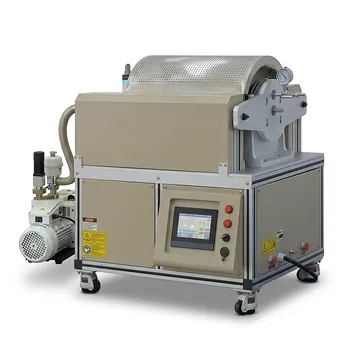
Automated 1200 C Tube Furnace for AI Material Research with 6 Inch OD and Sliding Flange

Compact High Temperature 1600C Tube Furnace with 50mm Alumina Tube and Vacuum Flanges for Material Sintering

1100C Tube Furnace with Vacuum Flange and Programmable Temperature Controller for Material Science and Industrial Heat Treatment
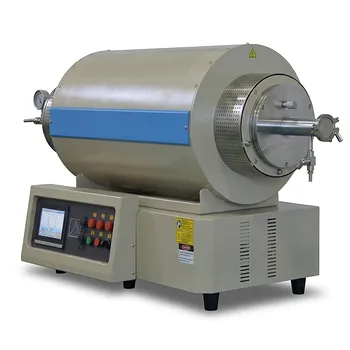
1200C Max Three Zone Tube Furnace 6 Inch OD Max with Tube and Flange

Three Zone Tube Furnace with 11 Inch or 15 Inch Quartz Tube and Hinged Flanges for Vacuum Atmosphere Heat Treatment

1800C High Temperature Compact Vacuum Tube Furnace with 60mm OD Alumina Tube and Kanthal MoSi2 Heating Elements

Vertical 1700C Vacuum and Atmosphere Tube Furnace with 80mm Alumina Tube

High Temperature Automated 5 Inch Tube Furnace for Autonomous Material Research and Advanced Laboratory R&D

Compact Vertical Split Quartz Tube Furnace with Stainless Steel Vacuum Flanges for Rapid Thermal Quenching and Controlled Atmosphere Material Processing
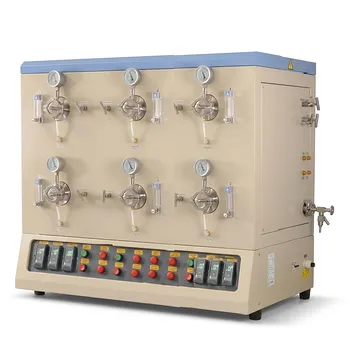
1200C High Throughput Multi Channel Tube Furnace with 50mm Quartz Tubes for Annealing and Material Phase Diagram Research
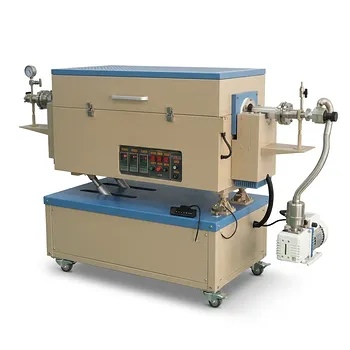
Three Zone Rotary Tube Furnace for High Temperature Powder Processing and Material Research
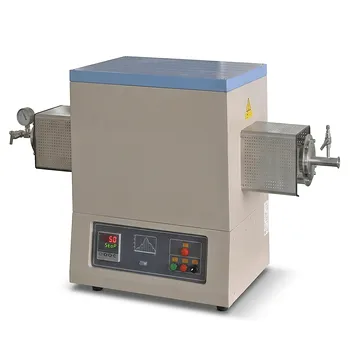
High Temperature 1700C Tube Furnace with 4 Inch OD Alumina Tube and Vacuum Sealing Flanges

1700C Hydrogen Gas Tube Furnace with 60mm Alumina Process Tube and Integrated Hydrogen Safety Detector
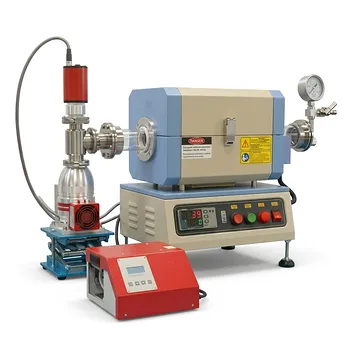
High Vacuum Compact Tube Furnace 1200C with Integrated Turbo Pump System and 8 Inch Heating Zone

High Temperature 1700C Benchtop Tube Furnace with 5 Inch Heating Zone High Purity Alumina Tube and Vacuum Sealing Flanges

High Temperature 1700C Six Zone Split Tube Furnace with Alumina Tube and Water Cooled Flanges

High Temperature 1700C Vertical Tube Furnace for Powder Spherification and Material Sintering

1200°C 5 Inch Vertical Quartz Tube Furnace with Stainless Steel Vacuum Flanges
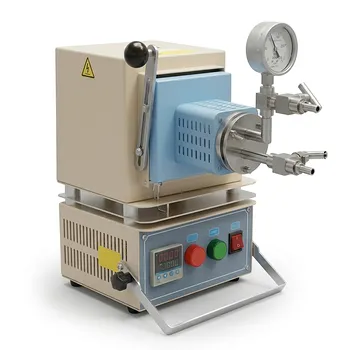
Compact Hybrid Muffle and Tube Furnace for 1000C Controlled Atmosphere Laboratory Material Sintering